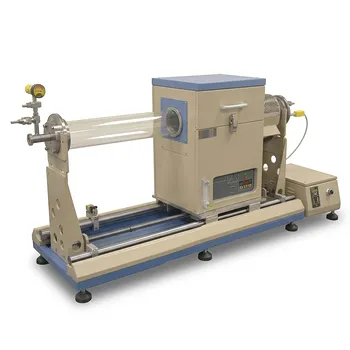
What is the function of an industrial-grade tube furnace in reed straw biochar synthesis? Precision Thermal Engineering.
Updated 3 months ago
The industrial-grade tube furnace acts as a high-precision thermal reactor that facilitates the controlled thermochemical conversion of reed straw into high-quality biochar. It provides the two critical environments necessary for synthesis: a strictly anaerobic (oxygen-free) atmosphere maintained by inert gases and a meticulously regulated temperature profile. This setup ensures the complete carbonization of biomass and the precise activation required to develop complex mesoporous structures.
The tube furnace is the fundamental tool for transforming raw reed straw into a functional carbon material by providing absolute control over the heating rate, peak temperature, and gaseous environment. Its primary function is to enable high-temperature pyrolysis and chemical activation while preventing the combustion of the carbon skeleton.
Precision Thermal Control: The Engine of Pyrolysis
Managing Heating Rates and Residence Times
The tube furnace allows for the exact regulation of heating rates, often set between 5°C and 10°C per minute. This gradual increase is vital for the orderly dehydration and degassing of the reed straw, preventing the sudden structural collapse of the biomass fibers.
By maintaining a specific residence time at the target temperature, the furnace ensures that the heat penetrates the material uniformly. This consistency is what allows for a predictable and repeatable biochar quality across different batches.
Facilitating the Degradation of Biomass Components
Industrial tube furnaces provide the intense heat—ranging from 300°C to 800°C—required to break down the complex organic polymers in reed straw. This process targets the thermochemical degradation of hemicellulose, cellulose, and lignin.
As these components decompose, the furnace facilitates the removal of volatile matter and moisture. This leaves behind a stable carbon substrate with a rich density of surface functional groups.
Atmospheric Integrity and Anaerobic Conditions
The Role of Inert Gas Blanketing
A defining feature of the tube furnace is its ability to maintain a stable inert nitrogen ($N_2$) atmosphere. This environment is critical for anaerobic carbonization, ensuring the biomass does not catch fire when exposed to high temperatures.
The continuous flow of nitrogen also helps sweep away liberated volatiles. This prevents secondary reactions that could clog the developing pores of the biochar.
Optimizing Solid Biochar Yield
By creating a strictly oxygen-limited or vacuum environment, the furnace maximizes the conversion of biomass into solid carbon rather than ash. This precise atmospheric control is what allows the material to transition from amorphous carbon to a more crystalline structure.
The result is an increased aromatization degree, which enhances the chemical stability and longevity of the biochar in environmental applications.
Advanced Structural Engineering: Activation and Pore Development
Catalyzing Mesoporous Growth
At high temperatures, such as 800°C, the tube furnace facilitates the physicochemical reactions between the carbonized reed straw and chemical activators. This process is essential for etching the carbon surface to construct a mesoporous structure.
These pores significantly increase the specific surface area of the biochar. This makes the final product highly effective for tasks like heavy metal adsorption or gas storage.
Surface Functionalization and Modification
The furnace provides the stable environment needed for deep reactions with additives like potassium bicarbonate or urea. These reactions modify the "coral-like" carbon skeleton of the reed straw.
This level of control allows researchers to tailor the biochar’s surface active sites. By adjusting the furnace settings, one can optimize the biochar specifically for its intended end-use, such as adsorbing lead ions.
Understanding the Trade-offs
Precision vs. Throughput
While tube furnaces offer unparalleled control over the thermal environment, they are typically batch-processing units. This means they may have lower throughput compared to continuous-flow reactors like rotary kilns.
Energy Consumption and Cooling
Maintaining high temperatures like 800°C for extended residence times requires significant energy input. Additionally, the sealed nature of the tube means that cooling cycles can be lengthy, increasing the overall turnaround time for each production run.
How to Apply This to Your Project
Making the Right Choice for Your Goal
To achieve the best results with reed straw biochar, you must align your furnace settings with your specific objectives.
- If your primary focus is maximizing surface area: Utilize a higher temperature (near 800°C) and an activation agent to drive the formation of a mesoporous skeleton.
- If your primary focus is high carbon yield: Opt for lower pyrolysis temperatures (between 300°C and 500°C) and a slower heating rate to preserve the solid mass.
- If your primary focus is heavy metal adsorption: Ensure a steady inert gas flow to keep surface functional groups clean and reactive during the cooling phase.
By mastering the thermal and atmospheric variables of the tube furnace, you can transform simple agricultural waste into a high-performance, engineered carbon material.
Summary Table:
| Feature | Function in Biochar Synthesis | Key Impact |
|---|---|---|
| Thermal Control | Regulates heating rates (5-10°C/min) and residence time | Prevents structural collapse; ensures uniform carbonization |
| Atmosphere Integrity | Maintains inert $N_2$ or vacuum environment | Prevents combustion; maximizes solid carbon yield and stability |
| Pore Engineering | Facilitates high-temp chemical activation (up to 800°C) | Develops mesoporous structures and high surface area |
| Functionalization | Provides stable environment for additives/doping | Tailors surface active sites for targeted adsorption |
Optimize Your Material Synthesis with THERMUNITS
Ready to transform agricultural waste into high-value engineered carbon? THERMUNITS is a leading manufacturer of high-temperature laboratory equipment for material science and industrial R&D. We empower researchers and engineers with the precision tools necessary for advanced thermal processing.
Our comprehensive range of solutions includes:
- Tube and Atmosphere Furnaces for precise anaerobic pyrolysis.
- Vacuum and Rotary Furnaces for high-yield carbonization.
- CVD/PECVD Systems and Hot Press Furnaces for advanced material modification.
- Vacuum Induction Melting (VIM) and Thermal Elements for specialized heat treatments.
Whether you are refining reed straw biochar or developing new catalysts, THERMUNITS provides the reliability and control your lab demands. Contact us today to discuss your specific requirements and see how our expertise can accelerate your R&D breakthroughs!
References
- Oleksii Tomin, Maryam Roza Yazdani. Synthesis and efficiency comparison of reed straw-based biochar as a mesoporous adsorbent for ionic dyes removal. DOI: 10.1016/j.heliyon.2024.e24722
Mentioned Products
- High Temperature Dual Zone Rotating Tube Furnace 1500C Silicon Carbide Heating for Advanced Material Synthesis
- 1500C Max Dual Zone Rotary Tube Furnace with 60 mm OD Alumina Tube for High Temperature Material Synthesis
- 1500C 3-Zone Rotary Tube Furnace 60mm with Automatic Powder Feeding and Receiving System for Continuous Material Synthesis
- High Temperature 1700C Vertical Tube Furnace for Powder Spherification and Material Sintering
- Compact High Temperature 1600C Tube Furnace with 50mm Alumina Tube and Vacuum Flanges for Material Sintering
People Also Ask
- What is the function of CVD furnaces in graphene prep? Enhancing Photodetector Charge Transport
- Why use CVD and a tube furnace for Pd3P0.95/NC catalyst phosphidation? Ensure high phase purity and performance.
- CVD Tube Furnace Advantages for Pd-P Catalyst Durability: Precision Control for 40,000+ Cycles
- How does a rotary tube furnace improve the processing of granular materials? Enhance Uniformity and Reaction Kinetics
- How does a Chemical Vapor Deposition (CVD) tube furnace facilitate synchronized nitridation? Precision Nano-Engineering.

Tech Team · ThermUnits
Last updated on Jun 03, 2026
Related Products
High Temperature Dual Zone Rotating Tube Furnace 1500C Silicon Carbide Heating for Advanced Material Synthesis
1500C Max Dual Zone Rotary Tube Furnace with 60 mm OD Alumina Tube for High Temperature Material Synthesis
1500C 3-Zone Rotary Tube Furnace 60mm with Automatic Powder Feeding and Receiving System for Continuous Material Synthesis

High Temperature 1700C Vertical Tube Furnace for Powder Spherification and Material Sintering

Compact High Temperature 1600C Tube Furnace with 50mm Alumina Tube and Vacuum Flanges for Material Sintering
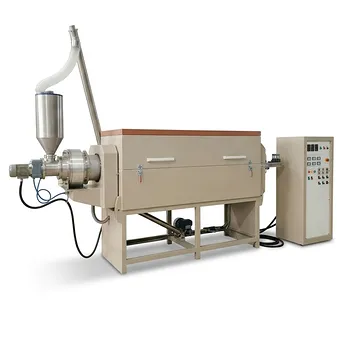
Continuous Feeding Rotary Tube Furnace for Industrial Powder Heat Treatment and Material Research
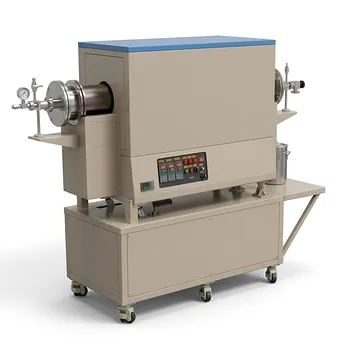
900°C Max Rotary Tube Furnace with 8 Inch 310S Alloy Tube and Optional Multi Zone Heating for Industrial Material Calcination

1100C Tube Furnace with Vacuum Flange and Programmable Temperature Controller for Material Science and Industrial Heat Treatment
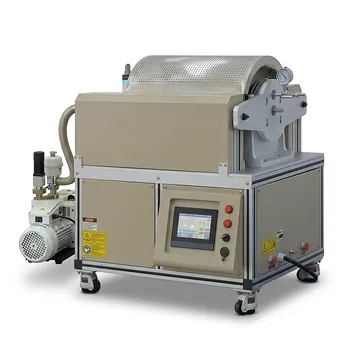
Automated 1200 C Tube Furnace for AI Material Research with 6 Inch OD and Sliding Flange

High Temperature Automated 5 Inch Tube Furnace for Autonomous Material Research and Advanced Laboratory R&D
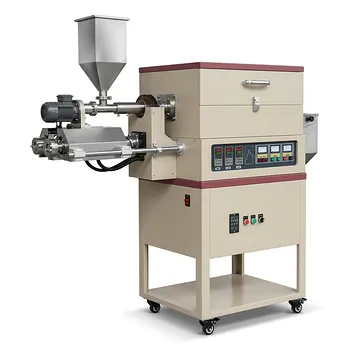
Laboratory Tilting Rotary Tubular Furnaces for Material Science and Industrial Heat Treatment
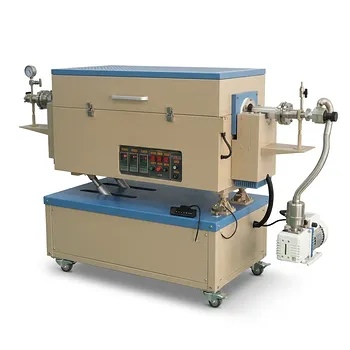
Three Zone Rotary Tube Furnace for High Temperature Powder Processing and Material Research

5 Inch Three Zone Rotary Tube Furnace with Integrated Gas Delivery System and 1200C Capability for Advanced Material CVD Processing

1200C High Throughput Multi Channel Tube Furnace with 50mm Quartz Tubes for Annealing and Material Phase Diagram Research

Vertical 1700C Vacuum and Atmosphere Tube Furnace with 80mm Alumina Tube
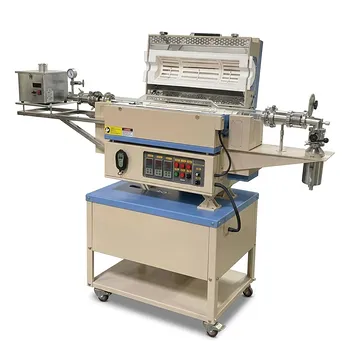
5 Inch Rotary Tube Furnace with Automatic Feeding and Receiving System 1200C Three Zone CVD Powder Processing
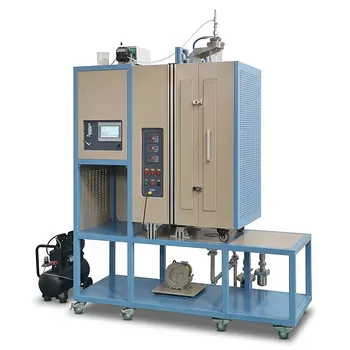
1500C Three Zone Vertical Pyrolysis Furnace for Nanoparticle Synthesis and Advanced Oxide Coating

1800C High Temperature Compact Vacuum Tube Furnace with 60mm OD Alumina Tube and Kanthal MoSi2 Heating Elements
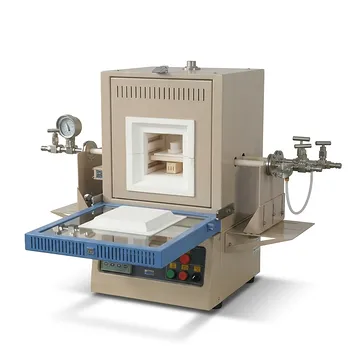
1700C Compact Hybrid Furnace with Dual Layer Box Sintering and Controlled Atmosphere Alumina Tubes