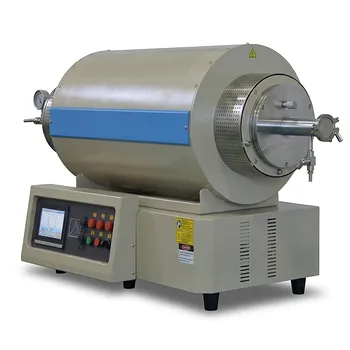
What core function does a high-temperature tube furnace perform during the final conversion of h-BN nanoparticles?
Updated 3 months ago
The high-temperature tube furnace is the critical thermal processing platform for hexagonal boron nitride (h-BN) synthesis. During the final conversion of h-BN nanoparticles, it provides the precise high-temperature energy (900–1300 °C) and high-purity nitrogen flow required for precursors to undergo a phase transition. This controlled environment facilitates deep chemical reactions and crystal growth while maintaining atmospheric integrity to prevent sample oxidation.
The core function of a high-temperature tube furnace is to serve as a dual-control environment that simultaneously regulates thermal energy and chemical atmosphere. By balancing these factors, the furnace enables the transformation of precursors into high-purity, high-crystallinity nanoparticles with specific structural orientations.
Driving the Chemical Transformation
Facilitating Phase Transition and Deep Reactions
The furnace provides the sustained thermal energy necessary to break chemical bonds in precursors and drive their transition into the h-BN phase. Temperatures between 900 and 1300 °C ensure that the material reaches the activation energy required for deep chemical reactions.
Providing a Protective and Reducing Atmosphere
By maintaining a continuous flow of high-purity nitrogen, the tube furnace creates a protective environment that excludes oxygen. This is vital because high-temperature processing in the presence of even trace oxygen would lead to sample oxidation rather than the desired nitride formation.
Enabling Precursor Conversion
Similar to the carbonization of fibers or the synthesis of core-shell structures, the tube furnace ensures complete conversion. It provides a sealed vessel where volatile components are removed, and the remaining material is chemically reconstructed into a stable inorganic lattice.
Achieving Structural and Morphological Control
Crystal Growth and Lattice Perfection
Beyond the initial chemical change, the furnace allows for crystal growth and the perfection of the atomic lattice. The stable heat allows atoms to migrate to their most energetically favorable positions, resulting in nanoparticles with high crystallinity and fewer defects.
Specific Crystal Orientation (002 Plane)
The precise control of the thermal environment allows researchers to influence the morphology and orientation of the nanoparticles. In the case of h-BN, this facilitates growth along the 002 plane, which is essential for achieving the material's unique hexagonal structure and performance characteristics.
Particle Size and Morphology Regulation
By strictly regulating the temperature gradient and the duration of heating, the furnace helps determine the final particle size and surface activity. This level of control is necessary for applications like nanofluids, where the microscopic attributes of the particles directly impact heat exchange efficiency.
Understanding the Trade-offs
Temperature Uniformity vs. Throughput
Maintaining a precise constant temperature zone is difficult as the scale of production increases. Variations in temperature across the tube can lead to inconsistent particle sizes or incomplete phase transitions in different parts of the sample batch.
Atmosphere Sealing Risks
The "superior sealing performance" mentioned by technical experts is a double-edged sword; any failure in the sealing gaskets or vacuum integrity at 1000 °C+ can introduce oxygen. This often results in the immediate contamination of the h-BN nanoparticles, rendering them unusable for high-purity applications.
Energy Intensity and Ramp Rates
While high temperatures are required for crystallinity, rapid heating or cooling (ramp rates) can introduce internal stresses in the nanoparticles. Balancing the speed of synthesis with the need for structural integrity is a constant challenge in thermal processing.
How to Apply This to Your Project
To achieve the best results when using a high-temperature tube furnace for nanoparticle synthesis, align your furnace parameters with your specific material requirements:
- If your primary focus is High Purity: Prioritize the sealing integrity and the purity of the nitrogen or argon gas flow to eliminate even trace oxidation.
- If your primary focus is High Crystallinity: Use longer soaking times at the peak temperature (1200–1300 °C) to allow for complete lattice rearrangement and 002 plane orientation.
- If your primary focus is Particle Size Control: Focus on the temperature gradient and implement rapid "in-flight" annealing or controlled cooling to prevent unwanted grain growth.
The tube furnace is not merely a heater, but a sophisticated reactor that dictates the chemical identity and physical structure of h-BN nanoparticles.
Summary Table:
| Core Function | Key Role in h-BN Synthesis | Critical Requirements |
|---|---|---|
| Phase Transition | Drives precursor conversion into stable inorganic lattice | 900 – 1300 °C Precise Energy |
| Atmosphere Control | Prevents oxidation via high-purity nitrogen flow | Superior Vacuum/Sealing |
| Structural Regulation | Enables 002 plane orientation & lattice perfection | Uniform Temperature Zone |
| Morphology Control | Regulates particle size & surface activity for nanofluids | Controlled Cool-down/Ramp |
Elevate Your Nanomaterial Research with THERMUNITS
Precision is the difference between a failed batch and high-purity h-BN nanoparticles. THERMUNITS is a leading manufacturer of high-temperature laboratory equipment, providing the atmospheric integrity and thermal stability required for advanced material science and industrial R&D.
Our comprehensive range of thermal processing solutions includes:
- Tube Furnaces & Rotary Kilns for precise nanoparticle synthesis.
- Vacuum, Atmosphere, and Muffle Furnaces for diverse heat treatments.
- CVD/PECVD Systems for advanced thin-film deposition.
- Hot Press & Vacuum Induction Melting (VIM) Furnaces for specialized metallurgy.
Whether you are focusing on crystal growth or complete precursor conversion, our expert team is ready to help you configure the ideal furnace system.
Contact THERMUNITS Today to Optimize Your Thermal Processes
References
- Qun Li, Guolong Ni. Preparation of BN Nanoparticle with High Sintering Activity and Its Formation Mechanism. DOI: 10.3390/molecules29153458
Mentioned Products
- 1500C Three Zone Vertical Pyrolysis Furnace for Nanoparticle Synthesis and Advanced Oxide Coating
- 1500C Max Dual Zone Rotary Tube Furnace with 60 mm OD Alumina Tube for High Temperature Material Synthesis
- High Temperature 1700C Vertical Tube Furnace for Powder Spherification and Material Sintering
- Compact High Temperature 1600C Tube Furnace with 50mm Alumina Tube and Vacuum Flanges for Material Sintering
- High Temperature Dual Zone Rotating Tube Furnace 1500C Silicon Carbide Heating for Advanced Material Synthesis
People Also Ask
- Why is high-precision temperature control essential in a pyrolysis furnace? Master Pd NPs/NO-C Catalyst Synthesis
- Why is Nitrogen (N2) required for 3D carbon electrodes? Ensure material purity and structural integrity.
- What is the technical necessity of multiple high-temperature thermocouples in a pyrolysis furnace? Precision Control
- Why is it necessary to maintain a strict nitrogen (N2) atmosphere during the operation of a pyrolysis furnace? (Pro Tips)
- Why are precise nitrogen supply systems and flow meters necessary in the pyrolysis process? Optimize Purity & Yield.

Tech Team · ThermUnits
Last updated on Jun 03, 2026
Related Products
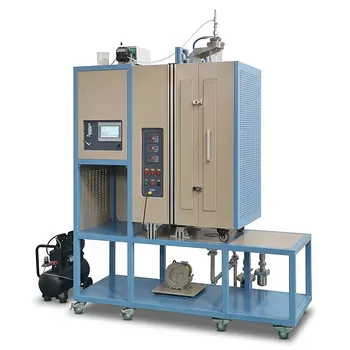
1500C Three Zone Vertical Pyrolysis Furnace for Nanoparticle Synthesis and Advanced Oxide Coating
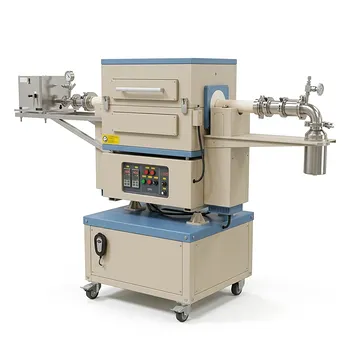
1500C Max Dual Zone Rotary Tube Furnace with 60 mm OD Alumina Tube for High Temperature Material Synthesis

High Temperature 1700C Vertical Tube Furnace for Powder Spherification and Material Sintering

Compact High Temperature 1600C Tube Furnace with 50mm Alumina Tube and Vacuum Flanges for Material Sintering
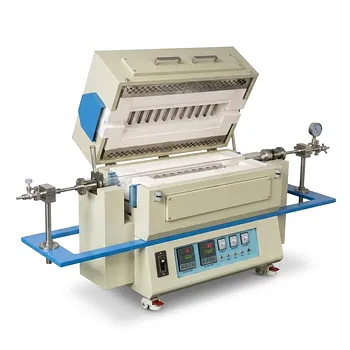
High Temperature Dual Zone Rotating Tube Furnace 1500C Silicon Carbide Heating for Advanced Material Synthesis
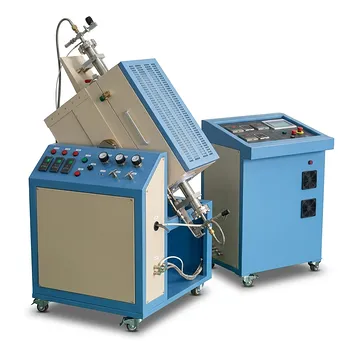
1100C High Pressure Rocking Tube Furnace with 2 Inch Super Alloy Processing Tube for Material Synthesis

High Temperature Tube Furnace 1500C with Sliding Flanges and 50mm OD for Rapid Thermal Processing Fast Heating and Cooling

High Temperature 1700C Tube Furnace with 4 Inch OD Alumina Tube and Vacuum Sealing Flanges

High Temperature 1700C Tube Furnace with High Vacuum Turbomolecular Pump System and Multi Channel Mass Flow Controller Gas Mixer
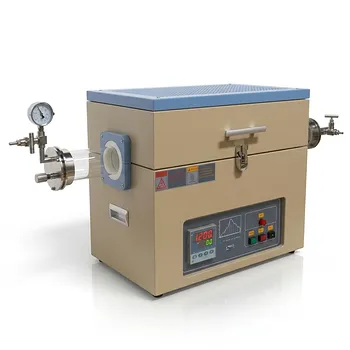
High Temperature 1200C Split Tube Furnace with Optional Quartz Tube Sizes and Vacuum Sealing Flanges for Material Science Research
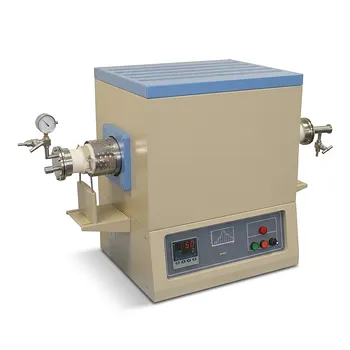
1700C High Temperature Alumina Tube Furnace with 18 Inch Heated Zone and Vacuum Sealing Flanges

1750°C High Temperature Benchtop Vacuum Atmosphere Tube Furnace with Kanthal Super 1800 Heating Elements and 60mm Alumina Processing Tube

High Temperature Automated 5 Inch Tube Furnace for Autonomous Material Research and Advanced Laboratory R&D

High Temperature 1700C Six Zone Split Tube Furnace with Alumina Tube and Water Cooled Flanges

High Temperature 1700C Benchtop Tube Furnace with 5 Inch Heating Zone High Purity Alumina Tube and Vacuum Sealing Flanges

1800C High Temperature Compact Vacuum Tube Furnace with 60mm OD Alumina Tube and Kanthal MoSi2 Heating Elements

1700C Hydrogen Gas Tube Furnace with 60mm Alumina Process Tube and Integrated Hydrogen Safety Detector
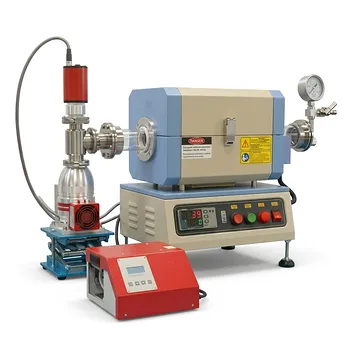
High Vacuum Compact Tube Furnace 1200C with Integrated Turbo Pump System and 8 Inch Heating Zone
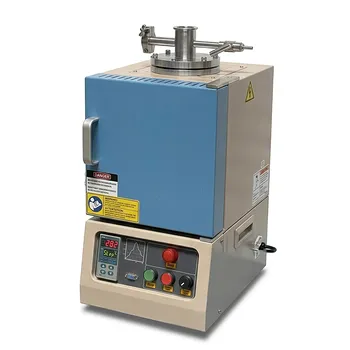
High Temperature Hybrid Muffle and Tube Furnace with Vacuum Capability and PID Control