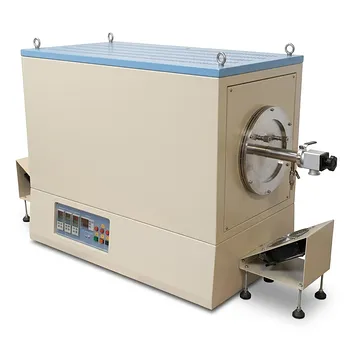
Why use CVD and a tube furnace for Pd3P0.95/NC catalyst phosphidation? Ensure high phase purity and performance.
Updated 3 months ago
The Chemical Vapor Deposition (CVD) method using a tube furnace is essential for synthesizing Pd3P0.95/NC catalysts because it facilitates a highly uniform, non-contact gas-solid reaction. This setup ensures that phosphorus atoms infiltrate the palladium lattice at a precise molecular level, creating a stable crystalline phase without compromising the catalyst's delicate nanostructure or introducing liquid-phase impurities.
Core Takeaway: The tube furnace acts as a precision reactor that transforms a precursor into a high-performance catalyst by controlling the thermal environment and gas flow. This method is required to achieve phase purity and maintain a high surface area, which are impossible to achieve through traditional liquid-phase or direct-mixing techniques.
Achieving Phase Purity and Uniformity
The primary challenge in phosphidation is ensuring that phosphorus integrates into the metal lattice evenly rather than forming localized clusters or incomplete phases.
Uniform Gas-Solid Interaction
The tube furnace provides a stable gas flow channel where phosphine gas ($PH_3$), generated from the decomposition of sodium hypophosphite, can pass over the Pd/NC precursor. This creates a consistent concentration of reactants across the entire surface of the catalyst, leading to the formation of the specific Pd3P0.95 phase.
Precise Thermal Management
To achieve the correct stoichiometry, the reaction must occur at exactly 250 °C with a constant heating rate of 5 °C/min. The tube furnace's ability to maintain this specific temperature zone prevents the formation of unwanted side products or incomplete phosphorus infiltration.
Elimination of Impurity Residues
Unlike liquid-phase synthesis, which often leaves behind chemical residues or solvents, the CVD process is inherently "clean." Because only the gaseous phosphorus source interacts with the solid palladium, the resulting Pd3P0.95/NC catalyst remains free of the impurities that typically degrade electrochemical performance.
Preservation of Catalyst Morphology
Catalytic efficiency is deeply tied to the physical structure and surface area of the material, which can be easily damaged by aggressive chemical treatments.
Non-Contact Gas-Phase Modification
By placing the sodium hypophosphite upstream and the catalyst downstream, the system uses argon (Ar) carrier gas to transport phosphorus vapor. This "non-contact" approach allows the chemical transformation to occur without the physical stress of stirring or the surface tension of liquids.
Preventing Particle Agglomeration
High-temperature sintering often causes nanoparticles to fuse together, reducing the active surface area. The controlled CVD environment in a tube furnace prevents this agglomeration, preserving the needle-like or sheet-like shapes that provide the abundant interfacial active sites necessary for the catalyst.
Maintaining the NC Support Structure
The Nitrogen-doped Carbon (NC) support is sensitive to harsh environments. The CVD method allows for rapid phosphidation of the palladium surface without damaging the underlying carbon framework, ensuring the catalyst retains its structural integrity and conductivity.
Understanding the Trade-offs
While the tube furnace CVD method is superior for catalyst quality, it does present specific operational challenges.
The primary trade-off is the complexity of the experimental setup, which requires precise control over vacuum levels, gas flow rates, and spatial positioning of precursors. Improper placement of the sodium hypophosphite relative to the sample can lead to uneven phosphidation or "dead zones" where the reaction is incomplete.
Furthermore, while the gas-phase reaction is cleaner, it requires careful handling of toxic precursors like $PH_3$. This necessitates specialized safety equipment and sealing performance that simpler synthesis methods do not require.
How to Apply This to Your Project
When implementing a CVD phosphidation process, your configuration should be dictated by your specific material goals.
- If your primary focus is phase purity: Prioritize the use of a dual-zone furnace to independently control the phosphorus sublimation temperature and the catalyst reaction temperature.
- If your primary focus is high surface area: Ensure the heating rate is kept low (e.g., 5 °C/min) to prevent thermal shock and agglomeration of the nanoparticles.
- If your primary focus is scalability: Optimize the argon carrier gas flow rate to ensure that the $PH_3$ concentration remains uniform across larger batches of the Pd/NC precursor.
By leveraging the precision of a tube furnace, you can engineer catalysts with molecular-level accuracy while preserving the essential nanostructures that drive performance.
Summary Table:
| Feature | Advantage in Phosphidation | Technical Requirement |
|---|---|---|
| Gas-Solid Interaction | Uniform phosphorus infiltration into Pd lattice | Stable $PH_3$ gas flow in a tube reactor |
| Thermal Precision | Prevents unwanted side products/phases | Exact 250 °C with 5 °C/min heating rate |
| Clean Synthesis | Eliminates liquid-phase impurity residues | Gaseous precursor ($PH_3$) interaction |
| Morphology Control | Prevents nanoparticle agglomeration | Non-contact gas-phase modification |
| Support Integrity | Preserves Nitrogen-doped Carbon (NC) framework | Controlled atmosphere & precise heat zones |
Precision Thermal Solutions for Advanced Catalyst R&D
Achieving the perfect Pd3P0.95/NC catalyst requires more than just a recipe—it requires the rigorous thermal precision of a high-performance reactor. THERMUNITS is a leading manufacturer of high-temperature laboratory equipment, providing the specialized Tube Furnaces and CVD/PECVD systems essential for successful phosphidation and material synthesis.
From Atmosphere and Vacuum furnaces to custom Rotary and Hot Press systems, our equipment is engineered to give researchers and industrial R&D teams total control over gas flow, heating rates, and phase purity.
Ready to elevate your material science research? Contact THERMUNITS Today to discuss how our thermal processing solutions can optimize your next project!
References
- Wenyuan Zhao, Bang‐An Lu. Phosphorus-Doping Enables the Superior Durability of a Palladium Electrocatalyst towards Alkaline Oxygen Reduction Reactions. DOI: 10.3390/ma17122879
Mentioned Products
- Split Chamber CVD Tube Furnace with Vacuum Station Chemical Vapor Deposition System Machine
- 5 Inch Rotary Tube Furnace with Automatic Feeding and Receiving System 1200C Three Zone CVD Powder Processing
- 1200C Max Dual Sliding Tube Furnace with 50 mm Tube Flanges for CVD
- High Temperature 1700C Tube Furnace with High Vacuum Turbomolecular Pump System and Multi Channel Mass Flow Controller Gas Mixer
- Vertical Openable Tube Furnace 0-1700c High Temperature Laboratory System for CVD and Vacuum Heat Treatment
People Also Ask
- Why is a Tube Furnace typically utilized for CVD? Achieve Precision in Graphene and 2D Material Synthesis
- What is the function of CVD furnaces in graphene prep? Enhancing Photodetector Charge Transport
- CVD Tube Furnace Advantages for Pd-P Catalyst Durability: Precision Control for 40,000+ Cycles
- How does a Chemical Vapor Deposition (CVD) tube furnace facilitate synchronized nitridation? Precision Nano-Engineering.
- How do CVD furnace cooling rates influence graphene-platinum residual stress? Optimize Material Quality

Tech Team · ThermUnits
Last updated on Jun 03, 2026
Related Products
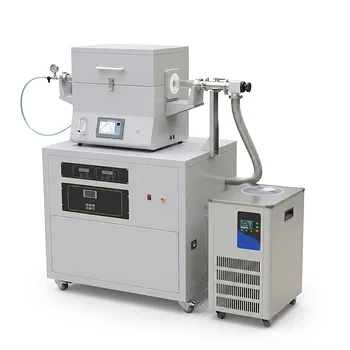
Split Chamber CVD Tube Furnace with Vacuum Station Chemical Vapor Deposition System Machine
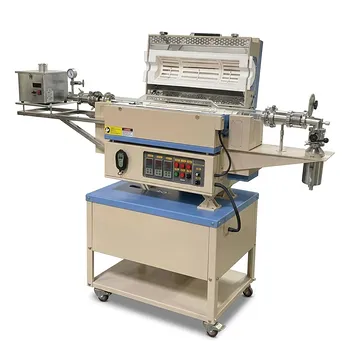
5 Inch Rotary Tube Furnace with Automatic Feeding and Receiving System 1200C Three Zone CVD Powder Processing
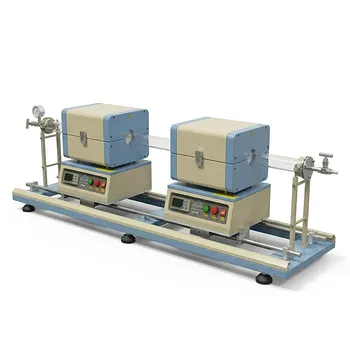
1200C Max Dual Sliding Tube Furnace with 50 mm Tube Flanges for CVD

High Temperature 1700C Tube Furnace with High Vacuum Turbomolecular Pump System and Multi Channel Mass Flow Controller Gas Mixer
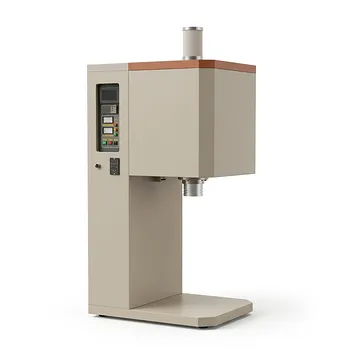
Vertical Openable Tube Furnace 0-1700c High Temperature Laboratory System for CVD and Vacuum Heat Treatment
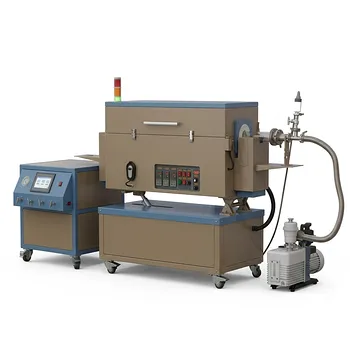
5 Inch Three Zone Rotary Tube Furnace with Integrated Gas Delivery System and 1200C Capability for Advanced Material CVD Processing
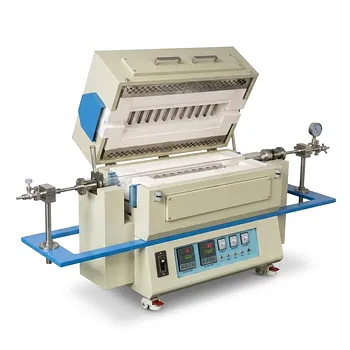
High Temperature Dual Zone Rotating Tube Furnace 1500C Silicon Carbide Heating for Advanced Material Synthesis
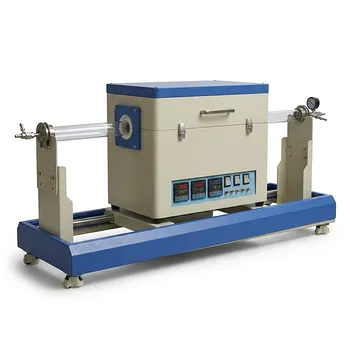
Double Temperature Zone Double Cover Tube Furnace for High Temperature CVD and Vacuum Annealing
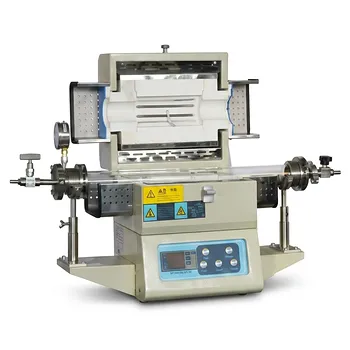
High Temperature 1200C Split Tube Furnace for CVD Research and Vacuum Atmosphere Heat Treatment
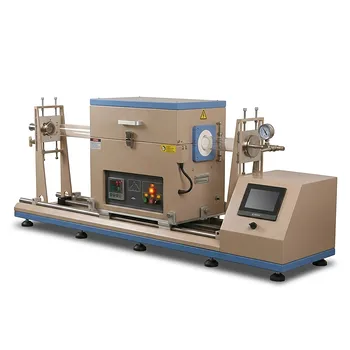
1200C Sliding Tube Furnace for Rapid Thermal Processing and CVD Graphene Growth with 100mm OD Capacity
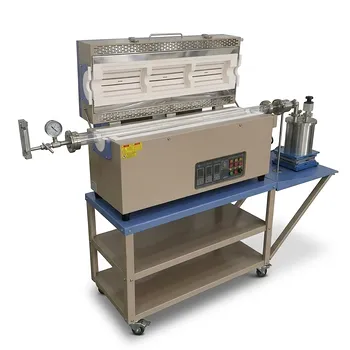
5 Inch Two Zone Rotary Tube Furnace 1100C for Powder CVD and Material Synthesis
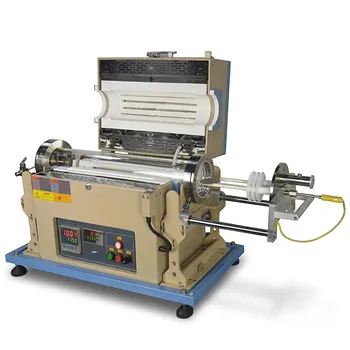
1200°C High Temperature 4 Inch Tube Furnace with Sliding Flange for CVD Systems
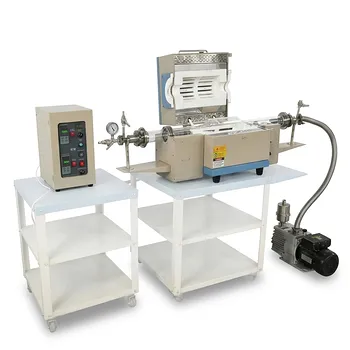
Two Zone Rotary Tube Furnace for Powder CVD Coating and Core Shell Material Synthesis 1100C
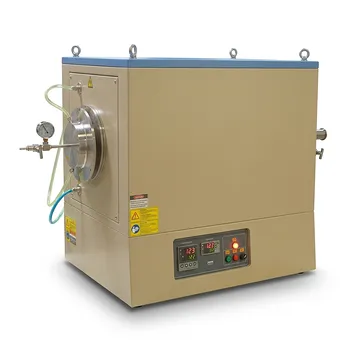
1100°C Large Diameter Quartz Tube Furnace with 24 Inch Heating Zone and Water Cooled Flanges
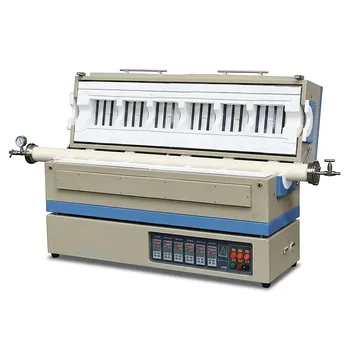
Six Zone Split Tube Furnace with Alumina Tube and Vacuum Flanges for 1500C High Temperature Thermal Processing and CVD
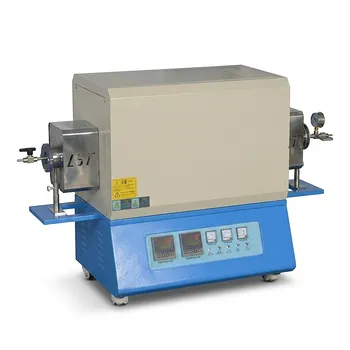
High Temperature Dual Zone Vacuum Tube Furnace for Material Research and CVD Processing

High Temperature 1700C Benchtop Tube Furnace with 5 Inch Heating Zone High Purity Alumina Tube and Vacuum Sealing Flanges
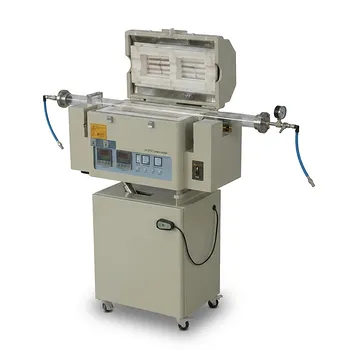
Double Temperature Revolving Tube Furnace with Precision Rotation and Adjustable Inclination for Advanced Material Research
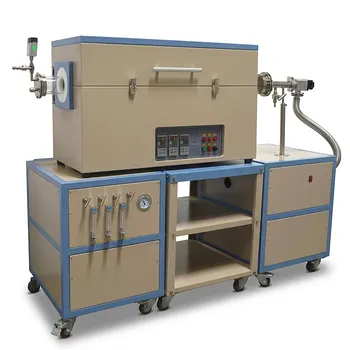
Three Zone Quartz Tube Furnace with 3 Channel Gas Mixer Vacuum Pump and Anti Corrosive Vacuum Gauge