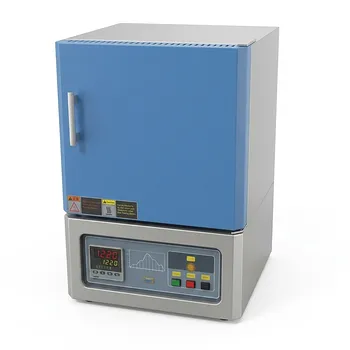
What is the function of industrial box muffle furnaces in the high-temperature corrosion assessment of ZrO2-Dy3TaO7 coatings?
Updated 3 months ago
Industrial box muffle furnaces serve as the primary environmental simulator for evaluating the durability of advanced ceramic coatings. In the specific context of $ZrO_2-Dy_3TaO_7$ assessment, these furnaces provide a stable, long-term, high-temperature static oxidation environment, typically maintaining temperatures such as $1200^\circ\text{C}$ for durations up to 1000 hours. Their role is to ensure precise thermal control and insulation, which are critical for accurately studying the interface reaction kinetics between the ceramic coating and corrosive media like molten copper or salts.
The core function of an industrial box muffle furnace is to provide a controlled, high-precision thermal field that allows for the long-term observation of material degradation. By maintaining constant extreme temperatures, the furnace enables researchers to simulate years of operational wear in a compressed experimental timeframe.
Simulating High-Temperature Erosion Environments
Maintaining Long-Term Thermal Stability
The primary requirement for assessing $ZrO_2$-based coatings is the ability to maintain a constant temperature, such as $1200^\circ\text{C}$, over extended periods. Industrial muffle furnaces use advanced insulation and heating elements to ensure that the thermal environment remains static for up to 1000 hours. This stability is essential because even minor temperature fluctuations can skew data regarding how quickly corrosive agents penetrate the coating.
Facilitating Interface Reaction Kinetics
To understand how $Dy_3TaO_7$ interacts with molten metals or salts, the furnace must provide a uniform thermal field. This uniformity allows for the study of reaction kinetics at the interface where the ceramic layer meets the corrosive substance. Without high-precision temperature control, it would be impossible to determine whether coating failure was caused by material properties or inconsistent heating.
Static Oxidation and Corrosive Exposure
The furnace creates an environment where samples, often placed in ceramic crucibles, can be submerged in corrosive powders like copper or sodium salts. As the furnace heats these materials to their melting points, it facilitates the acidic fluxing corrosion process. This allows for an accurate assessment of the coating's service life and its resistance to chemical penetration under simulated operational conditions.
Material Synthesis and Structural Evolution
Inducing Phase Transformation
Beyond corrosion testing, these furnaces are vital for the initial preparation of the coating materials. By providing controlled thermal energy, they facilitate the transformation of amorphous precursors into phase-pure tetragonal zirconia ($t-ZrO_2$) or stable fluorite structures. This ensures that the material being tested for corrosion has the correct crystalline structure to begin with.
Driving Atomic Diffusion and Densification
High-temperature treatment within the furnace drives long-range atomic diffusion, which is necessary for densification sintering. In $ZrO_2$ systems, this process eliminates residual stresses and promotes grain fusion growth. A well-executed sintering cycle in a muffle furnace determines the final grain size and mechanical strength of the coating, which directly impacts its corrosion resistance.
Optimizing Surface Porosity
The furnace environment allows for the fine-tuning of a coating's physical characteristics, such as pore size and through-pore rate. By controlling the heating and cooling rates, engineers can optimize the surface morphology to better resist the infiltration of molten contaminants. This level of control is essential for developing coatings that can withstand the harsh environments of gas turbines or industrial engines.
Understanding the Trade-offs
Static vs. Dynamic Limitations
While box muffle furnaces are excellent for static oxidation tests, they do not simulate the high-velocity gas flows found in actual turbine environments. This means that while chemical corrosion resistance can be measured, the effects of mechanical erosion from fast-moving particles are often excluded.
Thermal Gradient Discrepancies
In a muffle furnace, the entire sample is typically heated uniformly, whereas in real-world applications, there is often a thermal gradient across the coating. This can lead to a different stress profile than what the material would experience in service. Researchers must account for this "isothermal" limitation when interpreting life-cycle data.
Atmosphere Control Constraints
Standard muffle furnaces operate in an air atmosphere, which may not capture the complex combustion chemistry of an engine. While they are perfect for assessing basic oxidation and molten salt corrosion, they may require specialized gas-tight configurations to simulate reducing or specific chemical environments.
How to Apply This to Your Project
When utilizing an industrial box muffle furnace for coating assessment, your methodology should align with your specific testing objectives.
- If your primary focus is corrosion resistance: Prioritize furnaces with high temperature-control precision ($\pm 1^\circ\text{C}$) to ensure that interface reaction rates remain consistent throughout the 1000-hour test.
- If your primary focus is phase stability: Use a programmable furnace that allows for precise ramp-up and cool-down cycles to avoid inducing thermal shock or unwanted phase transformations in the $ZrO_2$ matrix.
- If your primary focus is material synthesis: Ensure the furnace can reach and maintain temperatures above $1500^\circ\text{C}$ to facilitate the long-range atomic diffusion necessary for high-density ceramic sintering.
By mastering the controlled thermal environment of the muffle furnace, you can transform raw ceramic powders into high-performance, corrosion-resistant barriers.
Summary Table:
| Key Function | Technical Detail | Impact on Coating Assessment |
|---|---|---|
| Thermal Stability | Maintains $1200^{\circ}C$ for up to 1000h | Ensures accurate long-term durability data. |
| Reaction Kinetics | High-precision thermal field | Allows study of molten salt/metal interface reactions. |
| Phase Control | Regulated heating/cooling cycles | Facilitates transformation into stable crystal structures. |
| Densification | Long-range atomic diffusion | Enhances mechanical strength and corrosion resistance. |
| Morphology | Optimized sintering parameters | Controls pore size to prevent corrosive infiltration. |
Advance Your Material Research with THERMUNITS
Precision is the foundation of breakthroughs in material science. THERMUNITS is a premier manufacturer of high-temperature laboratory equipment, providing the advanced thermal processing solutions required for rigorous industrial R&D.
Whether you are assessing advanced ceramic coatings or developing new alloys, our comprehensive range—including Muffle, Vacuum, Atmosphere, Tube, and Rotary furnaces, as well as CVD/PECVD systems and Vacuum Induction Melting (VIM) units—delivers the temperature uniformity and stability your project demands.
Ready to elevate your lab’s capabilities? Contact our technical experts today to find the perfect thermal solution for your high-temperature applications.
References
- Dongbo Li, Guizhong Yang. Synthesis and thermophysical properties of rare-earth tantalate ZrO<sub>2</sub>-Dy<sub>3</sub>TaO<sub>7</sub> ceramics. DOI: 10.1088/1742-6596/2842/1/012065
Mentioned Products
- Industrial Large Box Furnace 1700C 216L High Temp Muffle Sintering System
- Five Sided Heating Muffle Furnace High Uniformity 1200C Lab Box Furnace 27L Alumina Fiber Chamber
- 1200°C Five Side Heating Atmosphere Controlled Muffle Furnace 64 Liter High Uniformity Box Furnace for Material Synthesis
- Atmosphere Controlled Muffle Furnace 1700C Maximum Temperature 80L High Capacity Vacuum Inert Gas Box Furnace
- 1650C High Temperature Atmosphere Controlled Box Furnace with 65L Chamber for Advanced Material Sintering and Industrial Heat Treatment
People Also Ask
- Why is an industrial high-temperature box furnace used for the pre-sintering of calcium silicate carriers? Key Benefits
- What is the role of an industrial box furnace in the oxidation and reduction processes of nickel electrodes? - Key Roles
- What is the role of a high-temperature box furnace in the solid-state synthesis of Europium-doped M3MgSi2O8 phosphors?
- How does the temperature control precision of a high-temperature sintering furnace affect Na1+xLa1-xZr2O6-δ ceramics?
- How does a high-temperature sintering furnace environment enhance NdFeB magnets? Achieve 98%+ density with precision.

Tech Team · ThermUnits
Last updated on Jun 02, 2026
Related Products
Industrial Large Box Furnace 1700C 216L High Temp Muffle Sintering System
Five Sided Heating Muffle Furnace High Uniformity 1200C Lab Box Furnace 27L Alumina Fiber Chamber
1200°C Five Side Heating Atmosphere Controlled Muffle Furnace 64 Liter High Uniformity Box Furnace for Material Synthesis
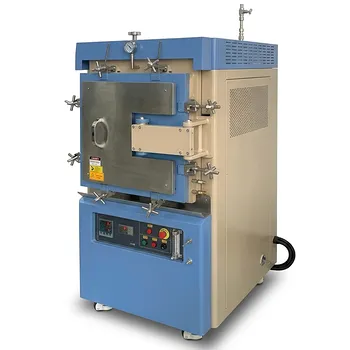
Atmosphere Controlled Muffle Furnace 1700C Maximum Temperature 80L High Capacity Vacuum Inert Gas Box Furnace
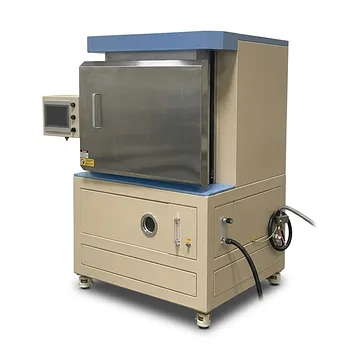
1650C High Temperature Atmosphere Controlled Box Furnace with 65L Chamber for Advanced Material Sintering and Industrial Heat Treatment
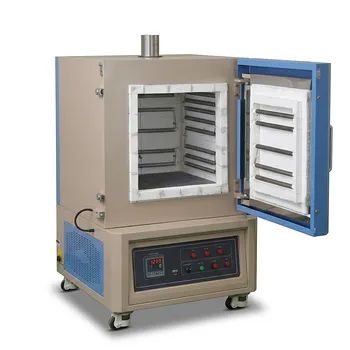
1200C High Temperature 125L Muffle Furnace 5 Side Heating for Large Batch Sintering with Optional Alloy Debinding Chamber
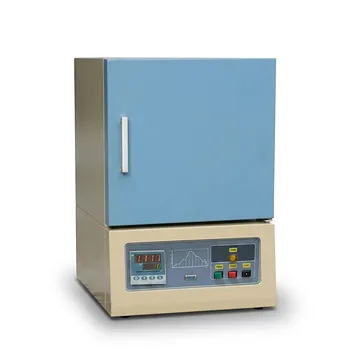
Ultra High Temperature Bench Top Muffle Furnace 1750C Sintering System with Kanthal Super Heating Elements and Precision Digital Control
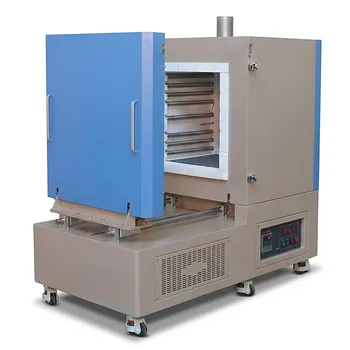
1200C Five Side Heating Muffle Furnace with Sliding Door 125L Volume High Temperature Heat Treatment System for Large Scale Sintering and Annealing
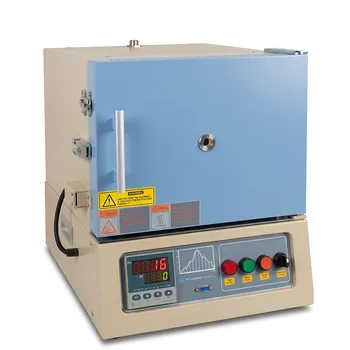
1200C Muffle Furnace 12x8x5 7.2L Heating Chamber with Quartz Observation Window and Vent Port
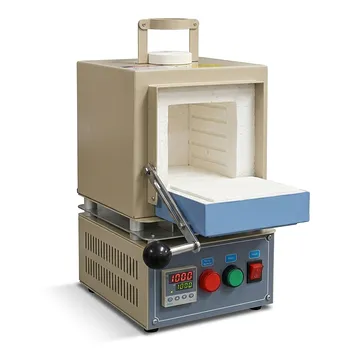
Compact 1000C Muffle Furnace with Programmable Controller and 2 Inch Top Port for Vacuum and Atmosphere Material Research
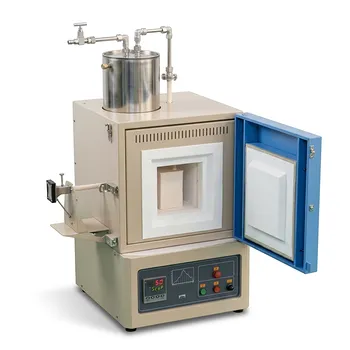
High Temperature Bench Top Muffle Furnace 1700C with Integrated Evaporating Particle Collection and 8x8x8 Alumina Fiber Chamber
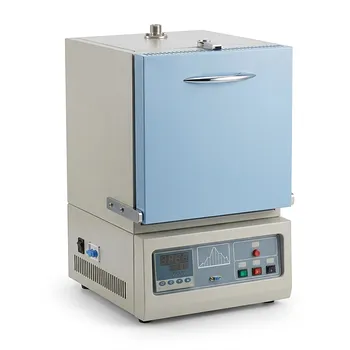
1750C Compact Muffle Furnace 1.7L Ultra High Temperature Laboratory Sintering System for Advanced Ceramics and Material Science Research
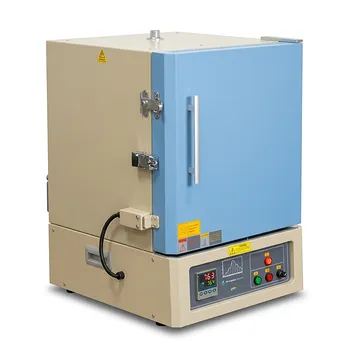
Large Capacity 1200C Muffle Furnace 64 Liter Chamber with Digital PID Controller and Built In Venting Port
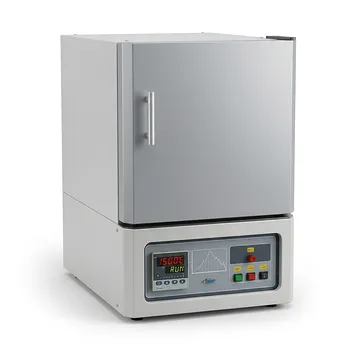
High Temperature 1500C Benchtop Muffle Furnace 3.6L Alumina Fiber Chamber Programmable Controller Sintering Annealing Carbonization Thermal Processing System
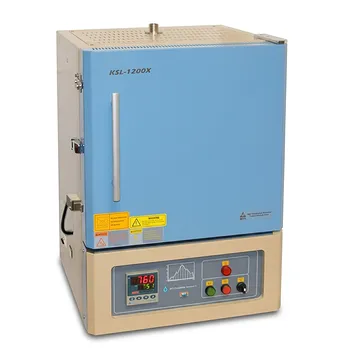
High Temperature 1200C Muffle Furnace 27L Volume 12x12x12 Chamber with Programmable PID Controller for Laboratory Material Science
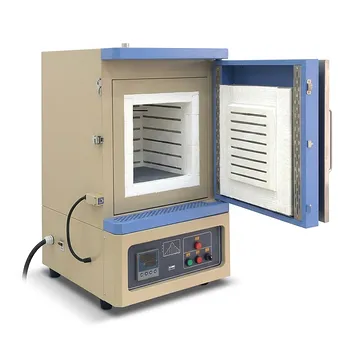
Five Side Heating Muffle Furnace High Purity Alumina Fiber 27L Chamber 1200C High Temperature Thermal Processing System for Sintering Annealing and Materials Research
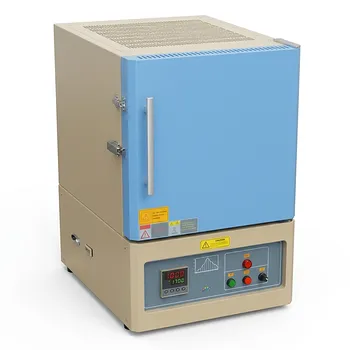
Large Bench Top 1700C High Temperature Muffle Furnace with 19L Chamber for Advanced Material Sintering and Annealing
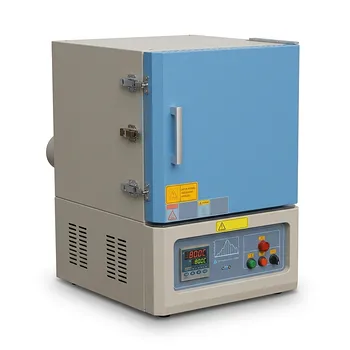
1800C Bench Top Muffle Furnace 18 Liters with Kanthal Super 1900 Heating Elements for High Purity Ceramic Sintering and Material Research
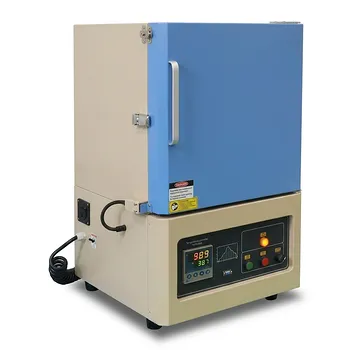
1200°C High Temperature Muffle Furnace 19L Chamber with 50 Segment Programmable Controller