What is the function of introducing hydrogen gas (H2) during Tungsten film selenization? Optimize WSe2 Crystal Growth
Updated 3 months ago
Introducing hydrogen gas ($H_2$) during the selenization of Tungsten films serves primarily as a powerful reducing agent. It targets and eliminates the native oxide layer ($WO_{3-x}$) that naturally forms on the Tungsten surface, transforming it into chemically reactive intermediate states. This process is essential for enhancing the bonding affinity between Selenium atoms and the Tungsten substrate, which directly facilitates the nucleation and high-quality growth of Tungsten Diselenide ($WSe_2$) crystals.
Core Takeaway: Hydrogen acts as a chemical catalyst for surface preparation; by reducing inactive surface oxides, it creates a clean, high-energy environment necessary for the uniform and crystalline synthesis of $WSe_2$.
The Chemical Mechanics of Surface Reduction
Eliminating the Passive Oxide Layer
Tungsten films naturally develop a stable oxide layer ($WO_3$ or $WO_{3-x}$) when exposed to air, which acts as a diffusion barrier. Hydrogen gas reacts with this oxygen at high temperatures, converting the oxides into water vapor and leaving behind a chemically "fresh" metal surface. Without this step, the Selenium atoms cannot effectively bond with the underlying Tungsten, leads to poor film adhesion and fragmented crystal domains.
Creation of Reactive Intermediate States
The reduction process does not always jump directly from oxide to pure metal; it often creates highly reactive transition states. These intermediates possess lower activation energy barriers for the subsequent selenization reaction. This increased reactivity ensures that the Selenium atoms can successfully "anchor" to the surface during the initial stages of the thermal process.
Impact on $WSe_2$ Nucleation and Growth
Promoting High-Density Nucleation
Uniform crystal growth depends on having a high density of active nucleation sites across the entire film. By stripping away surface contaminants and oxides, $H_2$ ensures that nucleation occurs simultaneously across the substrate. This synchronized start prevents the formation of isolated, oversized grains and instead promotes the growth of a continuous, high-quality $WSe_2$ layer.
Enhancing Atomic Diffusion and Bonding
A clean surface allows Selenium atoms to diffuse more freely and settle into the correct lattice positions. The absence of oxygen atoms, which would otherwise compete for bonding sites, allows for stronger Tungsten-Selenium (W-Se) covalent bonds. This results in a significant improvement in the final mechanical properties and electronic performance of the synthesized thin film.
Understanding the Trade-offs and Risks
Managing Water Vapor Byproducts
The reduction of tungsten oxide by hydrogen produces water vapor as a byproduct. If not properly evacuated using a carrier gas or vacuum system, excess moisture can lead to unwanted side reactions or even re-oxidation of the film at specific temperatures. Precise control of the hydrogen flow rate is required to balance reduction efficiency with the removal of these gaseous byproducts.
The Risk of Over-Etching or Volatilization
While hydrogen is effective for cleaning, an excessive concentration can behave as an etchant. At very high temperatures, $H_2$ may cause the loss of Selenium species or negatively affect the stoichiometry of the growing $WSe_2$ film. Furthermore, the use of high-pressure hydrogen requires rigorous safety protocols to manage flammability and prevent furnace atmosphere contamination.
How to Apply This to Your Project
When optimizing your selenization process, the introduction of hydrogen should be calibrated based on your specific film thickness and desired crystal quality.
- If your primary focus is Maximum Crystal Grain Size: Maintain a steady $H_2$ flow during the initial heating phase to ensure a perfectly clean surface before Selenium vapor reaches the substrate.
- If your primary focus is Film Purity and Stoichiometry: Use a dilute Hydrogen/Argon mix (e.g., 5% $H_2$) to provide enough reducing power for oxide removal without risking excessive etching of the Selenium atoms.
- If your primary focus is Substrate Adhesion: Prioritize the reduction step to ensure the Selenium bonds directly to the metallic Tungsten, preventing the delamination often caused by trapped interfacial oxides.
By strategically using hydrogen as a reducing agent, you transform a passive Tungsten surface into a highly reactive template for superior semiconductor synthesis.
Summary Table:
| Aspect | Role of Hydrogen ($H_2$) | Impact on Selenization |
|---|---|---|
| Primary Function | Reducing Agent | Eliminates native oxide ($WO_{3-x}$) layers |
| Surface State | Preparation | Creates chemically reactive metallic sites |
| Nucleation | Facilitation | Ensures high-density, uniform crystal seeds |
| Crystal Quality | Enhancement | Strengthens W-Se bonds for high-purity $WSe_2$ |
| Process Risk | Management | Requires controlled flow to avoid over-etching |
Elevate Your Material Research with THERMUNITS
Precise thermal control and atmospheric purity are critical for successful 2D material synthesis like $WSe_2$. THERMUNITS is a leading manufacturer of high-temperature laboratory equipment designed specifically for material science and industrial R&D.
We provide a comprehensive range of thermal processing solutions to meet your exact specifications, including:
- Advanced CVD/PECVD Systems for thin-film synthesis.
- Vacuum, Atmosphere, and Tube Furnaces for controlled selenization.
- Muffle, Rotary, and Hot Press Furnaces for diverse heat treatments.
- Specialized Equipment: Dental Furnaces, Electric Rotary Kilns, and Vacuum Induction Melting Furnaces (VIM).
Ready to optimize your lab’s heat treatment efficiency? Our experts are here to help you select the right furnace for your R&D projects.
Contact THERMUNITS Today to Request a Quote
References
- Kathryn M. Neilson, Eric Pop. Toward Mass Production of Transition Metal Dichalcogenide Solar Cells: Scalable Growth of Photovoltaic-Grade Multilayer WSe<sub>2</sub> by Tungsten Selenization. DOI: 10.1021/acsnano.4c03590
Mentioned Products
- Radio Frequency Plasma Enhanced Chemical Vapor Deposition RF PECVD System for Laboratory and Industrial Thin Film Growth
- Compact Spark Plasma Sintering SPS Furnace 1200 C Max 100 MPa Pressure High Speed Sintering System for Material Research
- High Temperature 800C Rapid Thermal Processing Furnace with Rotating Sample Holder for Close Spaced Sublimation and Thin Film Solar Cell Research
- Two Zones CSS Furnace for Rapid Thermal Processing Thin Film Coating 3 Inch Diameter 650C
- HFCVD Machine System for Nano Diamond Coating on Drawing Dies and Industrial Tools
People Also Ask
- What are the advantages of PECVD systems for nano flame retardant films? Protect Heat-Sensitive Polymers with Precision
- How does PECVD differ from conventional thermal CVD? Key Advantages of Low-Temperature Deposition for R&D
- What is the role of CVD/PECVD systems in the research of optoelectronic materials and functional coatings? Expert Guide
- What are the benefits of using PECVD for optical and photonic coatings? Achieve High-Precision Thin-Film Deposition
- How do RF frequency and power settings influence the characteristics of a PECVD process? Master Quality & Efficiency

Tech Team · ThermUnits
Last updated on Jun 02, 2026
Related Products
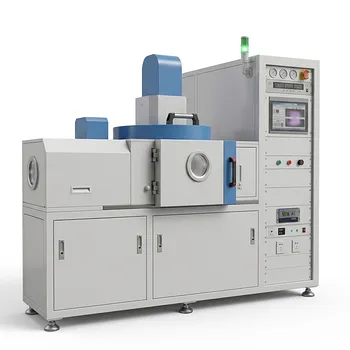
Radio Frequency Plasma Enhanced Chemical Vapor Deposition RF PECVD System for Laboratory and Industrial Thin Film Growth
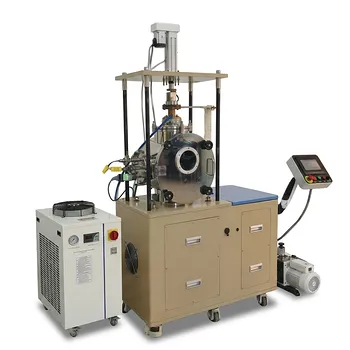
Compact Spark Plasma Sintering SPS Furnace 1200 C Max 100 MPa Pressure High Speed Sintering System for Material Research
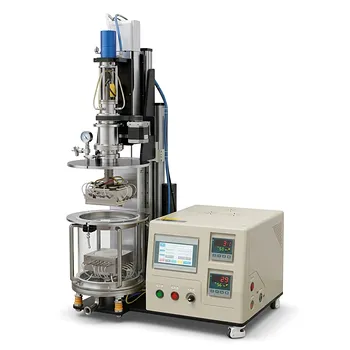
High Temperature 800C Rapid Thermal Processing Furnace with Rotating Sample Holder for Close Spaced Sublimation and Thin Film Solar Cell Research
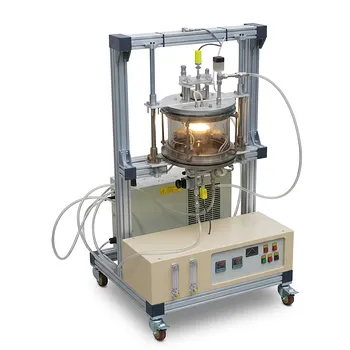
Two Zones CSS Furnace for Rapid Thermal Processing Thin Film Coating 3 Inch Diameter 650C