What role do by-product desorption and evacuation play in CVD film quality? Key Factors for High-Purity Films
Updated 5 months ago
By-product desorption and evacuation are the final, essential safeguards in the Chemical Vapor Deposition (CVD) process that directly determine a film's purity, stoichiometry, and structural integrity. By ensuring volatile residues like hydrogen chloride (HCl) or hydrogen ($H_2$) are fully removed from the substrate and chamber, these steps prevent the re-incorporation of impurities and unwanted chemical side reactions that would otherwise degrade the solid deposit.
Core Takeaway: Efficient desorption and evacuation function as the "purification" phase of CVD; without the rapid removal of chemical waste products, the resulting film will suffer from chemical defects, compromised optical properties, and unpredictable growth rates.
The Mechanics of By-Product Removal
The CVD process is a multi-step sequence where the removal of waste is just as important as the delivery of precursors. If by-products remain on the surface, they occupy active sites, preventing new precursor molecules from bonding and reacting.
Completing the Chemical Cycle
The deposition cycle concludes only after the surface reaction forms a solid and releases volatile by-products. These by-products must detach (desorb) from the substrate and be swept away by continuous gas flow or vacuum pumping.
Volatility and Surface Clearance
For a CVD process to be successful, the by-products must have high vapor pressure at the reaction temperature. This ensures they transition easily into the gas phase, leaving the surface clean for the next layer of atoms.
Impact on Film Properties and Quality
The quality of a CVD film is measured by how closely it matches its intended chemical and physical specifications. Incomplete evacuation of by-products introduces variables that can cause a high-performance film to fail.
Maintaining Chemical Stoichiometry
Stoichiometry refers to the precise ratio of elements within the film. If by-products are not evacuated, they can become trapped in the growing lattice, leading to non-stoichiometric films that lack the required mechanical or electrical properties.
Preventing Unwanted Etch-Back
Certain by-products, such as hydrogen chloride, can be highly reactive. If they linger in the chamber, they may engage in etch-back effects, where the by-product actually re-reacts with and removes the newly deposited film, leading to poor thickness control.
Optical Precision and Purity
In optical applications, even trace impurities can increase absorption rates or shift the refractive index. Efficient removal of by-products is necessary to achieve the low absorption (less than 0.1%) required for high-end multilayer optical stacks and infrared detectors.
Understanding the Trade-offs and Risks
Optimizing the evacuation process is a balancing act between film quality and system throughput. Failure to manage this balance can lead to several common pitfalls in a production environment.
The Risk of Impurity Re-incorporation
If the vacuum pumping speed is insufficient, the concentration of by-products near the substrate remains high. This increases the statistical likelihood that an impurity molecule will be buried by incoming precursors, creating point defects in the crystal structure.
Pumping Speed vs. Precursor Utilization
Increasing the gas flow to sweep away by-products more effectively can sometimes reduce the residence time of the actual precursors. This may lead to lower chemical efficiency and higher costs, as more precursor gas is pumped out before it has a chance to react.
How to Apply This to Your Project
Achieving high-quality CVD films requires a specific focus on the "exit" strategy of your chemical reactions. Your approach should vary based on the sensitivity of your final application.
- If your primary focus is Optical Performance: Ensure the highest possible vacuum integrity and flow rates to keep absorption rates below 0.1% and maintain a precise refractive index.
- If your primary focus is Epitaxial Growth (MOCVD): Prioritize the rapid desorption of organic by-products to ensure high-purity layers with minimal defect density for optoelectronic devices.
- If your primary focus is Geometric Uniformity: Focus on consistent gas flow patterns across the entire substrate to ensure by-products are evacuated evenly, preventing localized thickness variations.
By mastering the final stage of the CVD sequence, you ensure that the chemical purity of your environment matches the technical requirements of your deposit.
Summary Table:
| Key Aspect | Impact on Film Quality | Practical Benefit |
|---|---|---|
| Desorption | Clears active surface sites | Enables continuous growth and precursor bonding |
| Evacuation | Removes volatile residues (HCl, H2) | Prevents re-incorporation of impurities and defects |
| Stoichiometry | Maintains precise chemical ratios | Ensures consistent electrical and mechanical properties |
| Etch-Back Prevention | Limits reactive by-product dwell time | Improves thickness control and surface uniformity |
| Optical Purity | Reduces trace contaminants | Achieves low absorption rates (less than 0.1%) |
Elevate Your Thin Film Quality with THERMUNITS
As a global leader in high-temperature laboratory equipment, THERMUNITS understands that the success of CVD/PECVD processes depends on more than just heating. Our advanced thermal processing solutions—ranging from Tube and Vacuum Furnaces to specialized CVD systems and Atmosphere furnaces—are designed for the rigorous demands of material science and industrial R&D.
By choosing THERMUNITS, you benefit from:
- Precise Atmosphere Management: Optimized gas flow and vacuum systems for efficient by-product evacuation.
- Superior Temperature Uniformity: Ensuring consistent chemical reactions across the entire substrate.
- Versatile Solutions: Equipment tailored for MOCVD, epitaxial growth, and multilayer optical stacks.
Ready to achieve higher purity and perfect stoichiometry in your research? Contact our technical experts today to discuss how our furnace solutions can enhance your laboratory's capabilities.
Mentioned Products
- Chemical Vapor Deposition CVD System Slide PECVD Tube Furnace with Liquid Gasifier PECVD Machine
- Versatile Chemical Vapor Deposition Tube Furnace System for Advanced Material Research and Industrial Coating Processes
- Radio Frequency Plasma Enhanced Chemical Vapor Deposition RF PECVD System for Laboratory and Industrial Thin Film Growth
- 915MHz MPCVD Diamond Machine Microwave Plasma Chemical Vapor Deposition System Reactor
- Inclined Rotary Plasma Enhanced Chemical Vapor Deposition PECVD System for Thin Film Deposition and Nanomaterial Synthesis
People Also Ask
- What are the advantages of PECVD systems for nano flame retardant films? Protect Heat-Sensitive Polymers with Precision
- How does a sliding rail design benefit the CVD process within a furnace ventilation hood? Enhance Control & Quenching
- What is the role of CVD/PECVD systems in the research of optoelectronic materials and functional coatings? Expert Guide
- How does PECVD differ from conventional thermal CVD? Key Advantages of Low-Temperature Deposition for R&D
- What is the primary function of a CVD system in the synthesis of Bi2O2Se thin films? Master High-Quality Crystal Growth

Tech Team · ThermUnits
Last updated on Apr 14, 2026
Related Products
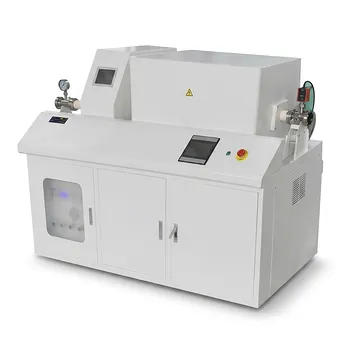
Chemical Vapor Deposition CVD System Slide PECVD Tube Furnace with Liquid Gasifier PECVD Machine
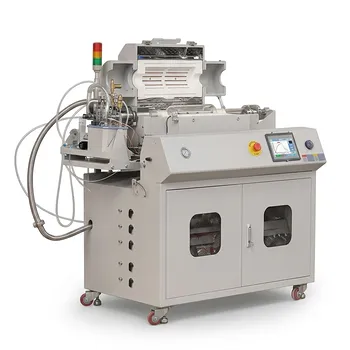
Versatile Chemical Vapor Deposition Tube Furnace System for Advanced Material Research and Industrial Coating Processes
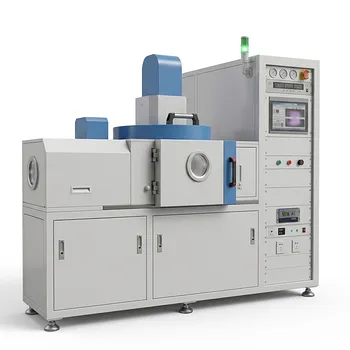
Radio Frequency Plasma Enhanced Chemical Vapor Deposition RF PECVD System for Laboratory and Industrial Thin Film Growth
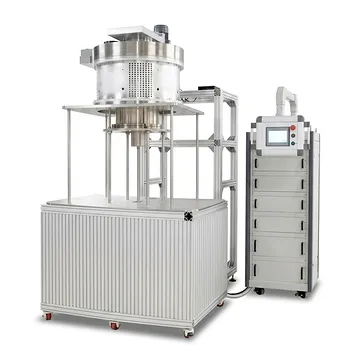
915MHz MPCVD Diamond Machine Microwave Plasma Chemical Vapor Deposition System Reactor
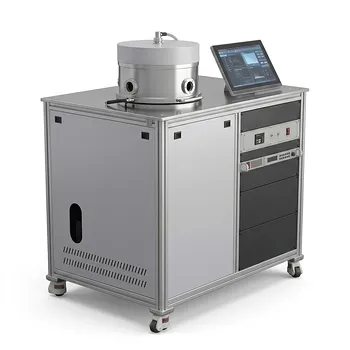
Inclined Rotary Plasma Enhanced Chemical Vapor Deposition PECVD System for Thin Film Deposition and Nanomaterial Synthesis
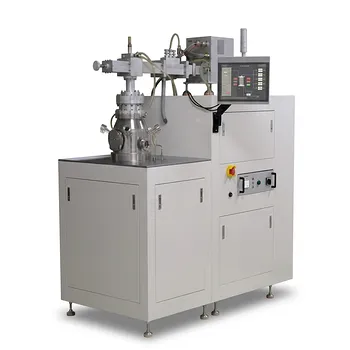
Cylindrical Resonator MPCVD Machine System for Microwave Plasma Chemical Vapor Deposition and Lab Diamond Growth
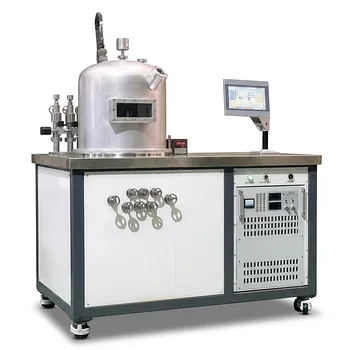
HFCVD Machine System for Nano Diamond Coating on Drawing Dies and Industrial Tools
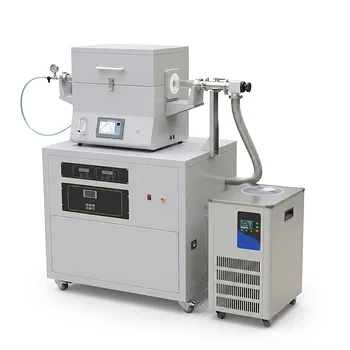
Split Chamber CVD Tube Furnace with Vacuum Station Chemical Vapor Deposition System Machine
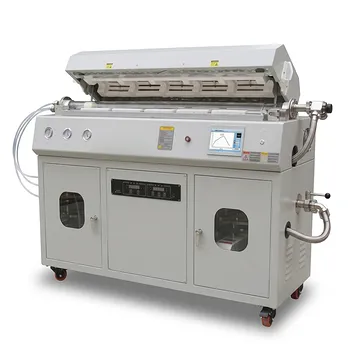
Multi Heating Zones CVD Tube Furnace System for Precision Chemical Vapor Deposition and Advanced Material Synthesis
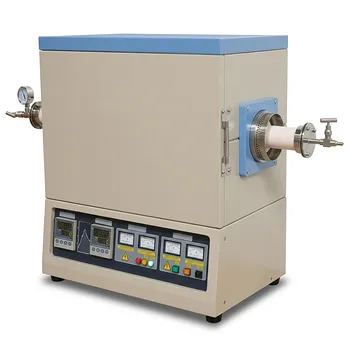
High Temperature 1700C Dual Zone Tube Furnace for Material Science and Industrial Chemical Vapor Deposition Research
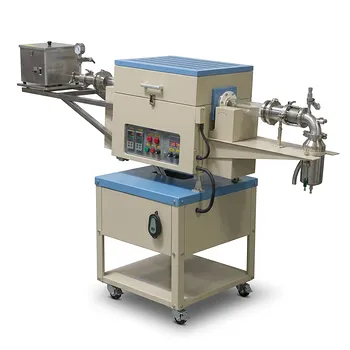
Two Zone Rotary CVD Furnace with Automatic Feeding and Receiving System for Powder Processing