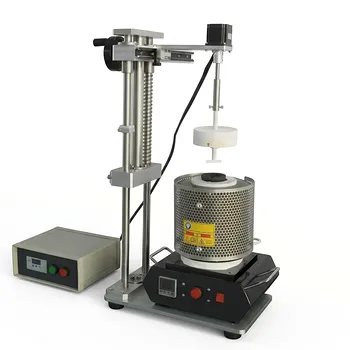
Why use high-purity alumina or quartz crucibles for Ga2O3 nanowire growth? Ensure Precursor Purity & Optical Integrity
Updated 3 months ago
High-purity alumina and quartz crucibles are essential for gallium oxide nanowire growth because they prevent chemical contamination at the extreme temperatures required for synthesis. These materials maintain exceptional thermal and chemical stability at 1000°C, ensuring that liquid gallium precursors do not react with their containers. This isolation is critical for producing beta-Ga2O3 nanowires with a precise ultra-wide bandgap of 4.8 eV.
The use of high-purity alumina or quartz serves as a fundamental safeguard for precursor integrity. By remaining chemically inert under intense heat, these materials prevent the introduction of foreign elements that would otherwise degrade the semiconductor's electronic and optical properties.
Maintaining Precursor Purity in High-Heat Environments
Chemical Inertness at 1000°C
At the 1000°C growth temperature, metallic gallium becomes highly reactive and can easily leach impurities from standard container materials. High-purity alumina and quartz are chosen because they do not participate in chemical exchanges with the gallium melt.
Prevention of Unintentional Doping
Even trace amounts of impurities from a crucible can penetrate the nanowire lattice during the vapor-phase growth process. This unintentional doping can create defects that alter the electrical performance and photoelectric properties of the resulting gallium oxide.
Isolation from the Reaction Atmosphere
A quartz liner or crucible often serves to isolate the core reaction zone from external heating elements. This ensures that the atmosphere—typically a mix of argon and trace oxygen—remains free from metallic vapors or particles that could compromise the growth environment.
Ensuring Structural and Performance Integrity
Preservation of the Ultra-Wide Bandgap
The defining characteristic of beta-Ga2O3 nanowires is their ultra-wide bandgap of 4.8 eV. Maintaining this specific energy profile requires a high degree of stoichiometric consistency, which is only possible if the precursor supply remains uncontaminated by container reactions.
Thermal Stress Resistance
Synthesis processes involve repeated thermal cycles that can cause lower-grade materials to crack or shed micro-particles. High-purity alumina exhibits excellent resistance to thermal stress, preventing physical debris from entering the precursor melt or the vapor stream.
Resistance to Physical Penetration
High-density alumina prevents liquid gallium and other metallic melts from infiltrating the walls of the container. This ensures that the precise chemical composition of the reactants is maintained throughout the entire duration of the growth process.
Understanding the Trade-offs and Risks
Temperature Limitations of Quartz
While quartz provides an excellent high-purity environment, it begins to soften as it approaches 1200°C. For processes requiring temperatures significantly higher than 1000°C, alumina is often the superior choice due to its higher melting point and superior structural rigidity.
Porosity and Contamination
If the alumina used is not of sufficiently high purity or density, its inherent porosity can trap contaminants from previous runs. Using "research-grade" high-purity materials is necessary to avoid the carry-over of impurities that could cause lattice distortions.
Cost vs. Performance
High-purity crucibles are significantly more expensive than standard industrial-grade ceramics. However, using lower-grade materials often leads to "performance deviations" in the nanowires, making the initial investment in high-purity carriers a requirement for reproducible research.
How to Apply This to Your Synthesis
Selecting the right container material depends on your specific growth parameters and the sensitivity of your target material.
- If your primary focus is maximum chemical isolation at 1000°C: Use high-purity quartz to provide a clean, non-reactive environment that protects against external heating element contamination.
- If your primary focus is durability across extreme thermal cycles: Opt for high-purity alumina (Al2O3) to ensure the crucible survives repeated heating without cracking or reacting with the liquid gallium.
- If your primary focus is achieving a precise 4.8 eV bandgap: Prioritize research-grade materials for all carriers to prevent unintentional doping from the crucible lattice.
By prioritizing chemical inertness and thermal stability in your choice of crucible, you ensure the integrity and consistent performance of your synthesized gallium oxide nanowires.
Summary Table:
| Feature | High-Purity Quartz | High-Purity Alumina (Al2O3) |
|---|---|---|
| Max Operating Temp | ~1200°C (softening point) | Up to 1800°C+ |
| Chemical Inertness | Excellent isolation of reaction zone | Non-reactive with liquid gallium |
| Thermal Stability | Moderate | Superior resistance to thermal stress |
| Main Advantage | High transparency & gaseous purity | Durability across repeated cycles |
| Best Application | CVD/PECVD or lower temp growth | High-heat R&D & liquid melt containment |
Elevate Your Semiconductor Research with THERMUNITS Precision
As a global leader in high-temperature laboratory equipment, THERMUNITS understands that the success of material science R&D depends on absolute precursor integrity. We provide high-purity crucibles and advanced thermal processing solutions—including Tube, Vacuum, Atmosphere, and CVD/PECVD systems—specifically designed to prevent contamination and ensure stoichiometric precision in your nanomaterial synthesis.
Our Value to Your Laboratory:
- Unmatched Purity: Equipment designed to maintain high-density, non-reactive environments for sensitive materials like Ga2O3.
- Comprehensive Range: From Muffle and Dental Furnaces to Vacuum Induction Melting (VIM) and Hot Press systems.
- Technical Support: Expert guidance in selecting the right thermal elements and equipment for your specific temperature and atmosphere requirements.
Ready to achieve superior heat treatment results for your research?
Contact THERMUNITS Today for Professional Solutions
References
- G. A. Dorsey, W. E. Collins. The growth and characterization of Au-catalyzed gallium oxide nanowires. DOI: 10.1557/s43580-024-00843-y
Mentioned Products
- 600°C Vertical Crucible Furnace with SS316 Alloy Reactor and 6 Port Vacuum Flange
- High Temperature Vertical Crucible Furnace with 22L Heating Chamber and 1200C Maximum Temperature
- Vertical Crucible Furnace 1000C High Temperature Laboratory Equipment 4.7 Inch Diameter Chamber SS316 Anti Corrosive Enclosure
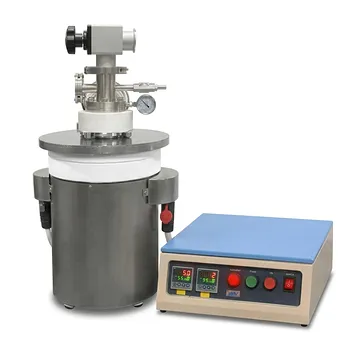
- 1100C High Temperature Vacuum Crucible Furnace with Quartz Chamber for Thermal Processing and Sintering
- 1100C Crucible Melting Furnace with Stirring Function for Glovebox and Air Sensitive Alloy Research
People Also Ask
- How does a high vacuum sintering furnace at 600 Celsius affect the microstructure of Al-TiC composites? Expert Analysis
- How should the choice between a Quartz crucible and an Alumina crucible be made for La2O2S? Optimize Material Purity
- Why use ceramic crucibles for coal nano-hybrid heat treatment? Ensure Purity and Thermal Stability.
- What role does a vacuum tube furnace play in palladium membrane treatment? Achieve 600°C Stability & Prevent Brittle Phases
- Why is a high-temperature furnace with precise temperature control necessary for Ag8SiS6 alloy synthesis? Ensure Safety.

Tech Team · ThermUnits
Last updated on Jun 02, 2026
Related Products
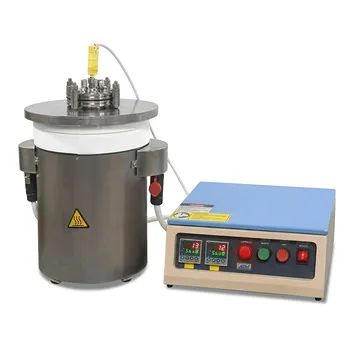
600°C Vertical Crucible Furnace with SS316 Alloy Reactor and 6 Port Vacuum Flange
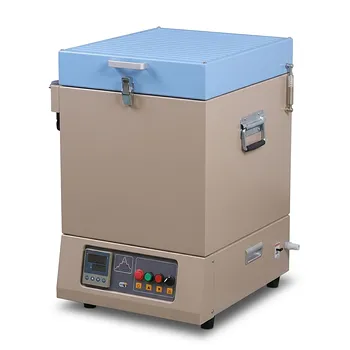
High Temperature Vertical Crucible Furnace with 22L Heating Chamber and 1200C Maximum Temperature
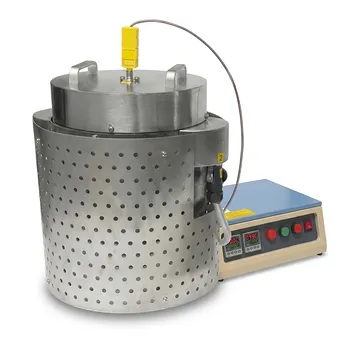
Vertical Crucible Furnace 1000C High Temperature Laboratory Equipment 4.7 Inch Diameter Chamber SS316 Anti Corrosive Enclosure
1100C High Temperature Vacuum Crucible Furnace with Quartz Chamber for Thermal Processing and Sintering