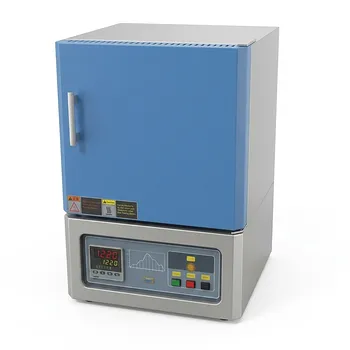
What is the necessity of the 900 °C pre-calcination process? Optimize Na1+xLa1-xZr2O6-δ Proton Conductor Synthesis
Updated 3 months ago
The 900 °C pre-calcination process is a mandatory thermal treatment designed to ensure chemical purity and structural integrity in $Na_{1+x}La_{1-x}Zr_2O_{6-\delta}$ proton conductors. By maintaining this temperature for four hours in a muffle furnace, researchers achieve the complete thermal decomposition of carbonates and the safe discharge of carbon dioxide. This stage is critical because it transforms the raw chemical mixture into a stable perovskite precursor, preventing physical failures during the final high-temperature sintering.
Core Takeaway: Pre-calcination at 900 °C acts as a "chemical cleanup" and structural foundation-building step. It eliminates volatile gases that would otherwise cause cracking and initiates the solid-state diffusion necessary for a high-performance perovskite crystal structure.
Chemical Transformation and Gas Management
Complete Decomposition of Carbonates
The primary chemical objective of this process is the thermal decomposition of carbonates present in the precursor mixture. At 900 °C, the chemical bonds in these salts break down, allowing for the complete release of carbon dioxide ($CO_2$).
Prevention of Internal Porosity
If these gases are not removed during pre-calcination, they will attempt to escape during the final, high-temperature sintering stage. This rapid gas discharge in a densifying ceramic leads to pore generation and internal voids, which significantly degrade the material's proton conductivity.
Mitigating Sample Cracking
Residual volatiles can build up internal pressure as the ceramic grains begin to fuse. By ensuring all chemical decomposition occurs in the powder state during pre-calcination, the risk of sample cracking or structural failure in the final pelletized form is effectively eliminated.
Structural Evolution and Phase Stability
Initiating Solid-State Diffusion
900 °C provides the necessary kinetic energy for solid-state diffusion to begin between the sodium, lanthanum, and zirconium oxides. This process allows the different elemental components to start migrating and reacting at the atomic level.
Formation of the Perovskite Precursor
This temperature environment initiates the formation of the perovskite precursor phase. Establishing this crystalline foundation early ensures that the final sintering process can focus on densification rather than complex, multi-phase chemical rearrangements.
Thermal Field Uniformity
Utilizing a muffle furnace is essential because it provides a highly stable and uniform thermal field. Precise digital control prevents localized overheating, which can lead to abnormal grain growth or the formation of undesirable impurity phases that block proton transport.
Understanding the Trade-offs and Pitfalls
The Risk of Inadequate Temperature
If the pre-calcination temperature is too low (e.g., below 800 °C), the carbonate decomposition may be incomplete. This leaves residual carbon in the lattice, which can destabilize the perovskite structure and lead to poor electrochemical performance.
Challenges of Excessive Heating
Conversely, exceeding the required temperature or dwell time during pre-calcination can lead to excessive powder agglomeration. Hard agglomerates are difficult to grind and press, resulting in a lower green density and a less uniform microstructure after final sintering.
Atmospheric Considerations
The muffle furnace typically provides an oxidizing air atmosphere, which is necessary for stabilizing the oxide phases. Failing to maintain a consistent atmosphere can lead to oxygen vacancies that are not controlled by the dopant concentration ($x$), making the proton conductor's behavior unpredictable.
How to Apply This to Your Project
Recommendations for Process Optimization
- If your primary focus is Phase Purity: Ensure the muffle furnace is calibrated to maintain exactly 900 °C to guarantee the full transition from raw salts to the perovskite precursor.
- If your primary focus is Mechanical Density: Prioritize the full 4-hour dwell time to ensure all $CO_2$ is evacuated, preventing the micro-cracks that compromise structural strength.
- If your primary focus is High Conductivity: Use the pre-calcination stage to create a reactive, fine-grained powder by following the thermal treatment with rigorous milling to break up any soft agglomerates formed at 900 °C.
Strict adherence to the 900 °C pre-calcination protocol ensures that the fundamental chemical and structural requirements are met before the final, irreversible sintering stage begins.
Summary Table:
| Process Aspect | Primary Function | Benefit for Material |
|---|---|---|
| Carbonate Decomposition | Release of $CO_2$ gas | Prevents internal porosity and cracking |
| Structural Evolution | Perovskite precursor formation | Ensures phase stability during final sintering |
| Kinetic Activation | Initiates solid-state diffusion | Promotes atomic-level homogeneity |
| Thermal Uniformity | Stable heat field (Muffle Furnace) | Avoids abnormal grain growth and impurities |
Elevate Your Material Research with THERMUNITS Precision
Successful synthesis of advanced proton conductors requires the uncompromising thermal accuracy that THERMUNITS provides. As a global leader in high-temperature laboratory equipment, we empower researchers in material science and industrial R&D with top-tier thermal processing solutions.
Whether you need reliable Muffle Furnaces for pre-calcination or specialized Vacuum, Atmosphere, Tube, and CVD/PECVD systems for complex sintering, our equipment is engineered for uniform heat distribution and precise digital control. From dental furnaces to industrial electric rotary kilns and vacuum induction melting (VIM) systems, we offer the full spectrum of heat treatment tools to ensure your materials reach their peak performance.
Ready to optimize your lab’s thermal workflows?
Contact our technical experts today to find the perfect furnace solution for your project!
References
- Wenlong Huang, Wei Zhang. Mixed Conduction in A-Site Double-Perovskite Na1+xLa1-xZr2O6-δ Proton Conductors. DOI: 10.3390/ma17215211
Mentioned Products
- 1200C Muffle Furnace 12x8x5 7.2L Heating Chamber with Quartz Observation Window and Vent Port
- High Temperature 1200C Muffle Furnace 27L Volume 12x12x12 Chamber with Programmable PID Controller for Laboratory Material Science
- 1750C Compact Muffle Furnace 1.7L Ultra High Temperature Laboratory Sintering System for Advanced Ceramics and Material Science Research
- 1200C High Temperature 125L Muffle Furnace 5 Side Heating for Large Batch Sintering with Optional Alloy Debinding Chamber
- Ultra High Temperature Bench Top Muffle Furnace 1750C Sintering System with Kanthal Super Heating Elements and Precision Digital Control
People Also Ask
- What is the function of an experimental muffle furnace in the conversion of FeOOH to α-Fe2O3? Optimize Phase Transition
- Why is a muffle furnace required for MoO2@HCNF pre-oxidation? Crucial Steps for High-Performance Composites
- What is the function of a high-temperature Muffle furnace in removing residual solvents? Essential Bismuth Synthesis
- What is the function of Muffle furnace calcination? Essential steps for Pr-doped SrFeMoO6 Perovskite synthesis.
- What are the primary functions of a Muffle furnace in oxide calcination? Achieve high purity and phase control.

Tech Team · ThermUnits
Last updated on Jun 03, 2026
Related Products
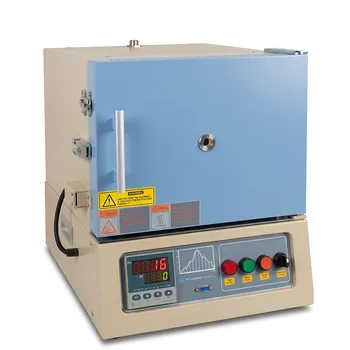
1200C Muffle Furnace 12x8x5 7.2L Heating Chamber with Quartz Observation Window and Vent Port
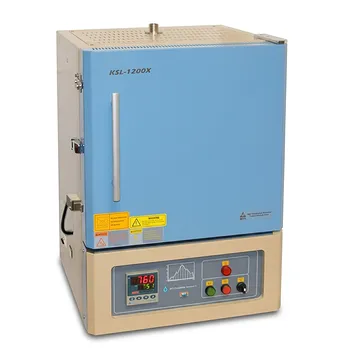
High Temperature 1200C Muffle Furnace 27L Volume 12x12x12 Chamber with Programmable PID Controller for Laboratory Material Science
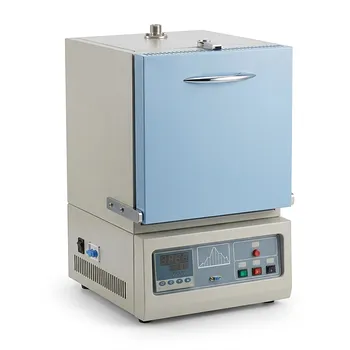
1750C Compact Muffle Furnace 1.7L Ultra High Temperature Laboratory Sintering System for Advanced Ceramics and Material Science Research
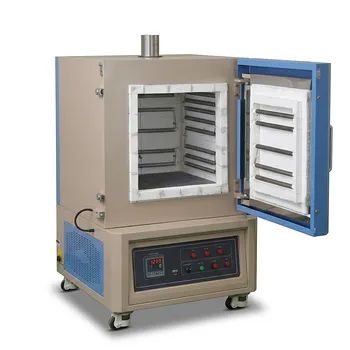
1200C High Temperature 125L Muffle Furnace 5 Side Heating for Large Batch Sintering with Optional Alloy Debinding Chamber
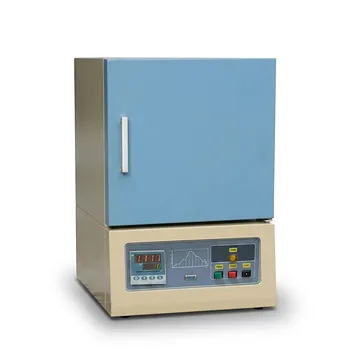
Ultra High Temperature Bench Top Muffle Furnace 1750C Sintering System with Kanthal Super Heating Elements and Precision Digital Control
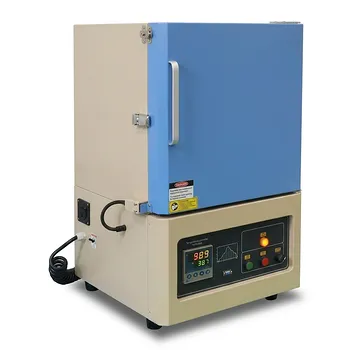
1200°C High Temperature Muffle Furnace 19L Chamber with 50 Segment Programmable Controller
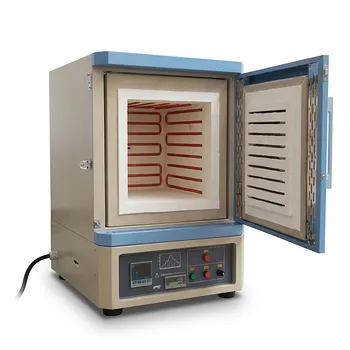
Five Side Heating Muffle Furnace 1200C High Uniformity 64L Chamber 16x16x16 Inch Industrial Heat Treatment
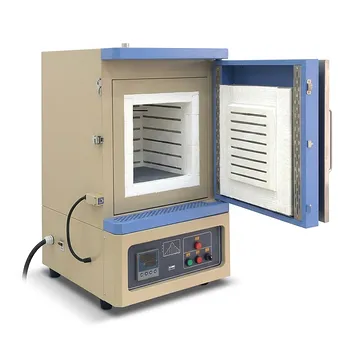
Five Side Heating Muffle Furnace High Purity Alumina Fiber 27L Chamber 1200C High Temperature Thermal Processing System for Sintering Annealing and Materials Research
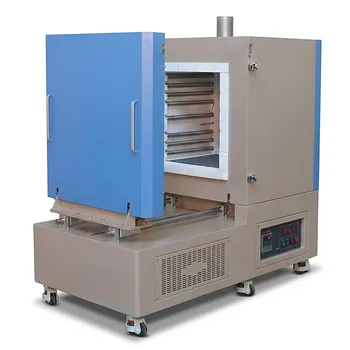
1200C Five Side Heating Muffle Furnace with Sliding Door 125L Volume High Temperature Heat Treatment System for Large Scale Sintering and Annealing
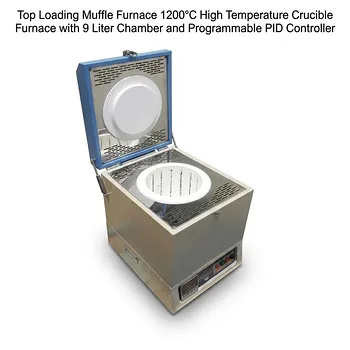
Top Loading Muffle Furnace 1200°C High Temperature Crucible Furnace with 9 Liter Chamber and Programmable PID Controller
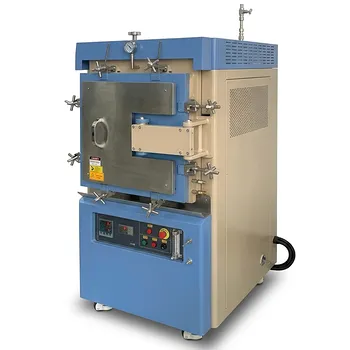
Atmosphere Controlled Muffle Furnace 1700C Maximum Temperature 80L High Capacity Vacuum Inert Gas Box Furnace
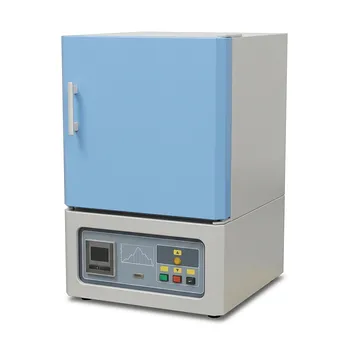
1800C Bench Top Muffle Furnace with Kanthal Super 1900 Heating Elements and 3.6L Alumina Fiber Chamber
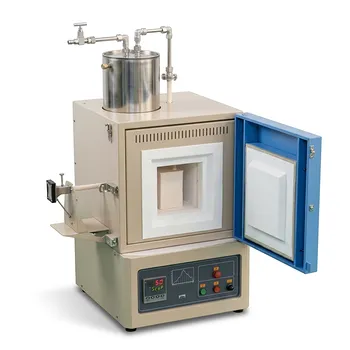
High Temperature Bench Top Muffle Furnace 1700C with Integrated Evaporating Particle Collection and 8x8x8 Alumina Fiber Chamber
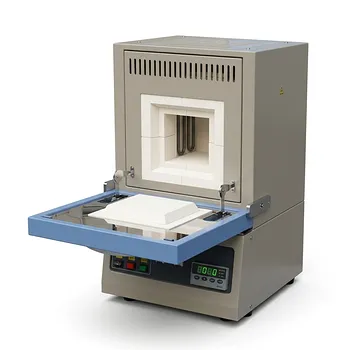
Five Sided Heating Muffle Furnace High Uniformity 1200C Lab Box Furnace 27L Alumina Fiber Chamber
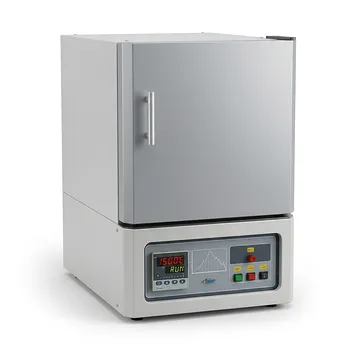
High Temperature 1500C Benchtop Muffle Furnace 3.6L Alumina Fiber Chamber Programmable Controller Sintering Annealing Carbonization Thermal Processing System
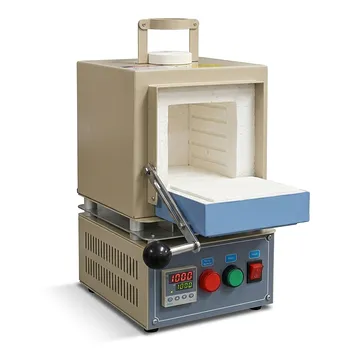
Compact 1000C Muffle Furnace with Programmable Controller and 2 Inch Top Port for Vacuum and Atmosphere Material Research
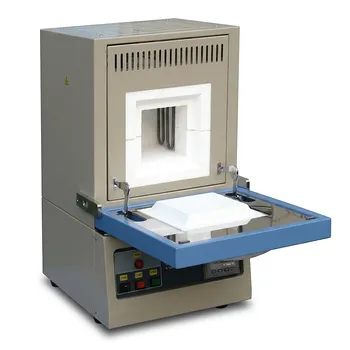
High Temperature 1800C Compact Muffle Furnace with Kanthal Super 1900 Heating Elements and 1.7L Alumina Chamber
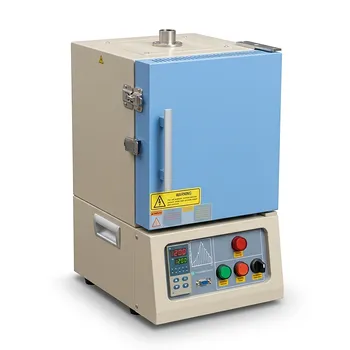
1200°C Small Box Furnace 4.2 Liter Programmable Muffle Furnace with High Purity Alumina Insulation and PID Control
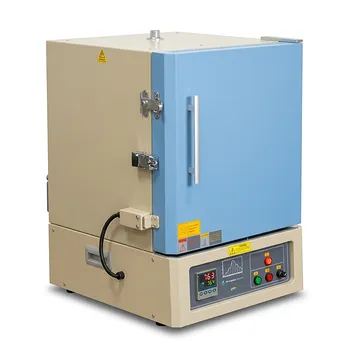
Large Capacity 1200C Muffle Furnace 64 Liter Chamber with Digital PID Controller and Built In Venting Port