What is the role of a drying oven in biochar pretreatment? Optimize Feedstock Standards for High-Quality Research
Updated 3 months ago
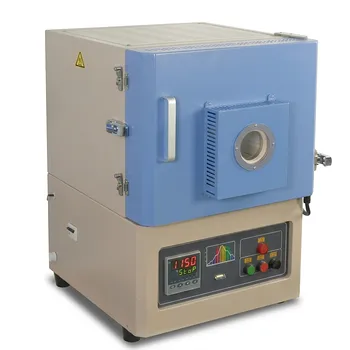
The laboratory constant temperature drying oven is the essential tool for standardizing the moisture profile of poultry manure before it undergoes thermochemical conversion. By maintaining a consistent temperature—typically 105°C for at least 12 hours—the oven removes free water and unifies the moisture content of the raw material to approximately 30%. This standardization is critical to eliminate moisture fluctuations that would otherwise compromise the accuracy of thermal balance calculations and the efficiency of the subsequent pyrolysis process.
Core Takeaway: The drying oven transforms raw, heterogeneous poultry manure into a stable, standardized feedstock by removing physically bound water, thereby ensuring predictable heat transfer and high-precision data during biochar production.
Establishing Technical Consistency and Thermal Balance
Standardizing Moisture Content
Raw poultry manure is inherently inconsistent, with moisture levels varying significantly between batches. The drying oven brings the entire sample to a uniform moisture level (approximately 30%), which prevents localized thermal gradients during later processing.
Optimizing Pyrolysis Efficiency
Excessive moisture in the feedstock requires significant energy to evaporate during the initial stages of pyrolysis. By pre-drying the manure, the oven ensures that the energy input in the reactor is focused on the chemical breakdown of biomass rather than the latent heat of vaporization.
Supporting Thermal Calculations
Accurate biochar research requires precise calculations of thermal balance and mass loss. Standardizing the moisture content allows researchers to eliminate the "noise" caused by water vapor, leading to more reliable data regarding the energy requirements of the conversion.
Preparing the Physical and Chemical Matrix
Facilitating Mechanical Pretreatment
Dry-basis materials are significantly easier to process into uniform particle sizes. Drying the manure ensures physical stability, allowing for efficient grinding and crushing without the clogging or clumping associated with damp organic waste.
Preserving Structural Integrity
Rapid heating of wet biomass can cause "structural fragmentation" as internal water turns to steam and escapes violently. Controlled oven drying removes this physically bound water slowly, protecting the fiber structure and ensuring a high-quality carbon shell in the final biochar.
Enhancing Chemical Impregnation
For specialized applications like magnetic biochar, the removal of moisture is a prerequisite for chemical absorption. A dry feedstock provides the ideal physical state for the precursor solutions to penetrate the biomass pores effectively during the impregnation stage.
Understanding the Trade-offs and Limitations
The Risk of Volatile Loss
While 105°C is standard for removing water, some low-boiling-point organic compounds may begin to volatilize at this temperature. This can slightly alter the chemical profile of the raw manure before it even reaches the pyrolysis reactor.
Energy Consumption and Throughput
Maintaining a drying oven for 12 to 24 hours creates a significant bottleneck in the production timeline and increases the energy footprint of the biochar. Scaling this pretreatment to industrial levels requires a careful balance between drying thoroughness and operational costs.
Incomplete Removal of Crystalline Water
Standard laboratory ovens are excellent at removing physically adsorbed water, but they may not remove crystalline water or deeply bound chemical moisture. Depending on the specific mineral content of the poultry manure, higher temperatures might be required to achieve a truly "bone-dry" state.
How to Apply This to Your Biochar Project
Making the Right Choice for Your Goal
- If your primary focus is analytical precision: Use a constant temperature of 105°C for 24 hours to establish a definitive dry-basis standard for calculating volatile matter and ash content.
- If your primary focus is structural integrity: Ensure a slow ramp-up in the drying oven to prevent the sudden evaporation of moisture from causing internal fractures in the biomass fibers.
- If your primary focus is chemical modification: Thoroughly dry the manure until it reaches a constant weight before attempting impregnation with precursor salts to ensure maximum pore accessibility.
Properly executed oven pretreatment is the foundation of a rigorous, repeatable, and energy-efficient biochar production process.
Summary Table:
| Feature | Role in Manure Pretreatment | Impact on Biochar Production |
|---|---|---|
| Moisture Control | Reduces and unifies levels to ~30% | Prevents thermal gradients and localized cold spots |
| Energy Efficiency | Removes free and physically bound water | Focuses reactor energy on chemical breakdown vs. evaporation |
| Data Precision | Eliminates water-related mass fluctuations | Enables accurate thermal balance and mass loss calculations |
| Physical Matrix | Stabilizes fiber structure and facilitates grinding | Prevents structural fragmentation and reactor clogging |
| Chemical Readiness | Opens pores by removing moisture | Enhances absorption of precursors for modified biochar |
Elevate Your Biochar Research with THERMUNITS Precision Heating
High-quality biochar starts with precise pretreatment. THERMUNITS is a leading manufacturer of high-temperature laboratory equipment for material science and industrial R&D. We empower researchers to achieve repeatable results through our comprehensive range of thermal solutions, including specialized Drying Ovens, Muffle, Vacuum, Atmosphere, Tube, and Rotary Furnaces.
From standardizing poultry manure moisture to advanced CVD/PECVD systems and Vacuum Induction Melting (VIM), our equipment is engineered for durability and high-precision control. Whether you are developing sustainable fuels or advanced carbon materials, our expert team provides the technical support you need to optimize your heat treatment workflow.
Ready to upgrade your lab's efficiency? Contact THERMUNITS today to find the perfect solution for your R&D goals!
References
- Joyce Clarke, Maria Olea. The Effect of Temperature and Treatment Regime on the Physical, Chemical, and Biological Properties of Poultry Litter Biochar. DOI: 10.3390/reactions5030020
Mentioned Products
- Compact High Temperature Bottom Loading Furnace 1700C Rapid Heating Cooling System Small Sample Thermal Cycling Equipment
- 1200°C High Temperature Muffle Furnace 19L Chamber with 50 Segment Programmable Controller
- High Temperature Benchtop Muffle Furnace 1500C with 3.6L Chamber and Quartz Observation Window
- Three Temperature Zone Fast Heating Furnace 1500C Laboratory High Precision Thermal Processing System
- Large Capacity 1200C Muffle Furnace 64 Liter Chamber with Digital PID Controller and Built In Venting Port
People Also Ask
- What are the advantages of using a Bottom-Loading High-Temperature Furnace in Barium Titanate Fast Firing? Superior Microstructure
- What are the advantages of using a rapid heating box furnace for catalyst precursor transformation in MS-SOECs? Boost Efficiency
- What function does a ceramic sample boat perform during the reforming of plastic powders? Optimize Thermal Conversion
- How should the choice between a Quartz crucible and an Alumina crucible be made for La2O2S? Optimize Material Purity
- Why is a laboratory box furnace used for the pre-oxidation treatment of lotus-root-like nanofibers? Boost Porosity

Tech Team · ThermUnits
Last updated on Jun 02, 2026
Related Products
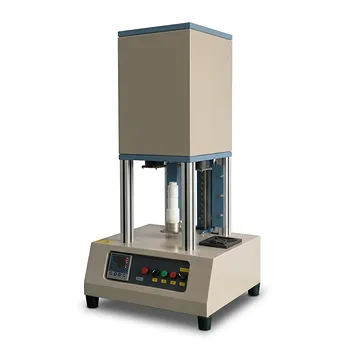
Compact High Temperature Bottom Loading Furnace 1700C Rapid Heating Cooling System Small Sample Thermal Cycling Equipment
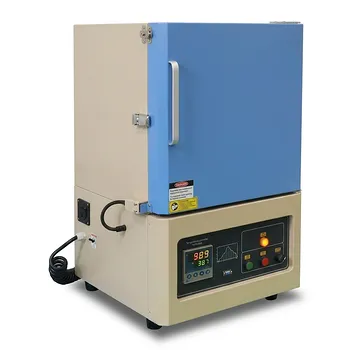
1200°C High Temperature Muffle Furnace 19L Chamber with 50 Segment Programmable Controller
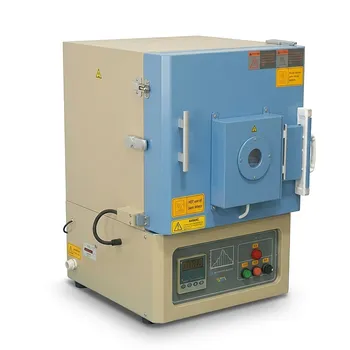
High Temperature Benchtop Muffle Furnace 1500C with 3.6L Chamber and Quartz Observation Window
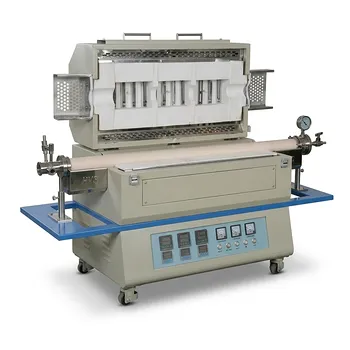
Three Temperature Zone Fast Heating Furnace 1500C Laboratory High Precision Thermal Processing System
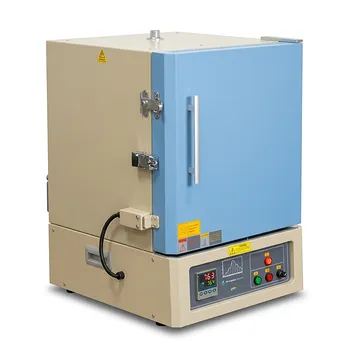
Large Capacity 1200C Muffle Furnace 64 Liter Chamber with Digital PID Controller and Built In Venting Port
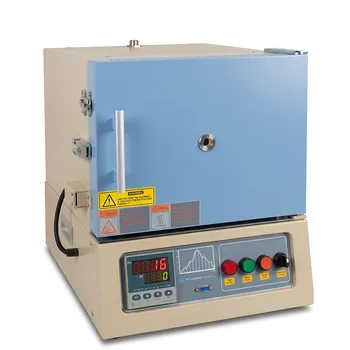
1200C Muffle Furnace 12x8x5 7.2L Heating Chamber with Quartz Observation Window and Vent Port
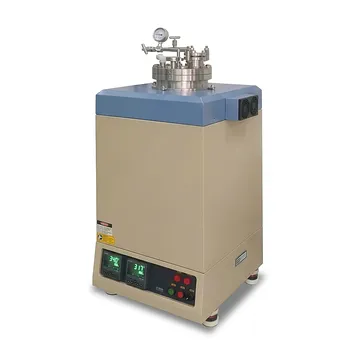
High Temperature 1000C Vacuum Furnace with 8 Inch ID Chamber for Material Sintering and Research Annealing