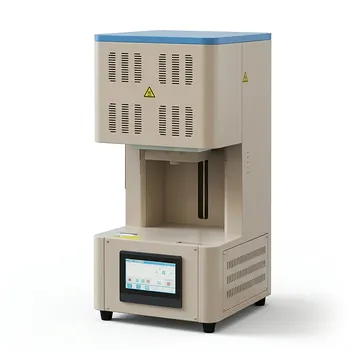
Why is a laboratory box furnace used for the pre-oxidation treatment of lotus-root-like nanofibers? Boost Porosity
Updated 3 months ago
The laboratory box furnace serves as a precision thermal reactor designed to achieve two simultaneous goals: the oxidative stabilization of the polymer skeleton and the controlled decomposition of pore-forming agents. This specific environment ensures the nanofibers develop a porous "lotus-root" architecture while becoming heat-resistant enough to survive high-temperature carbonization without melting or collapsing.
Core Takeaway: Pre-oxidation in a box furnace transforms unstable polymer fibers into a robust, porous carbon precursor. By precisely managing ramp rates and air exposure, the furnace facilitates the chemical cross-linking needed to maintain fiber integrity while inducing the high surface area required for advanced electrode materials.
Engineering the "Lotus-Root" Porosity
Thermal Decomposition of Sacrificial Components
The primary reason for using a box furnace is to facilitate the controlled removal of polystyrene (PS) through thermal decomposition. In a lotus-root-like nanofiber precursor, PS acts as a temporary template.
As the furnace reaches specific temperatures in an air atmosphere, the PS decomposes and escapes, leaving behind a unique longitudinal porous structure. This internal architecture is what gives the fibers their "lotus-root" appearance and significantly increases their specific surface area.
Increasing Specific Surface Area
A high specific surface area is critical for the performance of electrode materials. The furnace provides the stable environment needed for these pores to form uniformly throughout the fiber batch.
Without this precise heating phase, the pore-forming agents might outgas too violently or unevenly. This would result in ruptured fibers rather than the desired organized porous network.
The Chemistry of Oxidative Stabilization
Conversion to Heat-Resistant Ladder Structures
Pre-oxidation involves medium-temperature heat treatment, typically around 250 °C to 260 °C, in an oxygen-containing atmosphere. During this time, polyacrylonitrile (PAN) molecular chains undergo cyclization and cross-linking reactions.
This chemical transformation converts thermoplastic linear molecules into stable, heat-resistant ladder structures. This "laddering" is what gives the nanofibers the structural strength to withstand subsequent carbonization at temperatures exceeding 1000 °C.
Prevention of Fiber Fusion and Melting
One of the most critical functions of the box furnace is ensuring the fibers do not melt or adhere to one another. By providing a uniform thermal field, the furnace allows the polymer skeleton to stabilize evenly.
This stabilization ensures the fibers maintain their independent, one-dimensional morphology and high aspect ratio. Without this step, the fibers would simply melt into a solid, non-porous mass during high-temperature processing.
The Importance of Process Control
Precise Ramp Rates and Atmosphere
A laboratory box furnace allows for specific heating profiles, such as a 6 °C per minute ramp rate. Controlled heating is vital to prevent thermal shock and ensure that chemical reactions occur at the correct kinetic pace.
The air atmosphere provides the necessary oxygen for the oxidation of chemical components, such as converting indium nitrate into indium oxide microcrystals. This steady supply of oxygen is essential for the chemical maturation of the fibers.
Uniformity of the Thermal Field
Muffle and box furnaces create a stable, enclosed environment that minimizes temperature fluctuations. This uniformity is essential for treating a three-dimensional network of nanofibers.
Consistent heat ensures that every fiber in the batch undergoes the same degree of cross-linking and decomposition. This results in a material with predictable mechanical and electrochemical properties.
Understanding the Trade-offs
Time and Energy Intensive Processes
The requirement for slow ramp rates and specific dwell times means that pre-oxidation is a time-consuming stage of nanofiber production. Attempting to speed up the process by increasing the ramp rate often leads to structural defects or incomplete stabilization.
Scaling and Throughput Limitations
While laboratory box furnaces are excellent for precision, they have limited volume. As research moves toward industrial application, maintaining the same level of thermal uniformity in larger batches becomes a significant engineering challenge.
Risk of Over-Oxidation
If the fibers are exposed to the air atmosphere for too long or at slightly too high a temperature, they can become brittle or lose too much mass. Finding the "sweet spot" between stabilization and material loss requires rigorous calibration of the furnace settings.
How to Apply This to Your Project
Making the Right Choice for Your Goal
- If your primary focus is maximizing electrode surface area: Prioritize the precise control of the furnace ramp rate to ensure the pore-forming agents (like PS) decompose without damaging the fiber walls.
- If your primary focus is structural integrity during carbonization: Focus on the duration of the dwell time at stabilization temperatures (approx. 250 °C) to ensure full cyclization of the PAN molecular chains.
- If your primary focus is producing metal-oxide doped fibers: Ensure the furnace atmosphere is consistently oxygen-rich to facilitate the full transformation of precursor salts into microcrystals.
By mastering the controlled environment of the box furnace, you can successfully bridge the gap between electrospun precursors and high-performance, porous carbon nanofibers.
Summary Table:
| Process Phase | Primary Function | Key Outcome |
|---|---|---|
| Template Removal | Thermal decomposition of sacrificial agents (e.g., PS) | Creates "lotus-root" longitudinal pores |
| Oxidative Stabilization | Chemical cross-linking & cyclization (approx. 250°C) | Forms heat-resistant ladder structures |
| Atmosphere Control | Steady oxygen supply in air atmosphere | Facilitates metal-oxide microcrystal formation |
| Thermal Uniformity | Precise ramp rates (e.g., 6°C/min) | Prevents fiber fusion and structural collapse |
Elevate Your Nanomaterials Research with THERMUNITS
Achieving the perfect "lotus-root" architecture requires uncompromising thermal control. THERMUNITS is a leading manufacturer of high-temperature laboratory equipment specifically designed for material science and industrial R&D. Our furnaces provide the precise ramp rates and uniform thermal fields necessary to prevent fiber melting and maximize surface area in advanced electrode materials.
Our Comprehensive Thermal Solutions include:
- Muffle & Box Furnaces: Precision-engineered for stable pre-oxidation and stabilization.
- Vacuum & Atmosphere Furnaces: For controlled-environment carbonization.
- Advanced Systems: Tube, Rotary, and Hot Press furnaces, CVD/PECVD systems, and Vacuum Induction Melting (VIM) furnaces.
- Specialized Equipment: Dental Furnaces, electric rotary kilns, and high-quality Thermal Elements.
Ready to optimize your heat treatment workflow? Contact THERMUNITS today to request a quote or technical consultation and ensure the structural integrity of your high-performance nanofibers.
References
- Juhyeong Kim, Yoonkook Son. Lotus Root Type Nickel Oxide-Carbon Nanofibers: A Hybrid Supercapacitor Electrode Material. DOI: 10.3390/app14072977
Mentioned Products
- 1700C Box Furnace with Sliding Platform for Rapid Heating and Cooling High Temperature Thermal Processing System
- Five Sided Heating Muffle Furnace High Uniformity 1200C Lab Box Furnace 27L Alumina Fiber Chamber
- 1200°C Five Side Heating Atmosphere Controlled Muffle Furnace 64 Liter High Uniformity Box Furnace for Material Synthesis
- 1200C Small Box Muffle Furnace with Separated Programmable Controller and 4.2L Alumina Fiber Chamber
- Bottom Loaded Inert Gas Atmosphere Box Furnace 1400C Maximum Temperature 125L High Capacity Laboratory Heat Treatment System
People Also Ask
- What is the role of a high-temperature box furnace in the solid-state synthesis of Europium-doped M3MgSi2O8 phosphors?
- Why is a high-temperature box furnace required for 1250°C ferrite calcination? Ensure Precise Phase Transformation.
- What role does an industrial-grade high-temperature furnace play in C2F sintering? Achieve Pure Phase and High Strength
- How does a high-temp box furnace aid rare-earth oxysulfide phosphor synthesis? Enhance Purity & Luminescence
- What is the role of a high-temperature box furnace in Na3MnZr(PO4)3 synthesis? Engineering High-Performance NASICON.

Tech Team · ThermUnits
Last updated on Jun 03, 2026
Related Products
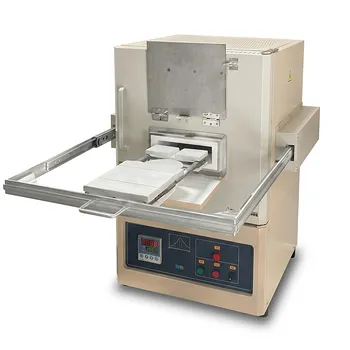
1700C Box Furnace with Sliding Platform for Rapid Heating and Cooling High Temperature Thermal Processing System
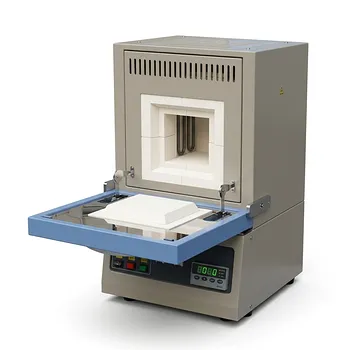
Five Sided Heating Muffle Furnace High Uniformity 1200C Lab Box Furnace 27L Alumina Fiber Chamber
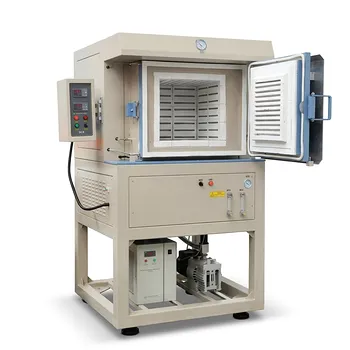
1200°C Five Side Heating Atmosphere Controlled Muffle Furnace 64 Liter High Uniformity Box Furnace for Material Synthesis
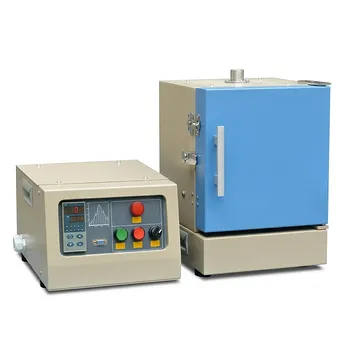
1200C Small Box Muffle Furnace with Separated Programmable Controller and 4.2L Alumina Fiber Chamber
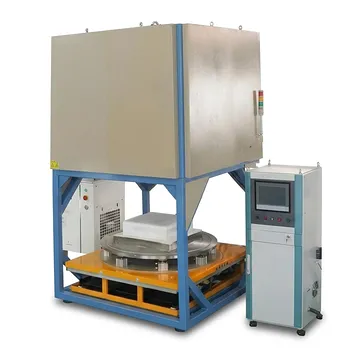
Bottom Loaded Inert Gas Atmosphere Box Furnace 1400C Maximum Temperature 125L High Capacity Laboratory Heat Treatment System
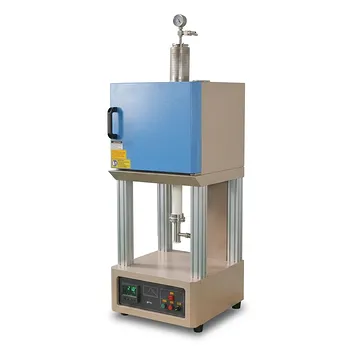
Hybrid High Temperature Tube and Box Furnace 1700C with 2 Inch Alumina Tube for Material Research
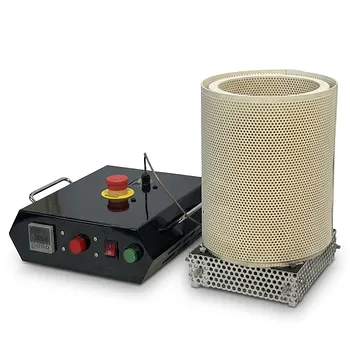
1250 C Compact Vertical Box Furnace for Glovebox Material Research Air Sensitive Samples
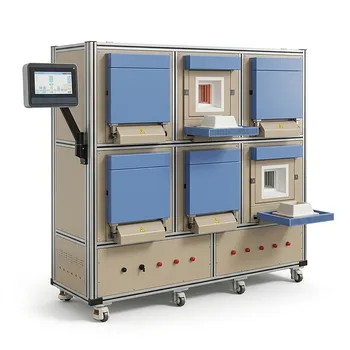
High Temperature 1700℃ Eight Chamber Box Furnace with Automatic Doors for Autonomous Material Research and High Throughput Heat Treatment
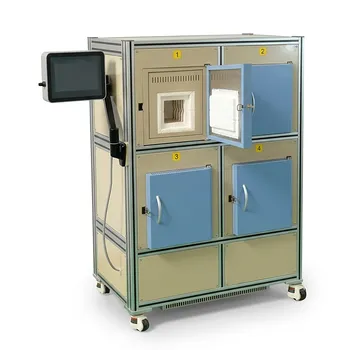
High Temperature Four Chamber Box Furnace for High Throughput Materials Research and Space Saving Thermal Processing
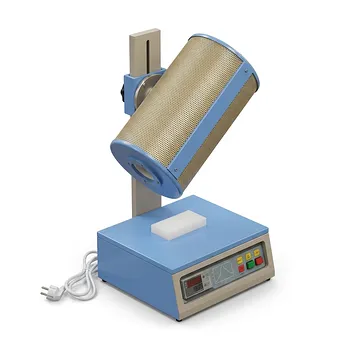
1100°C Vertical Laboratory Furnace for DIY Tubular Reactors with PID Temperature Controller
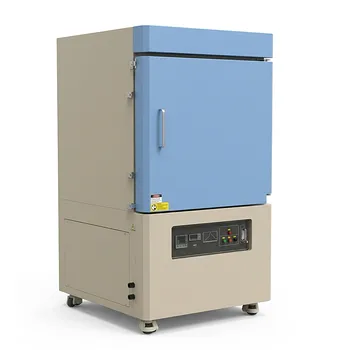
Industrial Large Box Furnace 1700C 216L High Temp Muffle Sintering System
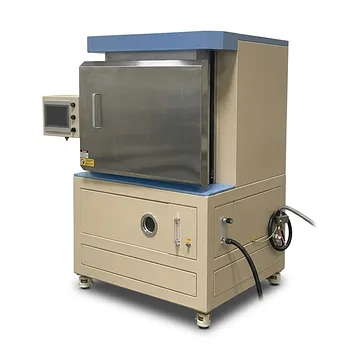
1650C High Temperature Atmosphere Controlled Box Furnace with 65L Chamber for Advanced Material Sintering and Industrial Heat Treatment
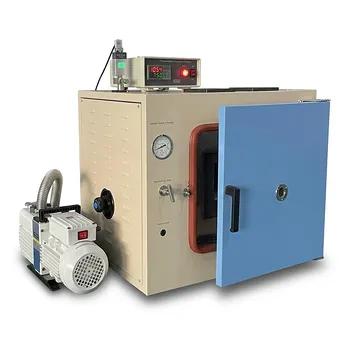
Compact High Vacuum Box Furnace 1050C Max 6.2L Ceramic Chamber Stainless Steel Shell Programmable Temperature Controller for Material Science Research
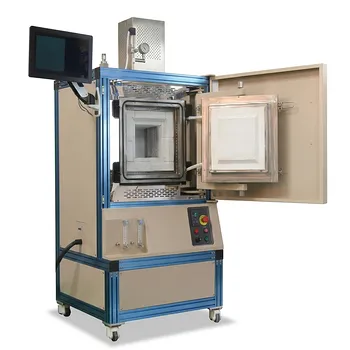
High Temperature Hydrogen Atmosphere Box Furnace 1650C Max Reducing Environment Material Synthesis System 8x8x8 Chamber
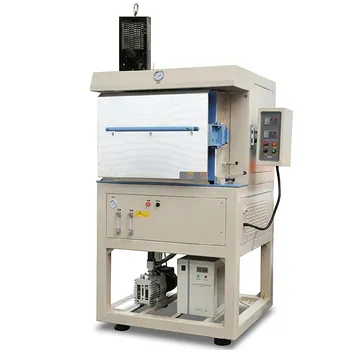
1200C Hydrogen Atmosphere Box Furnace with 5 Heated Sides and 64L Chamber
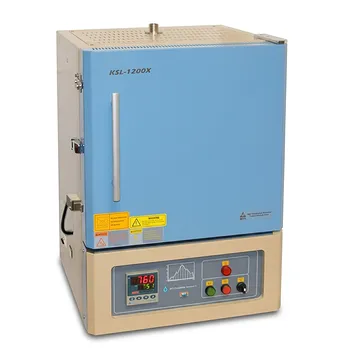
High Temperature 1200C Muffle Furnace 27L Volume 12x12x12 Chamber with Programmable PID Controller for Laboratory Material Science
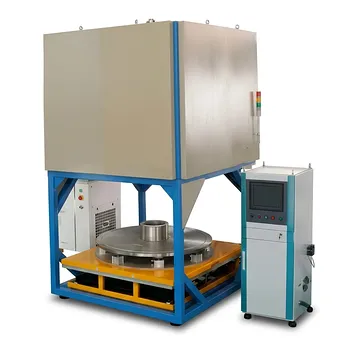
1400C Bottom Loaded Inert Gas Atmosphere Box Furnace with 125L Capacity and Precision Hydraulic Lift
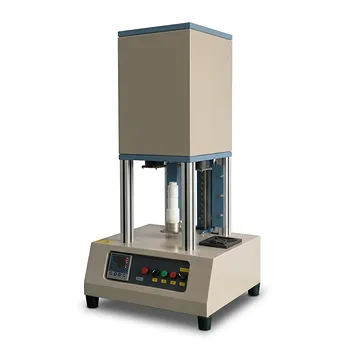
Compact High Temperature Bottom Loading Furnace 1700C Rapid Heating Cooling System Small Sample Thermal Cycling Equipment
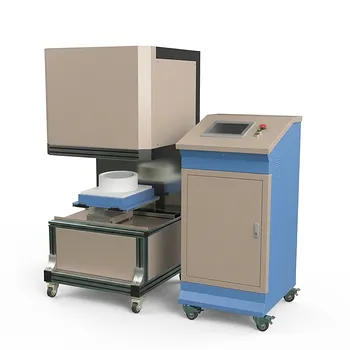
High Temperature Bottom Loading Box Furnace for Rapid Thermal Processing 1700C 40L Capacity