What is the purpose of a multi-point thermocouple in OCM? Monitor Exothermic Heat & Ensure Kinetic Accuracy
Updated 3 months ago
A multi-point thermocouple system serves as the primary diagnostic tool for monitoring intense heat release in methane oxidative coupling (OCM) reactions. It is specifically designed to detect the significant temperature differential between the external furnace and the internal catalyst bed, which can vary by over 100 °C. By capturing these data points, the system confirms when surface-level exothermic reactions successfully trigger the critical gas-phase free radical coupling necessary for the process.
Core Takeaway: Multi-point thermocouples allow researchers to manage the high exothermicity of OCM by monitoring real-time temperature gradients, ensuring the reactor remains stable and that the resulting kinetic data is accurate and scientifically valid.
Detecting and Validating Exothermic Phenomena
Identifying Localized Hotspots
In OCM reactions, the temperature of the catalyst bed can spike far beyond the settings of the external furnace. For example, a furnace set at 410 °C may house a catalyst bed that reaches 549 °C due to the energy released during the reaction.
A multi-point system identifies these hotspots by placing sensors both inside the catalyst bed and outside the reactor. This dual-monitoring approach prevents the oversight of internal thermal runaway that single-point sensors might miss.
Bridging Surface and Gas-Phase Reactions
The data provided by these thermocouples confirms the transition from surface chemistry to gas-phase dynamics. High-resolution temperature data proves that surface exothermic reactions provide the necessary energy to induce gas-phase free radical coupling.
Without this specific spatial data, researchers cannot accurately determine the exact point at which the oxidative coupling mechanism initiates. This understanding is fundamental to optimizing the conversion of methane into higher-order hydrocarbons.
Ensuring Kinetic Accuracy and Control
Monitoring the Temperature Gradient
Because OCM is strongly exothermic, heat is not distributed evenly, creating a temperature gradient across the catalyst. Multi-point systems typically distribute sensors at the top, middle, and bottom of the catalyst bed to map this distribution in real-time.
Mapping the gradient is essential for maintaining a "quasi-isothermal" environment. Significant temperature variations within the bed can lead to non-uniform reaction rates, which complicates the analysis of the catalyst’s performance.
Precision Furnace Regulation
Real-time thermal data allows operators to perform heating power distribution adjustments on the furnace. By reacting to the data from the catalyst bed, operators can counteract exothermic spikes by lowering power to specific furnace zones.
The goal of this active regulation is to keep temperature fluctuations within a minimal range, such as 20 °C. This stability is the only way to acquire accurate intrinsic kinetic parameters, as it ensures the observed reaction rates are a result of the catalyst properties rather than fluctuating thermal conditions.
Understanding the Trade-offs
The Risk of Physical Interference
While adding more thermocouples provides better data resolution, each sensor acts as a physical obstruction within the reactor. In small-scale laboratory reactors, too many probes can disrupt the gas flow patterns or create "wall effects" that bias the results.
Data Complexity and Lag
Managing a multi-point system increases the complexity of data acquisition and requires sophisticated control loops to adjust furnace power. Additionally, there is often a slight thermal lag between the reaction event and the thermocouple response, meaning operators must be cautious not to over-correct the furnace settings based on delayed data.
Applying Thermal Monitoring to Your Research
How to Apply This to Your Project
- If your primary focus is Understanding Reaction Mechanisms: Use multi-point sensors to correlate the exact temperature at which gas-phase radical coupling begins relative to the furnace set point.
- If your primary focus is Kinetic Modeling: Place sensors at the top, middle, and bottom of the bed to ensure temperature fluctuations remain under 20 °C, ensuring your kinetic data is "intrinsic" and not masked by heat transfer limitations.
- If your primary focus is Reactor Safety and Stability: Prioritize real-time monitoring of the catalyst-to-furnace temperature gap to prevent thermal runaway and catalyst sintering.
By integrating a multi-point thermocouple system, you transform the reactor from a "black box" into a transparent environment where heat generation and chemical transformation can be precisely synchronized.
Summary Table:
| Key Function | Technical Benefit | Research Impact |
|---|---|---|
| Hotspot Detection | Identifies internal spikes (>100°C) | Prevents thermal runaway and sintering |
| Gradient Mapping | Monitors bed (Top/Middle/Bottom) | Ensures quasi-isothermal conditions |
| Precision Feedback | Enables active furnace regulation | Secures accurate intrinsic kinetic data |
| Mechanism Validation | Tracks gas-phase radical coupling | Optimizes methane-to-hydrocarbon conversion |
Precision Thermal Solutions for Your R&D Success
Achieving stable temperature gradients in highly exothermic reactions like OCM requires more than just a furnace—it requires precision engineering. THERMUNITS is a leading manufacturer of high-temperature laboratory equipment tailored for material science and industrial R&D.
We offer a comprehensive range of thermal processing solutions to help you maintain strict kinetic control, including:
- Furnaces: Muffle, Vacuum, Atmosphere, Tube, Rotary, and Hot Press models.
- Advanced Systems: CVD/PECVD systems, Dental Furnaces, and Vacuum Induction Melting (VIM) units.
- Components: Electric rotary kilns, Thermal Elements, and specialized heat treatment tools.
Whether you are mapping temperature gradients or scaling up chemical vapor deposition, our equipment provides the reliability your data deserves.
Ready to enhance your lab's efficiency and accuracy?
Contact THERMUNITS today to discuss your custom requirements.
References
- Keiju Wachi, Kazuya YAMAGUCHI. Oxidative Coupling of Methane under High-pressure Conditions Using a Na<sub>2</sub>WO<sub>4</sub>/SiO<sub>2</sub> Catalyst. DOI: 10.1627/jpi.67.71
Mentioned Products
- Multi Position Tube Furnace 1100C for Laboratory Material Research and Advanced Industrial Thermal Processing
- Three Temperature Zone Fast Heating Furnace 1500C Laboratory High Precision Thermal Processing System
- Induction Heating System with Temperature Control for High Temperature Vacuum Sintering and Melting
- Compact Atmosphere Controlled Rapid Thermal Processing RTP Furnace with 4 Inch ID Quartz Tube 1100C
- Ten Zone Multi Orientation Laboratory Tube Furnace for 1200C High Temperature Gradient Thermal Processing
People Also Ask
- Why use a tube furnace for oxygen annealing LaCrO3/LaMnO3? Optimize Phase Transition & Magnetic Performance.
- What key role does a laboratory high-temperature tube furnace play in the production of carbon nanofibers? Guide
- How is a laboratory high-temperature tube furnace utilized to research the products of aluminothermic reduction? Advanced Metallurgical Solutions
- What is the role of a laboratory tube furnace in the carbonization process of porous carbon foam (PCF)? Master 3D Synthesis
- What role does a laboratory tube furnace play in the pyrolysis and carbonization of biomass? Optimize Thermal Research.

Tech Team · ThermUnits
Last updated on Jun 02, 2026
Related Products
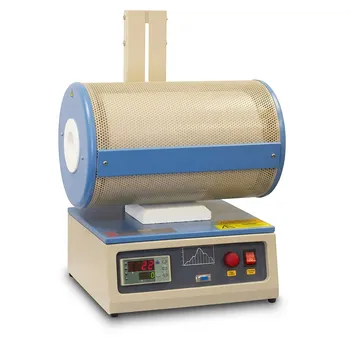
Multi Position Tube Furnace 1100C for Laboratory Material Research and Advanced Industrial Thermal Processing
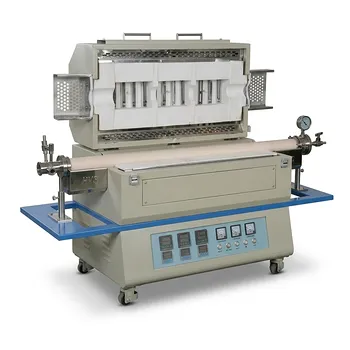
Three Temperature Zone Fast Heating Furnace 1500C Laboratory High Precision Thermal Processing System
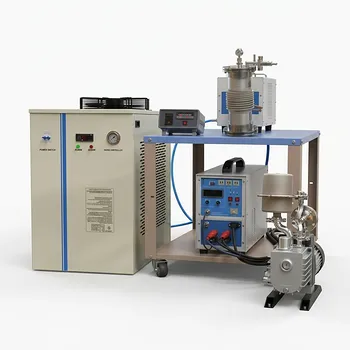
Induction Heating System with Temperature Control for High Temperature Vacuum Sintering and Melting
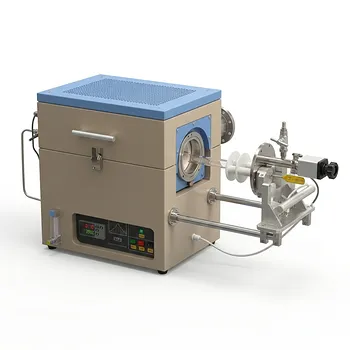
Compact Atmosphere Controlled Rapid Thermal Processing RTP Furnace with 4 Inch ID Quartz Tube 1100C
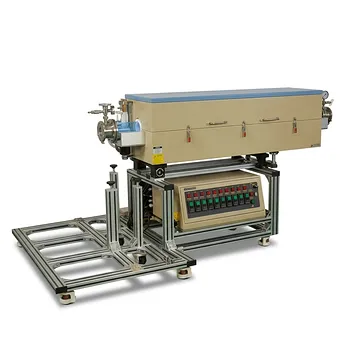
Ten Zone Multi Orientation Laboratory Tube Furnace for 1200C High Temperature Gradient Thermal Processing