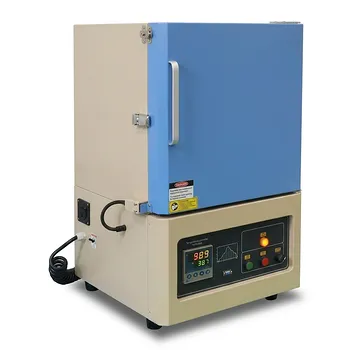
Why use a tube furnace for oxygen annealing LaCrO3/LaMnO3? Optimize Phase Transition & Magnetic Performance.
Updated 3 months ago
Oxygen annealing in a high-temperature tube furnace is primarily used to eliminate oxygen vacancies and facilitate a critical structural phase transition in $LaCrO_3/LaMnO_3$ heterostructures. By providing a uniform thermal environment of approximately 650 °C under a high-purity oxygen atmosphere, the furnace supplies the energy required to drive oxygen atoms into the crystal lattice. This process directly modifies the oxidation state of Manganese (Mn) ions, which ultimately tunes the magnetic characteristics and anisotropy of the fabricated sample.
Core Takeaway: The tube furnace acts as a controlled reactor that uses thermal energy and high-purity oxygen to repair lattice defects and shift the material from an orthorhombic to a rhombohedral phase, thereby refining its electronic and magnetic performance.
Restoring Lattice Integrity and Phase Balance
Eliminating Oxygen Vacancies
During the initial growth of $LaCrO_3/LaMnO_3$ samples, the crystal lattice often suffers from missing oxygen atoms, known as vacancies. The tube furnace maintains a precise 1-standard-atmosphere oxygen environment, providing the chemical potential necessary to force oxygen back into these gaps.
Facilitating Structural Phase Transitions
The thermal energy provided by the furnace at 650 °C allows the atoms within the heterostructure to rearrange into a more stable configuration. This specific annealing process drives a transition from an orthorhombic phase to a rhombohedral phase.
Relieving Internal Microscopic Stress
Like many thin-film fabrication processes, the initial deposition of $LaCrO_3$ and $LaMnO_3$ can introduce significant internal stresses and lattice strain. Annealing allows for thermal diffusion, which relaxes these stresses and improves the overall crystallinity and phase purity of the heterostructure.
Modifying Electronic and Magnetic States
Increasing Manganese Oxidation States
A critical outcome of oxygen annealing is the impact on the Manganese (Mn) ions within the $LaMnO_3$ layers. By filling oxygen vacancies, the process increases the oxidation state of Mn, which is a primary driver of the material's functional properties.
Tuning Magnetic Anisotropy
The shift in crystal structure and ion oxidation directly influences how the material responds to magnetic fields. This enables researchers to precisely modify the magnetic characteristics and anisotropy, making the heterostructure suitable for specific spintronic or magnetic storage applications.
Optimizing Electrical Stability
Beyond magnetism, the transition from a weakly crystalline or amorphous state to a highly ordered structure improves electrical stability. This ensures that the electronic properties of the $LaCrO_3/LaMnO_3$ interface remain consistent during device operation.
Understanding the Trade-offs and Limitations
Precision of Temperature Control
If the temperature is too low, the thermal energy will be insufficient to drive oxygen into the lattice or trigger the phase transition. Conversely, excessive temperatures can lead to unwanted grain growth or interdiffusion at the interface between the $LaCrO_3$ and $LaMnO_3$ layers, potentially degrading the heterostructure's unique properties.
Atmosphere Purity and Pressure
The success of this process relies heavily on the purity of the oxygen atmosphere. Contaminants in the gas stream can introduce new defects, while fluctuations in pressure (which should ideally be maintained at 1 atm for this specific material) can result in non-uniform oxygen distribution across the sample.
Processing Time vs. Phase Purity
While long annealing times can improve crystallinity, they also increase the risk of compositional segregation. Finding the "sweet spot" in duration is essential to ensure the transition to the rhombohedral phase is complete without compromising the distinct boundaries of the heterostructure layers.
How to Apply This to Your Project
When utilizing a high-temperature tube furnace for post-fabrication treatment, your parameters must align with your specific material goals.
- If your primary focus is maximizing magnetic performance: Prioritize the 650 °C oxygen anneal to ensure the Manganese ions reach the correct oxidation state and the rhombohedral transition is complete.
- If your primary focus is structural stability and stress relief: Focus on a controlled ramp-up and cool-down cycle to prevent the introduction of new thermal stresses during the phase transition.
- If your primary focus is phase purity in complex oxides: Ensure the oxygen atmosphere is high-purity and maintained at a constant pressure to prevent the formation of secondary oxide phases.
By precisely controlling the thermal and atmospheric environment, you transform a defective as-grown film into a highly ordered, functionally optimized heterostructure.
Summary Table:
| Process Element | Impact on LaCrO3/LaMnO3 | Functional Benefit |
|---|---|---|
| High-Purity O2 | Eliminates oxygen vacancies | Restores lattice integrity and stoichiometry |
| 650°C Thermal Energy | Facilitates structural phase transition | Shifts from orthorhombic to rhombohedral phase |
| Controlled Environment | Relieves internal microscopic stress | Enhances crystallinity and phase purity |
| Oxidation Control | Increases Mn ion oxidation states | Precision tuning of magnetic anisotropy |
Elevate Your Material Research with THERMUNITS Precision Furnaces
Achieving the perfect rhombohedral phase transition in LaCrO3/LaMnO3 heterostructures requires absolute control over temperature and atmosphere. As a leading manufacturer of high-temperature laboratory equipment, THERMUNITS provides the advanced thermal processing solutions necessary for cutting-edge material science.
Our specialized range includes:
- High-Precision Tube & Atmosphere Furnaces: Perfect for oxygen annealing and phase transition control.
- Vacuum & CVD/PECVD Systems: For advanced thin-film fabrication and research.
- Specialized Solutions: Muffle, Rotary, Hot Press, and Vacuum Induction Melting (VIM) furnaces.
Whether you are focusing on spintronics or industrial R&D, our equipment ensures uniform heating and high-purity environments to optimize your samples' electronic and magnetic performance.
Ready to refine your heat treatment process? Contact THERMUNITS today to discuss your specific laboratory requirements with our technical experts!
References
- Xuanyi Zhang, Divine P. Kumah. The Role of Interfacial Interactions and Oxygen Vacancies in Tuning Magnetic Anisotropy in LaCrO<sub>3</sub>/LaMnO<sub>3</sub> Heterostructures. DOI: 10.1002/admi.202400243
Mentioned Products
- 1800C High Temperature Compact Vacuum Tube Furnace with 60mm OD Alumina Tube and Kanthal MoSi2 Heating Elements
- High Temperature 1200C Split Tube Furnace with Hinged Vacuum Flanges and 4 Inch Quartz Tube for Laboratory Research
- High Temperature Automated 5 Inch Tube Furnace for Autonomous Material Research and Advanced Laboratory R&D
- Ten Zone Multi Orientation Laboratory Tube Furnace for 1200C High Temperature Gradient Thermal Processing
- 1700C High Temperature Alumina Tube Furnace with 18 Inch Heated Zone and Vacuum Sealing Flanges
People Also Ask
- What core functions does a high-temperature vacuum tube furnace provide? Optimize np-CuSn Sintering & Joint Integrity
- What is the primary function of a high-temperature tube furnace in Cu1-N-C synthesis? Precision Thermal Control.
- What impact does the heating rate of a tube furnace have on biochar microstructure? Optimize Your Material R&D.
- Role of Tube Furnace in KNNLST Ceramic Synthesis: Achieve High Phase Purity and Thermal Uniformity
- What is the role of a high-temperature tube furnace in the preparation of S-C3N4? Master Precision Material Synthesis

Tech Team · ThermUnits
Last updated on Jun 03, 2026
Related Products

1800C High Temperature Compact Vacuum Tube Furnace with 60mm OD Alumina Tube and Kanthal MoSi2 Heating Elements
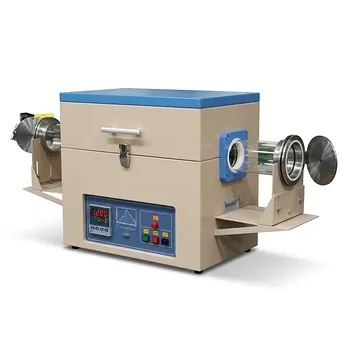
High Temperature 1200C Split Tube Furnace with Hinged Vacuum Flanges and 4 Inch Quartz Tube for Laboratory Research

High Temperature Automated 5 Inch Tube Furnace for Autonomous Material Research and Advanced Laboratory R&D
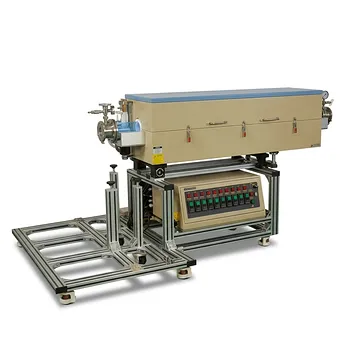
Ten Zone Multi Orientation Laboratory Tube Furnace for 1200C High Temperature Gradient Thermal Processing

1700C High Temperature Alumina Tube Furnace with 18 Inch Heated Zone and Vacuum Sealing Flanges
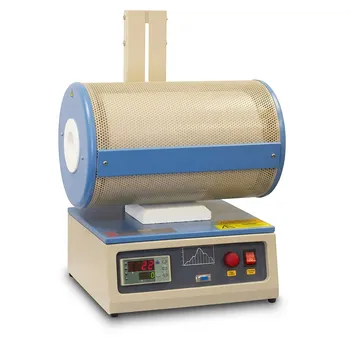
Multi Position Tube Furnace 1100C for Laboratory Material Research and Advanced Industrial Thermal Processing

High Temperature 1700C Tube Furnace with 4 Inch OD Alumina Tube and Vacuum Sealing Flanges
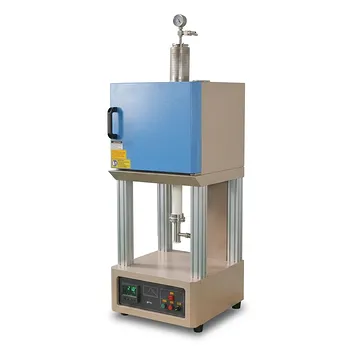
Hybrid High Temperature Tube and Box Furnace 1700C with 2 Inch Alumina Tube for Material Research
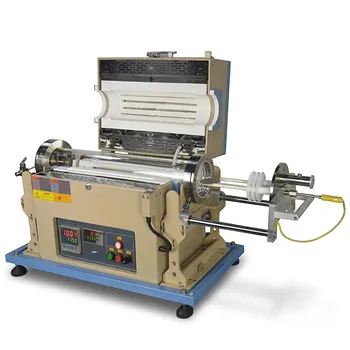
1200°C High Temperature 4 Inch Tube Furnace with Sliding Flange for CVD Systems
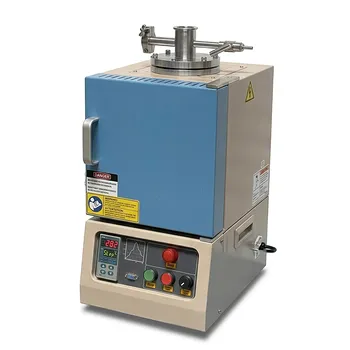
High Temperature Hybrid Muffle and Tube Furnace with Vacuum Capability and PID Control

High Temperature 1700C Tube Furnace with High Vacuum Turbomolecular Pump System and Multi Channel Mass Flow Controller Gas Mixer
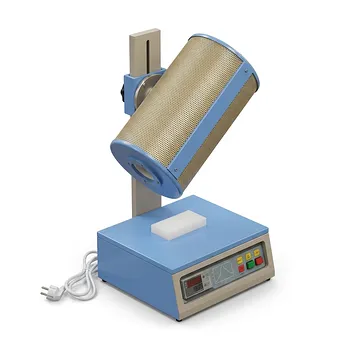
1100°C Vertical Laboratory Furnace for DIY Tubular Reactors with PID Temperature Controller

High Temperature Tube Furnace 1500C with Sliding Flanges and 50mm OD for Rapid Thermal Processing Fast Heating and Cooling

1750°C High Temperature Benchtop Vacuum Atmosphere Tube Furnace with Kanthal Super 1800 Heating Elements and 60mm Alumina Processing Tube
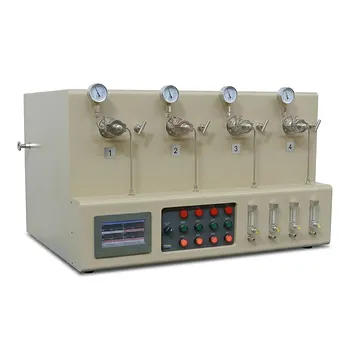
High Temperature 1700C 4 Channel Tube Furnace 1 Inch Alumina Tube for Hi-Throughput Annealing

High Temperature 1700C Benchtop Tube Furnace with 5 Inch Heating Zone High Purity Alumina Tube and Vacuum Sealing Flanges

High Temperature 1700C Vertical Tube Furnace for Powder Spherification and Material Sintering
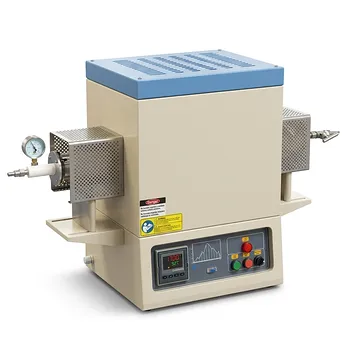
High Temperature Three Zone Tube Furnace 1700C with Alumina Tube and Water Cooled Flanges
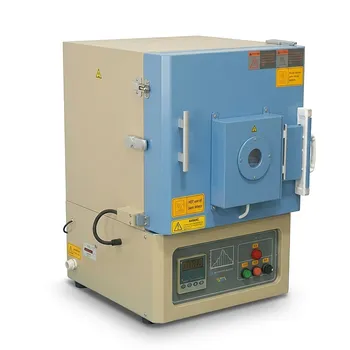
High Temperature Benchtop Muffle Furnace 1500C with 3.6L Chamber and Quartz Observation Window