What key role does a laboratory high-temperature tube furnace play in the production of carbon nanofibers? Guide
Updated 3 months ago
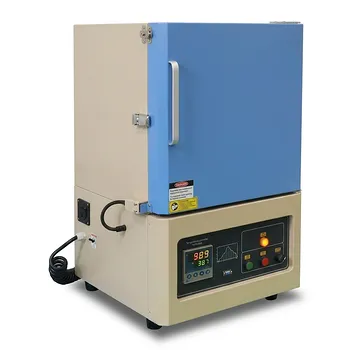
The primary role of a laboratory high-temperature tube furnace in carbon nanofiber production is to provide a strictly controlled, oxygen-free environment for carbonization. At temperatures typically reaching 1000 °C, the furnace uses an inert nitrogen atmosphere to prevent the oxidation (burning) of fibers while facilitating the chemical transformation of polymer precursors into highly conductive, high-strength carbon structures.
The tube furnace acts as a precision thermal reactor that manages the delicate transition from organic polymers to inorganic carbon. By balancing atmospheric purity with precise thermal ramping, it ensures the resulting nanofibers possess the specific surface area and electrical properties required for advanced technical applications.
Facilitating Structural Transformation and Carbonization
Conversion of Polymer Frameworks
The furnace provides the intense heat necessary to drive dehydrogenation and polycondensation reactions in precursor materials like polyacrylonitrile (PAN). As temperatures climb toward 1000 °C, the organic polymer framework is stripped of non-carbon elements, leaving behind a dense, highly conductive carbon structure.
Promoting Graphitization and Porosity
Within the 600 °C to 900 °C range, the furnace’s precision control system allows for "soaking times" that encourage the rearrangement of carbon atoms. This deliberate thermal soaking is critical for developing ultramicropore structures and high specific surface areas, which are vital for the fiber's chemical stability.
Removal of Non-Carbon Volatiles
As the precursor fibers are heated, the furnace effectively eliminates organic residues and volatile components. This purification process is essential for transforming a flexible, non-conductive polymer into a lightweight, high-strength substrate suitable for electronics and energy storage.
Managing the Critical Inert Environment
Prevention of Oxidative Loss
Carbon materials are highly susceptible to oxidation at high temperatures; without a strictly inert atmosphere, the nanofibers would simply turn to ash. The superior sealing performance of a tube furnace ensures that high-purity nitrogen or argon replaces all oxygen, protecting the fiber's integrity.
Support for Chemical Vapor Deposition (CVD)
In many production workflows, the tube furnace creates the environment for Chemical Vapor Deposition. It manages the axial temperature gradient necessary for carbon source adsorption and the vertical growth of nanotubes or nanofibers onto metallic substrates.
Thermal Decomposition of Catalysts
Beyond carbonization, the furnace is used for the calcination of catalyst precursors, such as converting cobalt nitrate into active cobalt oxide nanoparticles. This step, often performed at approximately 550 °C, ensures that catalytic sites are securely anchored and properly sized for subsequent fiber growth.
Understanding the Trade-offs and Challenges
Thermal Gradient Risks
One significant challenge is maintaining temperature uniformity across the entire length of the tube. If the axial temperature gradient is inconsistent, the nanofibers may exhibit varied structural properties, leading to defects in electrical conductivity or mechanical strength within the same batch.
Seal Integrity and Contamination
The effectiveness of the furnace is entirely dependent on its vacuum-tight seals. Even a microscopic leak can introduce oxygen, which causes pitting on the fiber surface or total mass loss, fundamentally compromising the chemical stability of the final product.
Heating Rate Sensitivity
Moving too quickly through temperature zones can lead to structural fragmentation. Precise control over the heating ramp is required to allow gases to escape the fiber slowly; rapid heating can cause internal pressure to build, resulting in hollow or brittle fibers rather than solid, high-strength structures.
Implementing Furnace Technology for Production Goals
How to Apply This to Your Project
Success in carbon nanofiber production depends on aligning your furnace parameters with your specific material requirements.
- If your primary focus is Electrical Conductivity: Prioritize a furnace capable of maintaining a stable 1000 °C nitrogen environment to ensure complete carbonization and framework transformation.
- If your primary focus is High Surface Area: Focus on the precision control of soaking times between 600 °C and 900 °C to promote the development of ultramicropore structures.
- If your primary focus is Catalyst Activation: Utilize a furnace with high thermal stability at lower ranges (450 °C - 550 °C) to ensure uniform calcination of metal salts without sintering the particles.
- If your primary focus is Substrate Cleanliness: Use the furnace for pre-treatment at 450 °C in an inert gas environment to effectively remove organic sizing agents and residues.
By mastering the furnace's atmospheric and thermal controls, you can precisely engineer the physical and chemical characteristics of carbon nanofibers for any industrial application.
Summary Table:
| Function | Operating Temperature | Key Benefit |
|---|---|---|
| Carbonization | ~1000 °C | Converts organic polymers into conductive carbon structures. |
| Graphitization | 600 °C - 900 °C | Promotes porosity and develops high specific surface areas. |
| Inert Protection | High Temperature | Prevents fiber oxidation using Nitrogen/Argon atmospheres. |
| Catalyst Activation | ~550 °C | Calcinates precursors into active metallic nanoparticles. |
| CVD Support | Variable | Manages axial gradients for uniform carbon source adsorption. |
Elevate Your Carbon Research with THERMUNITS Precision
As a leading manufacturer of high-temperature laboratory equipment for material science and industrial R&D, THERMUNITS provides the advanced thermal processing solutions you need to master nanofiber production. Whether you are scaling up production using our high-performance Tube and CVD/PECVD systems, or conducting fundamental research with our Muffle, Vacuum, and Atmosphere furnaces, we ensure superior temperature uniformity and atmospheric purity.
Our comprehensive range also includes Rotary and Hot Press furnaces, Dental Furnaces, Electric Rotary Kilns, Vacuum Induction Melting (VIM) systems, and specialized Thermal Elements. We empower researchers and industrial engineers to achieve consistent, high-strength material outcomes through precision heat treatment.
Contact THERMUNITS today to discuss how our expertise in laboratory heat treatment equipment can enhance your R&D outcomes and industrial efficiency!
References
- Bi-Ying Wang, Dawei Wang. Heterostructured WO <sub>x</sub> /W <sub>2</sub> C Nanocatalyst for Li <sub>2</sub> S Oxidation in Lithium–Sulfur Batteries with High‐Areal‐Capacity. DOI: 10.1002/smll.202310801
Mentioned Products
- 1800C High Temperature Compact Vacuum Tube Furnace with 60mm OD Alumina Tube and Kanthal MoSi2 Heating Elements
- High Temperature 1200C Split Tube Furnace with Hinged Vacuum Flanges and 4 Inch Quartz Tube for Laboratory Research
- High Temperature Automated 5 Inch Tube Furnace for Autonomous Material Research and Advanced Laboratory R&D
- Ten Zone Multi Orientation Laboratory Tube Furnace for 1200C High Temperature Gradient Thermal Processing
- 1700C High Temperature Alumina Tube Furnace with 18 Inch Heated Zone and Vacuum Sealing Flanges
People Also Ask
- What core functions does a high-temperature vacuum tube furnace provide? Optimize np-CuSn Sintering & Joint Integrity
- What is the primary function of a high-temperature tube furnace in Cu1-N-C synthesis? Precision Thermal Control.
- What impact does the heating rate of a tube furnace have on biochar microstructure? Optimize Your Material R&D.
- Role of Tube Furnace in KNNLST Ceramic Synthesis: Achieve High Phase Purity and Thermal Uniformity
- What is the role of a high-temperature tube furnace in the preparation of S-C3N4? Master Precision Material Synthesis

Tech Team · ThermUnits
Last updated on Jun 03, 2026
Related Products

1800C High Temperature Compact Vacuum Tube Furnace with 60mm OD Alumina Tube and Kanthal MoSi2 Heating Elements
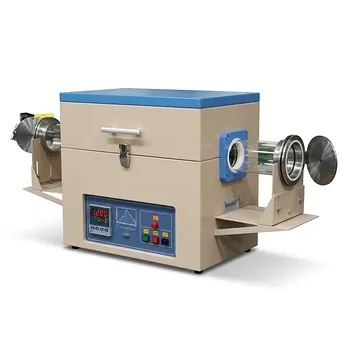
High Temperature 1200C Split Tube Furnace with Hinged Vacuum Flanges and 4 Inch Quartz Tube for Laboratory Research

High Temperature Automated 5 Inch Tube Furnace for Autonomous Material Research and Advanced Laboratory R&D
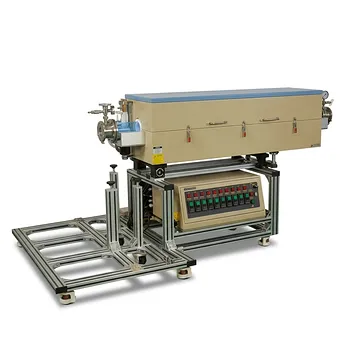
Ten Zone Multi Orientation Laboratory Tube Furnace for 1200C High Temperature Gradient Thermal Processing
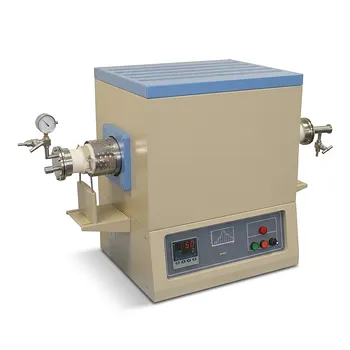
1700C High Temperature Alumina Tube Furnace with 18 Inch Heated Zone and Vacuum Sealing Flanges
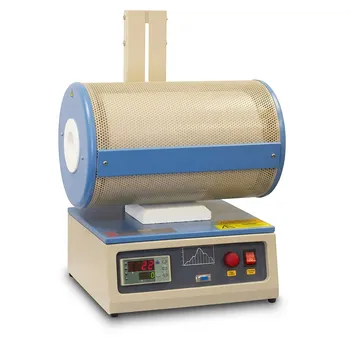
Multi Position Tube Furnace 1100C for Laboratory Material Research and Advanced Industrial Thermal Processing
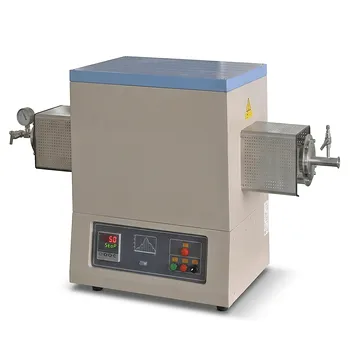
High Temperature 1700C Tube Furnace with 4 Inch OD Alumina Tube and Vacuum Sealing Flanges
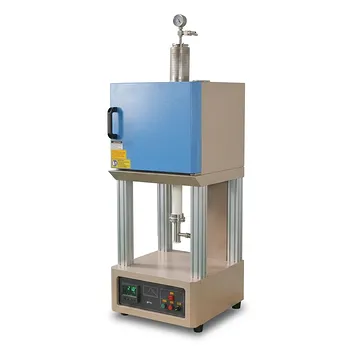
Hybrid High Temperature Tube and Box Furnace 1700C with 2 Inch Alumina Tube for Material Research
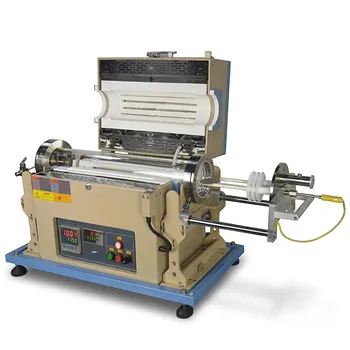
1200°C High Temperature 4 Inch Tube Furnace with Sliding Flange for CVD Systems
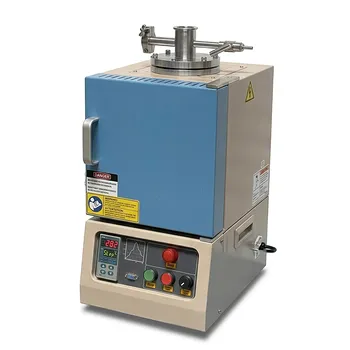
High Temperature Hybrid Muffle and Tube Furnace with Vacuum Capability and PID Control
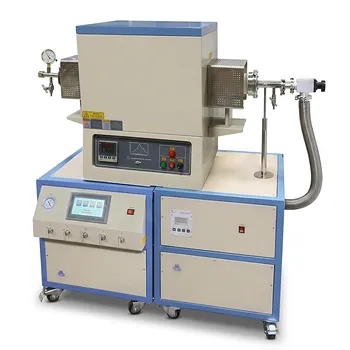
High Temperature 1700C Tube Furnace with High Vacuum Turbomolecular Pump System and Multi Channel Mass Flow Controller Gas Mixer
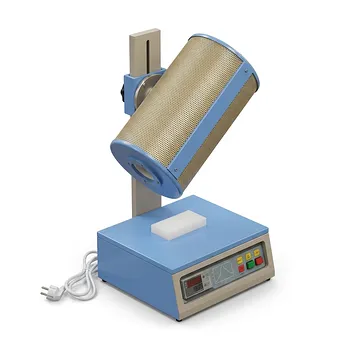
1100°C Vertical Laboratory Furnace for DIY Tubular Reactors with PID Temperature Controller
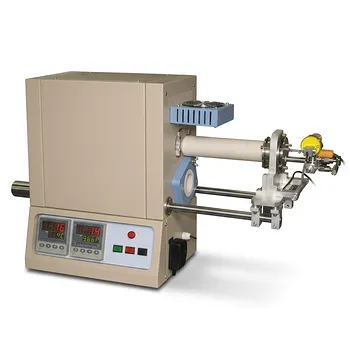
High Temperature Tube Furnace 1500C with Sliding Flanges and 50mm OD for Rapid Thermal Processing Fast Heating and Cooling
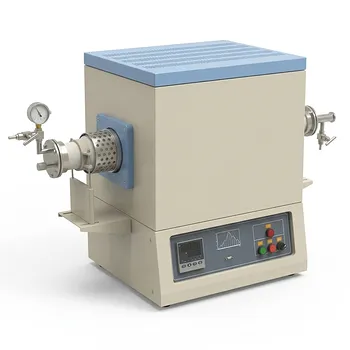
1750°C High Temperature Benchtop Vacuum Atmosphere Tube Furnace with Kanthal Super 1800 Heating Elements and 60mm Alumina Processing Tube
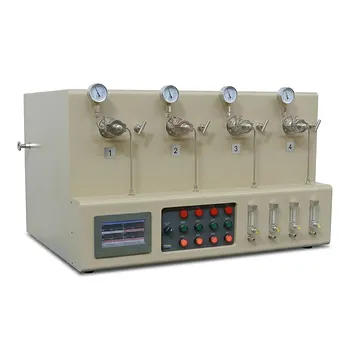
High Temperature 1700C 4 Channel Tube Furnace 1 Inch Alumina Tube for Hi-Throughput Annealing

High Temperature 1700C Benchtop Tube Furnace with 5 Inch Heating Zone High Purity Alumina Tube and Vacuum Sealing Flanges

High Temperature 1700C Vertical Tube Furnace for Powder Spherification and Material Sintering
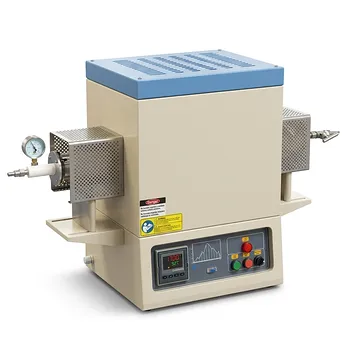
High Temperature Three Zone Tube Furnace 1700C with Alumina Tube and Water Cooled Flanges
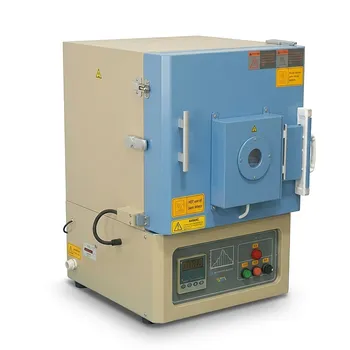
High Temperature Benchtop Muffle Furnace 1500C with 3.6L Chamber and Quartz Observation Window