Why is a tube furnace required for pre-oxidation? Enhance Ti(Nb)-Si-C coating adhesion and substrate durability.
Updated 3 months ago
The pre-oxidation of stainless steel substrates using a laboratory tube furnace is a critical preparatory step designed to engineer a precise, nanometric chromium oxide ($Cr_2O_3$) interface. This controlled thermal process creates a dense oxide layer that serves as a high-affinity nucleation site for Ti(Nb)-Si-C coatings while simultaneously acting as a chemical diffusion barrier. By utilizing the tube furnace’s ability to manage atmosphere and temperature with extreme precision, engineers ensure the mechanical integrity and long-term stability of the coating-substrate system.
Core Takeaway: A laboratory tube furnace is essential because it provides the controlled environment necessary to grow a uniform $Cr_2O_3$ layer, which acts as both a "mechanical anchor" for coating adhesion and a "chemical shield" to prevent elemental inter-diffusion during high-temperature service.
Engineering the Interfacial Layer for Coating Adhesion
Creating High-Affinity Nucleation Sites
The tube furnace provides the thermal energy required to pre-generate a thin, dense chromium oxide ($Cr_2O_3$) film on the stainless steel surface. This oxide layer acts as an excellent nucleation site, significantly enhancing the mechanical bonding between the metallic substrate and the advanced Ti(Nb)-Si-C coating.
Establishing a Robust Diffusion Barrier
Beyond adhesion, the pre-oxidized layer serves as a diffusion barrier during high-temperature operations. It effectively inhibits elemental inter-diffusion between the substrate and the coating, which preserves the chemical stoichiometry and structural integrity of the entire system.
The Technical Necessity of the Tube Furnace
Precision Atmosphere and Oxygen Control
Standard furnaces cannot provide the isolated environment required to prevent uncontrolled, "messy" oxidation. A tube furnace allows for the introduction of inert gases like argon or the creation of a vacuum, ensuring that only the desired oxidation reactions occur at the specified temperature.
Surface Morphology and Stress Relief
High-temperature treatment in a tube furnace can induce surface reconstruction, eliminating microscopic scratches and forming atomically flat structures. Furthermore, the uniform heating helps eliminate residual stresses caused by previous mechanical cutting, ensuring a consistent starting state for the coating deposition.
Temperature Stability and Uniformity
The design of a laboratory tube furnace ensures extreme temperature stability, which is vital for the uniform enrichment of residual elements. This level of control prevents localized defects in the oxide layer that could lead to coating delamination or premature failure under thermal stress.
Understanding the Trade-offs and Limitations
The Risk of Excessive Oxide Growth
While a thin oxide layer is beneficial, over-oxidation can lead to a thick, brittle interface that is prone to cracking. If the furnace temperature or duration is not precisely calibrated, the $Cr_2O_3$ layer may lose its protective qualities and reduce the overall toughness of the bond.
Thermal Mismatch and Cooling Rates
Rapid cooling after the pre-oxidation phase can introduce thermal shock, potentially damaging the newly formed oxide structure. Technical advisors must ensure the furnace's programmed cooling ramp is steady to maintain the structural integrity of the substrate surface before it enters the deposition chamber.
How to Apply This to Your Project
Once you understand the mechanisms of pre-oxidation, you can tailor your furnace parameters to your specific performance requirements.
- If your primary focus is Maximum Coating Adhesion: Focus on a precise, low-oxygen ramp-up to ensure a dense $Cr_2O_3$ layer that provides the highest density of nucleation sites.
- If your primary focus is High-Temperature Durability: Prioritize the "soaking" phase in the tube furnace to ensure the oxide layer is sufficiently uniform to act as a long-term diffusion barrier.
- If your primary focus is Substrate Purity: Utilize a high-vacuum tube furnace ($10^{-3}$ Pa) to eliminate all moisture and ambient contaminants before the formal oxidation stage begins.
By leveraging the controlled environment of a tube furnace, you transform a simple substrate into a high-performance engineered platform ready for advanced ceramic deposition.
Summary Table:
| Feature | Function in Pre-Oxidation | Impact on Performance |
|---|---|---|
| Atmosphere Control | Precise oxygen/inert gas management | Creates a dense, uniform $Cr_2O_3$ layer |
| Temperature Stability | Extreme thermal uniformity | Prevents localized defects and coating failure |
| Diffusion Barrier | Engineered interfacial shielding | Inhibits elemental inter-diffusion during service |
| Stress Relief | Controlled heating and cooling ramps | Eliminates residual stresses and surface flaws |
Optimize Your Coating Research with THERMUNITS
As a leading manufacturer of high-temperature laboratory equipment for material science and industrial R&D, THERMUNITS provides the precision required for critical pre-oxidation treatments. Our comprehensive range of thermal solutions—including Tube, Vacuum, Atmosphere, and Muffle furnaces, as well as CVD/PECVD systems—ensures uniform oxide layer growth and superior adhesion for advanced Ti(Nb)-Si-C coatings.
Whether you need an electric rotary kiln or a vacuum induction melting furnace, our equipment is designed to enhance your lab's efficiency and results. Contact us today to find the perfect thermal processing solution for your R&D needs!
References
- Xichao Li, Lili Zheng. The Preparation and Properties of Ti(Nb)-Si-C Coating on the Pre-Oxidized Ferritic Stainless Steel for Solid Oxide Fuel Cell Interconnect. DOI: 10.3390/ma17030632
Mentioned Products
- Multi Position Tube Furnace 1100C for Laboratory Material Research and Advanced Industrial Thermal Processing
- Ten Zone Multi Orientation Laboratory Tube Furnace for 1200C High Temperature Gradient Thermal Processing
- High Temperature 1200C Split Tube Furnace with Hinged Vacuum Flanges and 4 Inch Quartz Tube for Laboratory Research
- High Temperature Automated 5 Inch Tube Furnace for Autonomous Material Research and Advanced Laboratory R&D
- 1800C High Temperature Compact Vacuum Tube Furnace with 60mm OD Alumina Tube and Kanthal MoSi2 Heating Elements
People Also Ask
- Why use a tube furnace for oxygen annealing LaCrO3/LaMnO3? Optimize Phase Transition & Magnetic Performance.
- What key role does a laboratory high-temperature tube furnace play in the production of carbon nanofibers? Guide
- How is a laboratory high-temperature tube furnace utilized to research the products of aluminothermic reduction? Advanced Metallurgical Solutions
- What is the role of a laboratory tube furnace in the carbonization process of porous carbon foam (PCF)? Master 3D Synthesis
- What role does a laboratory tube furnace play in the pyrolysis and carbonization of biomass? Optimize Thermal Research.

Tech Team · ThermUnits
Last updated on Jun 03, 2026
Related Products
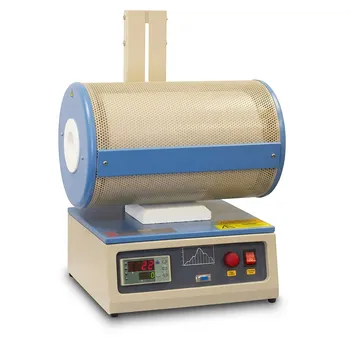
Multi Position Tube Furnace 1100C for Laboratory Material Research and Advanced Industrial Thermal Processing
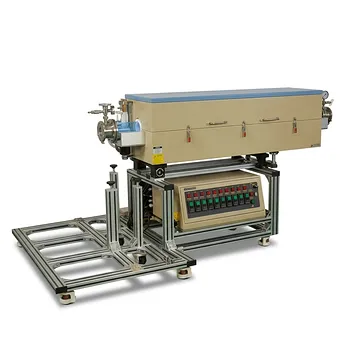
Ten Zone Multi Orientation Laboratory Tube Furnace for 1200C High Temperature Gradient Thermal Processing
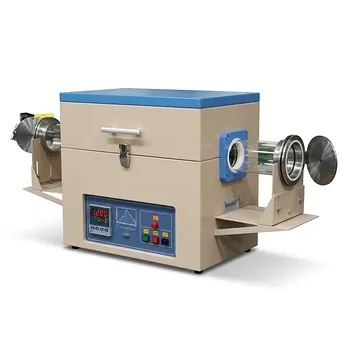
High Temperature 1200C Split Tube Furnace with Hinged Vacuum Flanges and 4 Inch Quartz Tube for Laboratory Research

High Temperature Automated 5 Inch Tube Furnace for Autonomous Material Research and Advanced Laboratory R&D

1800C High Temperature Compact Vacuum Tube Furnace with 60mm OD Alumina Tube and Kanthal MoSi2 Heating Elements
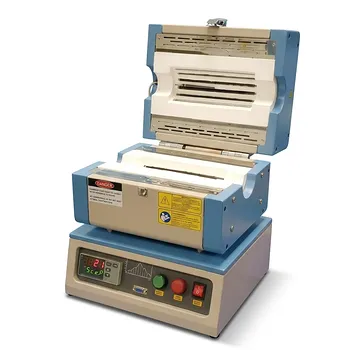
1250C Compact Split Tube Furnace with 8 Inch Heating Zone and Programmable Controller
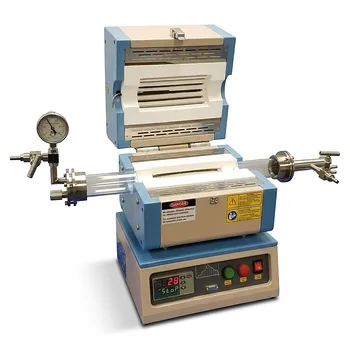
Compact Split Tube Furnace with Integrated Vacuum System and Precision Temperature Calibrator
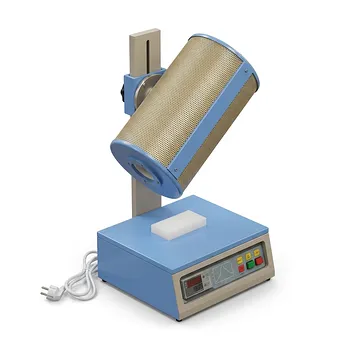
1100°C Vertical Laboratory Furnace for DIY Tubular Reactors with PID Temperature Controller
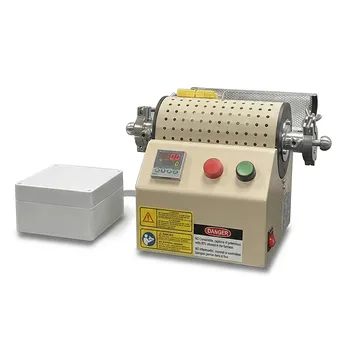
1000C Mini Tube Furnace with 20mm Quartz Tube and Vacuum Flanges for Material Science Research and Controlled Atmosphere Small Sample Processing
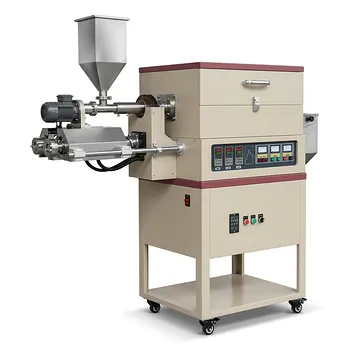
Laboratory Tilting Rotary Tubular Furnaces for Material Science and Industrial Heat Treatment
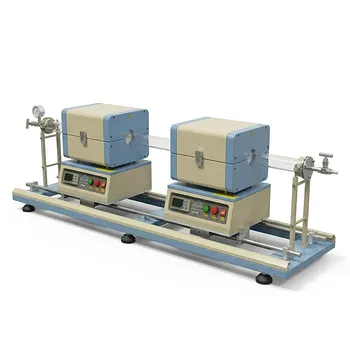
1200C Max Dual Sliding Tube Furnace with 50 mm Tube Flanges for CVD
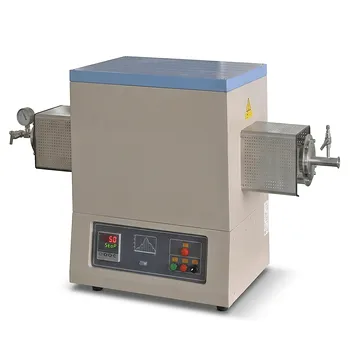
High Temperature 1700C Tube Furnace with 4 Inch OD Alumina Tube and Vacuum Sealing Flanges
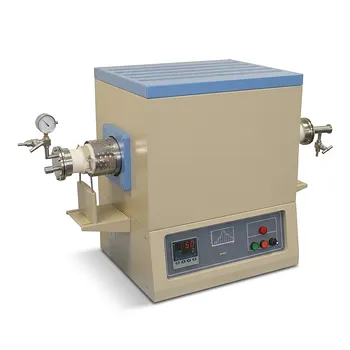
1700C High Temperature Alumina Tube Furnace with 18 Inch Heated Zone and Vacuum Sealing Flanges
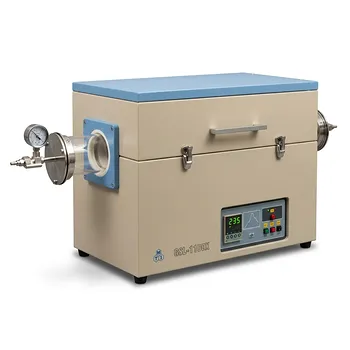
Single Zone Tube Furnace 5 Inch Quartz Tube 36 Inch Heating Zone Vacuum Flanges
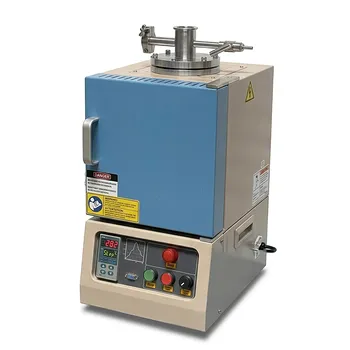
High Temperature Hybrid Muffle and Tube Furnace with Vacuum Capability and PID Control
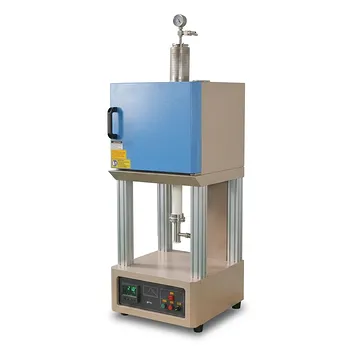
Hybrid High Temperature Tube and Box Furnace 1700C with 2 Inch Alumina Tube for Material Research
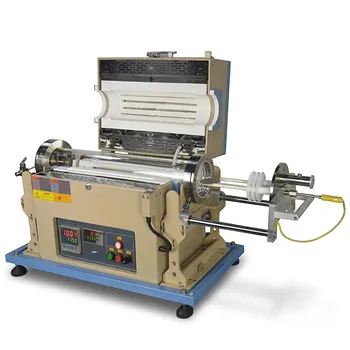
1200°C High Temperature 4 Inch Tube Furnace with Sliding Flange for CVD Systems
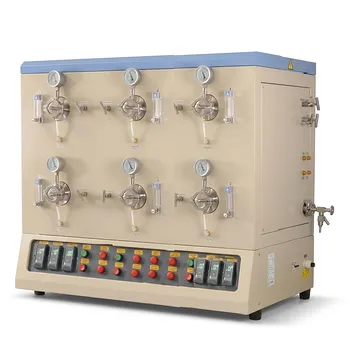
1200C High Throughput Multi Channel Tube Furnace with 50mm Quartz Tubes for Annealing and Material Phase Diagram Research

High Temperature 1700C Vertical Tube Furnace for Powder Spherification and Material Sintering