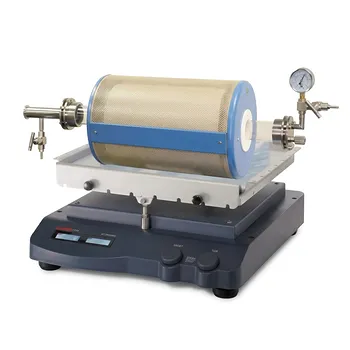
What role does a laboratory tube furnace play during the carbonization stage of seaweed-residue carbon aerogel materials?
Updated 3 months ago
The laboratory tube furnace is the critical reactor for seaweed-residue carbonization, providing an oxygen-free, high-temperature environment (typically 700°C to 1000°C) that transforms biomass precursors into graphitized carbon frameworks. Beyond simple heating, it drives the chemical reduction of additives like iron salts into conductive nanocrystals and ensures the removal of volatile organic components through anaerobic pyrolysis.
The tube furnace acts as a precision environment for structural and chemical metamorphosis, ensuring seaweed residues are converted into high-performance carbon aerogels through controlled deoxygenation, aromatization, and graphitization.
Establishing the Thermal Environment
Maintaining an Oxygen-Free Atmosphere
The primary role of the tube furnace is to provide a strictly anaerobic environment by utilizing inert gas flows, such as nitrogen or argon. This prevents the seaweed residue from combusting into ash, allowing instead for pyrolysis and carbon isolation.
Precise Temperature Regulation
By maintaining constant temperatures at specific thresholds like 700°C or 1000°C, the furnace ensures the biomass precursors are fully carbonized. This steady thermal energy is essential for the transition from a disorganized organic structure to a stable carbon skeleton.
Controlling Heating Rates
The ability to set specific heating rates (e.g., 3°C per minute) prevents structural collapse during the escape of volatiles. Gradual heating allows for a more uniform deoxygenation process, which is vital for maintaining the aerogel's delicate three-dimensional architecture.
Driving Chemical and Structural Metamorphosis
Facilitating Graphitization
High-temperature treatment within the furnace facilitates the aromatization and graphitization of the carbon. This process rearranges carbon atoms into a more ordered framework, significantly enhancing the material's mechanical stability and durability.
Conversion of Precursor Additives
The furnace drives critical secondary chemical reactions, such as converting loaded iron salts into metallic iron and iron carbide nanocrystals. These inclusions are vital for providing the final aerogel with high electrical conductivity and electrocatalytic activity.
Evolution of Porous Structures
As the furnace drives off volatile components, it leaves behind a multi-layered carbon skeleton. This controlled removal of non-carbon elements is what develops the microporous shell and high specific surface area required for advanced applications.
Understanding the Trade-offs
Thermal Gradients and Uniformity
While tube furnaces offer precise control, the temperature gradient across the tube can sometimes lead to slight inconsistencies in carbonization between the center and the edges of the sample. Ensuring the sample is placed in the "sweet spot" of the furnace is critical for achieving a uniform graphitic structure.
Throughput and Gas Consumption
Tube furnaces are primarily batch-processing tools, which limits the volume of carbon aerogel that can be produced at one time. Additionally, maintaining the necessary inert atmosphere requires a continuous flow of high-purity nitrogen or argon, which increases operational costs compared to simpler thermal treatments.
How to Apply This to Your Project
Selecting Parameters Based on Your Goal
The settings of your tube furnace should be dictated by the intended application of your seaweed-derived carbon material.
- If your primary focus is Maximum Conductivity: Utilize higher temperatures (1000°C+) to promote a higher degree of graphitization and more efficient nanocrystal formation.
- If your primary focus is High Surface Area: Opt for lower heating rates and moderate temperatures (500°C to 700°C) to prevent pore sintering and preserve the complex microporous skeleton.
- If your primary focus is Catalytic Activity: Ensure the furnace dwell time is sufficient to fully convert metallic salt precursors into their active carbide or metallic phases.
By precisely controlling the atmosphere and thermal profile, the tube furnace transforms raw seaweed waste into a sophisticated, high-performance technical material.
Summary Table:
| Process Function | Key Parameter | Strategic Benefit |
|---|---|---|
| Atmosphere Control | Inert Gas (N2/Ar) | Prevents combustion; ensures anaerobic pyrolysis |
| Thermal Regulation | 700°C – 1000°C | Facilitates carbonization and graphitization |
| Structural Integrity | Low Heating Rates | Prevents pore collapse; preserves 3D architecture |
| Chemical Conversion | Controlled Dwell Time | Transforms additives into conductive nanocrystals |
Precision Thermal Solutions for Advanced Material Science
Achieving the delicate structural balance of carbon aerogels requires the highest levels of thermal accuracy. THERMUNITS is a leading manufacturer of high-temperature laboratory equipment designed for material science and industrial R&D. We empower researchers with a comprehensive range of thermal processing solutions, including:
- Tube & Atmosphere Furnaces: Optimized for precise carbonization and pyrolysis.
- CVD/PECVD Systems: For sophisticated chemical vapor deposition needs.
- Vacuum, Muffle, & Rotary Furnaces: Tailored for diverse heat treatment applications.
- Specialized Equipment: Including Dental Furnaces and Vacuum Induction Melting (VIM) systems.
Whether you are converting biomass residues or developing next-generation electrocatalysts, THERMUNITS provides the reliability and uniformity your work demands.
Contact us today to optimize your research workflow
References
- Hao Wu, Gang Wei. Facile Synthesis of Fe-Doped, Algae Residue-Derived Carbon Aerogels for Electrochemical Dopamine Biosensors. DOI: 10.3390/s24092787
Mentioned Products
- Multi Position Tube Furnace 1100C for Laboratory Material Research and Advanced Industrial Thermal Processing
- Ten Zone Multi Orientation Laboratory Tube Furnace for 1200C High Temperature Gradient Thermal Processing
- High Temperature 1200C Split Tube Furnace with Hinged Vacuum Flanges and 4 Inch Quartz Tube for Laboratory Research
- High Temperature Automated 5 Inch Tube Furnace for Autonomous Material Research and Advanced Laboratory R&D
- 1800C High Temperature Compact Vacuum Tube Furnace with 60mm OD Alumina Tube and Kanthal MoSi2 Heating Elements
People Also Ask
- Why use a tube furnace for oxygen annealing LaCrO3/LaMnO3? Optimize Phase Transition & Magnetic Performance.
- What key role does a laboratory high-temperature tube furnace play in the production of carbon nanofibers? Guide
- How is a laboratory high-temperature tube furnace utilized to research the products of aluminothermic reduction? Advanced Metallurgical Solutions
- What is the role of a laboratory tube furnace in the carbonization process of porous carbon foam (PCF)? Master 3D Synthesis
- What role does a laboratory tube furnace play in the pyrolysis and carbonization of biomass? Optimize Thermal Research.

Tech Team · ThermUnits
Last updated on Jun 02, 2026
Related Products
Multi Position Tube Furnace 1100C for Laboratory Material Research and Advanced Industrial Thermal Processing
Ten Zone Multi Orientation Laboratory Tube Furnace for 1200C High Temperature Gradient Thermal Processing
High Temperature 1200C Split Tube Furnace with Hinged Vacuum Flanges and 4 Inch Quartz Tube for Laboratory Research

High Temperature Automated 5 Inch Tube Furnace for Autonomous Material Research and Advanced Laboratory R&D

1800C High Temperature Compact Vacuum Tube Furnace with 60mm OD Alumina Tube and Kanthal MoSi2 Heating Elements
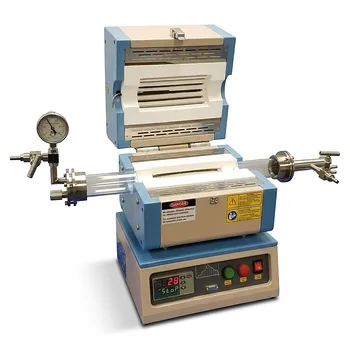
Compact Split Tube Furnace with Integrated Vacuum System and Precision Temperature Calibrator
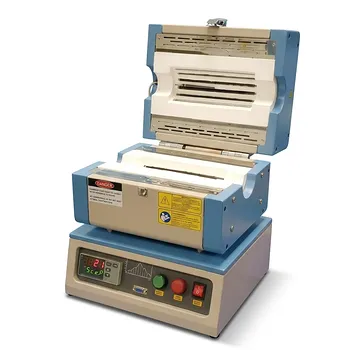
1250C Compact Split Tube Furnace with 8 Inch Heating Zone and Programmable Controller
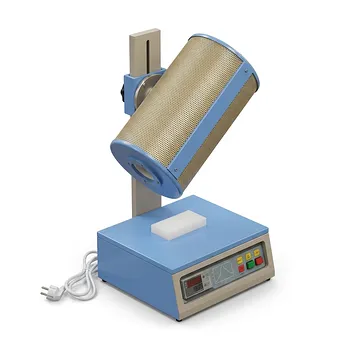
1100°C Vertical Laboratory Furnace for DIY Tubular Reactors with PID Temperature Controller
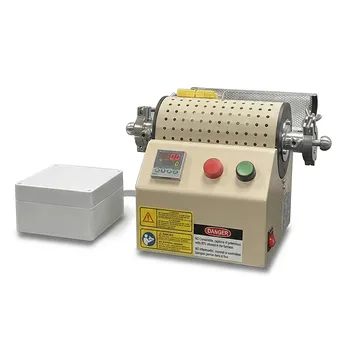
1000C Mini Tube Furnace with 20mm Quartz Tube and Vacuum Flanges for Material Science Research and Controlled Atmosphere Small Sample Processing
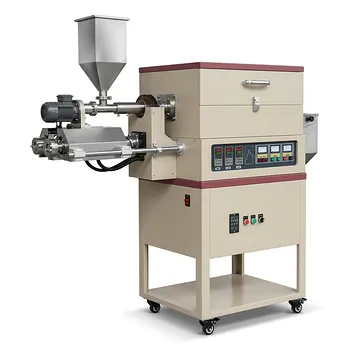
Laboratory Tilting Rotary Tubular Furnaces for Material Science and Industrial Heat Treatment
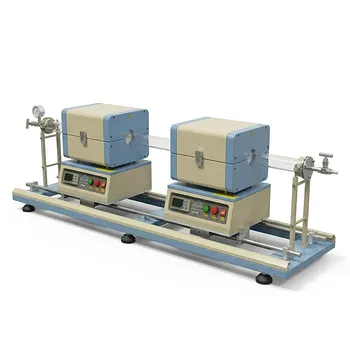
1200C Max Dual Sliding Tube Furnace with 50 mm Tube Flanges for CVD
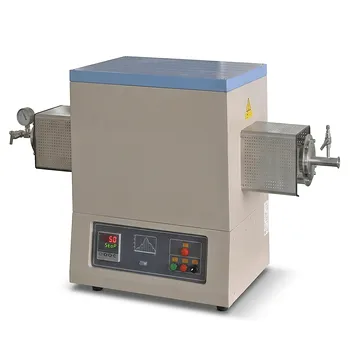
High Temperature 1700C Tube Furnace with 4 Inch OD Alumina Tube and Vacuum Sealing Flanges
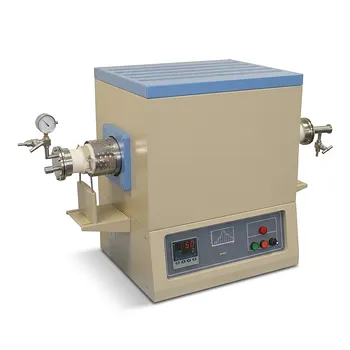
1700C High Temperature Alumina Tube Furnace with 18 Inch Heated Zone and Vacuum Sealing Flanges
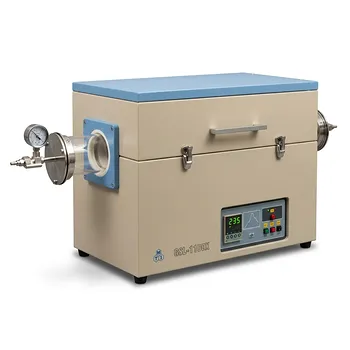
Single Zone Tube Furnace 5 Inch Quartz Tube 36 Inch Heating Zone Vacuum Flanges
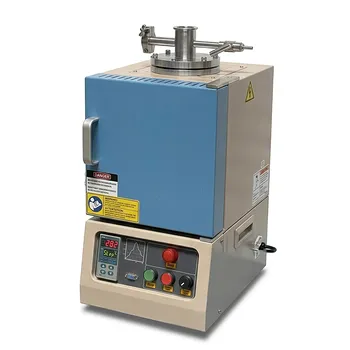
High Temperature Hybrid Muffle and Tube Furnace with Vacuum Capability and PID Control
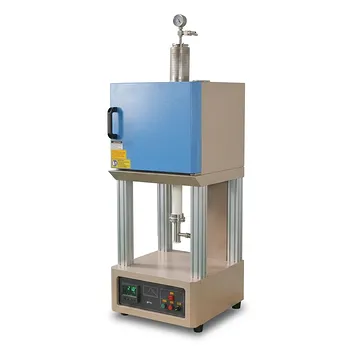
Hybrid High Temperature Tube and Box Furnace 1700C with 2 Inch Alumina Tube for Material Research
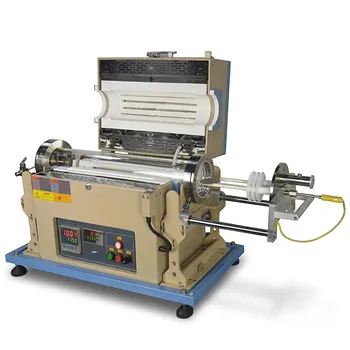
1200°C High Temperature 4 Inch Tube Furnace with Sliding Flange for CVD Systems
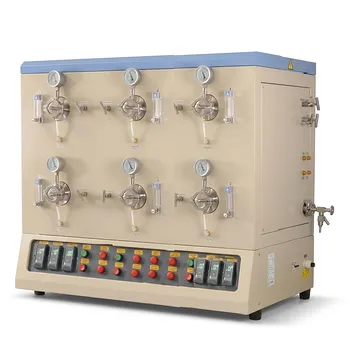
1200C High Throughput Multi Channel Tube Furnace with 50mm Quartz Tubes for Annealing and Material Phase Diagram Research

High Temperature 1700C Vertical Tube Furnace for Powder Spherification and Material Sintering