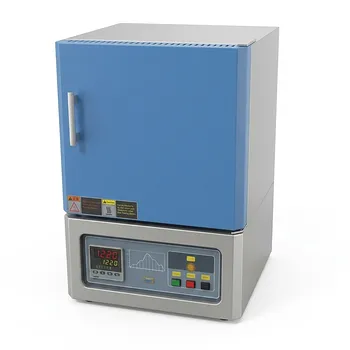
What is the purpose of using a muffle furnace at 250°C for carbon nanofibers? Master Thermal Stabilization Processes
Updated 3 months ago
The primary purpose of using a muffle furnace at 250°C in an air atmosphere is the thermal stabilization and pre-oxidation of the polymer precursor fibers. This critical step triggers chemical cross-linking and cyclization, transforming the fibers from a meltable thermoplastic into a heat-resistant "ladder structure." By doing so, it ensures the nanofibers maintain their distinct shape and porous structure instead of melting into a solid mass during subsequent high-temperature carbonization.
This pre-treatment acts as a "structural lock" that converts the chemical nature of the polymer to withstand extreme heat. Without this stabilization phase, the individual nanofibers would fuse together or lose their porous integrity when exposed to carbonization temperatures exceeding 1,000°C.
The Mechanism of Thermal Stabilization
Chemical Transformation: Building the Ladder Structure
At 250°C in an air atmosphere, polymer chains—most commonly polyacrylonitrile (PAN)—undergo complex chemical reactions including cyclization, dehydrogenation, and oxidation. These reactions transform the linear polymer chains into a rigid, thermally stable "ladder" polymer structure.
Preventing Structural Collapse
This chemical transition is vital because it changes the material from a thermoplastic, which would melt at high temperatures, into a thermoset-like structure. By establishing these internal chemical bonds, the fibers gain the heat resistance necessary to survive the transition to pure carbon.
Preserving Fiber Independence and Porosity
Because the fibers are stabilized before the main carbonization stage, they do not adhere to one another or collapse into a film. This maintains the three-dimensional network and the specific surface area required for high-performance porous carbon nanofibers.
The Role of the Muffle Furnace and Air Atmosphere
The Necessity of Oxygen
The air atmosphere is not incidental; oxygen serves as a chemical reactant during the pre-oxidation phase. Oxygen atoms are incorporated into the polymer structure, facilitating the formation of oxygen-containing functional groups that assist in the cross-linking process.
Thermal Uniformity and Precision
A muffle furnace (or box resistance furnace) provides a highly controlled and stable thermal field. This uniformity is essential because even minor temperature fluctuations can lead to uneven stabilization, causing some fibers to melt while others become brittle.
Controlled Heating Curves
The furnace allows for specific dwell times—often around two hours—and precise heating rates. This ensures the chemical reactions occur gradually and completely, preventing the exothermic nature of cyclization from overheating and damaging the delicate nanofiber morphology.
Understanding the Trade-offs and Pitfalls
The Risk of Under-Stabilization
If the temperature is too low or the time in the furnace is too short, the core of the fiber may remain unoxidized. This results in the "skin-core" effect, where the fiber shell is stable but the center melts during carbonization, leading to hollow or collapsed fibers.
The Danger of Over-Oxidation
Conversely, exceeding the required temperature or duration can lead to excessive weight loss or complete combustion of the polymer. Over-oxidized fibers often become overly brittle, resulting in carbon nanofibers with poor mechanical strength and reduced electrical conductivity.
Managing Atmosphere Consistency
In a box furnace, the air must circulate sufficiently to ensure all fibers have equal access to oxygen. Inconsistent airflow can lead to localized "dead zones" where stabilization is incomplete, causing patches of the nanofiber mat to fuse together during the final heat treatment.
Applying Pre-Treatment to Your Project
When preparing porous carbon nanofibers, your specific objectives will dictate how you fine-tune the 250°C stabilization process.
- If your primary focus is maximizing mechanical strength: Ensure a slow heating rate to 250°C to allow for uniform cyclization and the development of a flawless ladder structure.
- If your primary focus is maintaining high surface area: Prioritize the air circulation within the muffle furnace to ensure every fiber is stabilized, preventing any localized melting that could plug pores.
- If your primary focus is high-throughput production: Carefully calibrate the minimum dwell time required at 250°C to ensure full stabilization without wasting energy or risking over-oxidation.
A precise stabilization phase is the fundamental requirement for transforming delicate polymer webs into robust, functional carbon nanofiber architectures.
Summary Table:
| Process Phase | Chemical Mechanism | Structural Outcome |
|---|---|---|
| Pre-oxidation | Cyclization & Cross-linking | Formation of a stable "ladder structure" |
| Stabilization | Conversion from thermoplastic to thermoset | Prevents fiber melting and fusion during heating |
| Morphology Control | Preservation of independence | Maintains 3D network and high surface area porosity |
Optimize Your Material Research with THERMUNITS
At THERMUNITS, we understand that precision is paramount in material science. As a leading manufacturer of high-temperature laboratory equipment, we provide the reliable thermal processing solutions required for complex tasks like the stabilization and carbonization of nanofibers. Our comprehensive range of equipment—including Muffle, Vacuum, Atmosphere, Tube, and Rotary Furnaces, as well as CVD/PECVD systems and Vacuum Induction Melting (VIM) furnaces—is designed to deliver the superior thermal uniformity your R&D projects demand.
Unlock the full potential of your materials:
- Precise Temperature Control: Ensure perfect chemical cross-linking without the risk of over-oxidation.
- Durable Engineering: High-quality heating elements designed for long-term industrial and laboratory use.
- Tailored Solutions: From Dental Furnaces to Hot Press systems, we match the right technology to your specific application.
Ready to enhance your lab's efficiency and output quality? Contact our expert team today to find your ideal heat treatment solution!
References
- Gang Wang, Bowen Cheng. Zinc-induced polycrystalline transformation of high-entropy fluorides and derived regulatory mechanisms for bifunctional oxygen electrocatalysis. DOI: 10.1039/d4ta02866j
Mentioned Products
- 1200C Muffle Furnace 12x8x5 7.2L Heating Chamber with Quartz Observation Window and Vent Port
- High Temperature 1200C Muffle Furnace 27L Volume 12x12x12 Chamber with Programmable PID Controller for Laboratory Material Science
- 1750C Compact Muffle Furnace 1.7L Ultra High Temperature Laboratory Sintering System for Advanced Ceramics and Material Science Research
- 1200C High Temperature 125L Muffle Furnace 5 Side Heating for Large Batch Sintering with Optional Alloy Debinding Chamber
- Ultra High Temperature Bench Top Muffle Furnace 1750C Sintering System with Kanthal Super Heating Elements and Precision Digital Control
People Also Ask
- What is the function of an experimental muffle furnace in the conversion of FeOOH to α-Fe2O3? Optimize Phase Transition
- Why is a muffle furnace required for MoO2@HCNF pre-oxidation? Crucial Steps for High-Performance Composites
- What is the function of a high-temperature Muffle furnace in removing residual solvents? Essential Bismuth Synthesis
- What is the function of Muffle furnace calcination? Essential steps for Pr-doped SrFeMoO6 Perovskite synthesis.
- What are the primary functions of a Muffle furnace in oxide calcination? Achieve high purity and phase control.

Tech Team · ThermUnits
Last updated on Jun 02, 2026
Related Products
1200C Muffle Furnace 12x8x5 7.2L Heating Chamber with Quartz Observation Window and Vent Port
High Temperature 1200C Muffle Furnace 27L Volume 12x12x12 Chamber with Programmable PID Controller for Laboratory Material Science
1750C Compact Muffle Furnace 1.7L Ultra High Temperature Laboratory Sintering System for Advanced Ceramics and Material Science Research
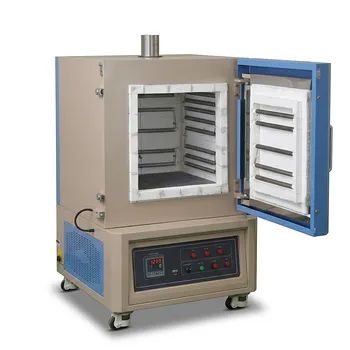
1200C High Temperature 125L Muffle Furnace 5 Side Heating for Large Batch Sintering with Optional Alloy Debinding Chamber
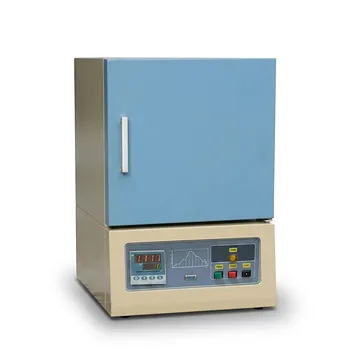
Ultra High Temperature Bench Top Muffle Furnace 1750C Sintering System with Kanthal Super Heating Elements and Precision Digital Control
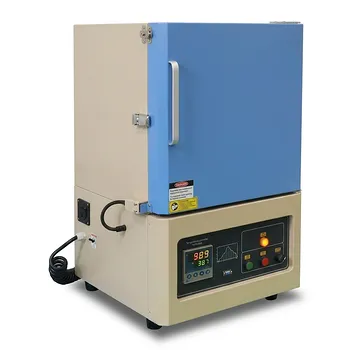
1200°C High Temperature Muffle Furnace 19L Chamber with 50 Segment Programmable Controller
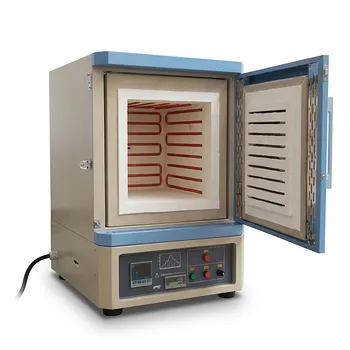
Five Side Heating Muffle Furnace 1200C High Uniformity 64L Chamber 16x16x16 Inch Industrial Heat Treatment
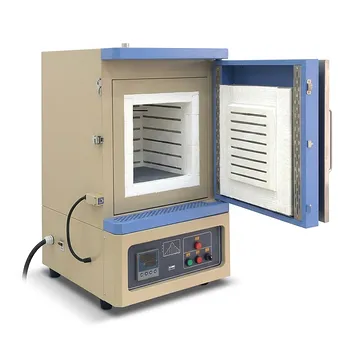
Five Side Heating Muffle Furnace High Purity Alumina Fiber 27L Chamber 1200C High Temperature Thermal Processing System for Sintering Annealing and Materials Research
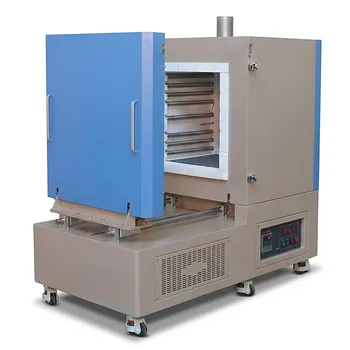
1200C Five Side Heating Muffle Furnace with Sliding Door 125L Volume High Temperature Heat Treatment System for Large Scale Sintering and Annealing
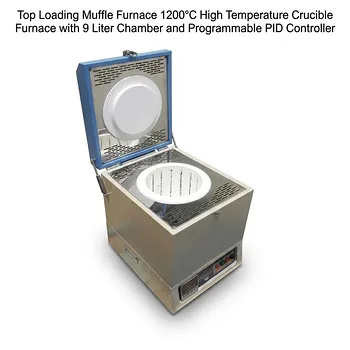
Top Loading Muffle Furnace 1200°C High Temperature Crucible Furnace with 9 Liter Chamber and Programmable PID Controller
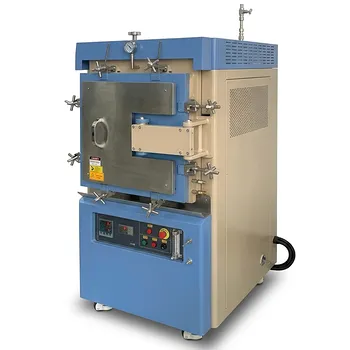
Atmosphere Controlled Muffle Furnace 1700C Maximum Temperature 80L High Capacity Vacuum Inert Gas Box Furnace
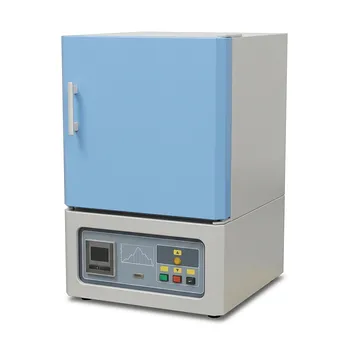
1800C Bench Top Muffle Furnace with Kanthal Super 1900 Heating Elements and 3.6L Alumina Fiber Chamber
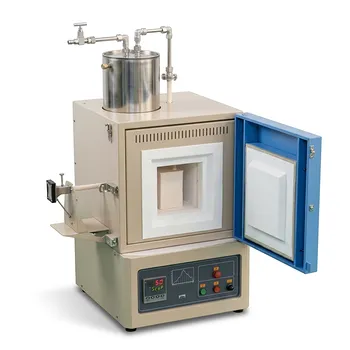
High Temperature Bench Top Muffle Furnace 1700C with Integrated Evaporating Particle Collection and 8x8x8 Alumina Fiber Chamber
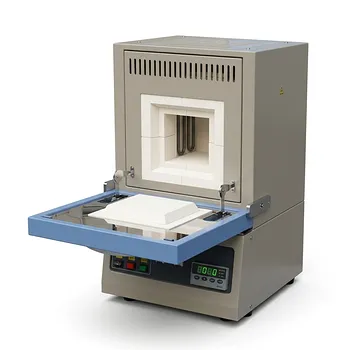
Five Sided Heating Muffle Furnace High Uniformity 1200C Lab Box Furnace 27L Alumina Fiber Chamber
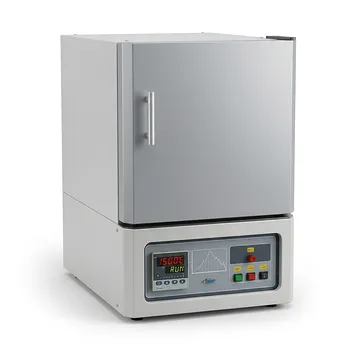
High Temperature 1500C Benchtop Muffle Furnace 3.6L Alumina Fiber Chamber Programmable Controller Sintering Annealing Carbonization Thermal Processing System
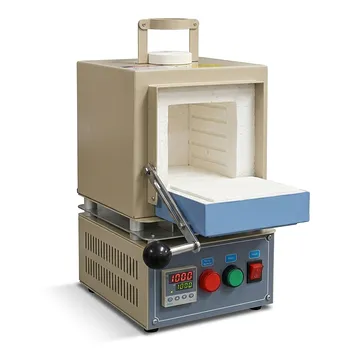
Compact 1000C Muffle Furnace with Programmable Controller and 2 Inch Top Port for Vacuum and Atmosphere Material Research
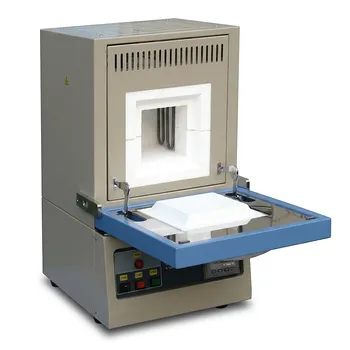
High Temperature 1800C Compact Muffle Furnace with Kanthal Super 1900 Heating Elements and 1.7L Alumina Chamber
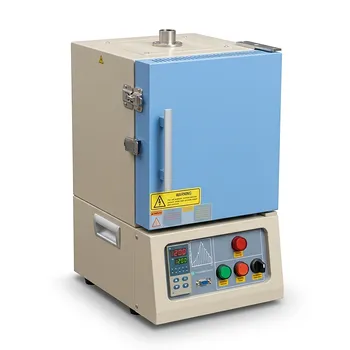
1200°C Small Box Furnace 4.2 Liter Programmable Muffle Furnace with High Purity Alumina Insulation and PID Control
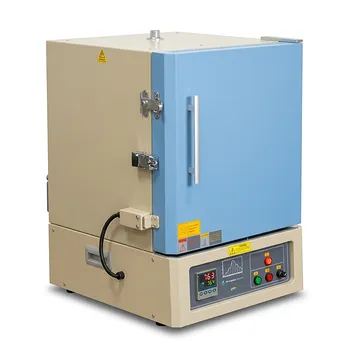
Large Capacity 1200C Muffle Furnace 64 Liter Chamber with Digital PID Controller and Built In Venting Port