What is the role of a high-precision manual micro-adjustment valve in CVD systems? Control hBN Growth and Quality
Updated 3 months ago
The high-precision manual micro-adjustment valve acts as the primary gatekeeper for precursor delivery in borazine-based CVD systems. It allows for the controlled introduction of liquid borazine into a vacuum environment at extremely low and stable flow rates. By enabling trace adjustments of the precursor’s partial pressure, the valve provides the necessary granularity to dictate the nucleation and growth behavior of hexagonal boron nitride (hBN).
Core Takeaway: In hBN synthesis, the manual micro-adjustment valve is the critical component for managing the high vapor pressure of liquid borazine, ensuring that growth rates and nucleation densities are controlled with the precision required for high-quality crystal formation.
The Challenge of High Vapor Pressure Precursors
Managing Liquid Borazine Volatility
Liquid borazine is a preferred precursor for hexagonal boron nitride (hBN), but its high vapor pressure makes it difficult to handle in a vacuum. Without a high-precision interface, the precursor would flood the chamber, leading to uncontrolled deposition and poor film quality.
Achieving Stable, Low-Flow Delivery
The micro-adjustment valve is designed to operate at the "trace" level, maintaining stable flow rates that are significantly lower than what standard valves can achieve. This stability is vital for maintaining a constant chemical environment throughout the duration of the Chemical Vapor Deposition (CVD) process.
Controlling Partial Pressure
By manually fine-tuning the valve aperture, operators can precisely set the partial pressure of the borazine within the system. This pressure level is the primary lever used to balance the concentration of reactive species at the substrate surface.
Impact on Thin-Film Morphology and Quality
Regulating Nucleation Density
The initial stage of hBN growth depends on the formation of "islands," a process governed by nucleation density. The micro-adjustment valve allows for the minute pressure changes required to limit the number of nucleation sites, preventing overcrowded and defective growth.
Maintaining Growth Rate and Orientation
Consistency in the growth rate is essential for achieving the desired thickness and structural uniformity of the hBN layers. Precise flow control ensures that these islands expand at a predictable speed, which directly influences the orientation consistency of the resulting crystal lattice.
Ensuring High Crystal Quality
Fluctuations in precursor delivery lead to lattice defects and grain boundaries. The use of a high-precision manual valve minimizes these fluctuations, resulting in a more perfect crystalline structure with fewer impurities.
Understanding the Trade-offs
Manual Precision vs. Automation
While manual micro-adjustment valves offer incredible resolution for trace flows, they require expert calibration and physical presence. Unlike automated Mass Flow Controllers (MFCs), they do not inherently provide digital feedback or "set-and-forget" programming.
Sensitivity to Environmental Factors
Because these valves rely on manual mechanical settings, they can be sensitive to thermal expansion or vibrations in the laboratory. Users must ensure a stable environment to maintain the integrity of the flow rate over long growth cycles.
The Learning Curve of Manual Control
Achieving repeatable results with a manual valve requires a high degree of operator skill and documentation. Small physical movements of the valve handle can result in significant changes in the chemical environment of the CVD chamber.
Applying This to Your CVD Process
Guidelines for Precursor Management
To maximize the effectiveness of your delivery system, consider your specific material requirements and growth conditions.
- If your primary focus is high-quality single-crystal hBN: Prioritize a high-precision manual valve to achieve the ultra-low partial pressures necessary for low nucleation density.
- If your primary focus is high-throughput production: Consider a hybrid approach that uses the manual valve for fine-tuning while utilizing automated sensors to monitor chamber pressure in real-time.
- If your primary focus is experimental repeatability: Ensure the valve is equipped with a high-resolution micrometer scale to allow for the precise logging and resetting of valve positions.
Mastering the manual control of borazine flow is the most direct path to achieving the structural perfection required for advanced 2D material applications.
Summary Table:
| Feature | Function in CVD System | Impact on Material Quality |
|---|---|---|
| Flow Control | Stable, trace-level delivery of liquid borazine | Prevents chamber flooding and uncontrolled deposition |
| Pressure Management | Precise tuning of precursor partial pressure | Regulates nucleation density and crystal orientation |
| Mechanical Tuning | Manual micrometer-scale adjustments | Minimizes lattice defects for high-quality single crystals |
| Stability | Maintains consistent chemical environment | Ensures uniform film thickness and structural integrity |
Elevate Your Material Research with THERMUNITS
Achieving structural perfection in 2D materials like hBN requires absolute control over your thermal environment. THERMUNITS is a leading manufacturer of high-temperature laboratory equipment designed specifically for material science and industrial R&D.
From precise precursor delivery to uniform heating, our comprehensive range of thermal solutions includes:
- Advanced CVD/PECVD Systems for high-quality thin-film synthesis.
- Specialized Laboratory Furnaces: Muffle, Vacuum, Atmosphere, Tube, Rotary, and Hot Press systems.
- Industrial R&D Equipment: Electric rotary kilns and Vacuum Induction Melting (VIM) furnaces.
- Precision Components: Dental furnaces, high-quality thermal elements, and customized heat treatment tools.
Ready to optimize your CVD process and enhance lab efficiency?
Contact THERMUNITS today to consult with our experts and find the perfect thermal processing solution for your research goals.
References
- Katherine A. Su, Michael S. Arnold. Chemical vapor deposition of hexagonal boron nitride on germanium from borazine. DOI: 10.1039/d4ra03704a
Mentioned Products
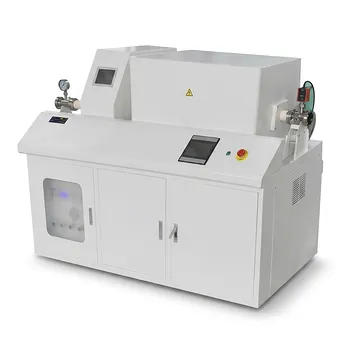
- Chemical Vapor Deposition CVD System Slide PECVD Tube Furnace with Liquid Gasifier PECVD Machine
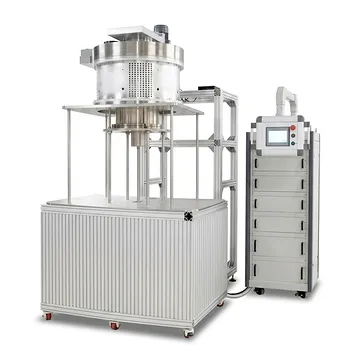
- 915MHz MPCVD Diamond Machine Microwave Plasma Chemical Vapor Deposition System Reactor
People Also Ask
- What are the advantages of PECVD systems for nano flame retardant films? Protect Heat-Sensitive Polymers with Precision
- How does a sliding rail design benefit the CVD process within a furnace ventilation hood? Enhance Control & Quenching
- What is the role of CVD/PECVD systems in the research of optoelectronic materials and functional coatings? Expert Guide
- How does PECVD differ from conventional thermal CVD? Key Advantages of Low-Temperature Deposition for R&D
- What role do by-product desorption and evacuation play in CVD film quality? Key Factors for High-Purity Films

Tech Team · ThermUnits
Last updated on Jun 03, 2026