How does PECVD differ from conventional thermal CVD? Key Advantages of Low-Temperature Deposition for R&D
Updated 5 months ago
The fundamental difference between Plasma-Enhanced Chemical Vapor Deposition (PECVD) and conventional thermal CVD is the energy source used to drive chemical reactions. While thermal CVD relies exclusively on high temperatures to dissociate precursor gases, PECVD utilizes plasma energy to achieve the same result. This shift in energy source allows PECVD to operate at significantly lower temperatures, typically ranging from room temperature to 400°C, compared to the 600°C to 1000°C+ required for standard thermal processes.
PECVD replaces high heat with non-thermal plasma energy to create reactive species, enabling the deposition of high-quality thin films on heat-sensitive materials. This capability protects underlying structures while maintaining the film density and conformality required for industrial applications.
Decoupling Energy from Temperature
Thermal Activation vs. Plasma Excitation
In conventional CVD, the substrate must be heated to extreme temperatures to provide the activation energy necessary for chemical precursors to react. This process is thermally driven, meaning the entire environment must reach a high energy state to trigger film growth.
PECVD uses radio frequency (RF) or microwave energy to create a plasma field. Electrons in the plasma collide with gas molecules, breaking them into highly reactive radicals and ions without requiring the entire system to be hot.
The Impact of Lower Thermal Budgets
The ability to operate at a low thermal budget is the primary driver for adopting PECVD in modern manufacturing. By keeping the substrate below 400°C, engineers can deposit films on materials that would otherwise melt, warp, or degrade.
This is critical for preserving pre-existing metal interconnects (like aluminum) or polymer-based components. These materials cannot survive the 600°C+ environments of traditional thermal CVD systems.
Versatility Across Industrial Applications
Semiconductor and Microelectronics Fabrication
PECVD is the industry standard for depositing silicon nitride passivation and dielectric layers. It provides excellent step coverage and conformality, ensuring that nanometer-scale features are coated evenly without damaging the delicate circuits underneath.
Biocompatible and Protective Coatings
Because PECVD can operate near room temperature, it is used to apply biocompatible coatings like SiO2 or diamond-like carbon (DLC) to medical implants and stents. These films improve surface chemistry and reduce ion leaching into the body without damaging heat-sensitive polymers or surgical tools.
Advanced Materials and Energy
In the development of fuel cells and 2D materials, PECVD protects gas diffusion layers and polymer binders from thermal degradation. It enables the preparation of dense, low-resistivity thin films on complex geometries that require high-hardness protective coatings.
Understanding the Trade-offs
Chemical Purity and Residual Species
Because PECVD reactions occur at lower temperatures, the resulting films may contain residual precursor fragments, such as hydrogen. In contrast, high-temperature thermal CVD typically produces films with higher chemical purity because the heat drives off volatile byproducts more effectively.
Potential for Plasma-Induced Damage
The presence of ion bombardment in a PECVD system can sometimes cause physical damage to the substrate surface. While this bombardment can improve film density and adhesion, it must be carefully managed to avoid "charging" or structural defects in sensitive electronic components.
Complexity and Maintenance
PECVD systems are generally more complex than thermal CVD reactors due to the addition of plasma generators and matching networks. This increased complexity can lead to higher initial capital costs and more intensive maintenance requirements for the vacuum and power delivery systems.
Selecting the Right Deposition Method
How to Apply This to Your Project
- If your primary focus is high-purity films on heat-resistant materials (like quartz or ceramics): Thermal CVD is often the preferred choice due to its simpler process and superior film stoichiometry.
- If your primary focus is depositing films on polymers or metal-layered semiconductors: PECVD is essential to prevent thermal damage to the substrate or melting of interconnects.
- If your primary focus is high-throughput conformal coating of 3D structures: PECVD provides the necessary reactivity at low temperatures to ensure even coverage across complex geometries.
By shifting the energy source from heat to plasma, PECVD provides a critical pathway for innovating on temperature-sensitive platforms without compromising film integrity.
Summary Table:
| Feature | Thermal CVD | PECVD |
|---|---|---|
| Energy Source | Thermal Heat | Plasma (RF/Microwave) |
| Process Temp. | 600°C to 1000°C+ | Room Temp. to 400°C |
| Substrates | Heat-resistant (Quartz, Ceramics) | Heat-sensitive (Polymers, Metals) |
| Film Purity | Higher (Low residual species) | Moderate (Potential H2/residuals) |
| Step Coverage | Good | Excellent (Conformal) |
Elevate Your Thin Film Research with THERMUNITS
Are you looking to optimize your material science R&D? THERMUNITS is a leading manufacturer of high-temperature laboratory equipment, offering a comprehensive range of thermal processing solutions tailored for precision and reliability.
Our advanced CVD and PECVD systems are designed to meet the rigorous demands of semiconductor fabrication, biocompatible coatings, and energy research. Beyond vapor deposition, we provide a full suite of equipment, including:
- Muffle, Vacuum, Atmosphere, and Tube Furnaces
- Rotary and Hot Press Furnaces
- Dental Furnaces and Electric Rotary Kilns
- Vacuum Induction Melting (VIM) Furnaces
- High-Quality Thermal Elements
Ready to enhance your lab's capabilities? Contact us today to discuss your specific heat treatment requirements with our experts and discover how our solutions can accelerate your industrial innovation.
Mentioned Products
- Radio Frequency Plasma Enhanced Chemical Vapor Deposition RF PECVD System for Laboratory and Industrial Thin Film Growth
- Chemical Vapor Deposition CVD System Slide PECVD Tube Furnace with Liquid Gasifier PECVD Machine
- Inclined Rotary Plasma Enhanced Chemical Vapor Deposition PECVD System for Thin Film Deposition and Nanomaterial Synthesis
- Cylindrical Resonator MPCVD Machine System for Microwave Plasma Chemical Vapor Deposition and Lab Diamond Growth
- 915MHz MPCVD Diamond Machine Microwave Plasma Chemical Vapor Deposition System Reactor
People Also Ask
- What are the advantages of PECVD systems for nano flame retardant films? Protect Heat-Sensitive Polymers with Precision
- What is the role of CVD/PECVD systems in the research of optoelectronic materials and functional coatings? Expert Guide
- What are the benefits of using PECVD for optical and photonic coatings? Achieve High-Precision Thin-Film Deposition
- How do RF frequency and power settings influence the characteristics of a PECVD process? Master Quality & Efficiency
- What types of materials can be deposited using PECVD systems? Explore Versatile Thin-Film Coating Solutions

Tech Team · ThermUnits
Last updated on Apr 14, 2026
Related Products
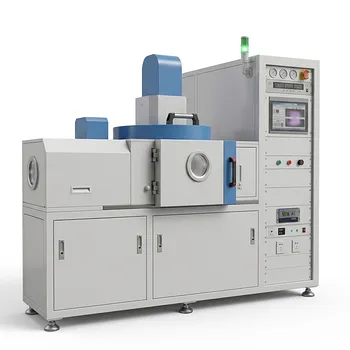
Radio Frequency Plasma Enhanced Chemical Vapor Deposition RF PECVD System for Laboratory and Industrial Thin Film Growth
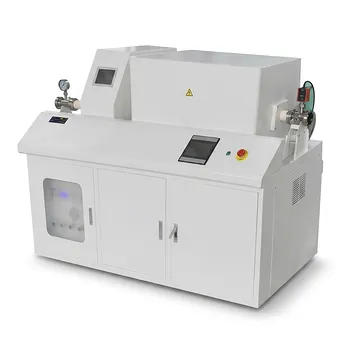
Chemical Vapor Deposition CVD System Slide PECVD Tube Furnace with Liquid Gasifier PECVD Machine
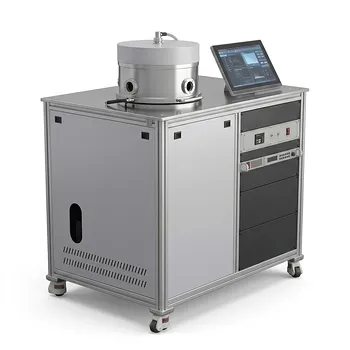
Inclined Rotary Plasma Enhanced Chemical Vapor Deposition PECVD System for Thin Film Deposition and Nanomaterial Synthesis
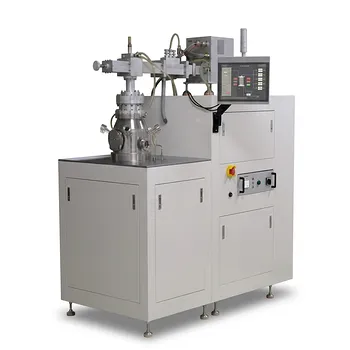
Cylindrical Resonator MPCVD Machine System for Microwave Plasma Chemical Vapor Deposition and Lab Diamond Growth
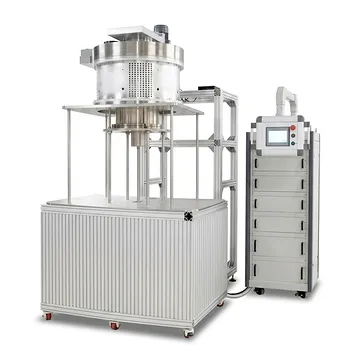
915MHz MPCVD Diamond Machine Microwave Plasma Chemical Vapor Deposition System Reactor
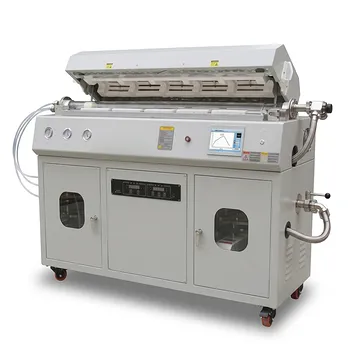
Multi Heating Zones CVD Tube Furnace System for Precision Chemical Vapor Deposition and Advanced Material Synthesis
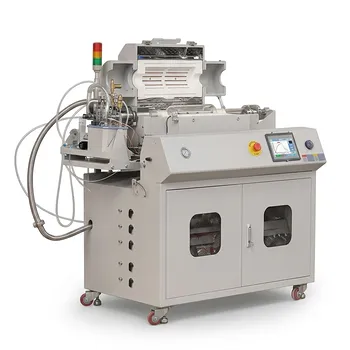
Versatile Chemical Vapor Deposition Tube Furnace System for Advanced Material Research and Industrial Coating Processes
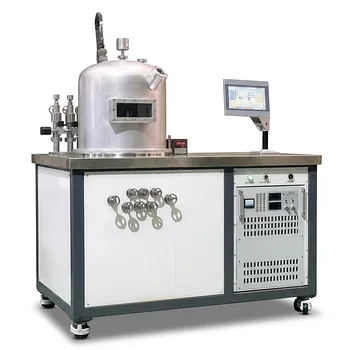
HFCVD Machine System for Nano Diamond Coating on Drawing Dies and Industrial Tools
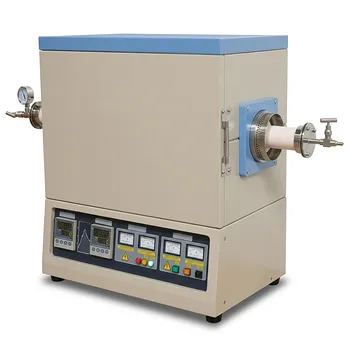
High Temperature 1700C Dual Zone Tube Furnace for Material Science and Industrial Chemical Vapor Deposition Research
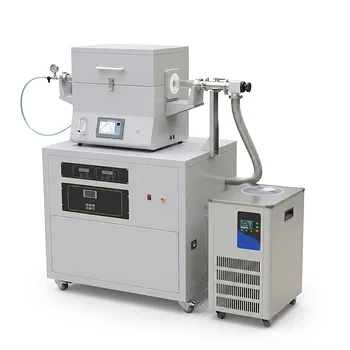
Split Chamber CVD Tube Furnace with Vacuum Station Chemical Vapor Deposition System Machine
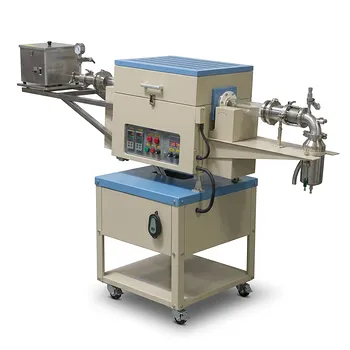
Two Zone Rotary CVD Furnace with Automatic Feeding and Receiving System for Powder Processing