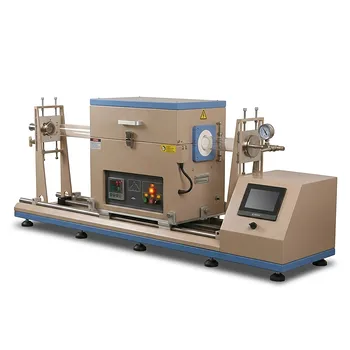
How does a sliding rail design benefit the CVD process within a furnace ventilation hood? Enhance Control & Quenching
Updated 3 months ago
The sliding rail design transforms a static tube furnace into a dynamic processing station. By allowing the furnace body to move longitudinally along the quartz tube while remaining fully enclosed, it provides researchers with the ability to manipulate thermal zones in real-time. This mechanical flexibility is critical for achieving precise film growth and managing the rapid cooling phases essential for high-quality Chemical Vapor Deposition (CVD).
The integration of a sliding rail within a ventilation hood enables precise spatial control over the heating zone and facilitates rapid quenching of samples. This design ensures that high-performance thermal processing occurs without compromising the environmental safety provided by the physical shielding of the hood.
Enhancing Precision and Process Control
Optimized Substrate Placement
The sliding rail allows operators to adjust the relative position between the heating zone and the substrate with high precision. This is vital because the concentration of precursor vapors and the temperature profile vary along the length of the tube.
By moving the furnace rather than the delicate quartz tube or internal substrate, you maintain the vacuum seal integrity while finding the "sweet spot" for deposition. This ensures better uniformity and repeatability across different experimental runs.
Dynamic Thermal Gradient Management
In many CVD processes, different stages of the reaction require the substrate to be exposed to specific temperatures at specific times. The sliding mechanism allows for the gradual or sudden introduction of heat to the sample area.
This mobility enables the creation of specific thermal gradients, which are often necessary for the synthesis of advanced 2D materials or nanowires. It provides a level of control that fixed-position furnaces simply cannot match.
Accelerating Throughput and Material Integrity
Rapid Quenching and Post-Reaction Cooling
One of the most significant advantages is the ability to facilitate fast cooling by shifting the hot furnace body away from the substrate immediately after a reaction. Rapidly removing the heat source "freezes" the material's microstructure and prevents unwanted secondary reactions or grain growth.
This "quenching" process is often necessary to achieve specific crystalline phases. Because the furnace moves while the tube stays stationary, the cooling happens significantly faster than waiting for the furnace insulation to radiate heat naturally.
Maintaining Containment Integrity
CVD processes often involve hazardous precursors or toxic byproducts that must remain confined. The sliding rail design is engineered to function entirely within the sealed ventilation hood.
This allows for rapid cooling and positioning adjustments without breaking the physical shielding. Operators are protected from high-temperature exposure and potentially harmful outgassing throughout the entire heating and cooling cycle.
Understanding the Trade-offs
Mechanical Wear and Alignment
Introducing moving parts into a high-temperature environment increases the need for regular maintenance. The sliding tracks and bearings must be rated for the weight of the furnace and resistant to the ambient heat within the hood.
If the rails are not perfectly aligned, the movement can cause vibrations that might disturb the substrate or the delicate quartz tube. Ensuring a smooth, low-friction glide is essential to prevent mechanical stress on the glassware.
System Complexity and Footprint
A sliding rail system requires more physical space within the ventilation hood to accommodate the furnace's range of motion. This can lead to a larger overall equipment footprint compared to a stationary setup.
Additionally, the cabling and gas lines must be managed carefully using energy chains or flexible conduits. This prevents tangling or melting as the furnace moves back and forth during operation.
How to Apply This to Your Project
Making the Right Choice for Your Goal
To maximize the utility of a sliding rail furnace, you must align its movement capabilities with your specific material requirements.
- If your primary focus is high-throughput material screening: Utilize the sliding rail to perform rapid quenching, allowing you to cycle through samples faster by reducing the "cool-down" wait time.
- If your primary focus is synthesizing sensitive 2D materials: Use the longitudinal adjustment to find the exact thermal zone where precursor concentration and temperature are perfectly balanced for uniform growth.
- If your primary focus is operator safety with hazardous precursors: Ensure the sliding mechanism is fully integrated with the hood’s controls so that all movements are performed without opening the shielding.
Integrating a sliding rail design effectively bridges the gap between laboratory precision and industrial-grade safety protocols.
Summary Table:
| Feature | Sliding Rail Design | Stationary Design |
|---|---|---|
| Cooling Speed | Rapid quenching by moving furnace body | Slow cooling via natural radiation |
| Substrate Control | Real-time adjustment of thermal zones | Fixed position relative to heat |
| Seal Integrity | Vacuum seals remain intact during movement | Risk of leak when moving tubes manually |
| Safety | Fully operational within closed hoods | May require hood access for cooling |
| Throughput | High; significantly reduced cycle times | Lower; limited by furnace cool-down |
| Application | 2D materials, nanowires, fast quenching | General heat treatment |
Optimize Your CVD Growth with THERMUNITS Precision
Elevate your material science research with THERMUNITS, a leading manufacturer of high-performance thermal processing solutions. Our sliding rail CVD systems are specifically engineered for researchers who demand precise thermal gradient control and rapid quenching within a safe, enclosed environment.
From advanced CVD/PECVD systems and Tube furnaces to Vacuum Induction Melting (VIM) and Hot Press furnaces, we provide the industrial-grade tools needed for breakthrough R&D.
Ready to enhance your lab's efficiency and film quality? Contact our engineering team today to find the perfect heat treatment solution for your specific application!
References
- Nina Z. Janković, Desirée L. Plata. Particles in a box: novel design and evaluation of an adaptable engineering control enclosure for a common split tube furnace to eliminate occupational exposure to refractory ceramic insulation fibers. DOI: 10.1039/d3en00041a
Mentioned Products
- Versatile Chemical Vapor Deposition Tube Furnace System for Advanced Material Research and Industrial Coating Processes
- Chemical Vapor Deposition CVD System Slide PECVD Tube Furnace with Liquid Gasifier PECVD Machine
- Split Chamber CVD Tube Furnace with Vacuum Station Chemical Vapor Deposition System Machine
- Multi Heating Zones CVD Tube Furnace System for Precision Chemical Vapor Deposition and Advanced Material Synthesis
- Two Zone Rotary CVD Furnace with Automatic Feeding and Receiving System for Powder Processing
People Also Ask
- What role do by-product desorption and evacuation play in CVD film quality? Key Factors for High-Purity Films
- How does the deposition process occur within a Chemical Vapor Deposition (CVD) reactor? Explore the 5-Stage Growth Cycle
- Why is CVD preferred over PVD for high-aspect-ratio features? Superior Conformality for Semiconductor Fabrication
- How do temperature regimes influence the growth rate of films in a CVD system? Master CVD Kinetics for Superior Thin Films
- What is the core function of a CVD system in FG-FET fabrication? High-Quality Graphene Synthesis for Research

Tech Team · ThermUnits
Last updated on Jun 03, 2026
Related Products
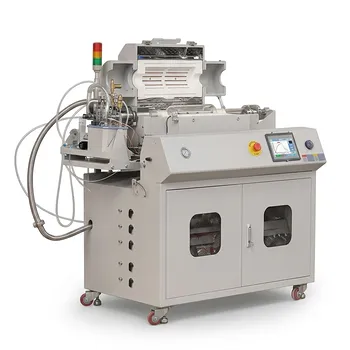
Versatile Chemical Vapor Deposition Tube Furnace System for Advanced Material Research and Industrial Coating Processes
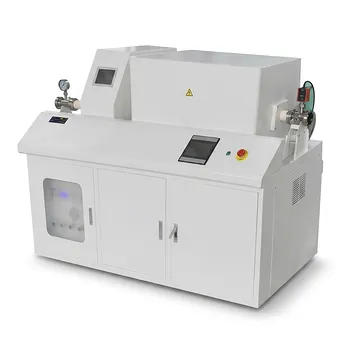
Chemical Vapor Deposition CVD System Slide PECVD Tube Furnace with Liquid Gasifier PECVD Machine
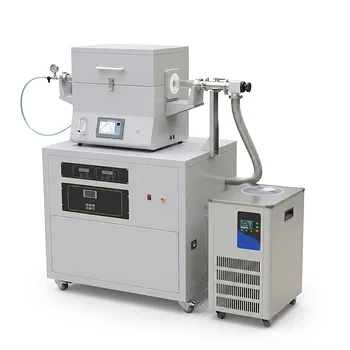
Split Chamber CVD Tube Furnace with Vacuum Station Chemical Vapor Deposition System Machine
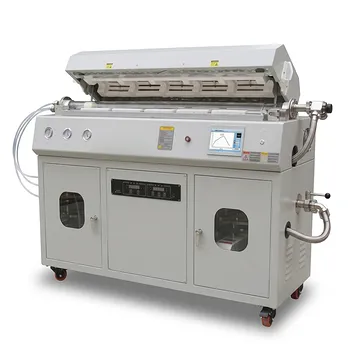
Multi Heating Zones CVD Tube Furnace System for Precision Chemical Vapor Deposition and Advanced Material Synthesis
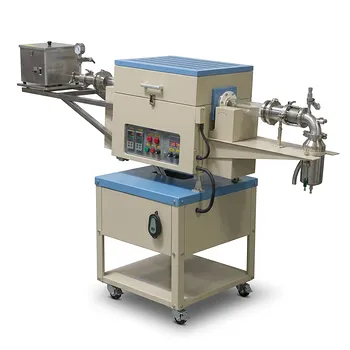
Two Zone Rotary CVD Furnace with Automatic Feeding and Receiving System for Powder Processing
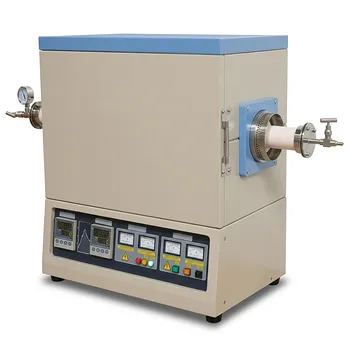
High Temperature 1700C Dual Zone Tube Furnace for Material Science and Industrial Chemical Vapor Deposition Research
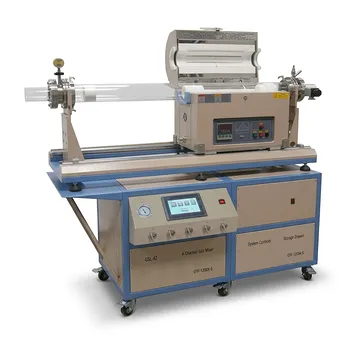
Dual Tube 100mm 80mm CVD Sliding Furnace with 4 Channel Gas Mixing and Vacuum System
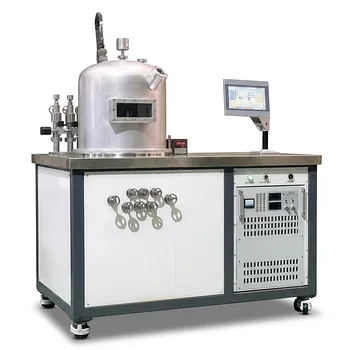
HFCVD Machine System for Nano Diamond Coating on Drawing Dies and Industrial Tools
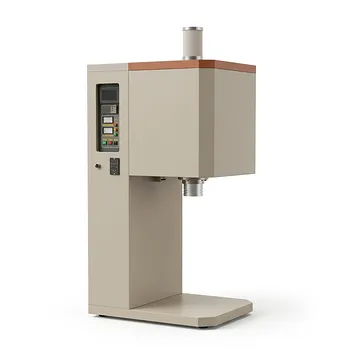
Vertical Openable Tube Furnace 0-1700c High Temperature Laboratory System for CVD and Vacuum Heat Treatment
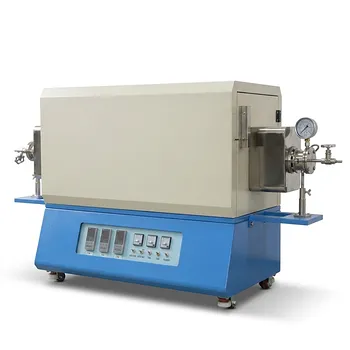
Three Temperature Zone High Temperature Vacuum Tube Furnace for CVD and Material Sintering
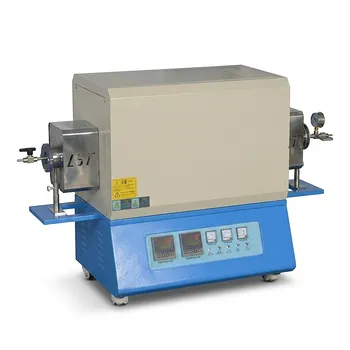
High Temperature Dual Zone Vacuum Tube Furnace for Material Research and CVD Processing
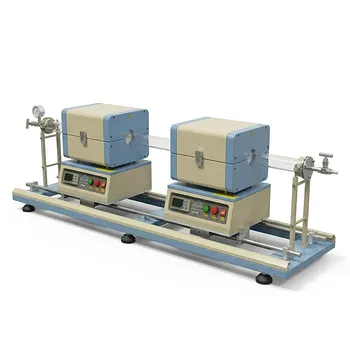
1200C Max Dual Sliding Tube Furnace with 50 mm Tube Flanges for CVD
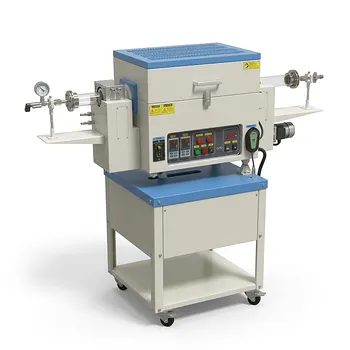
4 Inch Two Zone Rotary CVD Tube Furnace for High Temperature Battery Material Synthesis and Advanced Material Calcination
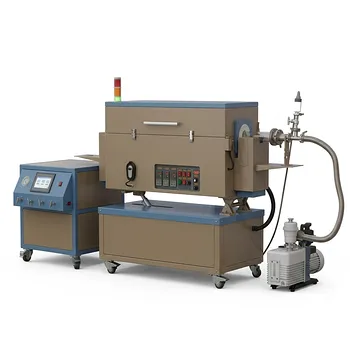
5 Inch Three Zone Rotary Tube Furnace with Integrated Gas Delivery System and 1200C Capability for Advanced Material CVD Processing
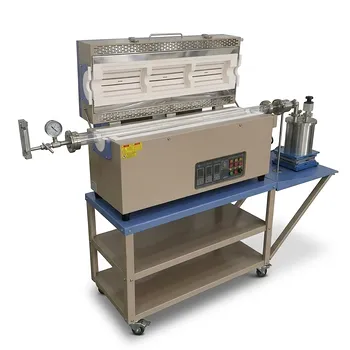
5 Inch Two Zone Rotary Tube Furnace 1100C for Powder CVD and Material Synthesis
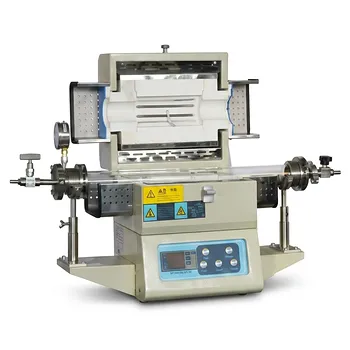
High Temperature 1200C Split Tube Furnace for CVD Research and Vacuum Atmosphere Heat Treatment
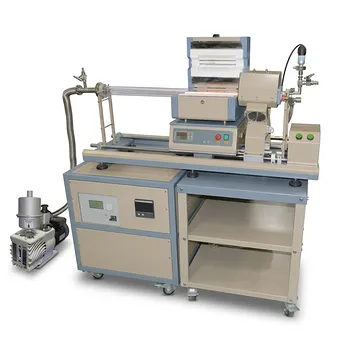
1200C Max Compact Auto-Sliding PECVD Furnace with 2 Inch Tube and Vacuum Pump

High Temperature 1700C Tube Furnace with High Vacuum Turbomolecular Pump System and Multi Channel Mass Flow Controller Gas Mixer
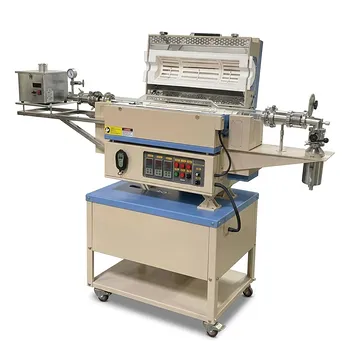
5 Inch Rotary Tube Furnace with Automatic Feeding and Receiving System 1200C Three Zone CVD Powder Processing