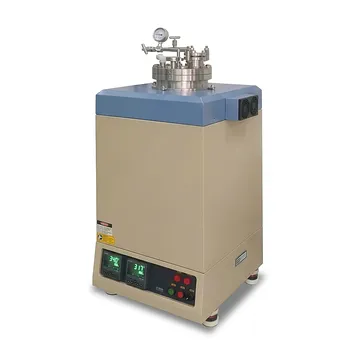
What is the role of a laboratory drying oven or muffle furnace in biomass pretreatment? Boost Biochar Quality & Efficiency
Updated 3 months ago
Thermal dehydration and stabilization. In the pretreatment phase, a laboratory drying oven or muffle furnace is primarily used to remove free moisture and surface contaminants from raw biomass at constant temperatures, typically ranging from 50°C to 100°C. This process ensures the material is physically stable for grinding and establishes a consistent dry-basis standard for all subsequent chemical analyses.
The use of a drying oven or muffle furnace in pretreatment is a critical quality-control step that eliminates moisture-related variables. By stabilizing the raw material before pyrolysis, researchers ensure efficient heat transfer and the accurate calculation of carbon, ash, and volatile matter content.
The Functional Role in Pretreatment
Thermal Dehydration and Moisture Removal
The primary function is the elimination of free moisture from feedstock like livestock manure, sewage sludge, or botanical shells. For materials like manure, a constant temperature of 100°C is standard, while sensitive materials like coconut shells may require lower temperatures (e.g., 50°C) to remove moisture introduced during cleaning.
Enhancing Physical Stability for Processing
Dry biomass is significantly easier to mechanically process than raw, wet waste. By removing moisture, the furnace ensures the physical stability required for the grinding and sieving processes that create uniform particle sizes for experimental consistency.
Establishing Analytical Baselines
Pretreatment provides a dry-basis standard, which is essential for the accurate calculation of a biochar's eventual volatile matter and ash content. Without this controlled drying phase, moisture fluctuations would skew the data regarding the chemical composition and yield of the final product.
Optimizing Downstream Pyrolysis Efficiency
Improving Heat Transfer Efficiency
Moisture is a significant barrier to efficient thermochemical decomposition because it absorbs a massive amount of energy during the heating process. Utilizing a drying oven ensures that when the material reaches the pyrolysis stage, energy is used for carbon rearrangement rather than simply evaporating water.
Ensuring Chemical Purity and Fiber Removal
In specific biomass types, such as palm or coconut shells, the pretreatment furnace helps eliminate surface fiber contamination. This step ensures the chemical purity of the resulting biochar, preventing unwanted side reactions during the high-temperature synthesis phase.
Preparing for Pore Structure Development
While the muffle furnace later creates the microporous structure at high temperatures (300°C–700°C), the pretreatment phase sets the stage by removing residual impurities. Deep drying prevents the introduction of moisture-related fluctuations in thermal performance when the biochar is later compounded with other substances.
Understanding the Trade-offs
Temperature Sensitivity vs. Speed
Using higher temperatures in a drying oven can speed up the pretreatment phase but risks the premature loss of volatile organic compounds. If the pretreatment temperature exceeds the stability threshold of the biomass, the resulting biochar may lack the specific functional groups needed for tasks like heavy metal adsorption.
Energy Consumption and Throughput
Pretreatment adds an extra step to the production cycle, increasing total energy expenditure. However, skipping this phase often leads to "wet-spot" cold zones during pyrolysis, which results in non-uniform biochar and unreliable experimental data.
How to Apply This to Your Project
When selecting your pretreatment parameters, match the furnace temperature to your specific feedstock and research goals.
- If your primary focus is analytical accuracy: Dry the samples at 100°C until a constant mass is achieved to ensure your dry-basis calculations are flawless.
- If your primary focus is preserving delicate surface fibers: Utilize a lower temperature (approx. 50°C) for a longer duration to remove moisture without degrading the biomass structure.
- If your primary focus is maximizing adsorption capacity: Ensure the pretreatment is thorough enough to remove all internal moisture, which prevents steam-related pore collapse during the subsequent high-temperature pyrolysis.
A disciplined pretreatment phase transforms raw waste into a standardized technical feedstock, ensuring that your final biochar is both chemically active and scientifically reproducible.
Summary Table:
| Function | Temperature Range | Primary Benefit in Pretreatment |
|---|---|---|
| Thermal Dehydration | 50°C - 100°C | Removes moisture and surface contaminants for physical stability. |
| Analytical Standard | N/A | Establishes a dry-basis baseline for accurate chemical profiling. |
| Physical Stabilization | N/A | Ensures uniform grinding and consistent particle size for research. |
| Pyrolysis Optimization | N/A | Improves heat transfer efficiency and prevents energy waste on steam. |
| Purity Preservation | 50°C - 100°C | Removes surface fibers to prevent unwanted side reactions. |
Elevate Your Biochar Research with THERMUNITS
High-quality biochar starts with precise thermal pretreatment. As a leading manufacturer of high-temperature laboratory equipment, THERMUNITS provides the advanced thermal solutions you need—including Muffle, Tube, Vacuum, and Rotary furnaces—specifically designed for material science and industrial R&D.
Our equipment delivers:
- Precision Control: Maintain volatile matter integrity with stable low-temperature drying.
- Uniform Heating: Ensure consistent feedstock stabilization for reproducible results.
- Robust Durability: High-performance systems built for demanding heat treatment workflows.
Ready to optimize your biomass conversion and material synthesis? Contact us today to find the perfect furnace for your laboratory!
References
- Ayşenur Özuysal, Görkem Akıncı. Investigation of cattle manure, poultry manure and sewage sludge as raw materials for biochar synthesis via pyrolysis: A case study for Küçük Menderes Basin-Türkiye. DOI: 10.5505/pajes.2023.71644
Mentioned Products
- Compact High Temperature Bottom Loading Furnace 1700C Rapid Heating Cooling System Small Sample Thermal Cycling Equipment
- High Temperature Benchtop Muffle Furnace 1500C with 3.6L Chamber and Quartz Observation Window
- Large Capacity 1200C Muffle Furnace 64 Liter Chamber with Digital PID Controller and Built In Venting Port
- 1200C Muffle Furnace 12x8x5 7.2L Heating Chamber with Quartz Observation Window and Vent Port
- 1200°C High Temperature Muffle Furnace 19L Chamber with 50 Segment Programmable Controller
People Also Ask
- What are the advantages of using a Bottom-Loading High-Temperature Furnace in Barium Titanate Fast Firing? Superior Microstructure
- What are the advantages of using a rapid heating box furnace for catalyst precursor transformation in MS-SOECs? Boost Efficiency
- What function does a ceramic sample boat perform during the reforming of plastic powders? Optimize Thermal Conversion
- How should the choice between a Quartz crucible and an Alumina crucible be made for La2O2S? Optimize Material Purity
- Why is a laboratory box furnace used for the pre-oxidation treatment of lotus-root-like nanofibers? Boost Porosity

Tech Team · ThermUnits
Last updated on Jun 03, 2026
Related Products
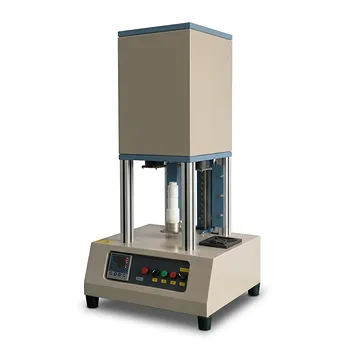
Compact High Temperature Bottom Loading Furnace 1700C Rapid Heating Cooling System Small Sample Thermal Cycling Equipment
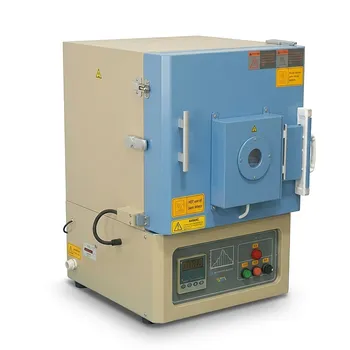
High Temperature Benchtop Muffle Furnace 1500C with 3.6L Chamber and Quartz Observation Window
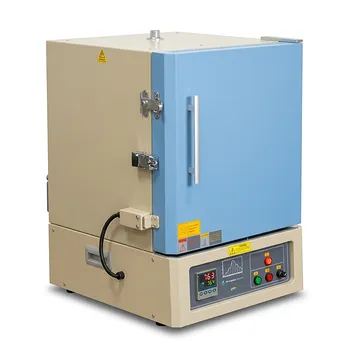
Large Capacity 1200C Muffle Furnace 64 Liter Chamber with Digital PID Controller and Built In Venting Port
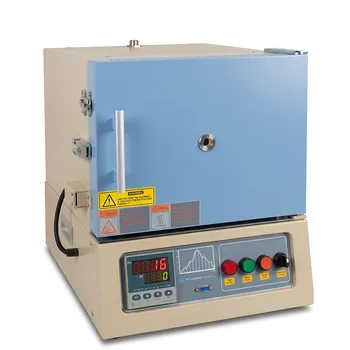
1200C Muffle Furnace 12x8x5 7.2L Heating Chamber with Quartz Observation Window and Vent Port
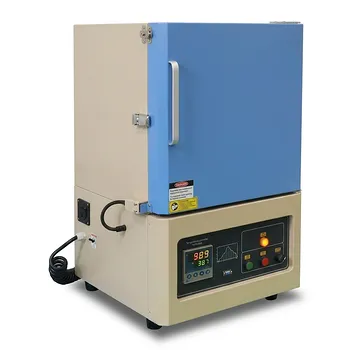
1200°C High Temperature Muffle Furnace 19L Chamber with 50 Segment Programmable Controller
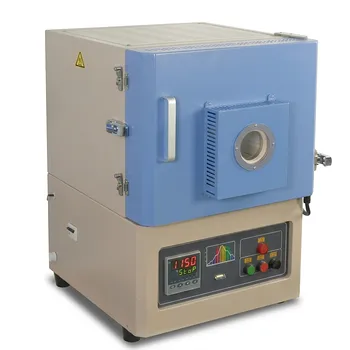
High Temperature Benchtop Muffle Furnace with Quartz Observation Window for Thermal Imaging and Material Analysis
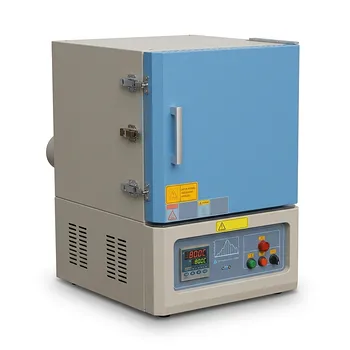
1800C Bench Top Muffle Furnace 18 Liters with Kanthal Super 1900 Heating Elements for High Purity Ceramic Sintering and Material Research