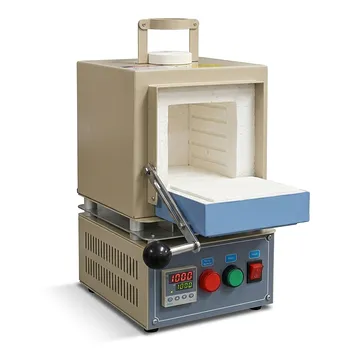
What is the role of a laboratory muffle furnace in the synthesis of monoclinic BiVO4 crystal structures? Expert Guide
Updated 3 months ago
The laboratory muffle furnace serves as the critical thermal reactor required to convert precursor materials into photoactive monoclinic $\text{BiVO}_4$. Specifically, it provides the precise, high-temperature environment—typically maintained at 450 °C for 2 hours—necessary to facilitate the solid-phase reaction between bismuth oxyiodide ($\text{BiOI}$) thin films and a vanadium source. This process drives the crystallization of the precursors into the specific monoclinic scheelite structure required for high-performance photoelectrocatalysis.
Core Takeaway: The muffle furnace is the engine of phase transformation, providing the controlled thermal energy needed to shift $\text{BiVO}_4$ from an amorphous or low-crystallinity state into a highly active monoclinic crystal structure while ensuring chemical purity.
The Mechanics of Solid-Phase Crystallization
Facilitating Atomic Diffusion
The muffle furnace provides a stable thermal field that grants atoms the kinetic energy required for diffusion. In the synthesis of $\text{BiVO}_4$, this energy allows bismuth and vanadium ions to migrate and rearrange from their initial precursor states into a structured lattice. Without this sustained heat, the precursors remain a heterogeneous mixture rather than a unified crystalline compound.
Driving the Monoclinic Phase Transition
The monoclinic scheelite phase is the most sought-after structure for $\text{BiVO}_4$ due to its superior photocatalytic activity. The furnace triggers the transition from an amorphous state to this specific crystalline phase by maintaining precise temperature gradients. This transformation is essential for optimizing the material's electrochemical stability and light-harvesting capabilities.
Removal of Organic Impurities
During the synthesis process, residual organic components or solvents are often present in the precursor "green" body. The high-temperature environment of the muffle furnace effectively oxidizes and removes these impurities. This calcination step ensures that the final $\text{BiVO}_4$ crystal is pure, preventing organic residues from blocking active catalytic sites.
Precision Control and Material Quality
Regulating Grain Growth
Precise temperature control within the furnace is vital for managing grain size. If the temperature is too low, the crystal structure will be poorly defined; however, if it is held too high for too long, excessive grain growth can occur. The muffle furnace allows researchers to hit the "sweet spot" where crystallinity is high but grain boundaries remain optimized for electron transport.
Ensuring Phase Purity
A muffle furnace provides a uniform heat distribution, which is critical for phase purity. Inhomogeneous heating can lead to the formation of secondary, less active phases (such as tetragonal $\text{BiVO}_4$). By maintaining a constant 450 °C environment, the furnace ensures that the entire sample undergoes a uniform chemical reaction.
Understanding the Trade-offs
Temperature Sensitivity and Over-Sintering
While high temperatures are necessary for crystallinity, excessive heat (often exceeding 600 °C) can lead to over-sintering. This reduces the surface area of the $\text{BiVO}_4$ crystals, which directly diminishes its catalytic performance. Finding the balance between high crystallinity and high surface area is a primary challenge in thermal treatment.
Ramp Rates and Structural Stress
The rate at which the furnace reaches its target temperature, known as the ramp rate, significantly impacts the film's mechanical integrity. Rapid heating can cause thermal shock or delamination of $\text{BiVO}_4$ thin films from their substrates. Therefore, a controlled heating curve (e.g., 5 K/min) is often as important as the final "soak" temperature itself.
How to Apply This to Your Project
Making the Right Choice for Your Goal
To achieve the best results in $\text{BiVO}_4$ synthesis, your furnace settings should align with your specific performance requirements.
- If your primary focus is Maximum Photocatalytic Activity: Maintain a precise 450 °C soak for 2 hours to ensure the formation of the monoclinic scheelite phase without sacrificing surface area.
- If your primary focus is Structural Stability and Purity: Consider higher calcination temperatures (up to 600 °C) to ensure the complete removal of organic residues and the achievement of high crystallinity.
- If your primary focus is Thin-Film Adhesion: Utilize a slow ramp rate (3-5 °C per minute) to prevent thermal stress and cracking during the phase transition.
The muffle furnace is not merely a heater but a precision tool that determines the final electronic and structural identity of the synthesized $\text{BiVO}_4$ crystal.
Summary Table:
| Parameter | Optimal Setting | Synthesis Role |
|---|---|---|
| Reaction Temp | 450 °C | Triggers monoclinic phase transition |
| Soak Time | 2 Hours | Facilitates diffusion and crystallization |
| Ramp Rate | 3-5 K/min | Maintains film adhesion and structural integrity |
| Atmosphere | Ambient/Air | Oxidizes and removes organic impurities |
| Heat Field | Uniform | Prevents formation of secondary inactive phases |
Precision Thermal Processing for Material Science with THERMUNITS
Achieving the specific monoclinic scheelite structure of BiVO4 requires the absolute precision that only high-quality thermal equipment can provide. THERMUNITS is a leading manufacturer of high-temperature laboratory equipment for material science and industrial R&D. We offer a comprehensive range of thermal processing solutions designed to optimize your synthesis results.
Our Advanced Equipment Includes:
- Furnaces: Muffle, Vacuum, Atmosphere, Tube, Rotary, and Hot Press furnaces.
- Specialized Systems: CVD/PECVD systems, Dental Furnaces, and Electric Rotary Kilns.
- Industrial R&D: Vacuum Induction Melting (VIM) furnaces and specialized Thermal Elements.
Whether you are focusing on photocatalytic activity or structural purity, our laboratory heat treatment equipment ensures consistent, high-performance results for every batch.
Enhance your research efficiency today — Contact THERMUNITS for a consultation!
References
- Xianlong Li, Lianzhou Wang. Oxygen vacancy induced defect dipoles in BiVO4 for photoelectrocatalytic partial oxidation of methane. DOI: 10.1038/s41467-024-53426-8
Mentioned Products
- 1200C Muffle Furnace 12x8x5 7.2L Heating Chamber with Quartz Observation Window and Vent Port
- 1750C Compact Muffle Furnace 1.7L Ultra High Temperature Laboratory Sintering System for Advanced Ceramics and Material Science Research
- High Temperature 1200C Muffle Furnace 27L Volume 12x12x12 Chamber with Programmable PID Controller for Laboratory Material Science
- 1200°C High Temperature Muffle Furnace 19L Chamber with 50 Segment Programmable Controller
- 1750C Bench Top Muffle Furnace 3.6L High Grade Molybdenum Disilicide Heating Elements Laboratory Heat Treatment Equipment
People Also Ask
- What is the function of an experimental muffle furnace in the conversion of FeOOH to α-Fe2O3? Optimize Phase Transition
- Why is a muffle furnace required for MoO2@HCNF pre-oxidation? Crucial Steps for High-Performance Composites
- What is the function of a high-temperature Muffle furnace in removing residual solvents? Essential Bismuth Synthesis
- What is the function of Muffle furnace calcination? Essential steps for Pr-doped SrFeMoO6 Perovskite synthesis.
- What are the primary functions of a Muffle furnace in oxide calcination? Achieve high purity and phase control.

Tech Team · ThermUnits
Last updated on Jun 03, 2026
Related Products
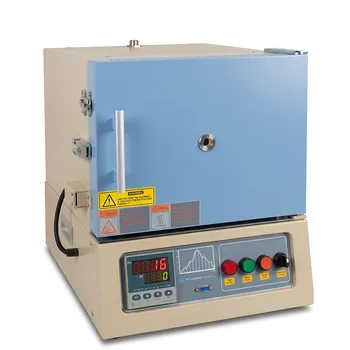
1200C Muffle Furnace 12x8x5 7.2L Heating Chamber with Quartz Observation Window and Vent Port
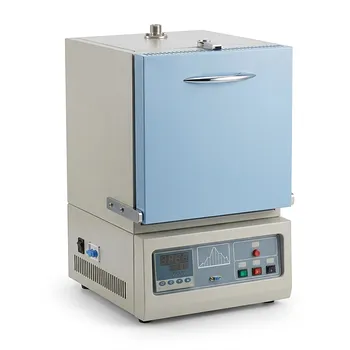
1750C Compact Muffle Furnace 1.7L Ultra High Temperature Laboratory Sintering System for Advanced Ceramics and Material Science Research
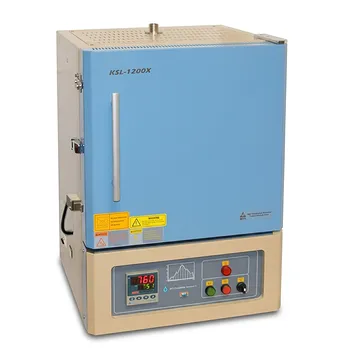
High Temperature 1200C Muffle Furnace 27L Volume 12x12x12 Chamber with Programmable PID Controller for Laboratory Material Science
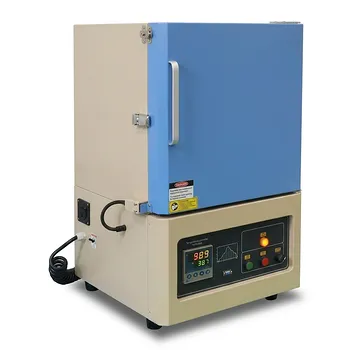
1200°C High Temperature Muffle Furnace 19L Chamber with 50 Segment Programmable Controller
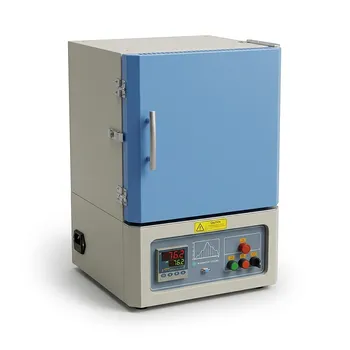
1750C Bench Top Muffle Furnace 3.6L High Grade Molybdenum Disilicide Heating Elements Laboratory Heat Treatment Equipment
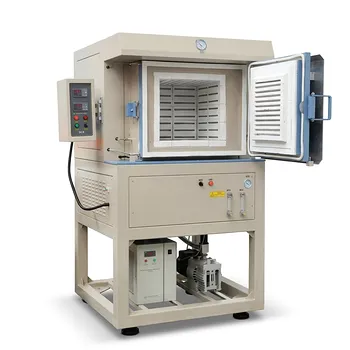
1200°C Five Side Heating Atmosphere Controlled Muffle Furnace 64 Liter High Uniformity Box Furnace for Material Synthesis
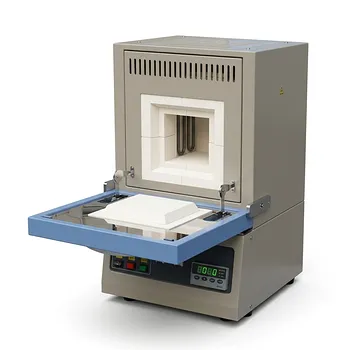
Five Sided Heating Muffle Furnace High Uniformity 1200C Lab Box Furnace 27L Alumina Fiber Chamber
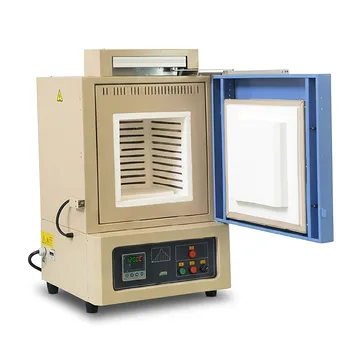
1200C High Temperature Muffle Furnace with Motorized Door and Automated PC Control for Industrial Sintering and Material Processing 27 Liter
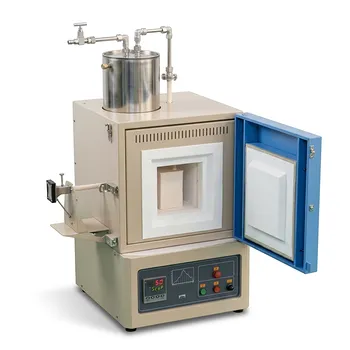
High Temperature Bench Top Muffle Furnace 1700C with Integrated Evaporating Particle Collection and 8x8x8 Alumina Fiber Chamber
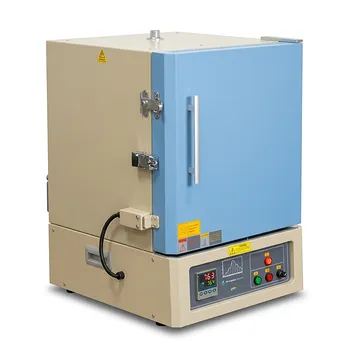
Large Capacity 1200C Muffle Furnace 64 Liter Chamber with Digital PID Controller and Built In Venting Port
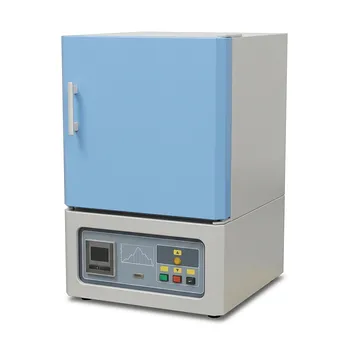
1800C Bench Top Muffle Furnace with Kanthal Super 1900 Heating Elements and 3.6L Alumina Fiber Chamber
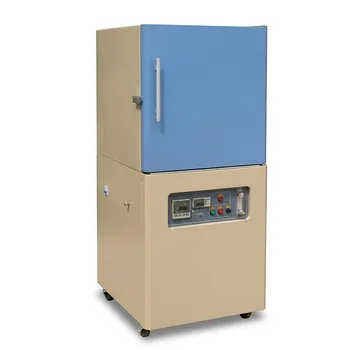
High Temperature Muffle Furnace with Dual Controllers and 36L Large Chamber 1700C Max
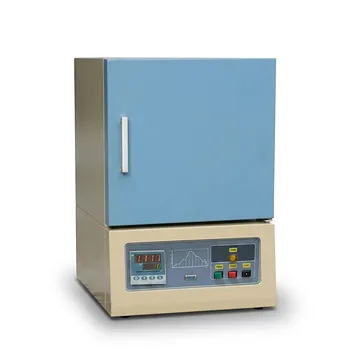
Ultra High Temperature Bench Top Muffle Furnace 1750C Sintering System with Kanthal Super Heating Elements and Precision Digital Control
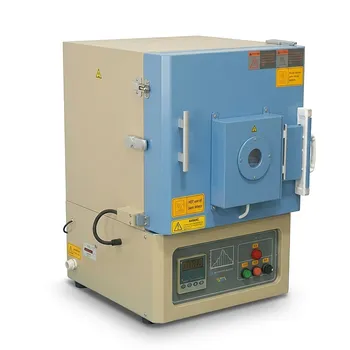
High Temperature Benchtop Muffle Furnace 1500C with 3.6L Chamber and Quartz Observation Window
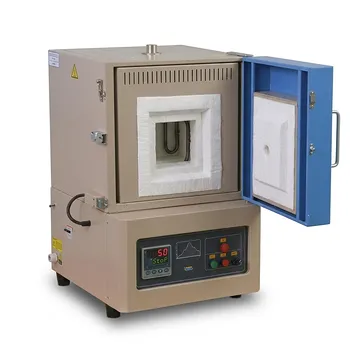
1800°C Bench Top Ultra High Temperature Muffle Furnace with Sapphire Observation Window and Top Feeding Port for Materials Research and Thermal Processing
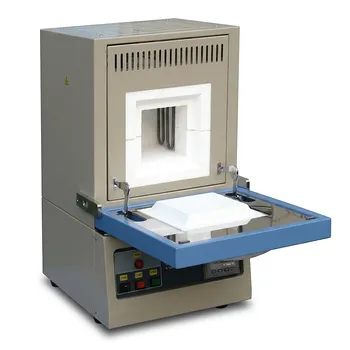
High Temperature 1800C Compact Muffle Furnace with Kanthal Super 1900 Heating Elements and 1.7L Alumina Chamber
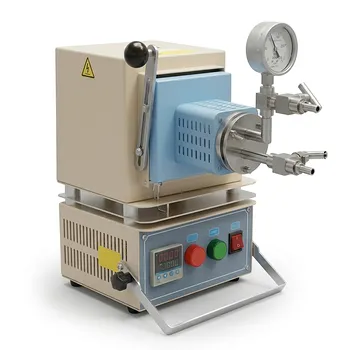
Compact Hybrid Muffle and Tube Furnace for 1000C Controlled Atmosphere Laboratory Material Sintering
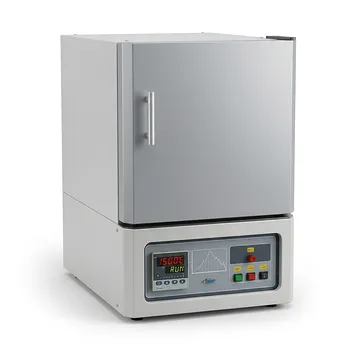
High Temperature 1500C Benchtop Muffle Furnace 3.6L Alumina Fiber Chamber Programmable Controller Sintering Annealing Carbonization Thermal Processing System
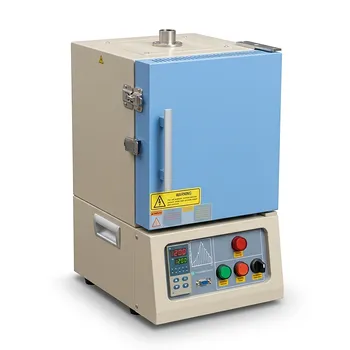
1200°C Small Box Furnace 4.2 Liter Programmable Muffle Furnace with High Purity Alumina Insulation and PID Control