What is the function of Mass Flow Controllers (MFC) in magnesium carbonate calcination? Key to Kinetic Precision
Updated 3 months ago
Mass Flow Controllers (MFC) function as the precision gatekeepers of the gaseous environment, regulating the mixing ratios of components like nitrogen, oxygen, and carbon dioxide to simulate specific flue gas or steam atmospheres. By maintaining a constant and accurate flow, they ensure the stability and repeatability of the reaction environment, which is critical for measuring how varying gas partial pressures influence the decomposition rate of magnesium carbonate.
The core function of an MFC in calcination kinetics is to isolate gas partial pressure as a controlled variable. This precision allows researchers to decouple the chemical drivers of decomposition from atmospheric fluctuations, ensuring that kinetic data reflects the material's true behavior.
Precision Control of the Reaction Environment
Simulating Realistic Industrial Conditions
MFCs allow researchers to synthesize complex atmospheres, such as pure steam or specific flue gas mixtures, by blending individual gas streams with high accuracy. This capability is essential for studying magnesium carbonate, as its behavior changes significantly when exposed to the different chemical potentials found in industrial calcination processes.
Managing Reversible Reaction Kinetics
Carbonate decomposition is a reversible solid-gas reaction that is highly sensitive to the concentration of product gases in the surrounding atmosphere. By strictly regulating the partial pressure of carbon dioxide ($P_{CO2}$), MFCs enable the study of the relationship between the decomposition onset temperature and the atmospheric composition.
Ensuring Experimental Repeatability
The ability to precisely replicate gas mixing ratios across multiple test runs is fundamental to kinetic modeling. MFCs eliminate the variability inherent in manual flow adjustments, providing a stable and repeatable baseline that is required for calculating reliable activation energies and reaction orders.
Impact on Mass Transfer and Heat Flow
Stabilizing the Flow Field
Beyond chemical composition, MFCs maintain a constant total flow rate entering the reaction zone, such as a tube furnace. This stability ensures a reproducible flow field, preventing localized turbulence or "dead zones" that could lead to inconsistent decomposition rates across the sample.
Regulating Thermal Convection
Flow velocity directly impacts thermal convection and the rate at which heat is transferred to the magnesium carbonate sample. MFCs provide the steady state necessary to ensure that thermal energy is delivered consistently, which is a prerequisite for accurate thermal analysis and mass loss measurements.
Controlling Volatile Accumulation
During calcination, gases released from the sample can accumulate near its surface, artificially slowing the reaction. High-precision flow control ensures these volatiles are swept away at a constant rate, allowing researchers to assess the true impact of oxygen or steam concentrations on the pyrolysis kinetics.
Understanding the Trade-offs
Calibration and Gas Compatibility
MFCs are typically calibrated for specific gases; using a controller calibrated for nitrogen to measure carbon dioxide without proper conversion factors will lead to significant errors. Researchers must ensure that the internal sensors are compatible with the corrosive or high-temperature nature of steam environments to avoid drift.
Response Time vs. Stability
While MFCs are designed for stability, they have a finite response time to reach a set point. In rapid kinetic studies where atmospheric conditions must change mid-experiment, the lag time of the controller can introduce "transient states" that may obscure the initial stages of a reaction.
Pressure Sensitivity
Most MFCs require a specific pressure differential to operate accurately. If the downstream pressure in the calcination chamber fluctuates due to rapid gas evolution from the sample, it can interfere with the controller’s ability to maintain a steady flow, potentially skewing kinetic data.
Applying MFC Precision to Your Research Goal
How to Apply This to Your Project
- If your primary focus is determining reaction orders: Use the MFC to incrementally vary the partial pressure of a single gas (like $CO_2$) while keeping the total flow rate constant to isolate the chemical impact on the reaction rate.
- If your primary focus is industrial process simulation: Utilize multiple MFCs to blend a "synthetic flue gas" that mirrors the specific moisture and CO2 levels of your target kiln environment.
- If your primary focus is high-accuracy kinetic modeling: Prioritize MFCs with high reproducibility and low "zero drift" to ensure that the mass loss data recorded at different temperatures is strictly comparable.
Precise atmospheric regulation through Mass Flow Controllers transforms calcination from an unpredictable thermal event into a controlled, quantifiable chemical process.
Summary Table:
| Key Function | Impact on Calcination Kinetics | Research Benefit |
|---|---|---|
| Atmosphere Synthesis | Simulates flue gas or pure steam environments | Matches industrial R&D conditions |
| Partial Pressure Control | Regulates $CO_2$ concentration precisely | Decouples chemical drivers from noise |
| Flow Stabilization | Maintains constant thermal convection and flow field | Ensures data repeatability/stability |
| Volatile Management | Sweeps away evolved gases at a constant rate | Measures true reaction rates without lag |
| Precision Mixing | Accurate blending of nitrogen, oxygen, and $CO_2$ | Reliable calculation of activation energy |
Elevate Your Kinetic Research with THERMUNITS
Precise atmospheric control is the backbone of reliable material science data. THERMUNITS is a leading manufacturer of high-temperature laboratory equipment, providing the precision tools required for advanced industrial R&D. Our comprehensive range of thermal processing solutions includes:
- Advanced Furnaces: Muffle, Vacuum, Atmosphere, Tube, Rotary, and Hot Press Furnaces.
- Specialized Systems: CVD/PECVD systems, Dental Furnaces, and Electric Rotary Kilns.
- Industrial Solutions: Vacuum Induction Melting (VIM) furnaces and high-quality Thermal Elements.
Whether you are studying magnesium carbonate kinetics or developing new materials, our equipment is engineered to provide the stable, repeatable environments your research demands.
Ready to optimize your lab’s thermal performance?
Contact our technical team today to find the perfect furnace solution for your specific application!
References
- Hani Ababneh, Bassam B. Dally. Steam Calcination of Magnesium Carbonate: A Kinetic Study. DOI: 10.11159/mmme24.105
Mentioned Products
- 4 Inch Two Zone Rotary CVD Tube Furnace for High Temperature Battery Material Synthesis and Advanced Material Calcination
- 900°C Max Rotary Tube Furnace with 8 Inch 310S Alloy Tube and Optional Multi Zone Heating for Industrial Material Calcination
- Dual Zone Rotary Tube Furnace for Uniform Powder Calcination 1000C 2 Inch Quartz Tube
- High Throughput Induction Melting and Casting Furnace for Superalloy Research 1700C Atmosphere Controlled Multi Sample System
- 915MHz MPCVD Diamond Machine Microwave Plasma Chemical Vapor Deposition System Reactor
People Also Ask
- How does a rotary tube furnace improve the processing of granular materials? Enhance Uniformity and Reaction Kinetics
- Why use a rotary tube furnace for FACS carbonization? Ensure uniform morphology and prevent sphere agglomeration.
- Why is the precise optimization of residence time essential in the catalyst calcination process? Maximize Your Yields.
- In what ways do rotary tube furnaces enhance chemical and specialty mineral processing? Drive Precision and Uniformity.
- What parameters must operators control to maintain product quality in a rotary furnace? Master Your Heat Treatment.

Tech Team · ThermUnits
Last updated on Jun 02, 2026
Related Products
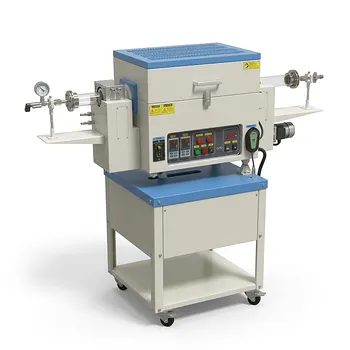
4 Inch Two Zone Rotary CVD Tube Furnace for High Temperature Battery Material Synthesis and Advanced Material Calcination
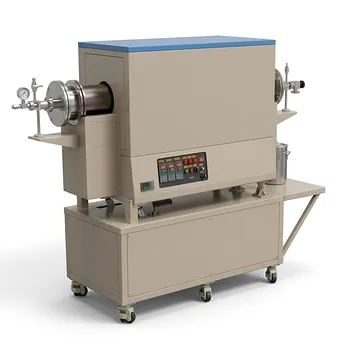
900°C Max Rotary Tube Furnace with 8 Inch 310S Alloy Tube and Optional Multi Zone Heating for Industrial Material Calcination
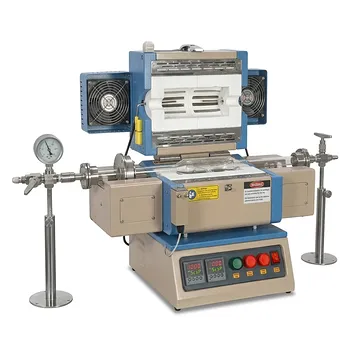
Dual Zone Rotary Tube Furnace for Uniform Powder Calcination 1000C 2 Inch Quartz Tube
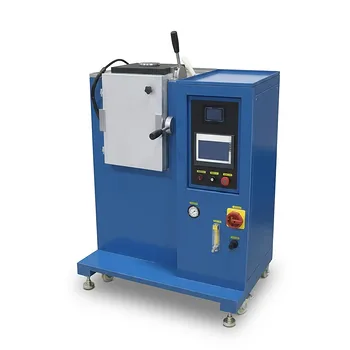
High Throughput Induction Melting and Casting Furnace for Superalloy Research 1700C Atmosphere Controlled Multi Sample System
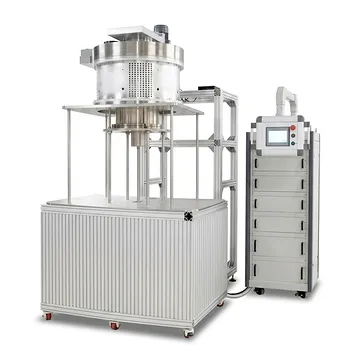
915MHz MPCVD Diamond Machine Microwave Plasma Chemical Vapor Deposition System Reactor
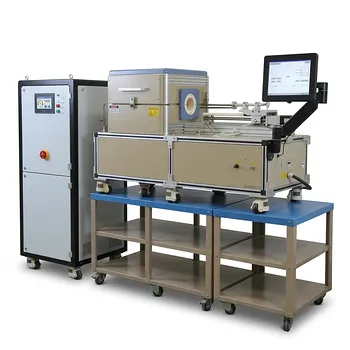
1650C Recirculating Steam Corrosion and Thermal Shock Testing Furnace with Integrated Water Vapor Generator and Automated Sample Delivery