Why use a lidded porcelain crucible for biochar activation? Optimize Carbonization and Prevent Ashing
Updated 3 months ago
The use of a porcelain crucible with a lid is the primary mechanism for transforming a standard muffle furnace into a functional pyrolysis reactor. It provides a localized oxygen-limited micro-environment that prevents the biomass from combusting into ash at high temperatures. This setup ensures that chemical activation and carbonization proceed efficiently by maintaining a micro-reducing atmosphere and protecting the structural integrity of the resulting biochar.
Using a lidded porcelain crucible creates a physical barrier that restricts oxygen intake and retains reactive gases. This configuration allows for successful carbonization and chemical activation by simulating an inert atmosphere, effectively preventing the complete oxidative loss of the carbon sample.
Atmospheric Control and Oxygen Limitation
Creating a Micro-Reducing Environment
The primary function of the lid is to establish a localized micro-reducing or hypoxic atmosphere within the furnace chamber. By physically isolating the sample, it minimizes contact with residual oxygen, simulating the conditions of an inert environment without the need for constant nitrogen flow.
Preventing Oxidative Combustion and Ashing
Without a lid, biomass heated to high temperatures in a muffle furnace would undergo complete combustion, leaving only inorganic ash. The crucible setup ensures the process remains in the pyrolysis phase, which is essential for the fixation of carbon elements and the formation of a porous carbon matrix.
Generating Micro-Positive Pressure
As the biomass decomposes, it releases volatile gases that create a micro-positive pressure inside the covered crucible. This pressure further inhibits the entry of external oxygen from the furnace, ensuring that the activation reaction proceeds within a stable, confined space.
Thermal and Chemical Resilience
Structural Integrity at Extreme Temperatures
Porcelain is selected for its exceptional thermal stability, capable of withstanding temperatures between 800 °C and 1000 °C without deforming. This high-temperature resistance ensures that the container remains stable throughout the intense heat required for chemical activation.
Chemical Inertness with Activators
During chemical activation, reagents such as potassium carbonate ($K_2CO_3$) are often used to etch the carbon structure. Porcelain is chemically inert enough to resist aggressive reactions with these activators, ensuring the final biochar is not contaminated by the container material.
Accuracy of Mass Loss Measurements
Because the porcelain crucible does not react with the sample or the furnace atmosphere, it acts as a neutral vessel. This allows researchers to ensure that any observed mass loss is strictly due to the change in the sample’s composition, guaranteeing the accuracy of physical and chemical indicators.
Reaction Efficiency and Pore Development
Retention of Volatile Decomposition Gases
The lid helps retain specific decomposition products, such as hydrogen chloride (HCl) generated from additives like ammonium chloride, within the reaction zone. These retained gases assist in pore formation and promote the doping of heteroatoms into the biochar structure, enhancing its functional properties.
Uniform Heat Distribution
The ceramic material facilitates even heat distribution throughout the biomass sample. This prevents localized overheating or "hot spots," which leads to a more consistent quality in the resulting biochar and ensures that the activation occurs uniformly across the entire sample.
Support for In-Situ Modification
The controlled environment provided by the crucible is critical for in-situ magnetic modification. By maintaining specific atmospheric conditions, it allows metal nanoparticles to be securely anchored to the carbon substrate without being oxidized or lost during the high-heat cycle.
Understanding the Trade-offs
The Risk of Thermal Shock
While porcelain is highly heat-resistant, it is susceptible to thermal shock if cooled too rapidly. Removing a crucible from an 800 °C furnace directly to room temperature can cause the ceramic to crack, potentially ruining the sample and the vessel.
Imperfect Atmospheric Sealing
A lidded crucible provides an "oxygen-limited" environment, but it is not a perfect vacuum or a strictly anaerobic system. For highly sensitive reactions, a standard lid may still allow trace oxygen ingress, sometimes necessitating the additional use of aluminum foil seals or inert gas purging to reach true anoxic conditions.
Crucible Contamination
Over multiple uses, residues from chemical activators can accumulate in the porous surface of the porcelain. If not cleaned rigorously, these residual chemicals can lead to cross-contamination between different batches of biochar, skewing experimental results.
How to Apply This to Your Project
Recommendations for Biochar Production
- If your primary focus is maximizing carbon yield: Ensure the crucible lid fits tightly and consider sealing the edges with a thin layer of high-temperature foil to further restrict oxygen access.
- If your primary focus is developing a high surface area: Utilize the lid to trap volatile gases during the activation phase, as these gases act as natural pore-forming agents.
- If your primary focus is chemical purity: Use a fresh or acid-washed porcelain crucible for every new activator type to prevent cross-contamination of mineral species.
- If your primary focus is equipment longevity: Always allow the crucible to cool slowly inside the furnace or a desiccator to prevent cracking from thermal stress.
Properly managing the micro-environment within the porcelain crucible is the single most important factor in determining whether a biomass sample becomes high-quality biochar or simple waste ash.
Summary Table:
| Key Feature | Technical Significance | Impact on Biochar Quality |
|---|---|---|
| Oxygen Limitation | Creates a micro-reducing atmosphere | Prevents combustion/ashing and ensures carbon fixation |
| Gas Retention | Traps volatile decomposition gases | Enhances pore development and surface area |
| Thermal Resilience | Withstands 800°C - 1000°C | Maintains vessel integrity during high-heat cycles |
| Chemical Inertness | Resists corrosive activators (e.g., $K_2CO_3$) | Prevents sample contamination and ensures purity |
| Pressure Control | Generates micro-positive pressure | Further inhibits oxygen ingress for stable reactions |
Elevate Your Material Research with THERMUNITS
At THERMUNITS, we understand that precise atmospheric control is the difference between high-quality biochar and simple ash. As a leading manufacturer of high-temperature laboratory equipment, we provide the specialized tools material scientists and industrial R&D teams need to achieve consistent, scalable results.
Whether you are performing chemical activation, carbonization, or advanced CVD/PECVD processes, our comprehensive range of thermal solutions—including Muffle, Vacuum, Atmosphere, Tube, and Rotary furnaces, as well as Vacuum Induction Melting (VIM) systems—is engineered for excellence.
Ready to optimize your thermal processing? Contact our technical experts today to find the perfect furnace solution for your laboratory or industrial R&D needs!
References
- V. Meseguer, Emmanuel Fuentes. Ciprofloxacin Uptake from an Aqueous Solution via Adsorption with K2CO3-Activated Biochar Derived from Brewing Industry Bagasse. DOI: 10.3390/pr12010199
Mentioned Products
- Dental Porcelain Zirconia Sintering Ceramic Furnace Chairside with Transformer
- High Temperature Vertical Crucible Furnace with 22L Heating Chamber and 1200C Maximum Temperature
- 1200C Sliding Internal Crucible Tube Furnace for Controlled Atmosphere Thin Film Deposition and Material Sublimation Research
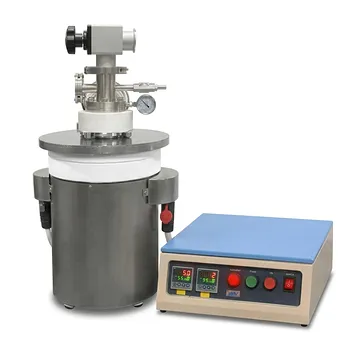
- 600°C Vertical Crucible Furnace with SS316 Alloy Reactor and 6 Port Vacuum Flange
- Vertical Crucible Furnace 1000C High Temperature Laboratory Equipment 4.7 Inch Diameter Chamber SS316 Anti Corrosive Enclosure
People Also Ask
- How do zirconia sintering furnaces differ from porcelain firing furnaces? Key Technical & Performance Differences
- What technical features ensure temperature precision and material integrity in dental furnaces? Quality Sintering Guide
- What are the practical benefits of using chairside-specific dental furnaces? Boost Single-Visit Dentistry Efficiency.
- What is the importance of dental furnaces in material science research and development? Keys to Ceramic Innovation
- How do sintering and firing differ in a dental furnace? Master the key techniques for flawless restorations.

Tech Team · ThermUnits
Last updated on Jun 03, 2026
Related Products
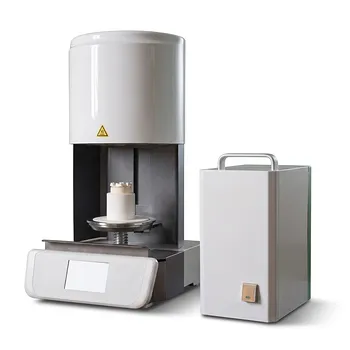
Dental Porcelain Zirconia Sintering Ceramic Furnace Chairside with Transformer
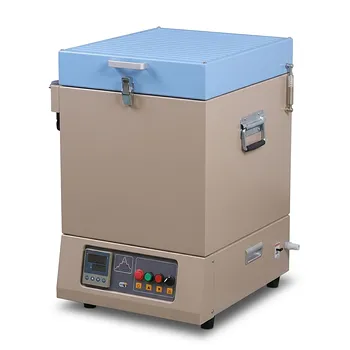
High Temperature Vertical Crucible Furnace with 22L Heating Chamber and 1200C Maximum Temperature
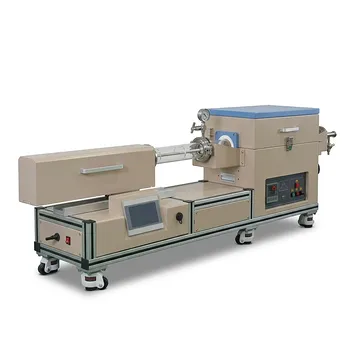
1200C Sliding Internal Crucible Tube Furnace for Controlled Atmosphere Thin Film Deposition and Material Sublimation Research
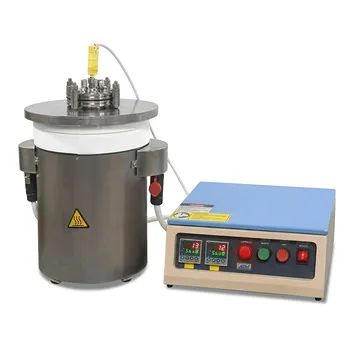
600°C Vertical Crucible Furnace with SS316 Alloy Reactor and 6 Port Vacuum Flange
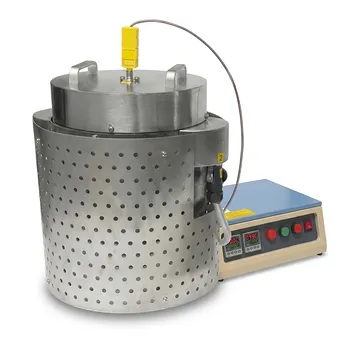
Vertical Crucible Furnace 1000C High Temperature Laboratory Equipment 4.7 Inch Diameter Chamber SS316 Anti Corrosive Enclosure
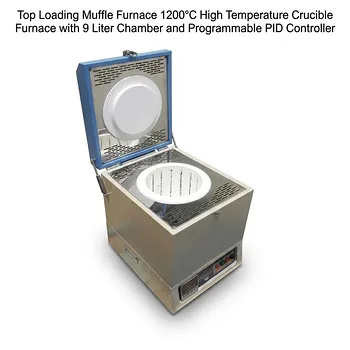
Top Loading Muffle Furnace 1200°C High Temperature Crucible Furnace with 9 Liter Chamber and Programmable PID Controller
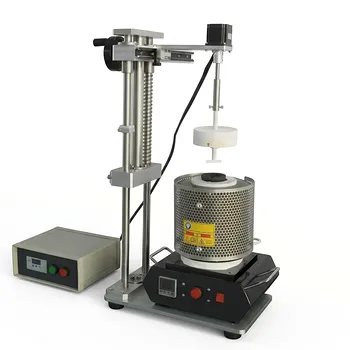
1100C Crucible Melting Furnace with Stirring Function for Glovebox and Air Sensitive Alloy Research