What is the technical value of a precision oven in composite drying? Ensure Material Integrity & Stabilization
Updated 3 months ago
The technical value of a precision oven is defined by its ability to execute precise, multi-stage thermal programs that guarantee material integrity. By utilizing controlled heating cycles—typically ranging from 100°C to 150°C—these ovens facilitate the safe removal of residual water and organic solvents from pressed green bodies. This systematic process is critical for preventing internal structural damage and ensuring the final composite achieves its intended dielectric performance.
Precision ovens provide the granular control necessary to balance solvent evaporation with structural stabilization. This prevents the catastrophic micro-cracking associated with rapid vaporization while enabling the molecular rearrangement essential for high-performance dielectric materials.
The Mechanics of Controlled Thermal Desorption
Managing Gradual Solvent Evaporation
Precision ovens allow for slow, multi-stage heating programs that transition carefully between temperature setpoints. This gradual increase is vital for removing residual water and organic solvents without triggering a violent phase change.
By controlling the rate of evaporation, the oven ensures that the internal pressure within the material remains below the threshold of structural failure.
Safeguarding the "Green Body" State
In the context of composite manufacturing, "green bodies" are highly susceptible to damage before they are fully cured or stabilized. A precision oven provides the thermal stability required to process these pressed forms without causing deformation.
This stage is the foundation of the manufacturing process, where the removal of volatile components must be handled with extreme care to maintain the sample's geometry.
Structural Integrity and Molecular Stabilization
Prevention of Structural Micro-Cracks
Rapid moisture vaporization is a primary cause of micro-cracks in composite materials. If heat is applied too quickly, the internal steam pressure can overwhelm the material's bond strength, leading to invisible but devastating structural flaws.
The precision oven mitigates this risk by keeping the vaporization rate in sync with the material's natural porosity.
Facilitating Molecular Rearrangement
Beyond mere drying, these ovens promote the thermal stabilization and rearrangement of molecules, such as glycine, under pressure. This molecular alignment is what gives the composite its specific dielectric properties and overall high-performance characteristics.
Without the steady, predictable heat of a precision environment, these molecules would remain in a disordered state, leading to inconsistent electrical performance.
Understanding the Trade-offs
Process Time vs. Material Quality
The primary trade-off in using a precision oven is the extended cycle time. Faster drying methods may increase throughput, but they significantly raise the risk of material rejection due to internal defects.
Technical advisors must weigh the cost of a slower production cycle against the superior yield and performance of the finished dielectric composite.
Equipment Sensitivity and Calibration
Precision ovens require rigorous calibration to ensure that multi-stage programs are executed accurately. Any deviation in temperature can disrupt the molecular stabilization process, particularly when dealing with sensitive organic components like glycine.
How to Apply Decisive Thermal Control
If you are integrating a precision oven into your workflow, your strategy should depend on your specific material requirements and performance benchmarks.
- If your primary focus is structural reliability: Prioritize the multi-stage ramp-up period to ensure no rapid vaporization occurs during the transition from 100°C to 150°C.
- If your primary focus is dielectric performance: Focus on the stabilization phase of the cycle, ensuring the temperature remains constant long enough to allow for complete molecular rearrangement.
- If your primary focus is high-yield production: Invest in ovens with high spatial uniformity to ensure every sample in the batch undergoes the exact same thermal profile.
Ultimately, the precision oven translates thermal consistency into material excellence by treating heat as a tool for molecular organization rather than just a source of evaporation.
Summary Table:
| Feature / Process Phase | Technical Benefit | Resulting Material Value |
|---|---|---|
| Multi-stage Heating | Controlled solvent evaporation | Prevents internal micro-cracking |
| 100°C - 150°C Cycling | Gradual moisture removal | Safeguards "green body" structural state |
| Molecular Realignment | Thermal stabilization of molecules | Optimized dielectric performance |
| Spatial Uniformity | Consistent thermal profiles | High-yield production and repeatable quality |
Elevate Your Composite Research with THERMUNITS Precision Solutions
Achieving superior dielectric performance and structural integrity in material science requires more than just heat; it requires absolute thermal control. THERMUNITS is a leading manufacturer of high-performance laboratory equipment, providing the precision needed for advanced industrial R&D.
Whether you are stabilizing sensitive green bodies or managing complex CVD/PECVD processes, our comprehensive range of thermal solutions—including Precision Ovens, Muffle, Vacuum, Atmosphere, and Tube Furnaces—is engineered to prevent material failure and ensure consistent molecular rearrangement.
Ready to optimize your heat treatment workflow? Contact our technical experts today to discuss how our specialized thermal processing equipment can enhance your laboratory’s efficiency and output.
References
- Henry E. Mgbemere, Viktoriya Semeykina. SYNTHESIS AND CHARACTERISATION OF DIELECTRIC COMPOSITES PRODUCED FROM GLYCINE AND ALKALINE NIOBATE-BASED CERAMICS. DOI: 10.30572/2018/kje/150106
Mentioned Products
- High Temperature Vacuum Lamination Hot Press Furnace Machine for Semiconductor Wafer Bonding and Advanced Composite Thermal Processing
- High Temperature Cold Wall High Vacuum Chamber Furnace 1400C for Advanced Material Processing
- High Temperature 1000C Vacuum Furnace with 8 Inch ID Chamber for Material Sintering and Research Annealing
People Also Ask
- What types of heating systems and insulation are used in Vacuum Hot Press Furnaces? Optimize Your Thermal Processing
- What is a Vacuum Hot Press Furnace and what are its primary industrial applications? Achieve Maximum Material Density
- What are the structural features of the furnace body and chamber in a Vacuum Hot Press Furnace? Master Material Density
- Why is graphite the preferred material for dies and heating elements in Vacuum Hot Press Furnaces? High-Temp Solutions
- What are the primary operational components and mechanisms of a vacuum hot press furnace? A Technical Breakdown

Tech Team · ThermUnits
Last updated on Jun 03, 2026
Related Products
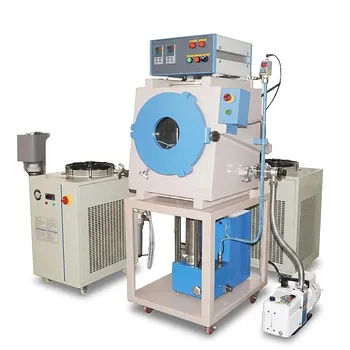
High Temperature Vacuum Lamination Hot Press Furnace Machine for Semiconductor Wafer Bonding and Advanced Composite Thermal Processing
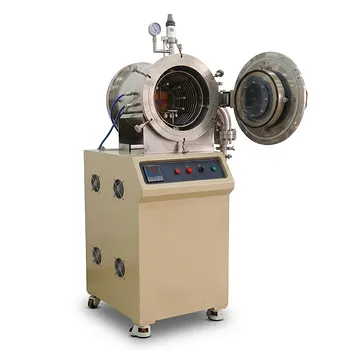
High Temperature Cold Wall High Vacuum Chamber Furnace 1400C for Advanced Material Processing