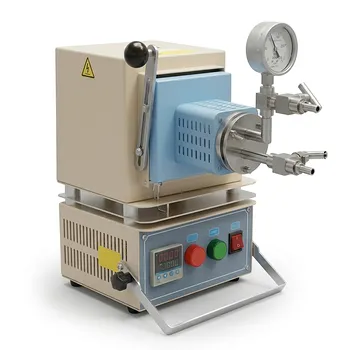
What role does a box muffle furnace play in CAM synthesis? Mastering Vapor-Phase Polycrystal Growth
Updated 5 months ago
The box muffle furnace and covered crucible function as a controlled vapor-phase reactor to facilitate the sublimation and subsequent diffusion-led reaction of precursor powders. By maintaining a stable temperature of approximately 280 °C, the furnace provides the thermal energy necessary to transform solid precursors into a gaseous state, while the covered crucible traps these vapors to create a localized high-concentration environment.
The core role of this setup is to transition synthesis from a solid-state reaction to a vapor-phase diffusion process. By confining sublimated molecules within a closed crucible, the system ensures sufficient molecular collisions to grow millimeter-scale branched polycrystals on the interior surfaces.
Thermodynamic Control of Sublimation
Establishing Thermal Stability
The box muffle furnace provides a uniform high-temperature environment that is critical for consistent precursor transformation. At the target temperature of 280 °C, the furnace ensures that the cyanuric acid and melamine precursors reach their sublimation points simultaneously.
Energy for Phase Transition
Unlike lower-temperature processes, this specific thermal window provides the thermodynamic energy required for molecules to escape the solid lattice. This transition into the vapor phase is the prerequisite for the formation of the CAM complex through molecular collision rather than simple solid-state contact.
The Role of the Local Vapor Environment
Maintaining Critical Vapor Pressure
The use of a covered ceramic crucible is essential to prevent the immediate escape of sublimated molecules into the larger furnace chamber. By creating a relatively closed local environment, the lid maintains a high partial pressure of the precursors, which is necessary to drive the chemical reaction forward.
Facilitating Molecular Diffusion
Within this confined space, the sublimated molecules move through a nitrogen atmosphere via diffusion. This movement allows the cyanuric acid and melamine molecules to interact and assemble in the gas phase or at the gas-solid interface on the crucible walls.
Morphological and Structural Outcomes
Promotion of Branched Polycrystal Growth
The specific conditions of a muffle furnace—characterized by static air or nitrogen and localized vapor—favor the growth of branched polycrystals. These structures typically reach millimeter-scale dimensions and deposit directly onto the crucible lid or walls as the vapor cools or reaches saturation.
Contrast with Single Crystal Synthesis
While tube furnaces and glass substrates are used to limit nucleation for single crystals, the box muffle furnace setup allows for multiple nucleation sites. This results in a polycrystalline morphology rather than the regular, transparent hexagonal flakes seen in more constrained single-crystal growth methods.
Understanding the Trade-offs
Vapor Containment vs. Contamination
While the covered crucible is excellent for maintaining vapor pressure, it is a static system that can trap byproducts like ammonia (deammoniation). If the seal is too tight, pressure buildup may occur; if too loose, the concentration of precursors drops, leading to poor crystal yield or smaller grain sizes.
Polycrystallinity vs. Structural Perfection
The primary limitation of this method is the lack of kinetic control over individual crystal orientation. Because the molecules deposit rapidly on the crucible surfaces, the resulting material is polycrystalline, which may have more structural defects than single crystals grown on specific substrates like glass.
How to Apply This to Your Project
Optimizing Your Synthesis Strategy
- If your primary focus is high yield of bulk material: Use a large-volume box muffle furnace with a tightly fitting lid to maximize precursor recovery and polycrystal deposition.
- If your primary focus is morphological purity: Closely monitor the heating rate (e.g., 2-3°C/min) to ensure uniform sublimation and prevent rapid, disordered crystal growth.
- If your primary focus is obtaining large single crystals: Consider transitioning from a box muffle furnace to a tube furnace setup using glass substrates to better regulate deposition kinetics.
The integration of precise thermal control and vapor confinement is the definitive factor in successfully synthesizing millimeter-scale CAM polycrystals.
Summary Table:
| Component | Function | Key Outcome |
|---|---|---|
| Box Muffle Furnace | Provides uniform 280°C thermal environment | Enables simultaneous precursor sublimation |
| Covered Crucible | Traps vapors to maintain high partial pressure | Facilitates molecular collision & diffusion |
| Nitrogen Atmosphere | Medium for molecular movement | Promotes millimeter-scale branched polycrystals |
| Cooling/Saturation | Governs deposition kinetics | Directs crystal growth on interior surfaces |
Elevate Your Material Research with THERMUNITS
High-precision thermal processing is the backbone of advanced material synthesis. THERMUNITS is a leading manufacturer specializing in high-performance laboratory equipment designed for the rigors of industrial R&D and material science.
Whether you need a Box Muffle Furnace for bulk CAM synthesis, a Tube Furnace for single-crystal growth, or specialized CVD/PECVD systems, our solutions deliver the thermal stability and uniformity your experiments demand. Our range includes:
- Laboratory Furnaces: Muffle, Vacuum, Atmosphere, and Rotary models.
- Advanced Systems: CVD/PECVD, Vacuum Induction Melting (VIM), and Hot Press furnaces.
- Specialized Equipment: Dental Furnaces, electric rotary kilns, and premium Thermal Elements.
Ready to optimize your heat treatment workflow? Contact THERMUNITS today to discuss your specific requirements with our technical experts!
References
- Yuting Wang, Jingsan Xu. Sublimation‐Induced Vapor Deposition of Cyanuric Acid‐Melamine Supramolecular Single Crystals on Surfaces. DOI: 10.1002/adfm.202403868
Mentioned Products
- Five Sided Heating Muffle Furnace High Uniformity 1200C Lab Box Furnace 27L Alumina Fiber Chamber
- Atmosphere Controlled Muffle Furnace 1700C Maximum Temperature 80L High Capacity Vacuum Inert Gas Box Furnace
- Industrial Large Box Furnace 1700C 216L High Temp Muffle Sintering System
- 1200C Muffle Furnace 12x8x5 7.2L Heating Chamber with Quartz Observation Window and Vent Port
- Ultra High Temperature Bench Top Muffle Furnace 1750C Sintering System with Kanthal Super Heating Elements and Precision Digital Control
People Also Ask
- What are the benefits of using muffle furnaces in pharmaceutical and biomedical applications? Maximize Purity & Compliance
- Why is the thermal environment provided by high-precision laboratory ovens or muffle furnaces essential? Achieve Precision.
- How is the ash content of polymers and plastics determined using a muffle furnace? Essential Guide for QC & R&D
- Why is a muffle furnace used for a 220°C preliminary baking after coating α-Fe2O3 nanorods with melamine? Explained
- How does the heating mechanism of a muffle furnace differ from that of an open-flame furnace? Indirect vs Direct Heat

Tech Team · ThermUnits
Last updated on Apr 14, 2026
Related Products
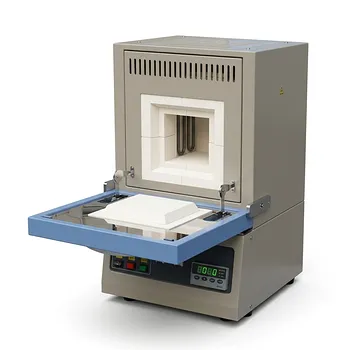
Five Sided Heating Muffle Furnace High Uniformity 1200C Lab Box Furnace 27L Alumina Fiber Chamber
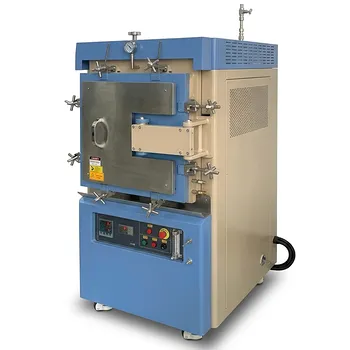
Atmosphere Controlled Muffle Furnace 1700C Maximum Temperature 80L High Capacity Vacuum Inert Gas Box Furnace
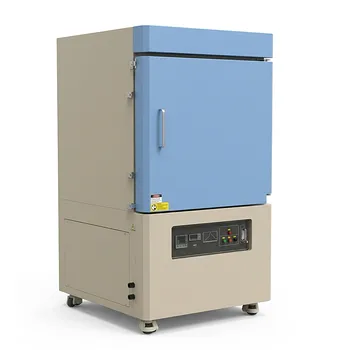
Industrial Large Box Furnace 1700C 216L High Temp Muffle Sintering System
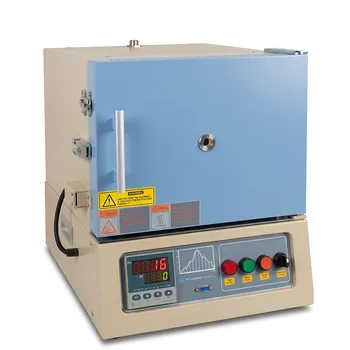
1200C Muffle Furnace 12x8x5 7.2L Heating Chamber with Quartz Observation Window and Vent Port
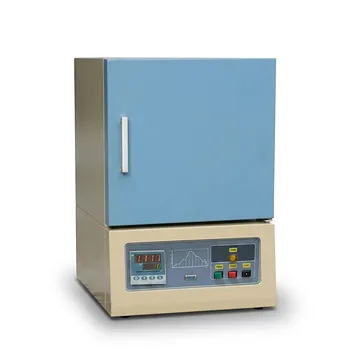
Ultra High Temperature Bench Top Muffle Furnace 1750C Sintering System with Kanthal Super Heating Elements and Precision Digital Control
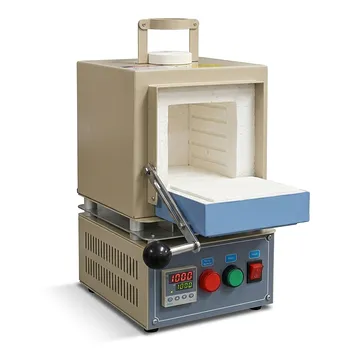
Compact 1000C Muffle Furnace with Programmable Controller and 2 Inch Top Port for Vacuum and Atmosphere Material Research
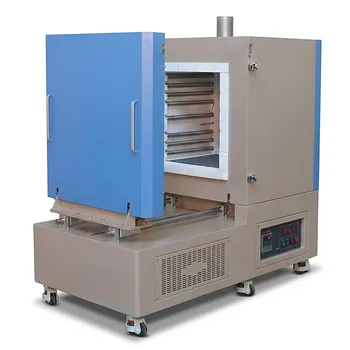
1200C Five Side Heating Muffle Furnace with Sliding Door 125L Volume High Temperature Heat Treatment System for Large Scale Sintering and Annealing
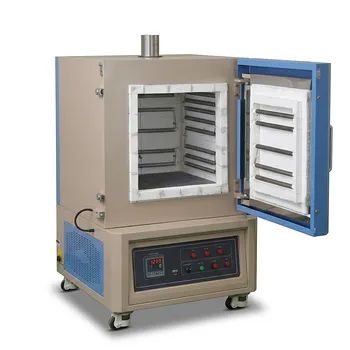
1200C High Temperature 125L Muffle Furnace 5 Side Heating for Large Batch Sintering with Optional Alloy Debinding Chamber
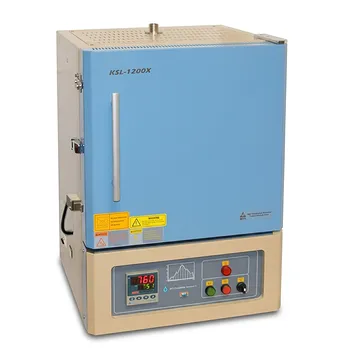
High Temperature 1200C Muffle Furnace 27L Volume 12x12x12 Chamber with Programmable PID Controller for Laboratory Material Science
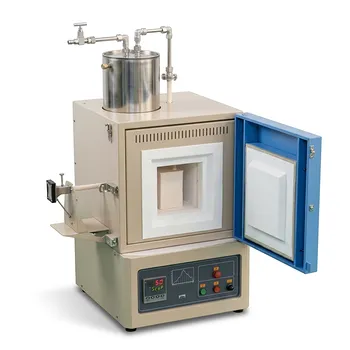
High Temperature Bench Top Muffle Furnace 1700C with Integrated Evaporating Particle Collection and 8x8x8 Alumina Fiber Chamber
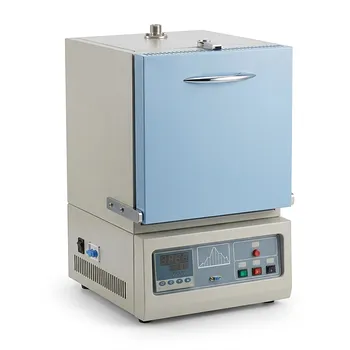
1750C Compact Muffle Furnace 1.7L Ultra High Temperature Laboratory Sintering System for Advanced Ceramics and Material Science Research
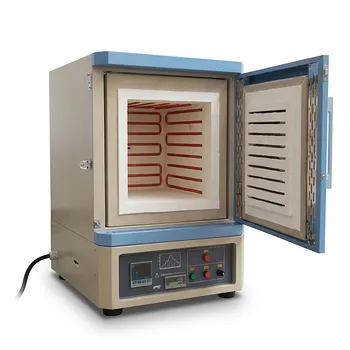
Five Side Heating Muffle Furnace 1200C High Uniformity 64L Chamber 16x16x16 Inch Industrial Heat Treatment
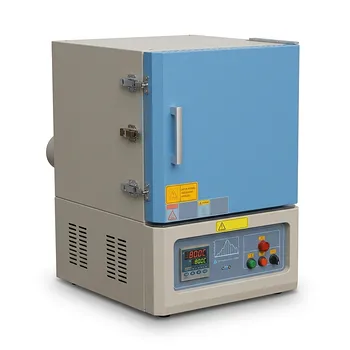
1800C Bench Top Muffle Furnace 18 Liters with Kanthal Super 1900 Heating Elements for High Purity Ceramic Sintering and Material Research
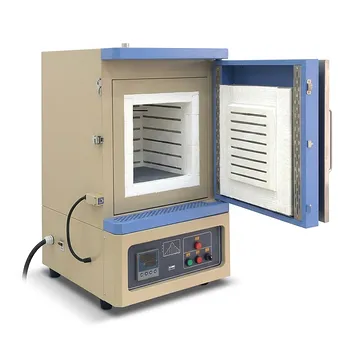
Five Side Heating Muffle Furnace High Purity Alumina Fiber 27L Chamber 1200C High Temperature Thermal Processing System for Sintering Annealing and Materials Research
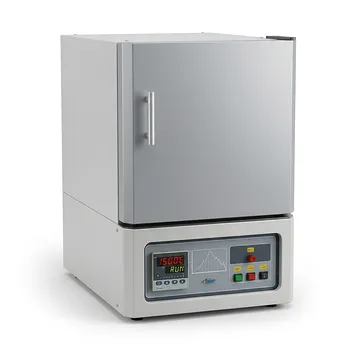
High Temperature 1500C Benchtop Muffle Furnace 3.6L Alumina Fiber Chamber Programmable Controller Sintering Annealing Carbonization Thermal Processing System
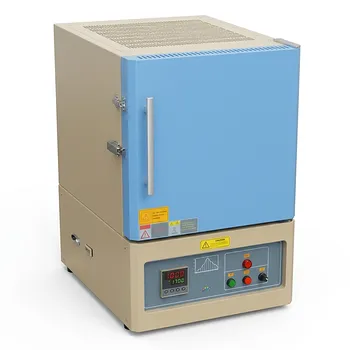
Large Bench Top 1700C High Temperature Muffle Furnace with 19L Chamber for Advanced Material Sintering and Annealing
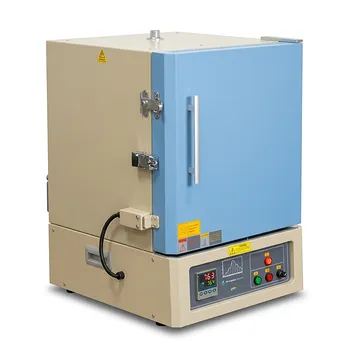
Large Capacity 1200C Muffle Furnace 64 Liter Chamber with Digital PID Controller and Built In Venting Port
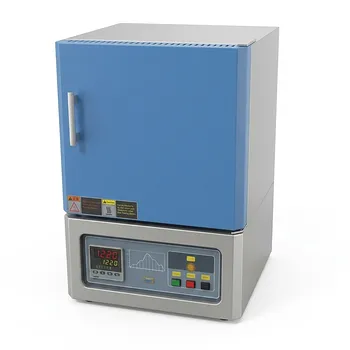
High Temperature Benchtop Muffle Furnace 1700C 10L Chamber Alumina Fiber Insulation MoSi2 Heating Elements
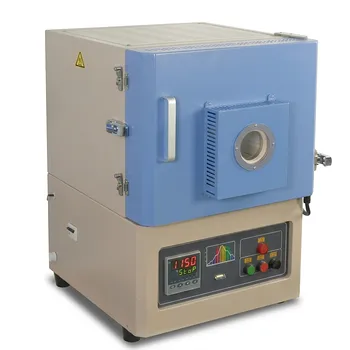
High Temperature Benchtop Muffle Furnace with Quartz Observation Window for Thermal Imaging and Material Analysis