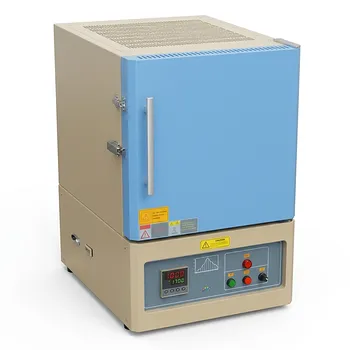
Why is a muffle furnace used for a 220°C preliminary baking after coating α-Fe2O3 nanorods with melamine? Explained
Updated 3 months ago
The preliminary 220°C baking step is a critical stabilization phase designed to ensure the structural integrity of the melamine coating on $\alpha$-Fe$_2$O$_3$ nanorods. This process utilizes the muffle furnace’s stable thermal environment to completely eliminate residual ethylene glycol solvent and facilitate a uniform, tightly adhered precursor layer. By removing volatile components at this controlled temperature, the system prevents structural failures like cracking or peeling that would otherwise occur during subsequent high-temperature chemical transformations.
This preliminary heating serves as a bridge between wet-chemistry coating and high-temperature polycondensation. It transforms a liquid-phase precursor into a stable solid film, ensuring that the final nanostructure is uniform and free of physical defects.
The Role of Controlled Solvent Management
The primary function of the 220°C environment is to manage the transition from a wet coating to a dry, stable precursor layer.
Complete Removal of Ethylene Glycol
Ethylene glycol, commonly used as a solvent in coating solutions, requires a constant and elevated temperature to be fully removed from the nanorod surface. The muffle furnace provides the precise 220°C environment necessary to ensure no residual solvent remains trapped within the melamine layer.
Prevention of Rapid Evaporation Defects
If the material were moved directly to high-temperature polycondensation, any remaining solvent would evaporate violently. This rapid gas escape would lead to film cracking or an uneven distribution of the melamine, compromising the quality of the final coating.
Enhancing Structural Integrity and Adhesion
Beyond simple drying, the 220°C baking step physically prepares the nanorods for the chemical stresses of further processing.
Promoting Uniform Precursor Adhesion
The controlled heat treatment ensures that the melamine precursor adheres uniformly and tightly to the surface of the iron oxide nanorods. This creates a robust interface between the core and the shell, which is essential for the material's performance in catalytic or electronic applications.
Preparing for High-Temperature Polycondensation
By establishing a stable physical state at 220°C, the coating is better equipped to handle the subsequent high-temperature stages. This "pre-stabilization" prevents the coating from collapsing or peeling off when the chemical structure begins to cross-link and harden at higher temperatures.
Understanding the Trade-offs
While the 220°C baking step is essential for quality, it requires careful calibration to avoid negative outcomes.
The Risk of Temperature Fluctuations
If the muffle furnace fails to maintain a constant temperature, the solvent may only partially evaporate, leading to "hot spots" where the coating remains weak. Conversely, exceeding the target temperature prematurely could trigger uncontrolled polycondensation before the solvent has escaped, resulting in a porous and brittle shell.
Time-Temperature Sensitivity
The duration of the baking is as important as the temperature; insufficient time at 220°C leaves residual organics that can contaminate the final product. However, excessive baking at this stage may begin to oxidize the nanorod core or degrade the melamine precursor before it can properly transition to its final state.
How to Apply This to Your Project
When utilizing a muffle furnace for preliminary baking of coated nanostructures, your approach should depend on your specific material goals.
- If your primary focus is coating uniformity: Ensure the muffle furnace is fully pre-heated to 220°C before introducing the samples to guarantee immediate and even solvent evaporation.
- If your primary focus is preventing structural cracking: Utilize a slow ramp-up to the 220°C setpoint to allow the ethylene glycol to escape gradually rather than all at once.
- If your primary focus is maximizing adhesion: Clean the $\alpha$-Fe$_2$O$_3$ nanorods thoroughly before coating to ensure the melamine precursor can form the strongest possible physical bond during the baking phase.
By masterfully controlling this preliminary thermal stage, you ensure the transition from a simple mixture to a high-performance, structurally sound nanocomposite.
Summary Table:
| Process Phase | Key Action | Benefit to Nanostructure |
|---|---|---|
| Solvent Management | Removal of Ethylene Glycol | Prevents rapid gas escape and film cracking |
| Adhesion Control | Uniform Precursor Bonding | Creates a robust interface between core and shell |
| Thermal Stabilization | Controlled 220°C Environment | Prepares the coating for high-temp polycondensation |
| Structural Integrity | Eliminating Volatiles | Ensures a defect-free, solid-phase precursor film |
Optimize Your Nanomaterial Research with THERMUNITS
Precision thermal processing is the foundation of successful material science. THERMUNITS is a leading manufacturer of high-temperature laboratory equipment, providing the stable environments necessary for critical steps like nanorod stabilization and chemical transformation.
From Muffle, Vacuum, and Atmosphere furnaces to advanced CVD/PECVD systems, Tube furnaces, and Vacuum Induction Melting (VIM), we offer a comprehensive range of thermal solutions tailored for industrial R&D. Our equipment, including Hot Press furnaces and Rotary Kilns, ensures uniform heating and precise control for even the most delicate heat treatment workflows.
Ready to elevate your lab's performance? Contact THERMUNITS today to find the ideal thermal solution for your project.
References
- Juan Wu, Weisheng Liu. Enhanced photoelectrochemical water splitting performance of α-Fe<sub>2</sub>O<sub>3</sub> photoanodes through Co-modification with Co single atoms and g-C<sub>3</sub>N<sub>4</sub>. DOI: 10.1039/d4sc03442b
Mentioned Products
- 1200C Muffle Furnace 12x8x5 7.2L Heating Chamber with Quartz Observation Window and Vent Port
- High Temperature 1200C Muffle Furnace 27L Volume 12x12x12 Chamber with Programmable PID Controller for Laboratory Material Science
- 1200C High Temperature 125L Muffle Furnace 5 Side Heating for Large Batch Sintering with Optional Alloy Debinding Chamber
- 1750C Compact Muffle Furnace 1.7L Ultra High Temperature Laboratory Sintering System for Advanced Ceramics and Material Science Research
- 1200C Five Side Heating Muffle Furnace with Sliding Door 125L Volume High Temperature Heat Treatment System for Large Scale Sintering and Annealing
People Also Ask
- What is the function of an experimental muffle furnace in the conversion of FeOOH to α-Fe2O3? Optimize Phase Transition
- Why is a muffle furnace required for MoO2@HCNF pre-oxidation? Crucial Steps for High-Performance Composites
- What is the function of a high-temperature Muffle furnace in removing residual solvents? Essential Bismuth Synthesis
- What is the function of Muffle furnace calcination? Essential steps for Pr-doped SrFeMoO6 Perovskite synthesis.
- What are the primary functions of a Muffle furnace in oxide calcination? Achieve high purity and phase control.

Tech Team · ThermUnits
Last updated on Jun 03, 2026
Related Products
1200C Muffle Furnace 12x8x5 7.2L Heating Chamber with Quartz Observation Window and Vent Port
High Temperature 1200C Muffle Furnace 27L Volume 12x12x12 Chamber with Programmable PID Controller for Laboratory Material Science
1200C High Temperature 125L Muffle Furnace 5 Side Heating for Large Batch Sintering with Optional Alloy Debinding Chamber
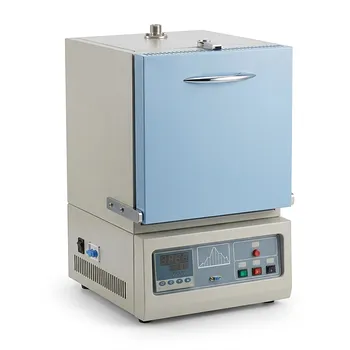
1750C Compact Muffle Furnace 1.7L Ultra High Temperature Laboratory Sintering System for Advanced Ceramics and Material Science Research
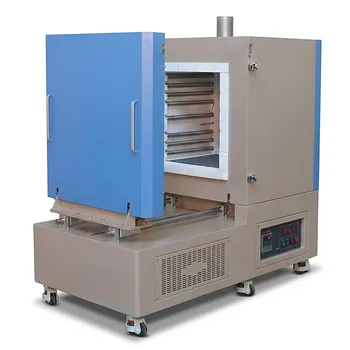
1200C Five Side Heating Muffle Furnace with Sliding Door 125L Volume High Temperature Heat Treatment System for Large Scale Sintering and Annealing
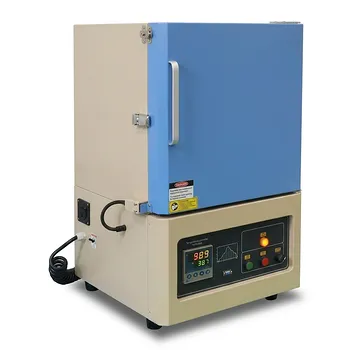
1200°C High Temperature Muffle Furnace 19L Chamber with 50 Segment Programmable Controller
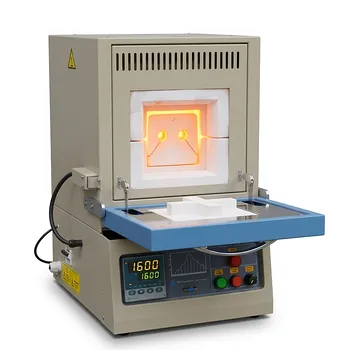
High Temperature Compact Muffle Furnace 1700 C with 30 Segment Programmable Controller and 1.7L Cubic Chamber
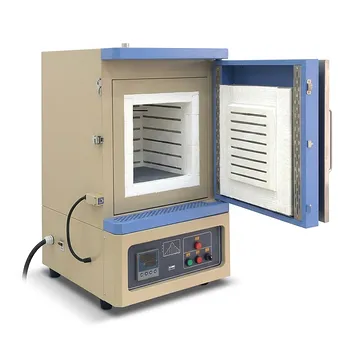
Five Side Heating Muffle Furnace High Purity Alumina Fiber 27L Chamber 1200C High Temperature Thermal Processing System for Sintering Annealing and Materials Research
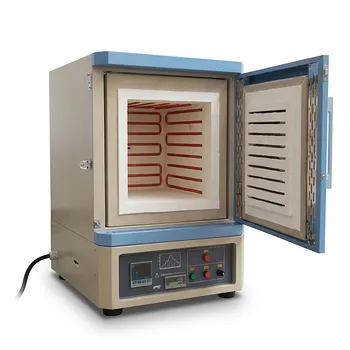
Five Side Heating Muffle Furnace 1200C High Uniformity 64L Chamber 16x16x16 Inch Industrial Heat Treatment
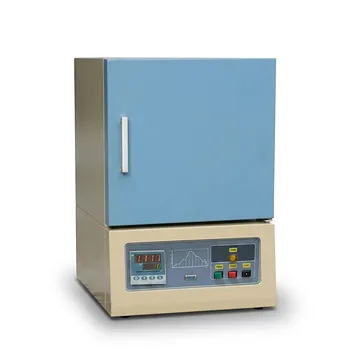
Ultra High Temperature Bench Top Muffle Furnace 1750C Sintering System with Kanthal Super Heating Elements and Precision Digital Control
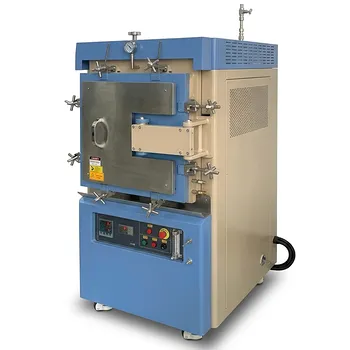
Atmosphere Controlled Muffle Furnace 1700C Maximum Temperature 80L High Capacity Vacuum Inert Gas Box Furnace
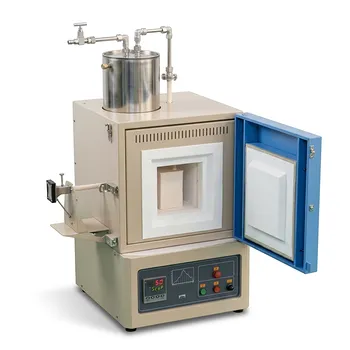
High Temperature Bench Top Muffle Furnace 1700C with Integrated Evaporating Particle Collection and 8x8x8 Alumina Fiber Chamber
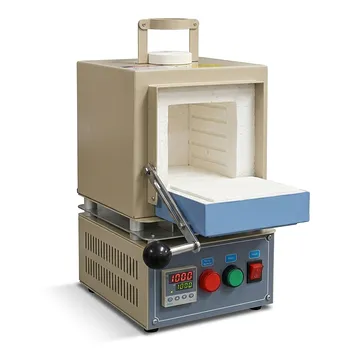
Compact 1000C Muffle Furnace with Programmable Controller and 2 Inch Top Port for Vacuum and Atmosphere Material Research
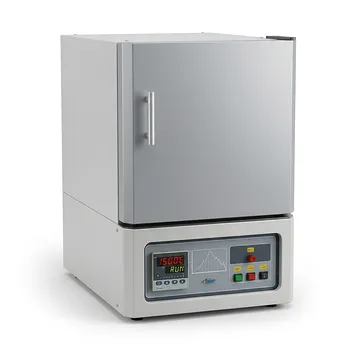
High Temperature 1500C Benchtop Muffle Furnace 3.6L Alumina Fiber Chamber Programmable Controller Sintering Annealing Carbonization Thermal Processing System
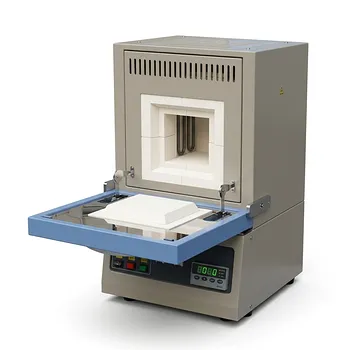
Five Sided Heating Muffle Furnace High Uniformity 1200C Lab Box Furnace 27L Alumina Fiber Chamber
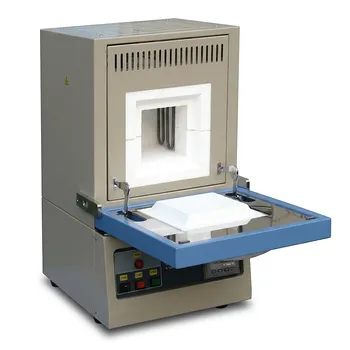
High Temperature 1800C Compact Muffle Furnace with Kanthal Super 1900 Heating Elements and 1.7L Alumina Chamber
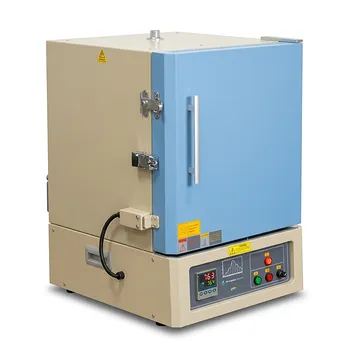
Large Capacity 1200C Muffle Furnace 64 Liter Chamber with Digital PID Controller and Built In Venting Port
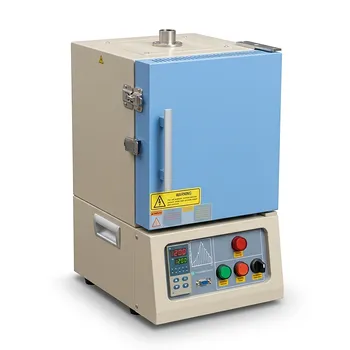
1200°C Small Box Furnace 4.2 Liter Programmable Muffle Furnace with High Purity Alumina Insulation and PID Control
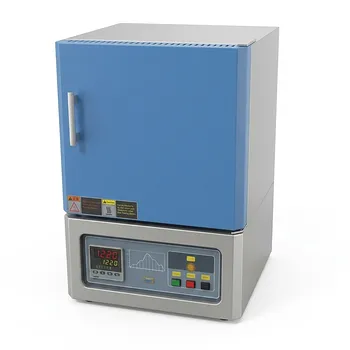
High Temperature Benchtop Muffle Furnace 1700C 10L Chamber Alumina Fiber Insulation MoSi2 Heating Elements