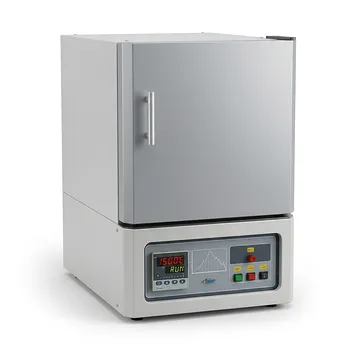
What role does a high-frequency induction furnace play in the preparation of pseudowollastonite-type slag? Expert Guide
Updated 3 months ago
The high-frequency induction furnace serves as the primary synthesis vessel for creating pseudowollastonite-type slag by providing a controlled, high-temperature environment. It facilitates the complete melting of refractory oxide powders—specifically CaO, SiO2, and Al2O3—at temperatures reaching 1600°C. Through the use of electromagnetic induction and graphite crucibles, it ensures that these distinct components transform from raw powders into a single, uniform liquid phase.
Core Takeaway: The induction furnace is essential for achieving the chemical homogeneity and physical consistency required for slag research. It combines extreme thermal energy with electromagnetic stirring to eliminate raw material interfaces and establish a stable chemical equilibrium.
Achieving Precise Thermal Control
Reaching Refractory Melting Points
The synthesis of pseudowollastonite-type slag requires temperatures that exceed the melting points of its constituent oxides. The high-frequency induction furnace provides a stable 1600°C environment, which is necessary to liquefy the CaO-SiO2-Al2O3 system.
The Role of the Graphite Crucible
In this setup, the furnace generates an alternating magnetic field that induces electrical currents directly within a graphite crucible. The crucible’s excellent thermal conductivity and high-temperature resistance allow it to transfer heat rapidly to the oxide powders, facilitating a complete melt in a very short timeframe.
Ensuring Chemical Homogeneity
The Power of Electromagnetic Stirring
A defining feature of the induction furnace is the electromagnetic stirring effect produced by the alternating current. This internal turbulence physically mixes the multi-component melt, preventing the settling of denser elements and ensuring the slag has a uniform chemical composition.
Eliminating Physical Interfaces
By maintaining the slag in a fully molten state under constant agitation, the furnace eliminates the physical boundaries between the initial raw material particles. This process is critical for promoting chemical equilibrium, resulting in a standardized material base that is vital for subsequent steel-slag reaction experiments.
Consistency for Kinetic Studies
High compositional uniformity allows researchers to study the dissolution kinetics of specific elements, such as calcium oxide, without interference from localized concentration gradients. This standardization ensures that experimental results are repeatable and accurately reflect the behavior of the slag system.
Understanding the Trade-offs
Potential for Carbon Contamination
Because the process often utilizes a graphite crucible as the susceptor, there is a risk of carbon interacting with the slag or metallic components. While graphite is excellent for heat transfer, researchers must account for potential carbon pickup which might alter the chemical purity of certain slag types.
Volatilization and Atmospheric Sensitivity
The high temperatures and electromagnetic agitation can increase the volatilization of certain oxides or surface impurities. If the furnace is not operated under a controlled atmosphere (such as an inert gas), oxidation or the loss of volatile components can shift the intended final composition of the slag.
How to Apply This to Your Project
Making the Right Choice for Your Goal
The utility of a high-frequency induction furnace depends on whether your priority is the speed of synthesis or the absolute purity of the final slag ingot.
- If your primary focus is rapid homogenization: Utilize high-frequency settings to maximize the electromagnetic stirring effect, ensuring a uniform distribution of CaO and SiO2.
- If your primary focus is chemical purity: Monitor the interaction between the melt and the graphite crucible carefully, and consider using inert gas shielding to prevent the loss of volatile oxides.
- If your primary focus is standardized testing: Employ repeated remelting cycles within the induction furnace to guarantee that the slag substrate is perfectly consistent across all experimental trials.
By leveraging the unique combination of high-intensity heat and electromagnetic agitation, you can produce a high-quality pseudowollastonite slag that serves as a reliable foundation for advanced metallurgical research.
Summary Table:
| Feature | Role in Slag Preparation | Key Benefit |
|---|---|---|
| High-Temp Range | Maintains stable 1600°C environment | Liquefies refractory CaO-SiO2-Al2O3 systems |
| Induction Heating | Utilizes graphite crucible as susceptor | Rapid heat transfer and complete melting |
| EM Stirring | Constant internal agitation of the melt | Ensures chemical homogeneity and eliminates interfaces |
| Thermal Stability | Consistent liquid phase environment | Ideal for repeatable kinetic and dissolution studies |
Elevate Your Metallurgical Research with THERMUNITS
Precision is critical when synthesizing complex materials like pseudowollastonite-type slag. THERMUNITS is a leading manufacturer of high-performance thermal equipment, providing the consistency and control required for advanced material science and industrial R&D.
Whether you require Vacuum Induction Melting (VIM) Furnaces for high-frequency homogenization or specialized Muffle, Vacuum, Tube, and Hot Press furnaces, our solutions are engineered for excellence. We also offer CVD/PECVD systems, Dental Furnaces, and high-quality thermal elements to support your entire heat treatment workflow.
Ready to optimize your lab’s thermal processing? Contact us today to find the perfect furnace for your application and experience the THERMUNITS advantage in thermal precision.
References
- Julian Cejka, Susanne Michelic. Influence of Tramp Elements on Surface Properties of Liquid Medium‐Carbon Steels. DOI: 10.1002/srin.202300715
Mentioned Products
- Induction Melting Casting Furnace 1750C Vacuum High Frequency Metal Processing Unit
- High Throughput Induction Melting and Casting Furnace for Superalloy Research 1700C Atmosphere Controlled Multi Sample System
- Ultra High Temperature Induction Heated Vacuum Furnace with Molten Salt Electrolysis Capability and 3000 Degree Precision Control
- High Pressure 600T Vacuum Induction Hot Press Furnace for Advanced Material Heat Treatment and Sintering
- High Temperature Mini Induction Heating Furnace 1600C Laboratory Material Melting System
People Also Ask
- What are the key structural components that make up a Vacuum Induction Melting (VIM) furnace system? Full Guide
- What is the primary role of a Vacuum Induction Melting furnace in the smelting of Fe-Cr-N alloys? Ensuring High Purity
- How does a Vacuum Induction Melting furnace heat materials while preventing atmospheric contamination? Achieve High Purity
- What technical advantages does Vacuum Induction Melting offer regarding alloy homogeneity and purity? Enhance Performance
- How does the skin effect influence VIM frequency selection? Optimize Heat Penetration & Stirring Efficiency

Tech Team · ThermUnits
Last updated on Jun 03, 2026
Related Products
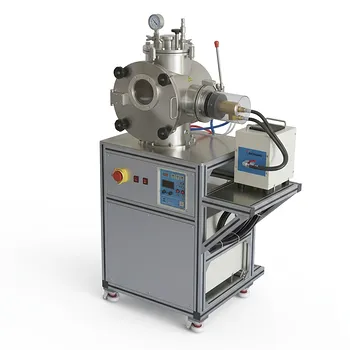
Induction Melting Casting Furnace 1750C Vacuum High Frequency Metal Processing Unit
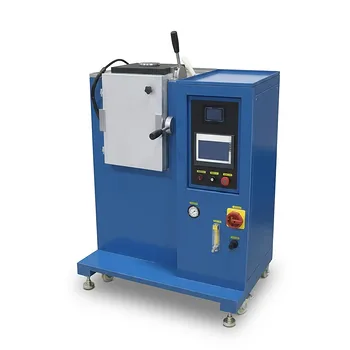
High Throughput Induction Melting and Casting Furnace for Superalloy Research 1700C Atmosphere Controlled Multi Sample System
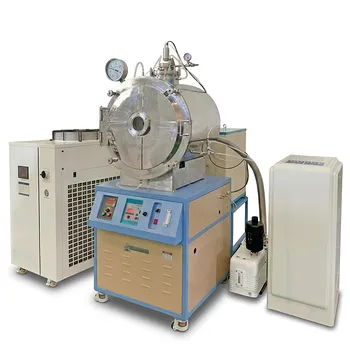
Ultra High Temperature Induction Heated Vacuum Furnace with Molten Salt Electrolysis Capability and 3000 Degree Precision Control
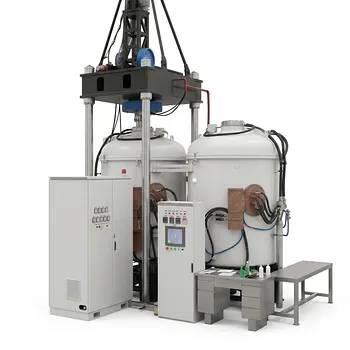
High Pressure 600T Vacuum Induction Hot Press Furnace for Advanced Material Heat Treatment and Sintering
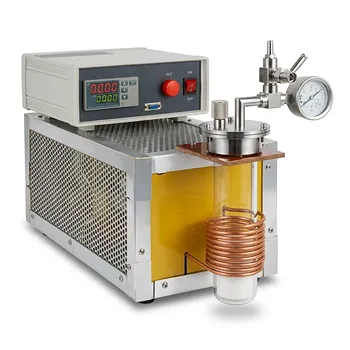
High Temperature Mini Induction Heating Furnace 1600C Laboratory Material Melting System
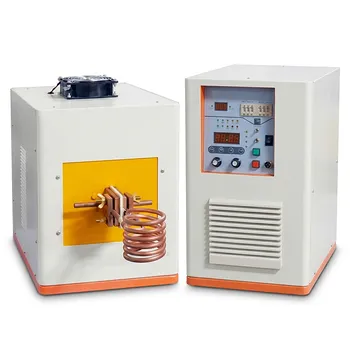
30KW High Frequency Induction Heater for Metal Melting and Industrial Heat Treatment 80-200kHz
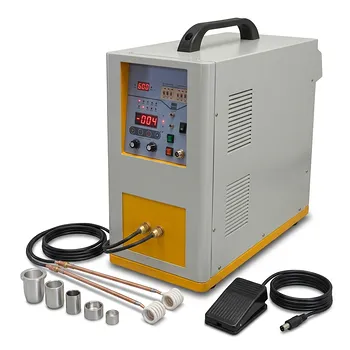
Desktop High Frequency Induction Heater 6KW 100-500kHz for Precision Metal Melting and Heat Treatment
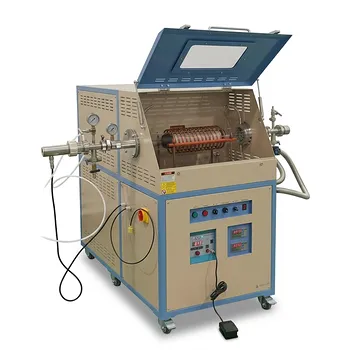
Ultra High Temperature 2300C Induction Heated Graphite Tube Furnace with Infrared Control
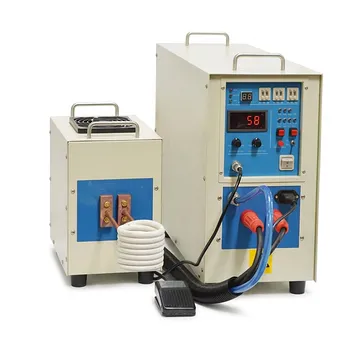
High Frequency Desktop Induction Heater 15 KVA Induction Heating System with Automatic Timer Control for Material Research and Metal Melting
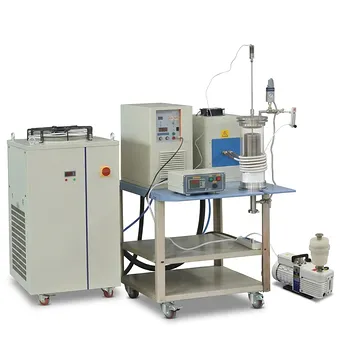
High Temperature Induction Melting System with Multi Cavity Crucible and 15KW Precision Digital Temperature Control
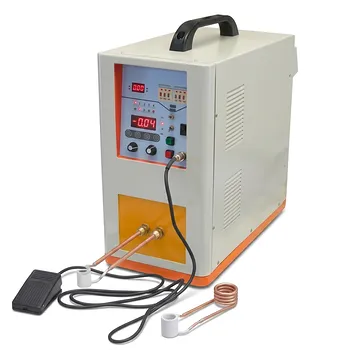
Desktop High Frequency Induction Heater for Precision Metal Melting and Laboratory Thermal Processing 0.6 to 1.1MHz
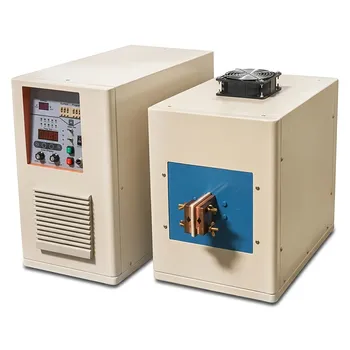
High Frequency Desktop Induction Heater 35KW 30-80 KHz with Precision Timer Control for Industrial Material Research and Metal Processing
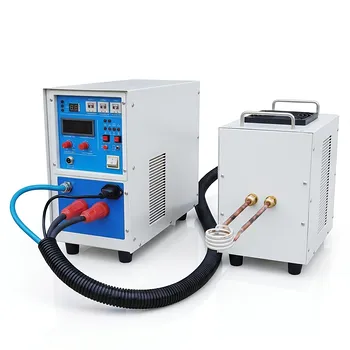
High Frequency Induction Heating System 7 KW Bench Top Heater with Automatic Timer Control and Dual Station Configuration
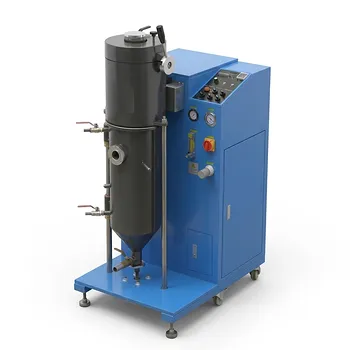
Atmosphere Controlled Induction Melting Granulating Casting Furnace 1500C 5kg Capacity
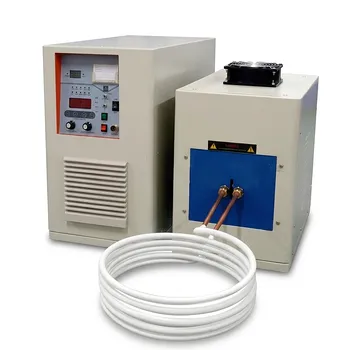
High Power 25KW Induction Heating System with Precision Timer Control and 80kHz Frequency for Metal Melting and Heat Treatment
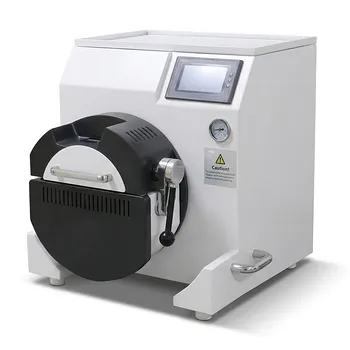
Desktop Induction Melting Furnace with Automatic Rotary Casting Function up to 1700C for Advanced Metal Alloy Research
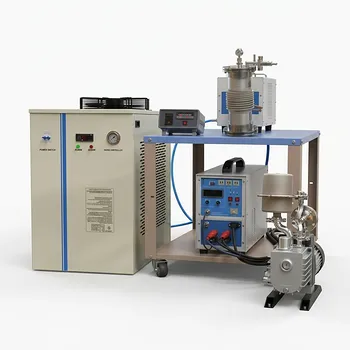
Induction Heating System with Temperature Control for High Temperature Vacuum Sintering and Melting
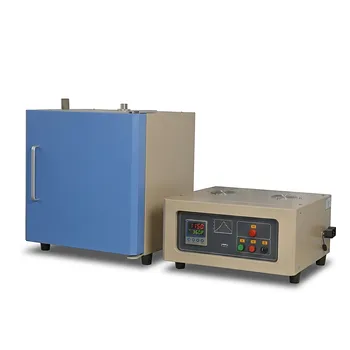
High Temperature Muffle Furnace with Alloy Chamber for Debinding and Sintering Applications
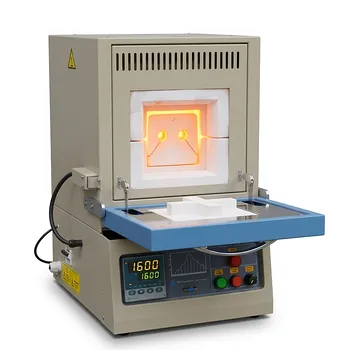
High Temperature Compact Muffle Furnace 1700 C with 30 Segment Programmable Controller and 1.7L Cubic Chamber