All Questions
Why Are Internal Getters Such As Titanium Used During The Synthesis Of Oxygen-Sensitive Materials In A Melting Furnace?
Learn how Titanium getters protect oxygen-sensitive materials by neutralizing contaminants and providing precise 1660°C thermal calibration.
Why Is A High-Purity Glassy Carbon Crucible Selected For The Induction Melting Process Of Casi2 Alloys? Ensure Purity.
Learn why high-purity glassy carbon crucibles are essential for CaSi2 induction melting to prevent reactions and maintain exact stoichiometry.
What Advantages Does Vim Offer For W18Cr4V Steel? Unlock Unmatched Purity And Precision
Discover how Vacuum Induction Melting (VIM) ensures superior purity, gas removal, and chemical homogeneity for W18Cr4V high-speed steel projects.
What Role Does A High-Frequency Induction Furnace Play In The Preparation Of Pseudowollastonite-Type Slag? Expert Guide
Learn how induction furnaces achieve 1600°C and chemical homogeneity in pseudowollastonite-type slag synthesis for metallurgical R&D.
What Is The Function Of A High-Frequency Remelting Furnace? Expert Guide To Steel Alloying & Homogeneity
Learn how high-frequency remelting furnaces provide rapid thermal processing and electromagnetic stirring for precise alloying of medium carbon steel.
Why Is High-Purity Argon Required For Melting High-Entropy Alloys (Heas)? Ensure Precise Material Stoichiometry
Learn how high-purity Argon prevents oxidation and preserves the chemical composition of HEAs during high-temperature thermal processing.
What Roles Do An Induction Furnace And A Graphite Crucible Play In The Slag Pre-Melting Process? Optimize Slag Prep.
Learn how induction furnaces and graphite crucibles work together to ensure rapid, uniform slag pre-melting and chemical homogenization.
What Are The Technical Considerations For Using Steel Crucibles In The Induction Melting Of Mg-Al-Ca Alloys? Guide
Learn why steel crucibles are ideal for induction melting Mg-Al-Ca alloys, focusing on thermal efficiency, chemical purity, and process kinetics.
Why Is A Water-Cooled Copper Crucible Necessary For Melting Crmnfecocu Heas? Ensure Chemical Purity & Homogeneity
Learn why water-cooled copper crucibles are vital for CrMnFeCoCu HEA melting to prevent contamination and ensure structural homogeneity.
What Role Does The Graphite Cavity Play During The Pressureless Sintering Of Zrb2–Sic In An Induction Heating System?
Learn how graphite cavities act as susceptors and catalysts in ZrB2-SiC induction sintering, enabling high density and complex shapes at 2150°C.
What Are The Process Advantages Of Using An Induction Furnace For Zrb2–Sic Vs Sps? Scalability & Near-Net Shape Benefits
Compare induction furnaces and SPS for ZrB2–SiC sintering. Discover the benefits of scalability, thermal uniformity, and near-net shape production.
What Is The Core Role Of The Vim Furnace In B-Rafm Steel Melting? Ensure High Purity And Precise Composition Control
Learn how VIM furnaces ensure the chemical purity of B-RAFM steel through vacuum degassing, oxidative loss prevention, and electromagnetic stirring.
What Technical Advantages Does An Intermediate Frequency Induction Furnace Provide For Melting Pure Iron? Improve Alloying
Discover how induction furnaces optimize pure iron melting via rapid internal heating, electromagnetic stirring, and superior chemical homogenization.
What Are The Advantages Of Using A Vim Furnace For Amorphous Alloys? Achieve Precision & High Material Purity
Discover how High-Vacuum Induction Melting (VIM) ensures sub-micron replication accuracy and material purity for high-performance amorphous alloys.
Why Is A Vacuum Induction Melting Furnace (Vim) Essential For Research Involving High-Purity Metal Alloys Or Materials?
Explore how VIM furnaces provide contamination-free melting, deep degassing, and stirring for ultra-high purity material research and R&D.
Why Is A Vim Furnace Essential For High-Purity Alloys? Achieve Unmatched Metal Purity And Structural Integrity.
Learn why VIM furnaces are essential for manufacturing high-purity alloys through vacuum degassing, stirring, and complete contamination control.
What Is The Primary Role Of Vacuum In Vim For Heas? Ensuring Purity And Compositional Precision
Discover how the vacuum environment in VIM prevents oxidation and purifies High-Entropy Alloys (HEAs) for superior material performance.
Why Is High-Purity Argon Gas Essential For Zirconium Melting? Ensure Maximum Purity And Prevent Material Embrittlement
Discover why high-purity argon is critical for zirconium alloys to prevent oxidation and embrittlement during high-temperature heat treatment.
How Does A Vacuum Induction Melting (Vim) Furnace Ensure Composition Precision? Mastering Purity & Homogeneity
Learn how VIM furnaces use electromagnetic stirring and high vacuum to achieve atomic-level homogeneity and high-purity alloys for specialty research.
How Does A Vertical Induction Furnace Contribute To Bocvd For Bnnt Synthesis? Optimize High-Purity Nanotube Growth
Learn how vertical induction furnaces enable high-purity BNNT synthesis through precise 1300°C control, rapid vapor generation, and stable kinetics.
What Is The Primary Role Of A Vacuum Induction Melting Furnace In The Smelting Of Fe-Cr-N Alloys? Ensuring High Purity
Learn how VIM furnaces prevent chromium oxidation and ensure high purity in Fe-Cr-N alloys for superior material performance and nitrogen control.
What Are The Primary Functions Of A High-Frequency Induction Melting Furnace In Lmd? Achieve Precision Microstructures
Learn how high-frequency induction furnaces drive LMD through precise thermal management, atomic diffusion control, and electromagnetic stirring.
What Is The Role Of A Vacuum Induction Melting Furnace Combined With A Water-Cooled Copper Mold? Mastering Rhea Purity
Learn how VIM furnaces and water-cooled molds create high-purity refractory high-entropy alloys (RHEAs) through induction stirring and rapid cooling.
What Are The Unique Advantages Of A Vim Furnace? Achieve Superior Purity & Chemical Homogeneity In Lab Experiments
Explore why VIM furnaces outperform resistance furnaces in lab settings, highlighting electromagnetic stirring, vacuum degassing, and alloy purity.
What Role Does A Vacuum Induction Melting Furnace (Vim) Play In High-Purity Alloying? Key Benefits Explained
Learn how VIM furnaces ensure material purity through degassing, oxidation prevention, and electromagnetic stirring for aerospace and R&D.
What Is The Significance Of A Vacuum Induction Melting (Vim) Furnace? Achieve High-Purity Alloys & Ceramics
Discover how VIM furnaces ensure material purity through degassing and precise composition control for aerospace, electronics, and R&D applications.
Why Use Atmosphere-Controlled Induction Furnaces For Biochar & Slag Foaming? Replicate Eaf Physics With Precision.
Learn how atmosphere-controlled induction furnaces simulate EAF conditions, protect biochar from oxygen, and measure slag foaming kinetics at 1600°C.
Why Is Argon Atmosphere Protection Necessary During The Melting Process Of Magnesium Alloys Such As Mg-Zn-Y? Key Benefits
Learn why argon atmosphere protection is vital for melting Mg-Zn-Y alloys to prevent oxidation, maintain purity, and ensure material integrity.
What Is The Role Of The High-Frequency Induction Melting Furnace In Mg-Zn-Y Alloy Production? Ensure Superior Purity
Learn how high-frequency induction furnaces ensure atomic-level homogeneity and prevent oxidation in Mg-Zn-Y magnesium alloy production.
What Is The Function Of A Vacuum Induction Melting Furnace (Vim) In The Preparation Of Mnbi-Cu Alloys? Essential Role.
Discover how VIM furnaces enable high-purity MnBi-Cu alloy production by preventing manganese oxidation and ensuring perfect chemical homogeneity.
Why Is A Vim Furnace Utilized For High-Performance Metals? Achieve Superior Material Purity And Integrity
Learn why Vacuum Induction Melting (VIM) is essential for high-purity alloys, gas removal, and achieving superior mechanical properties in materials.
What Is The Role Of Vim Furnace In Melting High-Carbon Alloy Steel? Achieve High Purity And Chemical Homogeneity.
Learn how Vacuum Induction Melting (VIM) removes impurities and protects reactive elements in high-carbon alloy steel for superior performance.
What Are The Operational Advantages Of Vacuum Induction Melting In Terms Of Process Flexibility And Downstream Efficiency?
Learn how Vacuum Induction Melting (VIM) enhances process flexibility, ensures chemical homogeneity, and improves efficiency for ultra-pure alloys.
What Technical Advantages Does Vacuum Induction Melting Offer Regarding Alloy Homogeneity And Purity? Enhance Performance
Explore how Vacuum Induction Melting (VIM) ensures extreme alloy purity through deep degassing and atomic-level homogeneity via induction stirring.
How Does Vacuum Induction Melting Mitigate Hydrogen Embrittlement? Ensure Structural Integrity For Critical Alloys
Learn how VIM degassing prevents hydrogen embrittlement in nuclear and defense alloys, ensuring material purity and preventing catastrophic failure.
Why Is Vacuum Induction Melting Preferred For Manufacturing Corrosion-Resistant Alloys? Ensure Ultra-High Purity
Learn why VIM is the top choice for oil and gas alloys. Discover how Vacuum Induction Melting removes impurities to ensure extreme corrosion resistance.
What Role Does Vacuum Induction Melting Play In Medical Implants? Ensure High-Purity Alloys For Superior Performance
Discover how Vacuum Induction Melting (VIM) ensures high-purity, biocompatible alloys for medical implants like Nitinol and Titanium.
How Does Vacuum Induction Melting Improve The Performance Of Components Used In Power Generation? Purity & Durability
Discover how Vacuum Induction Melting (VIM) removes impurities to enhance creep resistance and safety for power generation superalloys.
What Are The Primary Benefits Of Using Vacuum Induction Melting For Aerospace Superalloys? Superior Purity & Strength
Discover how Vacuum Induction Melting (VIM) enhances aerospace superalloys by ensuring chemical precision, gas removal, and structural uniformity.
How Does A Vacuum Induction Melting Furnace Heat Materials While Preventing Atmospheric Contamination? Achieve High Purity
Learn how VIM furnaces use electromagnetic induction and high vacuum to eliminate oxidation, remove impurities, and produce high-purity superalloys.
How Does A Vacuum Induction Melting (Vim) Furnace Ensure The Cleanliness Of Superalloys? Achieve High-Purity Results
Learn how VIM furnaces use high-vacuum environments and electromagnetic stirring to produce ultra-clean, homogeneous superalloys for R&D.
Describe The Typical Operational Sequence Of A Vim Furnace Cycle? Master Ultra-High Purity Alloy Production
Explore the step-by-step VIM furnace cycle, from evacuation to electromagnetic refining, to achieve superior metal purity and precise composition.
What Are The Key Structural Components That Make Up A Vacuum Induction Melting (Vim) Furnace System? Full Guide
Learn the essential structural components of a VIM furnace, from induction coils to multi-stage vacuum pumps, for high-purity alloy production.
What Are The Specific Metallurgical Advantages Of The Vacuum Environment In A Vim Furnace? Achieve Extreme Alloy Purity
Discover how the vacuum in a VIM furnace prevents oxidation and removes dissolved gases to produce ultra-clean, high-performance metallurgical alloys.
What Role Do Lorentz Forces Play In A Vim Furnace? Mastering Electromagnetic Stirring For High-Purity Alloys
Discover how Lorentz forces drive electromagnetic stirring in VIM furnaces to achieve thermal homogeneity and superior metallurgical refining.
How Does The Skin Effect Influence Vim Frequency Selection? Optimize Heat Penetration & Stirring Efficiency
Learn how the skin effect determines frequency selection in VIM furnaces to balance heat penetration, energy efficiency, and melt homogeneity.
Explain The Physical Principle Behind Heat Generation In A Vacuum Induction Melting (Vim) Furnace: A Technical Guide
Learn how electromagnetic induction and eddy currents generate heat in VIM furnaces to produce high-purity superalloys in a vacuum environment.
What Are The Primary Applications And Functions Of A Vacuum Induction Melting (Vim) Furnace? Mastering High-Purity Alloys
Explore how VIM furnaces eliminate impurities and prevent oxidation to produce high-purity superalloys for aerospace and electronic applications.
Featured Products
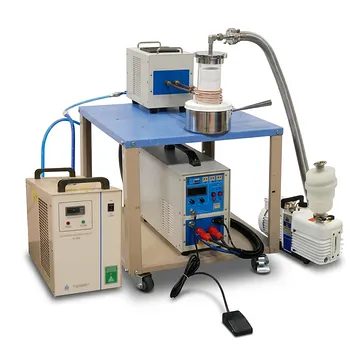
1900C Maximum High Temperature 7KW Vacuum Induction Melting System with 60mm Quartz Tube and Manual Temperature Control for Metallic Alloy Research
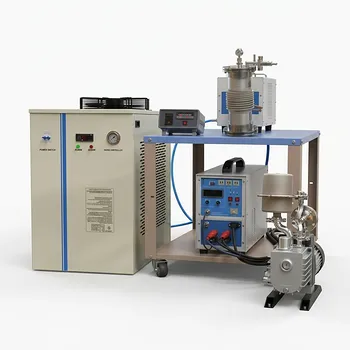
Induction Heating System with Temperature Control for High Temperature Vacuum Sintering and Melting
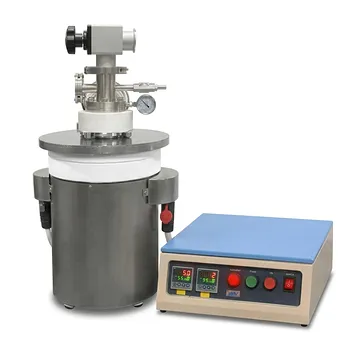
1100C High Temperature Vacuum Crucible Furnace with Quartz Chamber for Thermal Processing and Sintering
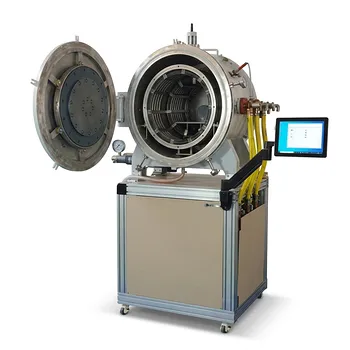
1600°C Cold Wall High Vacuum Chamber Furnace with Molybdenum Heating and 400mm Cube Work Zone
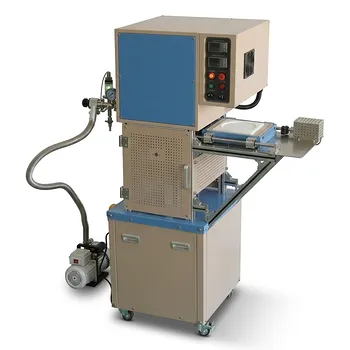
1200°C Bottom Loading Vacuum Furnace with Rapid Gas Cooling and 8.6 Inch Diameter Quartz Chamber