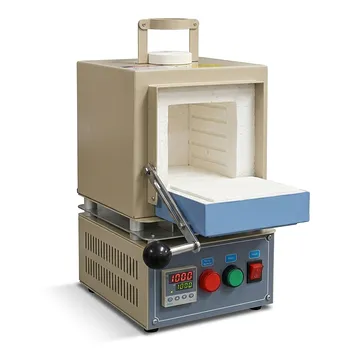
What role does a high-precision muffle furnace play in the synthesis of g-C3N4? Key for High-Performance Photocatalysts
Updated 3 months ago
A high-precision muffle furnace serves as the foundational reactor for the thermal synthesis of graphitic carbon nitride (g-C3N4). It provides the strictly controlled high-temperature environment required to drive the thermal polycondensation and deammoniation of nitrogen-rich precursors—such as urea, melamine, or dicyandiamide—transforming them into a stable, layered semiconducting framework.
The muffle furnace is not merely a heat source but a precision instrument that dictates the crystallinity, morphology, and photocatalytic efficiency of g-C3N4 by maintaining uniform thermal fields and specific heating programs.
The Catalyst for Thermal Polycondensation
Driving Chemical Transformations
The synthesis of g-C3N4 relies on a process called thermal polycondensation, where solid precursors are heated to approximately 550 °C. During this phase, the muffle furnace facilitates the release of ammonia (deammoniation) and other volatile groups, allowing the remaining molecules to reorganize.
Forming the Molecular Architecture
As the furnace maintains high temperatures, the precursors reorganize into triazine or heptazine ring structures. These rings then polymerize into the characteristic two-dimensional layered sheets that define g-C3N4, a process that requires a stable and sustained thermal input to reach completion.
Facilitating Precursor Versatility
High-precision furnaces allow researchers to utilize various precursors, including urea, dicyandiamide, and melamine. Each precursor reacts slightly differently, but the muffle furnace provides the common high-temperature platform necessary to drive these reactions toward a yellow powder product characterized by high photocatalytic activity.
The Significance of High-Precision Control
Temperature Uniformity and Crystallinity
A "high-precision" furnace is defined by its ability to maintain a uniform thermal field across the entire heating chamber. This uniformity is critical; even minor temperature gradients can lead to incomplete reactions or variations in crystallinity, which ultimately degrades the material's semiconductor properties.
Programmable Heating Rates and Staged Processing
The ability to program specific heating rates, such as 10 °C/min, is essential for controlling the rate of gas evolution. Advanced synthesis often involves staged heating—for example, dwelling at 500 °C before reaching a final 550 °C—to ensure the structural integrity of the layered carbon nitride and to prevent the collapse of the formed framework.
Atmosphere and Residence Time
Precise control over dwelling times (typically 4 to 5 hours) ensures that the polycondensation reaction is exhaustive. Because these reactions often occur in an air atmosphere within the furnace, the stability of the heating environment prevents unwanted oxidation while ensuring the material reaches its full polymerized potential.
Understanding the Trade-offs and Pitfalls
Overheating and Sublimation
One of the primary risks in g-C3N4 synthesis is exceeding the optimal temperature range. If the furnace fluctuates significantly above 600 °C, the g-C3N4 structure can begin to decompose or sublimate, leading to significant mass loss and reduced product yield.
Incomplete Polycondensation
Conversely, if the muffle furnace lacks precision and suffers from "cold spots," the precursor may only partially react. This results in a product with low crystallinity and residual functional groups that act as recombination centers, severely inhibiting its photocatalytic performance.
Mass Transfer Limitations
While the furnace provides heat, the physical placement of the precursor in a crucible (often covered) can create micro-environments. A high-precision furnace mitigates this by providing a steady, radiant heat that penetrates the bulk material more effectively than lower-end equipment with poor insulation or heating element placement.
Making the Right Choice for Your Goal
How to Apply This to Your Project
To achieve the best results in g-C3N4 synthesis, your furnace settings should align with your specific material objectives:
- If your primary focus is high crystallinity: Utilize a high-precision furnace with a slow heating rate (2–5 °C/min) and a long dwelling time at 550 °C to allow for perfect lattice alignment.
- If your primary focus is maximizing yield from urea: Implement a staged heating program (e.g., 500 °C then 550 °C) to manage the rapid gas release characteristic of urea precursors.
- If your primary focus is metal-doped g-C3N4: Ensure your furnace can maintain a precise temperature for the duration of the pyrolysis to ensure the metal ions are uniformly integrated into the layered structure.
Ultimately, the high-precision muffle furnace is the indispensable tool that bridges the gap between raw chemical precursors and a functional, high-performance semiconducting material.
Summary Table:
| Feature | Role in g-C3N4 Synthesis | Impact on Material Quality |
|---|---|---|
| Thermal Polycondensation | Drives deammoniation and reorganization | Forms the stable 2D layered framework |
| Precision Temp Control | Maintains uniform heating fields | Enhances crystallinity and semiconductor properties |
| Staged Heating | Manages gas evolution rates (e.g., urea) | Prevents structural collapse and mass loss |
| Residence Time Control | Ensures exhaustive chemical reaction | Minimizes residual groups and recombination centers |
Optimize Your Material Synthesis with THERMUNITS
Elevate your material science research and industrial R&D with THERMUNITS, a leading manufacturer of high-precision thermal processing solutions. Whether you are synthesizing g-C3N4 or developing advanced semiconductors, our comprehensive range of equipment—including Muffle, Vacuum, Tube, and CVD/PECVD furnaces—delivers the temperature uniformity and programmable control essential for high-performance results.
From laboratory-scale heat treatment to industrial-grade electric rotary kilns and vacuum induction melting furnaces (VIM), we provide the tools needed to bridge the gap between raw precursors and functional materials.
Ready to enhance your lab’s efficiency? Contact us today to find the perfect heat treatment solution for your specific application!
References
- Qiuyu Chen, Rongzhi Chen. Facilitated Unidirectional Electron Transmission by Ru Nano Particulars Distribution on MXene Mo2C@g-C3N4 Heterostructures for Enhanced Photocatalytic H2 Evolution. DOI: 10.3390/molecules29071684
Mentioned Products
- Ultra High Temperature Bench Top Muffle Furnace 1750C Sintering System with Kanthal Super Heating Elements and Precision Digital Control
- Large Bench Top 1700C High Temperature Muffle Furnace with 19L Chamber for Advanced Material Sintering and Annealing
- 1750C Compact Muffle Furnace 1.7L Ultra High Temperature Laboratory Sintering System for Advanced Ceramics and Material Science Research
- High Temperature 1500C Benchtop Muffle Furnace 3.6L Alumina Fiber Chamber Programmable Controller Sintering Annealing Carbonization Thermal Processing System
- 1200C High Temperature Muffle Furnace with Motorized Door and Automated PC Control for Industrial Sintering and Material Processing 27 Liter
People Also Ask
- Why is a benchtop muffle furnace essential for U3O8 micromaterials? Achieve precision stoichiometry and purity.
- What is the function of a muffle furnace in aluminoborosilicate glass prep? Stabilize Raw Materials for Superior Purity
- What is the function of a high-temperature muffle furnace in phosphorus-modified zeolite catalyst preparation?
- What is the function of a high-temp muffle furnace in Ni-V oxide synthesis? Optimize your material's performance.
- What is the purpose of using muffle or tube furnaces in glass synthesis? Achieve Precise Melt-Quenching & Homogeneity

Tech Team · ThermUnits
Last updated on Jun 03, 2026
Related Products
Ultra High Temperature Bench Top Muffle Furnace 1750C Sintering System with Kanthal Super Heating Elements and Precision Digital Control
Large Bench Top 1700C High Temperature Muffle Furnace with 19L Chamber for Advanced Material Sintering and Annealing
1750C Compact Muffle Furnace 1.7L Ultra High Temperature Laboratory Sintering System for Advanced Ceramics and Material Science Research
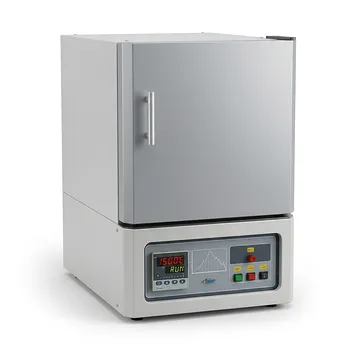
High Temperature 1500C Benchtop Muffle Furnace 3.6L Alumina Fiber Chamber Programmable Controller Sintering Annealing Carbonization Thermal Processing System
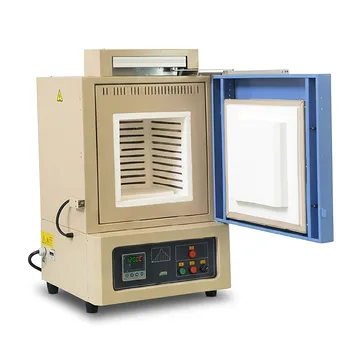
1200C High Temperature Muffle Furnace with Motorized Door and Automated PC Control for Industrial Sintering and Material Processing 27 Liter
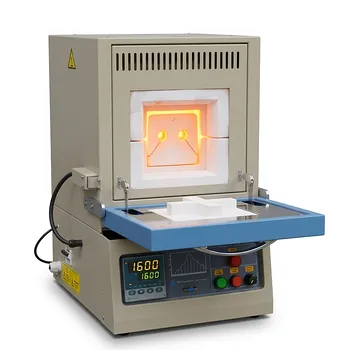
High Temperature Compact Muffle Furnace 1700 C with 30 Segment Programmable Controller and 1.7L Cubic Chamber
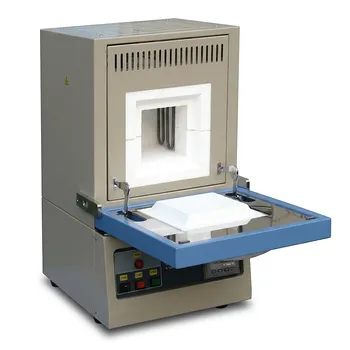
High Temperature 1800C Compact Muffle Furnace with Kanthal Super 1900 Heating Elements and 1.7L Alumina Chamber
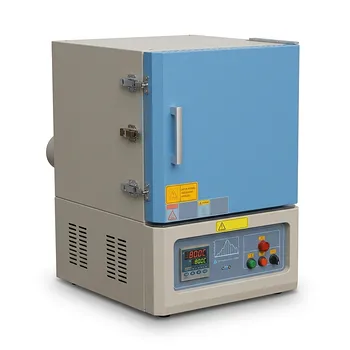
1800C Bench Top Muffle Furnace 18 Liters with Kanthal Super 1900 Heating Elements for High Purity Ceramic Sintering and Material Research
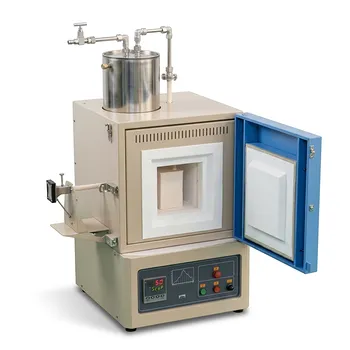
High Temperature Bench Top Muffle Furnace 1700C with Integrated Evaporating Particle Collection and 8x8x8 Alumina Fiber Chamber
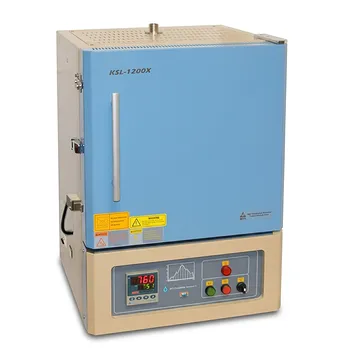
High Temperature 1200C Muffle Furnace 27L Volume 12x12x12 Chamber with Programmable PID Controller for Laboratory Material Science
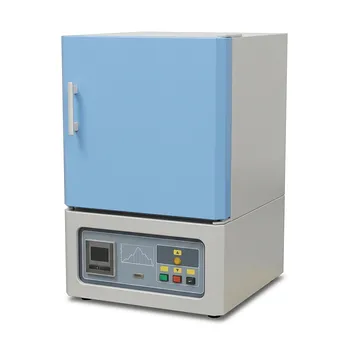
1800C Bench Top Muffle Furnace with Kanthal Super 1900 Heating Elements and 3.6L Alumina Fiber Chamber
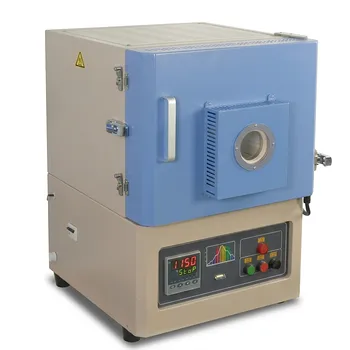
High Temperature Benchtop Muffle Furnace with Quartz Observation Window for Thermal Imaging and Material Analysis
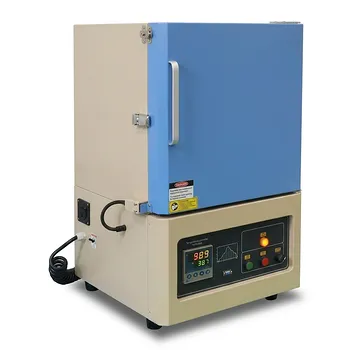
1200°C High Temperature Muffle Furnace 19L Chamber with 50 Segment Programmable Controller
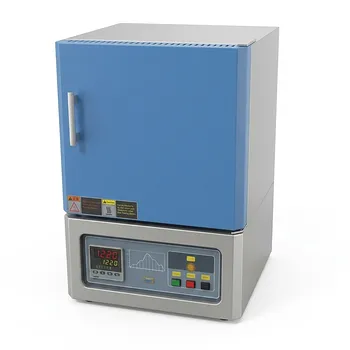
High Temperature Benchtop Muffle Furnace 1700C 10L Chamber Alumina Fiber Insulation MoSi2 Heating Elements
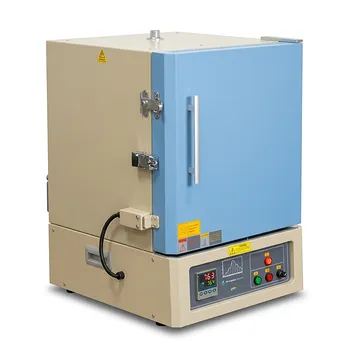
Large Capacity 1200C Muffle Furnace 64 Liter Chamber with Digital PID Controller and Built In Venting Port
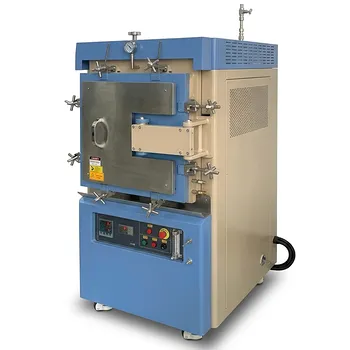
Atmosphere Controlled Muffle Furnace 1700C Maximum Temperature 80L High Capacity Vacuum Inert Gas Box Furnace
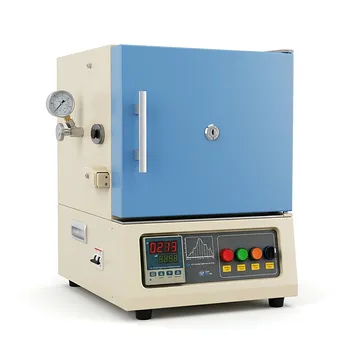
1200C Hybrid Muffle and Tube Furnace for Material Research with Dual Atmosphere Control Quartz Tubes
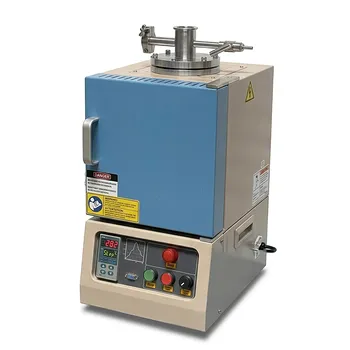
High Temperature Hybrid Muffle and Tube Furnace with Vacuum Capability and PID Control
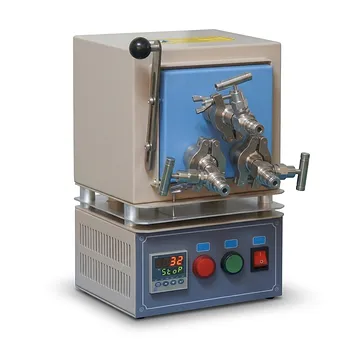
Triple Tube Compact Hybrid Muffle Furnace 1000C High Vacuum Thermal Processing System