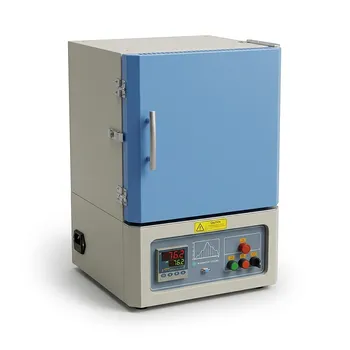
What role does a muffle furnace play in first-stage Ca–Tb–Co–O heating? Optimize Thermal Activation & Decomposition
Updated 3 months ago
In the synthesis of Ca–Tb–Co–O materials, the high-temperature box resistance furnace serves as the critical reactor for thermal decomposition and chemical activation. It provides a stable 1000°C environment specifically designed to drive the breakdown of carbonate raw materials and initiate the preliminary solid-state reactions necessary for forming a reactive precursor.
Core Takeaway: The muffle furnace acts as the primary driver for "pre-sintering," transforming raw carbonates into a chemically active oxide precursor by facilitating controlled gas release and initial atomic diffusion.
Driving Thermal Decomposition and Gas Release
Breaking Down Carbonate Raw Materials
The furnace provides the thermal energy required to decompose CaCO3 (calcium carbonate) and CoCO3 (cobalt carbonate). At the 1000°C setpoint, the chemical bonds in these carbonates break, allowing the materials to transition into their respective oxide forms.
Facilitating Carbon Dioxide Exhaust
As the carbonates decompose, they release carbon dioxide (CO2) as a byproduct. The stable environment of the box furnace ensures this gas is released steadily, preventing the "bursting" of samples that can occur during rapid, uncontrolled heating.
Eliminating Volatile Impurities
Beyond CO2, the heating process removes other volatile substances and moisture that may be present in the raw powders. This purification is essential to ensure the final chemical composition ratios remain accurate during the subsequent high-temperature sintering stages.
Initiating Preliminary Solid-State Reactions
Forming the Initial Reactive Mixture
The 1000°C environment does more than just clean the powder; it provides enough kinetic energy to trigger preliminary solid-state reactions. This stage creates a precursor mixture with initial reactive activity, which is far more conducive to phase formation than a simple physical blend of oxides.
Promoting Atomic Diffusion
Heat treatment facilitates the movement of atoms across particle boundaries, a process known as solid-state diffusion. This early-stage diffusion begins the structural evolution of the Ca–Tb–Co–O system, laying the groundwork for the complex crystalline phases that will develop later.
Establishing a Foundation for Sintering
By completing these initial reactions at 1000°C, the furnace produces a standardized starting material. This ensures that when the temperature is raised in later stages, the material reacts uniformly rather than undergoing erratic phase changes.
Understanding the Trade-offs and Limitations
Agglomeration vs. Decomposition
While 1000°C is necessary for full decomposition, excessive time at this temperature can lead to unwanted particle growth or agglomeration. If the particles become too large or fused at this stage, the surface area decreases, which can actually slow down the final sintering process.
Atmosphere Limitations
A standard box resistance furnace typically operates in an air atmosphere. While this is ideal for oxidative decomposition, it may not be suitable if the specific Ca–Tb–Co–O phase requires a vacuum or a highly reducing environment to prevent over-oxidation of the cobalt ions.
Thermal Uniformity Challenges
In larger box furnaces, thermal gradients can exist between the center and the edges of the heating chamber. If the furnace is not properly calibrated, a "cold spot" might leave residual carbonates in the precursor, potentially leading to cracks or phase impurities in the final ceramic.
How to Apply This to Your Process
Recommendations for Precursor Heating
- If your primary focus is phase purity: Ensure the 1000°C dwell time is sufficient to allow for the total release of CO2, as residual carbon can destabilize the final crystal structure.
- If your primary focus is nanoparticle retention: Monitor the heating rate closely to ensure decomposition occurs without triggering excessive grain growth during the initial solid-state reaction.
- If your primary focus is chemical accuracy: Use the furnace to calcine raw materials separately or as a mixture to eliminate crystal water before final mass measurements are finalized.
By mastering the first-stage heating in a muffle furnace, you transform a simple mixture of minerals into a highly reactive, chemically precise precursor ready for advanced materials synthesis.
Summary Table:
| Key Function | Mechanism at 1000°C | Process Benefit |
|---|---|---|
| Thermal Decomposition | Breaks bonds in CaCO3 and CoCO3 | Converts raw minerals into oxide forms |
| Volatile Removal | Controlled release of CO2 and moisture | Prevents sample bursting and ensures purity |
| Pre-Sintering | Initiates preliminary solid-state reactions | Creates a reactive mixture for phase formation |
| Atomic Diffusion | Facilitates movement across boundaries | Lays the structural foundation for crystalline phases |
Elevate Your Material Research with THERMUNITS Precision Heating
At THERMUNITS, we understand that the quality of your final Ca–Tb–Co–O ceramic depends entirely on the precision of your initial thermal activation. As a leading manufacturer of high-temperature laboratory equipment, we provide the reliable thermal environments needed to ensure complete carbonate decomposition and uniform atomic diffusion.
Our comprehensive range of thermal processing solutions includes:
- Muffle & Box Furnaces: For stable air-atmosphere calcination up to 1800°C.
- Atmosphere & Vacuum Furnaces: For specialized redox control of cobalt ions.
- Tube & Rotary Kilns: Ideal for high-throughput precursor preparation.
- Advanced Systems: Including CVD/PECVD, VIM, and Hot Press furnaces for R&D.
Ready to optimize your heat treatment workflow? Contact our engineering team today to find the perfect furnace solution for your material science and industrial R&D needs.
References
- O. Zaremba, R. Gladyshevskii. The Ca–Tb–Co–O system: phase diagram and crystal structures. DOI: 10.30970/cma17.0442
Mentioned Products
- 1200°C Five Side Heating Atmosphere Controlled Muffle Furnace 64 Liter High Uniformity Box Furnace for Material Synthesis
- Industrial Large Box Furnace 1700C 216L High Temp Muffle Sintering System
- 1200C Small Box Muffle Furnace with Separated Programmable Controller and 4.2L Alumina Fiber Chamber
- Atmosphere Controlled Muffle Furnace 1700C Maximum Temperature 80L High Capacity Vacuum Inert Gas Box Furnace
- High Temperature 1500C Benchtop Muffle Furnace 3.6L Alumina Fiber Chamber Programmable Controller Sintering Annealing Carbonization Thermal Processing System
People Also Ask
- What role does a laboratory high-temperature muffle furnace play in the ash analysis phase of biomass co-firing research? [Guide]
- What role does a laboratory muffle furnace play in the pre-carbonization of bagasse? Mastering Biomass Pyrolysis
- What is the primary use of a laboratory muffle furnace in evaluating pyrolyzed biomass? Master Biomass Fuel Analysis.
- What is the application of a muffle furnace in evaluating grubs-derived biochar? Master Ash & Purity Analysis
- What is the role of a laboratory muffle furnace in the preparation of corncob biochar? Optimize Your Biochar Synthesis.

Tech Team · ThermUnits
Last updated on Jun 03, 2026
Related Products
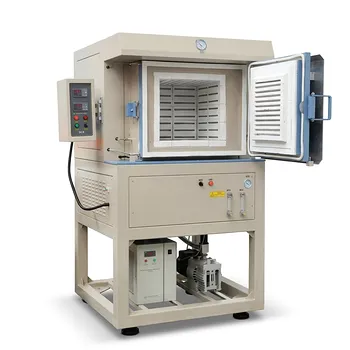
1200°C Five Side Heating Atmosphere Controlled Muffle Furnace 64 Liter High Uniformity Box Furnace for Material Synthesis
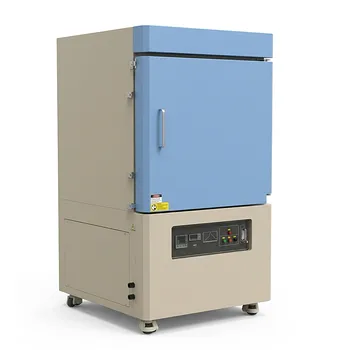
Industrial Large Box Furnace 1700C 216L High Temp Muffle Sintering System
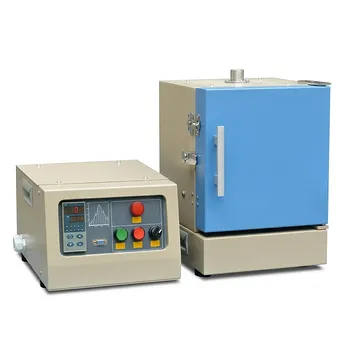
1200C Small Box Muffle Furnace with Separated Programmable Controller and 4.2L Alumina Fiber Chamber
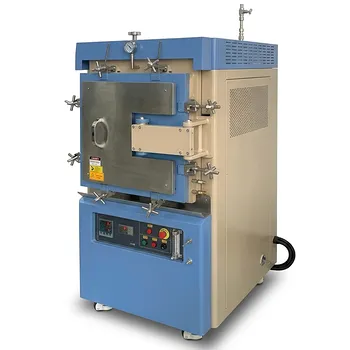
Atmosphere Controlled Muffle Furnace 1700C Maximum Temperature 80L High Capacity Vacuum Inert Gas Box Furnace
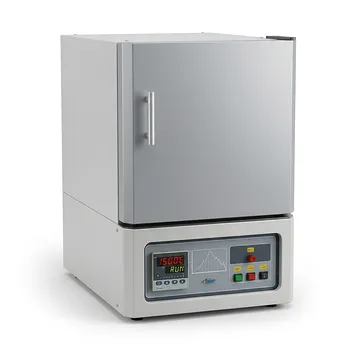
High Temperature 1500C Benchtop Muffle Furnace 3.6L Alumina Fiber Chamber Programmable Controller Sintering Annealing Carbonization Thermal Processing System
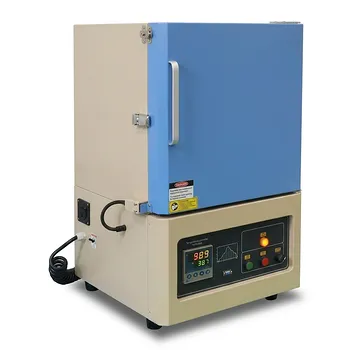
1200°C High Temperature Muffle Furnace 19L Chamber with 50 Segment Programmable Controller
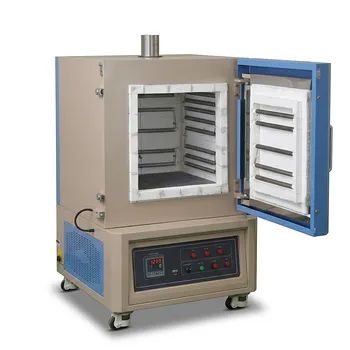
1200C High Temperature 125L Muffle Furnace 5 Side Heating for Large Batch Sintering with Optional Alloy Debinding Chamber
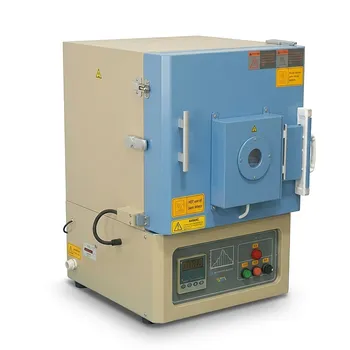
High Temperature Benchtop Muffle Furnace 1500C with 3.6L Chamber and Quartz Observation Window
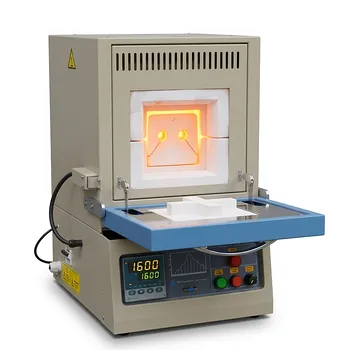
High Temperature Compact Muffle Furnace 1700 C with 30 Segment Programmable Controller and 1.7L Cubic Chamber
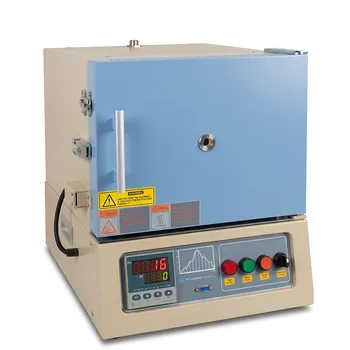
1200C Muffle Furnace 12x8x5 7.2L Heating Chamber with Quartz Observation Window and Vent Port
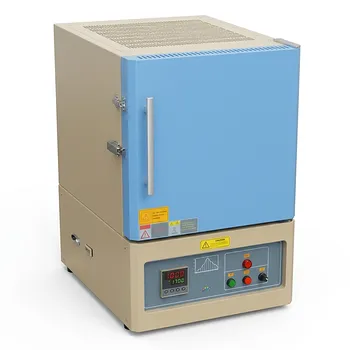
Large Bench Top 1700C High Temperature Muffle Furnace with 19L Chamber for Advanced Material Sintering and Annealing
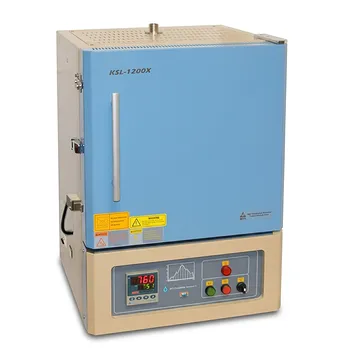
High Temperature 1200C Muffle Furnace 27L Volume 12x12x12 Chamber with Programmable PID Controller for Laboratory Material Science
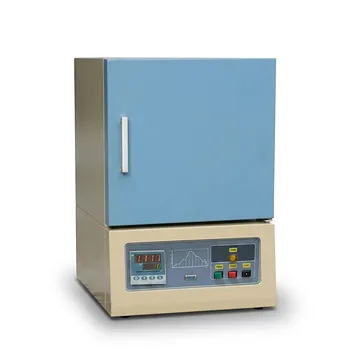
Ultra High Temperature Bench Top Muffle Furnace 1750C Sintering System with Kanthal Super Heating Elements and Precision Digital Control
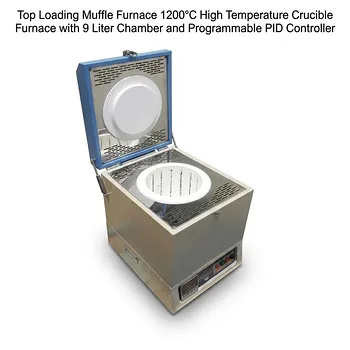
Top Loading Muffle Furnace 1200°C High Temperature Crucible Furnace with 9 Liter Chamber and Programmable PID Controller
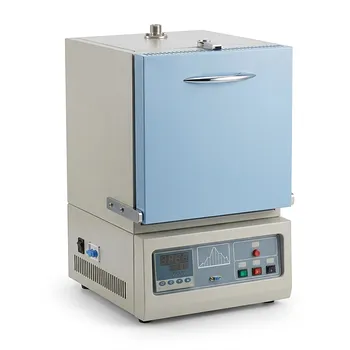
1750C Compact Muffle Furnace 1.7L Ultra High Temperature Laboratory Sintering System for Advanced Ceramics and Material Science Research
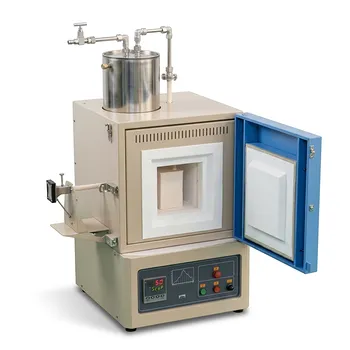
High Temperature Bench Top Muffle Furnace 1700C with Integrated Evaporating Particle Collection and 8x8x8 Alumina Fiber Chamber
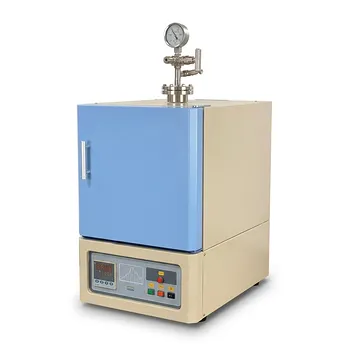
Hybrid High Temperature Muffle and Tube Furnace with 1500C Capability and Vacuum Flange Assembly
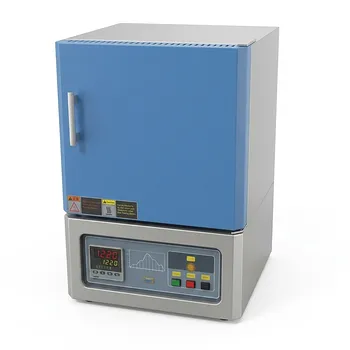
High Temperature Benchtop Muffle Furnace 1700C 10L Chamber Alumina Fiber Insulation MoSi2 Heating Elements
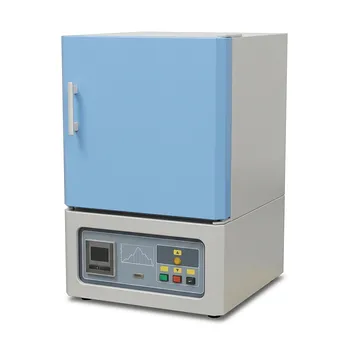
1800C Bench Top Muffle Furnace with Kanthal Super 1900 Heating Elements and 3.6L Alumina Fiber Chamber