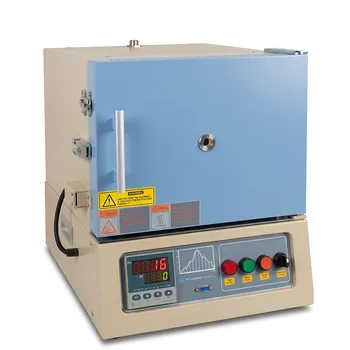
What is the role of a high-temperature muffle furnace in the synthesis of graphitic carbon nitride (g-C3N4)? - Guide
Updated 3 months ago
The high-temperature muffle furnace serves as the fundamental reactor for the thermal polycondensation of nitrogen-rich precursors into graphitic carbon nitride ($g-C_3N_4$). By providing a stable thermal environment—typically maintained between $500^\circ C$ and $600^\circ C$—the furnace facilitates the controlled de-ammoniation and polymerization of precursors such as urea, melamine, or dicyandiamide. This precise heating process is what transforms organic monomers into a stable, layered semiconducting framework with high photocatalytic activity.
The muffle furnace is critical because it manages the transition from simple molecular precursors to complex tri-s-triazine structures. It provides the necessary energy to drive chemical condensation while maintaining the structural integrity of the resulting semiconductor.
Facilitating the Thermal Polycondensation Process
Driving Molecular Transformation
The primary role of the furnace is to initiate thermal decomposition and polycondensation. As the temperature rises, nitrogen-rich precursors lose ammonia and other volatile groups, allowing the remaining molecules to link together. This chemical evolution is essential for building the carbon-nitrogen backbone of the material.
Forming the Structural Framework
The furnace provides the specific energy threshold required to form triazine or heptazine (tri-s-triazine) units. These units are the fundamental building blocks of $g-C_3N_4$. Without a consistent and high-temperature environment, the precursor would fail to achieve the degree of polymerization necessary for a stable, layered graphitic structure.
Developing Semiconductor Properties
By maintaining temperatures usually around $550^\circ C$, the muffle furnace ensures the material develops its characteristic electronic properties. This thermal "soaking" or annealing period is what defines the material’s bandgap and its ability to function as a photocatalyst.
Critical Parameters of the Synthesis Environment
Precise Temperature Control
Consistency is vital, as even minor fluctuations can result in incomplete reactions or the total decomposition of the product. High-precision furnaces use programmed temperature control to reach specific setpoints, such as $520^\circ C$ or $580^\circ C$, ensuring that the entire batch of precursor reacts uniformly.
Programmed Heating Rates
The rate at which the furnace reaches its target temperature—often set at $2^\circ C/min$ to $10^\circ C/min$—directly influences the morphology of the $g-C_3N_4$. A controlled ramp-up prevents rapid gas evolution, which can lead to excessive mass loss or poor crystallinity in the final yellow powder.
Thermal Field Uniformity
Superior temperature uniformity within the furnace chamber is essential for achieving a consistent chemical composition. If the thermal field is uneven, the resulting material may contain a mixture of partially polymerized intermediates and fully formed $g-C_3N_4$, reducing the overall reactivity of the catalyst.
Understanding the Trade-offs and Pitfalls
Volatilization vs. Yield
One of the primary challenges in using a muffle furnace for this synthesis is the high rate of precursor volatilization. Because the reaction often occurs in an open or semi-closed crucible, a significant portion of the precursor (especially urea) can escape as gas before it has the chance to polymerize, leading to low product yields.
Over-calcination and Decomposition
While heat is necessary for polymerization, $g-C_3N_4$ begins to decompose if temperatures exceed $600^\circ C$ to $700^\circ C$. If the furnace lacks precise calibration, it is easy to "over-cook" the material, resulting in the complete loss of the sample or a significant reduction in nitrogen content.
Atmospheric Influence
Most muffle furnaces operate in an air atmosphere, which can lead to slight oxygen doping in the carbon nitride lattice. While this can sometimes improve photocatalytic performance, it can also introduce defects that may be undesirable depending on the specific research goal.
Optimizing Your Synthesis Strategy
How to Apply This to Your Project
To achieve the best results in $g-C_3N_4$ synthesis, you must align your furnace settings with your specific material requirements.
- If your primary focus is high crystallinity: Increase the dwelling time (e.g., to 4 or 5 hours) at a stable $550^\circ C$ to allow the crystal lattice to organize more effectively.
- If your primary focus is high surface area: Utilize a faster heating rate and precursors like urea, which generate more gas during decomposition, creating a more porous "bulk" structure.
- If your primary focus is consistent morphology: Ensure the use of a high-precision furnace with a multi-point heating program to maintain a perfectly uniform thermal field across the crucible.
The muffle furnace is not merely a heater but a precision instrument that dictates the structural and functional destiny of synthetic graphitic carbon nitride.
Summary Table:
| Synthesis Parameter | Role in g-C3N4 Formation | Recommended Range |
|---|---|---|
| Temperature | Drives polycondensation & framework stability | 500°C – 600°C |
| Heating Rate | Influences morphology and gas evolution | 2°C/min – 10°C/min |
| Dwelling Time | Controls crystallinity and lattice organization | 2 – 5 Hours |
| Atmosphere | Affects nitrogen content and oxygen doping | Air or Inert Gas |
| Uniformity | Ensures consistent chemical composition | High-precision required |
Elevate Your Material Research with THERMUNITS
Precision is the backbone of successful semiconductor synthesis. THERMUNITS is a leading manufacturer of high-temperature laboratory equipment, providing the thermal accuracy required for advanced material science and industrial R&D.
Whether you are synthesizing g-C3N4 or developing complex alloys, our comprehensive range of thermal solutions—including Muffle, Vacuum, Atmosphere, Tube, and Rotary furnaces, as well as CVD/PECVD systems and Hot Press furnaces—ensures uniform heating and reliable results every time.
Ready to optimize your lab’s thermal processing? Contact our technical experts today to find the perfect high-precision furnace for your specific research needs!
References
- Matevž Roškarič, Albin Pintar. Effect of TiO2 Morphology on the Properties and Photocatalytic Activity of g-C3N4/TiO2 Nanocomposites Under Visible-Light Illumination. DOI: 10.3390/molecules30030460
Mentioned Products
- High Temperature 1700C Bench Top Muffle Furnace with Alumina Fiber Insulation and 3.6L Chamber Capacity for Precision Sintering and Heat Treatment
- High Temperature 1500C Benchtop Muffle Furnace 3.6L Alumina Fiber Chamber Programmable Controller Sintering Annealing Carbonization Thermal Processing System
- 1200°C High Temperature Muffle Furnace 19L Chamber with 50 Segment Programmable Controller
- High Temperature Muffle Furnace with Dual Controllers and 36L Large Chamber 1700C Max
- Large Bench Top 1700C High Temperature Muffle Furnace with 19L Chamber for Advanced Material Sintering and Annealing
People Also Ask
- What role does a high-temperature muffle furnace play in evaluating the mineral composition of rock samples? LOI & XRF Guide
- What is the purpose of using muffle or tube furnaces in glass synthesis? Achieve Precise Melt-Quenching & Homogeneity
- What is the function of a muffle furnace in aluminoborosilicate glass prep? Stabilize Raw Materials for Superior Purity
- What is the function of a high-temp muffle furnace in Ni-V oxide synthesis? Optimize your material's performance.
- What is the function of a high-temperature muffle furnace in phosphorus-modified zeolite catalyst preparation?

Tech Team · ThermUnits
Last updated on Jun 03, 2026
Related Products
High Temperature 1700C Bench Top Muffle Furnace with Alumina Fiber Insulation and 3.6L Chamber Capacity for Precision Sintering and Heat Treatment
High Temperature 1500C Benchtop Muffle Furnace 3.6L Alumina Fiber Chamber Programmable Controller Sintering Annealing Carbonization Thermal Processing System
1200°C High Temperature Muffle Furnace 19L Chamber with 50 Segment Programmable Controller
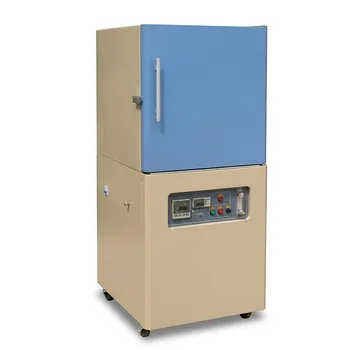
High Temperature Muffle Furnace with Dual Controllers and 36L Large Chamber 1700C Max
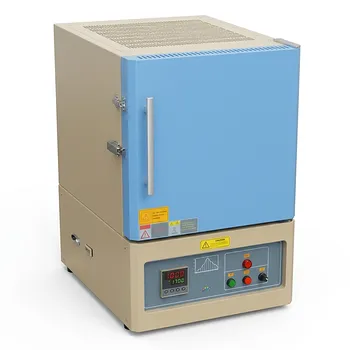
Large Bench Top 1700C High Temperature Muffle Furnace with 19L Chamber for Advanced Material Sintering and Annealing
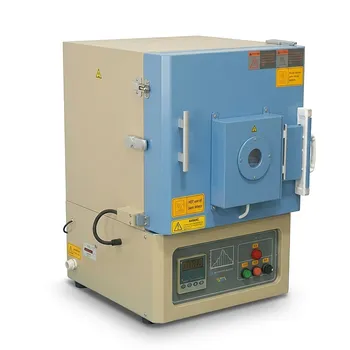
High Temperature Benchtop Muffle Furnace 1500C with 3.6L Chamber and Quartz Observation Window
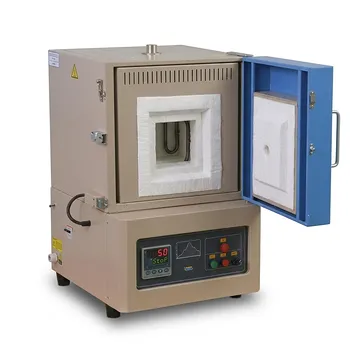
1800°C Bench Top Ultra High Temperature Muffle Furnace with Sapphire Observation Window and Top Feeding Port for Materials Research and Thermal Processing
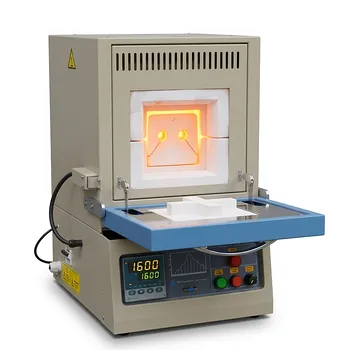
High Temperature Compact Muffle Furnace 1700 C with 30 Segment Programmable Controller and 1.7L Cubic Chamber
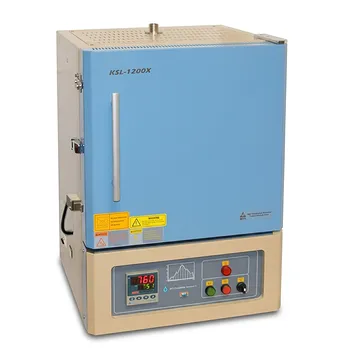
High Temperature 1200C Muffle Furnace 27L Volume 12x12x12 Chamber with Programmable PID Controller for Laboratory Material Science
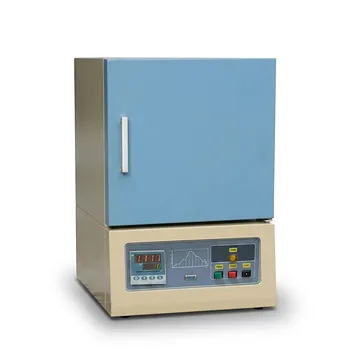
Ultra High Temperature Bench Top Muffle Furnace 1750C Sintering System with Kanthal Super Heating Elements and Precision Digital Control
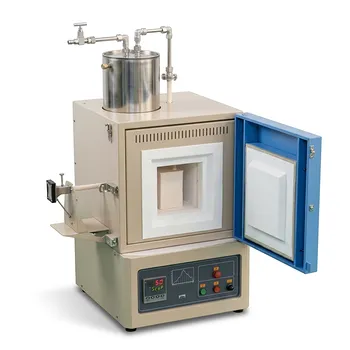
High Temperature Bench Top Muffle Furnace 1700C with Integrated Evaporating Particle Collection and 8x8x8 Alumina Fiber Chamber
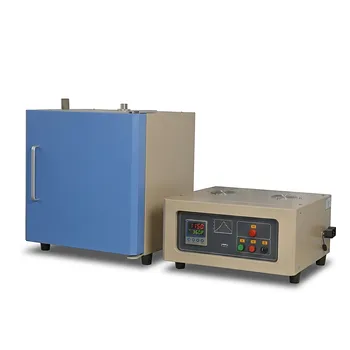
High Temperature Muffle Furnace with Alloy Chamber for Debinding and Sintering Applications
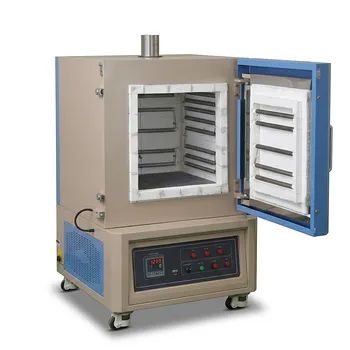
1200C High Temperature 125L Muffle Furnace 5 Side Heating for Large Batch Sintering with Optional Alloy Debinding Chamber
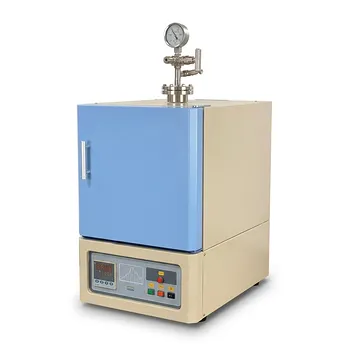
Hybrid High Temperature Muffle and Tube Furnace with 1500C Capability and Vacuum Flange Assembly
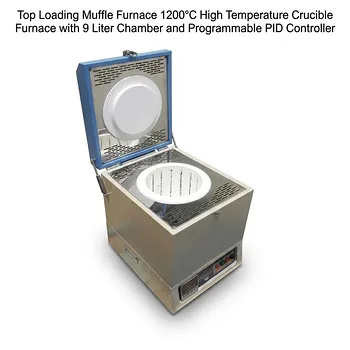
Top Loading Muffle Furnace 1200°C High Temperature Crucible Furnace with 9 Liter Chamber and Programmable PID Controller
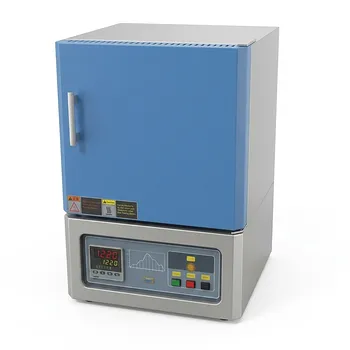
High Temperature Benchtop Muffle Furnace 1700C 10L Chamber Alumina Fiber Insulation MoSi2 Heating Elements
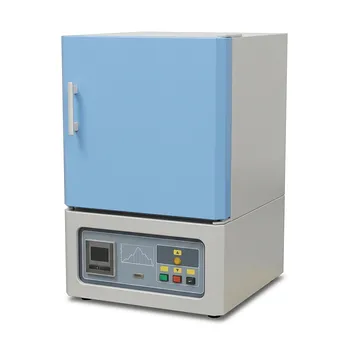
1800C Bench Top Muffle Furnace with Kanthal Super 1900 Heating Elements and 3.6L Alumina Fiber Chamber
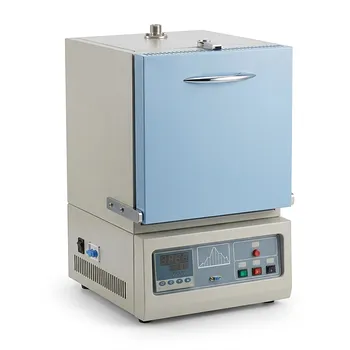
1750C Compact Muffle Furnace 1.7L Ultra High Temperature Laboratory Sintering System for Advanced Ceramics and Material Science Research
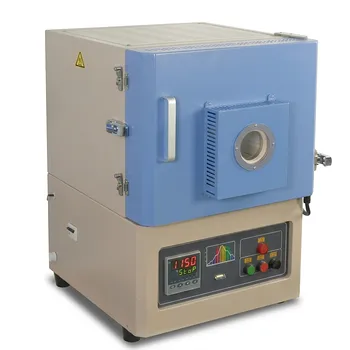
High Temperature Benchtop Muffle Furnace with Quartz Observation Window for Thermal Imaging and Material Analysis