What role does a laboratory Muffle Furnace play in the preparation of MXene-derived oxide nano-heterojunctions?
Updated 5 months ago
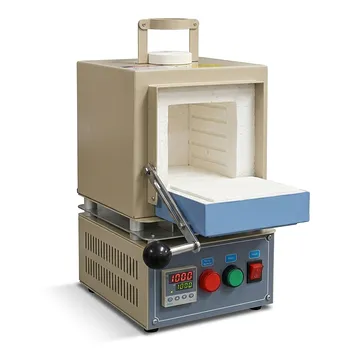
The laboratory muffle furnace is the essential reactor for high-temperature thermal oxidation. In the preparation of MXene-derived oxide nano-heterojunctions, this equipment provides the controlled atmospheric environment and 900 °C thermal energy required to transform 2D carbide nanosheets into active oxide phases. It specifically facilitates the phase transition of etched MXene into a heterojunction composed of rutile TiO2 and monoclinic Ti2Nb10O29.
The muffle furnace serves as the core hardware for achieving a precise phase transition from carbides to photocatalytically active oxides. By maintaining a uniform thermal field, it ensures the consistent conversion of MXene precursors into high-crystallinity nano-heterojunctions.
Driving the Phase Transition from Carbides to Oxides
Achieving Precise Thermal Oxidation at 900 °C
The primary role of the muffle furnace is to provide the extreme heat necessary to break the chemical bonds within the 2D MXene nanosheets. At 900 °C, the furnace induces a thermal oxidation reaction between the carbide layers and oxygen from the ambient air.
This high-temperature environment is the critical catalyst that forces the transition from a carbide precursor to a stable oxide structure. Without this precise temperature control, the material would remain in its metallic carbide state, lacking the desired photocatalytic properties.
Inducing Heterojunction Formation
The furnace is responsible for the simultaneous growth of two distinct phases: rutile TiO2 and monoclinic Ti2Nb10O29. The uniform heating ensures that these two phases intergrow effectively to form a nano-heterojunction.
These heterojunctions are vital for improving charge carrier separation in photocatalytic applications. The muffle furnace acts as the "forge" that establishes the interface between these different oxide crystals.
The Importance of a Uniform Thermal Field
Ensuring Structural Homogeneity
A laboratory muffle furnace provides a stable and uniform thermal field throughout the heating chamber. This uniformity prevents localized overheating, which could lead to irregular grain growth or structural collapse of the nanosheets.
Consistency in the thermal field ensures that the resulting nano-heterojunctions have a predictable morphology and pure phase composition. This reliability is crucial for the scalability and reproducibility of the synthesis process.
Facilitating Lattice Perfection
High-temperature treatment within the furnace helps eliminate lattice stresses and defects that may have occurred during the initial etching of the MAX phase. By allowing atoms to rearrange into their most stable crystalline positions, the furnace optimizes the material's grain size.
This process of "perfection" is essential for maximizing the electrochemical and photocatalytic performance of the final nanocomposite. Increased crystallinity directly correlates to better stability and higher efficiency in target applications.
Understanding the Trade-offs
Temperature and Phase Control
While 900 °C is necessary for creating rutile-based heterojunctions, lower temperatures (500–650 °C) typically favor the formation of the anatase phase. Choosing the wrong temperature can result in a phase profile that is incompatible with the intended application.
Risk of Morphology Loss
Excessive residence time or temperatures significantly higher than 900 °C can lead to the "sintering" of nanoparticles. This causes the high-surface-area 2D structure to collapse into larger, bulkier particles, which reduces the active surface area and overall performance.
Atmospheric Sensitivity
Since the muffle furnace typically operates in an air atmosphere for these reactions, the oxidation rate is high. If the oxidation process is not carefully timed, the carbon framework within the MXene may be entirely consumed, potentially losing the conductive benefits of the original structure.
How to Apply This to Your Project
To successfully prepare MXene-derived oxide nano-heterojunctions, you must align your furnace settings with your specific material goals.
- If your primary focus is Rutile phase stability: Operate the muffle furnace at 900 °C to ensure the complete transformation of titanium atoms into the rutile TiO2 structure.
- If your primary focus is Anatase phase retention: Target a lower temperature range between 500 °C and 650 °C to prevent the transition to rutile while maintaining the 2D morphology.
- If your primary focus is High Crystallinity: Use longer calcination times (e.g., 2–3 hours) to allow for the perfection of the crystal structure and the elimination of lattice stress.
- If your primary focus is Molten Salt Etching: Utilize the furnace as a high-temperature environment (e.g., 700 °C) to transition Lewis acid salts into a molten state for removing "A" elements from the MAX phase.
By mastering the thermal environment of the muffle furnace, you can precisely engineer the phase composition and nanostructure of MXene-derived materials.
Summary Table:
| Function | Key Process Parameter | Outcome for Nano-heterojunctions |
|---|---|---|
| Thermal Oxidation | 900 °C in air | Breaks carbide bonds; transforms MXene into stable oxide phases. |
| Phase Transition | Controlled Temperature | Induces growth of rutile $TiO_2$ and monoclinic $Ti_2Nb_{10}O_{29}$. |
| Thermal Uniformity | Stable Thermal Field | Prevents localized overheating; ensures structural homogeneity. |
| Lattice Perfection | Calcination Time | Eliminates lattice stress; optimizes grain size and crystallinity. |
| Morphology Control | 500 °C – 900 °C Range | Regulates the balance between anatase/rutile phases and 2D structure retention. |
Elevate Your Material Research with THERMUNITS Precision Furnaces
Precision is the difference between a failed experiment and a breakthrough in material science. THERMUNITS is a leading manufacturer of high-performance laboratory heat treatment equipment specifically designed for demanding R&D applications like MXene synthesis and oxide nano-heterojunction preparation.
Whether you need precise 900°C oxidation or controlled atmospheric environments, our comprehensive range of thermal solutions delivers unmatched uniformity and reliability:
- Core Equipment: Muffle, Vacuum, Atmosphere, Tube, and Rotary Furnaces.
- Advanced Systems: CVD/PECVD systems, Vacuum Induction Melting (VIM), and Hot Press Furnaces.
- Specialized Tools: Dental Furnaces, Electric Rotary Kilns, and high-quality Thermal Elements.
Ready to optimize your thermal processing? Let our experts help you select the perfect furnace to achieve superior crystallinity and phase control.
Contact THERMUNITS Today to Request a Quote
References
- Shalu Atri, Olivier Monfort. MXene-Derived Oxide Nanoheterostructures for Photocatalytic Sulfamethoxazole Degradation. DOI: 10.1021/acsanm.4c02523
Mentioned Products
- 1750C Compact Muffle Furnace 1.7L Ultra High Temperature Laboratory Sintering System for Advanced Ceramics and Material Science Research
- 1200C Muffle Furnace 12x8x5 7.2L Heating Chamber with Quartz Observation Window and Vent Port
- High Temperature 1200C Muffle Furnace 27L Volume 12x12x12 Chamber with Programmable PID Controller for Laboratory Material Science
- 1750C Bench Top Muffle Furnace 3.6L High Grade Molybdenum Disilicide Heating Elements Laboratory Heat Treatment Equipment
- 1200°C High Temperature Muffle Furnace 19L Chamber with 50 Segment Programmable Controller
People Also Ask
- What role does a laboratory high-temperature muffle furnace play in the ash analysis phase of biomass co-firing research? [Guide]
- What is the function of a high-temp muffle furnace in Ni-V oxide synthesis? Optimize your material's performance.
- What role does a high-temperature muffle furnace play in the synthesis of Melem precursors? Precision Polymerization.
- What is the function of a high-temperature muffle furnace in phosphorus-modified zeolite catalyst preparation?
- What is the function of a muffle furnace in aluminoborosilicate glass prep? Stabilize Raw Materials for Superior Purity

Tech Team · ThermUnits
Last updated on Apr 14, 2026
Related Products
1750C Compact Muffle Furnace 1.7L Ultra High Temperature Laboratory Sintering System for Advanced Ceramics and Material Science Research
1200C Muffle Furnace 12x8x5 7.2L Heating Chamber with Quartz Observation Window and Vent Port
High Temperature 1200C Muffle Furnace 27L Volume 12x12x12 Chamber with Programmable PID Controller for Laboratory Material Science
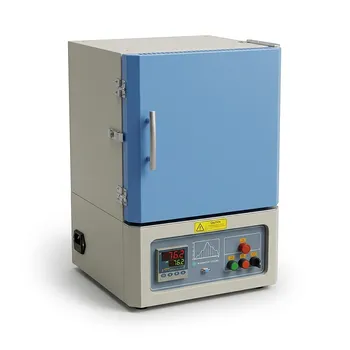
1750C Bench Top Muffle Furnace 3.6L High Grade Molybdenum Disilicide Heating Elements Laboratory Heat Treatment Equipment
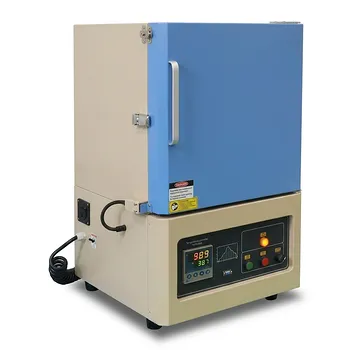
1200°C High Temperature Muffle Furnace 19L Chamber with 50 Segment Programmable Controller
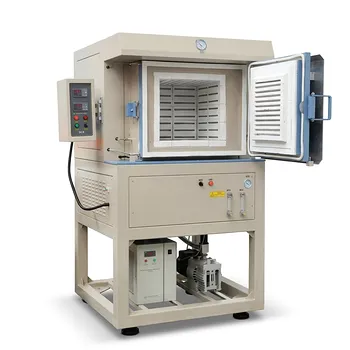
1200°C Five Side Heating Atmosphere Controlled Muffle Furnace 64 Liter High Uniformity Box Furnace for Material Synthesis
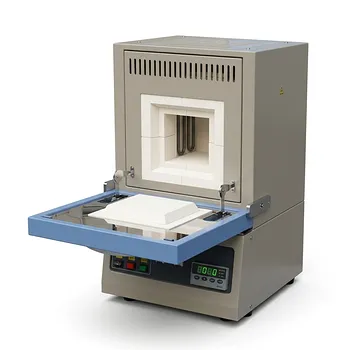
Five Sided Heating Muffle Furnace High Uniformity 1200C Lab Box Furnace 27L Alumina Fiber Chamber
1200C High Temperature Muffle Furnace with Motorized Door and Automated PC Control for Industrial Sintering and Material Processing 27 Liter
1800C Bench Top Muffle Furnace with Kanthal Super 1900 Heating Elements and 3.6L Alumina Fiber Chamber
High Temperature Bench Top Muffle Furnace 1700C with Integrated Evaporating Particle Collection and 8x8x8 Alumina Fiber Chamber
Ultra High Temperature Bench Top Muffle Furnace 1750C Sintering System with Kanthal Super Heating Elements and Precision Digital Control
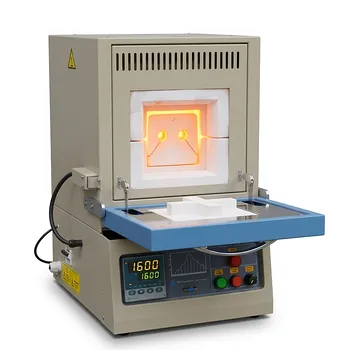
High Temperature Compact Muffle Furnace 1700 C with 30 Segment Programmable Controller and 1.7L Cubic Chamber
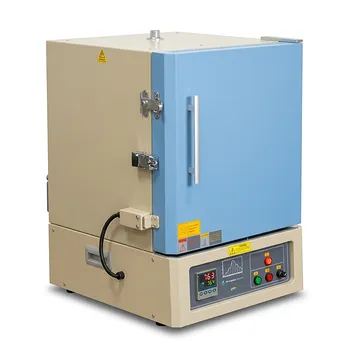
Large Capacity 1200C Muffle Furnace 64 Liter Chamber with Digital PID Controller and Built In Venting Port
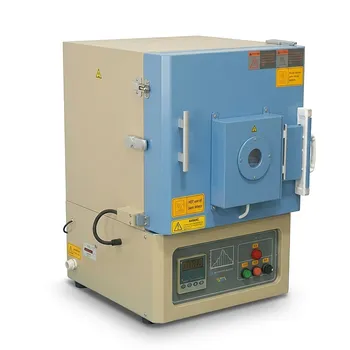
High Temperature Benchtop Muffle Furnace 1500C with 3.6L Chamber and Quartz Observation Window
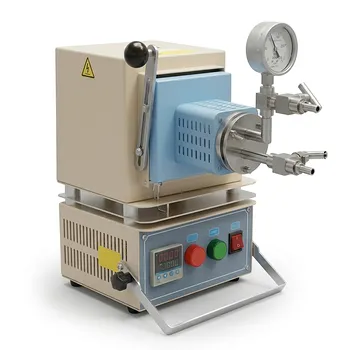
Compact Hybrid Muffle and Tube Furnace for 1000C Controlled Atmosphere Laboratory Material Sintering
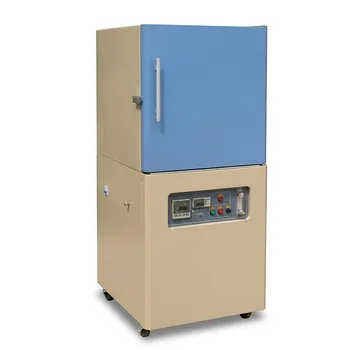
High Temperature Muffle Furnace with Dual Controllers and 36L Large Chamber 1700C Max
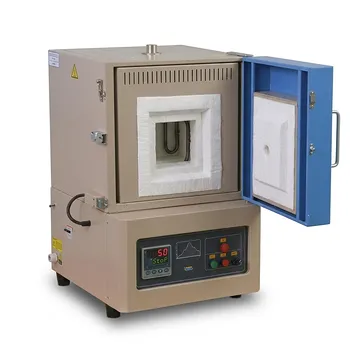
1800°C Bench Top Ultra High Temperature Muffle Furnace with Sapphire Observation Window and Top Feeding Port for Materials Research and Thermal Processing
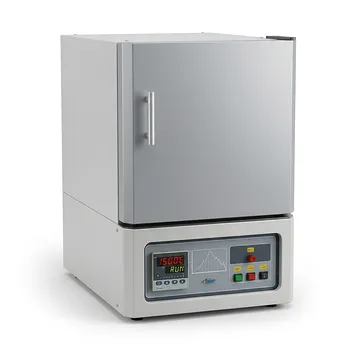
High Temperature 1500C Benchtop Muffle Furnace 3.6L Alumina Fiber Chamber Programmable Controller Sintering Annealing Carbonization Thermal Processing System
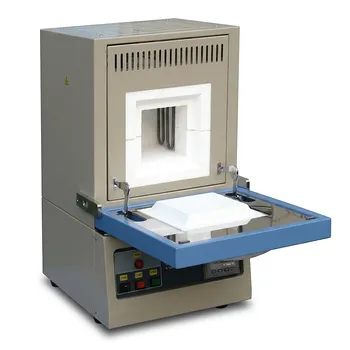
High Temperature 1800C Compact Muffle Furnace with Kanthal Super 1900 Heating Elements and 1.7L Alumina Chamber