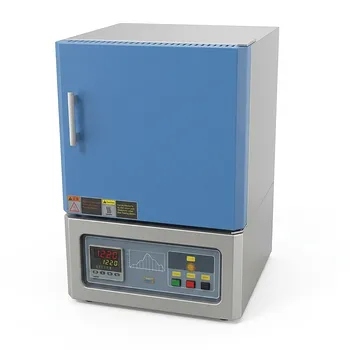
What role does a Muffle Furnace play in the low-temperature thermal treatment process of coal? Key for Boron Removal
Updated 6 months ago
In the low-temperature thermal treatment of coal, a muffle furnace serves as a high-precision isolation chamber used to volatilize specific harmful trace elements before the coal is burned. It provides a stable thermal environment between 110°C and 210°C under natural air convection. This specific heat range facilitates the release of volatile boron substances, such as inorganic $BO_4$ units, directly from the coal matrix.
The primary role of the muffle furnace is to enable the targeted removal of boron prior to combustion. This pre-treatment prevents boron enrichment in fly ash, mitigating environmental and industrial contamination risks during large-scale coal use.
The Mechanism of Targeted Volatilization
Identifying the Temperature Window
The muffle furnace is calibrated to a specific range of 110°C to 210°C. This "low-temperature" threshold is high enough to trigger the release of specific volatile compounds but low enough to avoid the full carbonization or combustion of the coal mass.
Facilitating Inorganic Boron Release
By heating the coal within this controlled window, the furnace disrupts the chemical bonds of boron-bearing minerals. The equipment allows inorganic $BO_4$ units to escape the coal matrix, effectively purifying the material before it reaches the boiler.
Natural Air Convection and Oxidation
The use of natural air convection within the furnace provides a steady, non-aggressive supply of oxygen. This environment supports the oxidation or volatilization of trace elements without the turbulence that might cause sample loss or uneven heating.
Broader Impacts on Coal Composition
Preventing Downstream Contamination
The most critical outcome of this process is the protection of fly ash quality. By removing boron in the muffle furnace first, the resulting ash from combustion remains free of concentrated boron, making it safer for disposal or recycling in construction.
Pre-structuring for Higher Efficiency
While the primary focus is boron removal, low-temperature treatment in a muffle furnace can also begin the process of moisture removal. This slightly increases the effective energy density of the coal, similar to the torrefaction processes used in bio-coal production.
Enhancing Surface Reactivity
Subjecting coal to these controlled temperatures can disrupt the physical structure of the minerals. This reduction in surface passivation makes the coal more reactive, which can be beneficial if the coal is intended for subsequent chemical leaching or gasification.
Understanding the Trade-offs
Throughput and Scalability
Muffle furnaces are primarily laboratory or batch-processing tools. While they offer extreme precision, they lack the high throughput required for industrial-scale coal preparation, making them better suited for research and quality control.
Gas Environment Limitations
Standard muffle furnaces often rely on natural air, which may not be suitable if a specific inert atmosphere (like Nitrogen or Argon) is required to prevent all oxidation. If the goal is pure thermal treatment without any oxygen interaction, a modified furnace with gas purging is necessary.
Energy Consumption
Maintaining a steady state between 110°C and 210°C for long durations requires constant electrical input. Operators must weigh the environmental benefits of boron removal against the energy costs of the pre-treatment phase.
Applying Thermal Treatment to Your Objectives
How to Use This Information
The application of muffle furnace technology depends heavily on your specific environmental or material goals for coal processing.
- If your primary focus is Environmental Compliance: Use the muffle furnace at 110°C–210°C to strip volatile boron, ensuring your fly ash meets regulatory standards for heavy metal concentrations.
- If your primary focus is Improving Fuel Quality: Utilize the furnace to remove residual moisture and high-volatility organic components, which stabilizes the coal for cleaner combustion.
- If your primary focus is Chemical Research: Leverage the isolation chamber to study phase changes in coal gangue or pitch without contamination from external fuel combustion products.
By precisely controlling the thermal field, the muffle furnace transforms coal from a raw mineral into a specialized industrial feedstock.
Summary Table:
| Feature | Details |
|---|---|
| Temperature Range | 110°C to 210°C |
| Primary Target | Volatile Boron removal (inorganic $BO_4$ units) |
| Environment | Natural air convection / Precise isolation |
| Key Outcome | Prevents fly ash contamination & improves fuel quality |
| Applications | Environmental compliance, Material R&D, Fuel preparation |
Elevate Your Material Research with THERMUNITS High-Precision Furnaces
Precise low-temperature thermal treatment is critical for environmental compliance and material purity. THERMUNITS is a leading manufacturer of high-temperature laboratory equipment specifically designed for material science and industrial R&D. Our equipment ensures the stable, controlled thermal environments necessary for sensitive processes like coal volatilization and trace element removal.
How THERMUNITS adds value to your facility:
- Precision Technology: Achieve exact temperature windows (like the 110°C–210°C range) for targeted chemical extraction.
- Comprehensive Range: We offer everything from Muffle, Vacuum, and Atmosphere Furnaces to advanced CVD/PECVD systems, Electric Rotary Kilns, and Vacuum Induction Melting (VIM) Furnaces.
- Tailored Solutions: Whether you need standard laboratory heat treatment or specialized hot press furnaces, our tools provide superior heating uniformity and durability.
Ready to enhance your lab's efficiency and research accuracy? Contact our technical team today to discuss your specific thermal processing needs!
References
- Jonah Gamutan, Tetsuya Nagasaka. Low-Temperature Thermal Treatment and Boron Speciation Analysis from Coals. DOI: 10.3390/su16135770
Mentioned Products
- 1200C Muffle Furnace 12x8x5 7.2L Heating Chamber with Quartz Observation Window and Vent Port
- High Temperature 1200C Muffle Furnace 27L Volume 12x12x12 Chamber with Programmable PID Controller for Laboratory Material Science
- 1750C Compact Muffle Furnace 1.7L Ultra High Temperature Laboratory Sintering System for Advanced Ceramics and Material Science Research
- 1200C High Temperature 125L Muffle Furnace 5 Side Heating for Large Batch Sintering with Optional Alloy Debinding Chamber
- Ultra High Temperature Bench Top Muffle Furnace 1750C Sintering System with Kanthal Super Heating Elements and Precision Digital Control
People Also Ask
- What is the function of an experimental muffle furnace in the conversion of FeOOH to α-Fe2O3? Optimize Phase Transition
- What are the primary functions of a Muffle furnace in oxide calcination? Achieve high purity and phase control.
- What is the function of a high-temperature Muffle furnace in removing residual solvents? Essential Bismuth Synthesis
- What is the function of Muffle furnace calcination? Essential steps for Pr-doped SrFeMoO6 Perovskite synthesis.
- Why is a muffle furnace required for MoO2@HCNF pre-oxidation? Crucial Steps for High-Performance Composites

Tech Team · ThermUnits
Last updated on Apr 14, 2026
Related Products
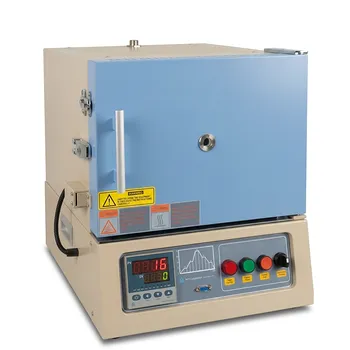
1200C Muffle Furnace 12x8x5 7.2L Heating Chamber with Quartz Observation Window and Vent Port
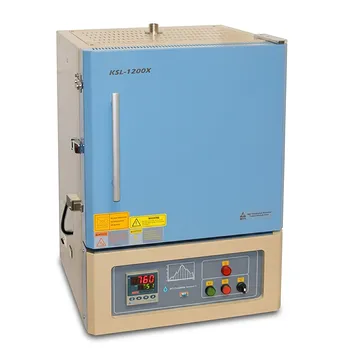
High Temperature 1200C Muffle Furnace 27L Volume 12x12x12 Chamber with Programmable PID Controller for Laboratory Material Science
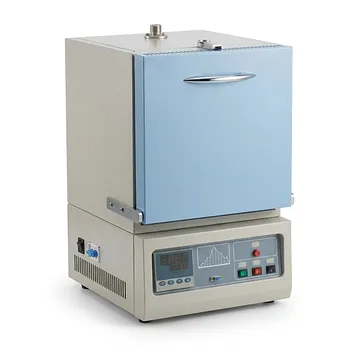
1750C Compact Muffle Furnace 1.7L Ultra High Temperature Laboratory Sintering System for Advanced Ceramics and Material Science Research
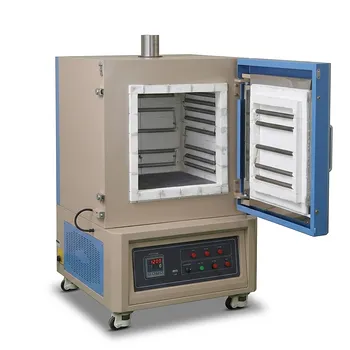
1200C High Temperature 125L Muffle Furnace 5 Side Heating for Large Batch Sintering with Optional Alloy Debinding Chamber
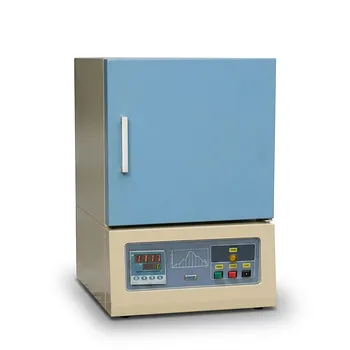
Ultra High Temperature Bench Top Muffle Furnace 1750C Sintering System with Kanthal Super Heating Elements and Precision Digital Control
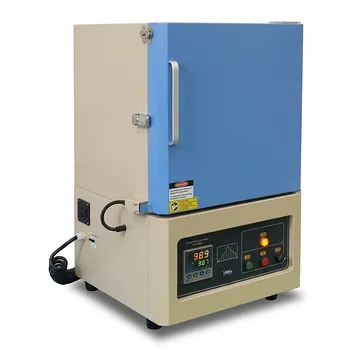
1200°C High Temperature Muffle Furnace 19L Chamber with 50 Segment Programmable Controller
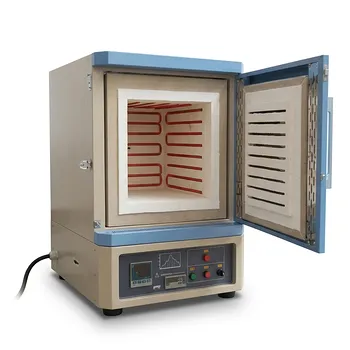
Five Side Heating Muffle Furnace 1200C High Uniformity 64L Chamber 16x16x16 Inch Industrial Heat Treatment
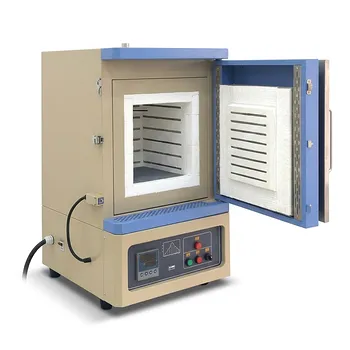
Five Side Heating Muffle Furnace High Purity Alumina Fiber 27L Chamber 1200C High Temperature Thermal Processing System for Sintering Annealing and Materials Research
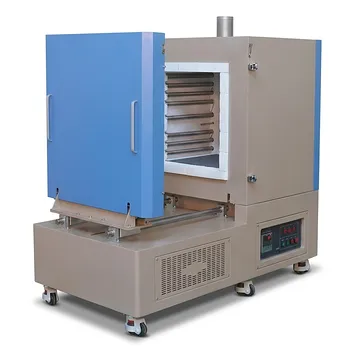
1200C Five Side Heating Muffle Furnace with Sliding Door 125L Volume High Temperature Heat Treatment System for Large Scale Sintering and Annealing
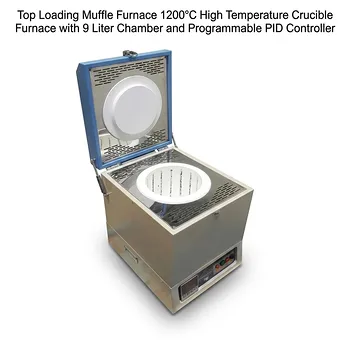
Top Loading Muffle Furnace 1200°C High Temperature Crucible Furnace with 9 Liter Chamber and Programmable PID Controller
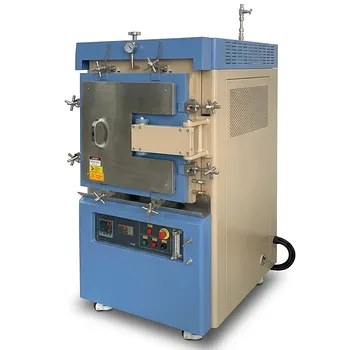
Atmosphere Controlled Muffle Furnace 1700C Maximum Temperature 80L High Capacity Vacuum Inert Gas Box Furnace
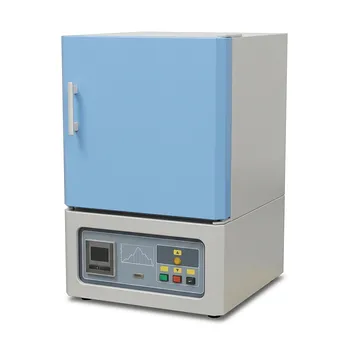
1800C Bench Top Muffle Furnace with Kanthal Super 1900 Heating Elements and 3.6L Alumina Fiber Chamber
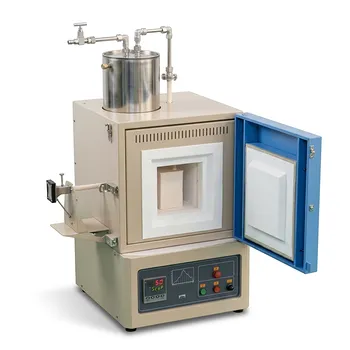
High Temperature Bench Top Muffle Furnace 1700C with Integrated Evaporating Particle Collection and 8x8x8 Alumina Fiber Chamber
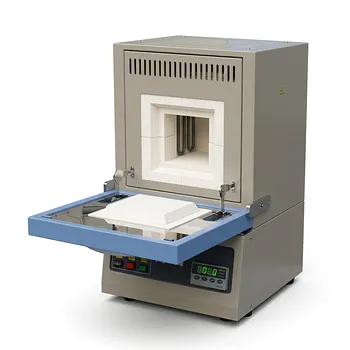
Five Sided Heating Muffle Furnace High Uniformity 1200C Lab Box Furnace 27L Alumina Fiber Chamber
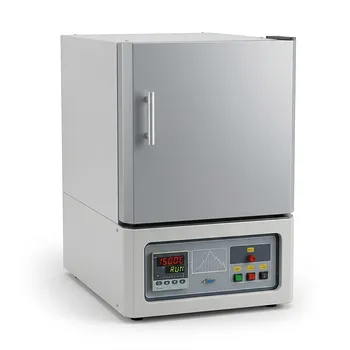
High Temperature 1500C Benchtop Muffle Furnace 3.6L Alumina Fiber Chamber Programmable Controller Sintering Annealing Carbonization Thermal Processing System
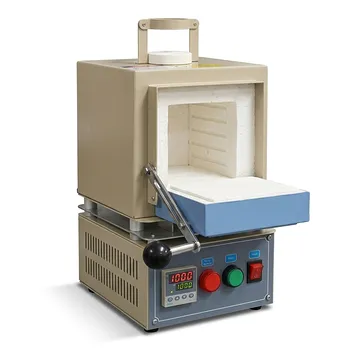
Compact 1000C Muffle Furnace with Programmable Controller and 2 Inch Top Port for Vacuum and Atmosphere Material Research
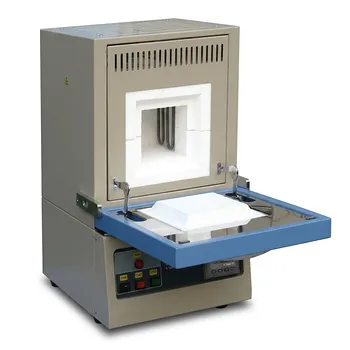
High Temperature 1800C Compact Muffle Furnace with Kanthal Super 1900 Heating Elements and 1.7L Alumina Chamber
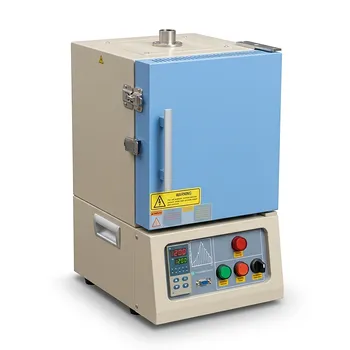
1200°C Small Box Furnace 4.2 Liter Programmable Muffle Furnace with High Purity Alumina Insulation and PID Control
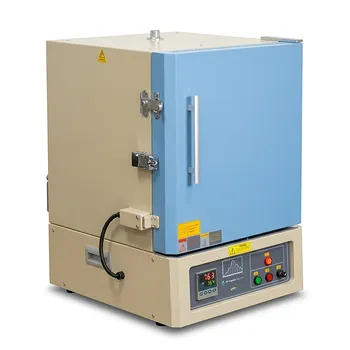
Large Capacity 1200C Muffle Furnace 64 Liter Chamber with Digital PID Controller and Built In Venting Port