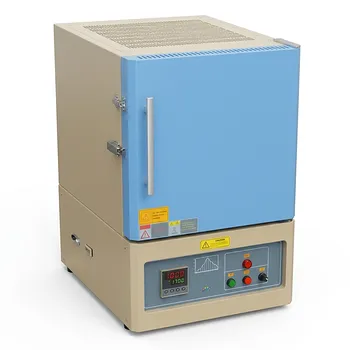
What role does an electric muffle furnace play in YBCO thin film oxygen annealing? Optimize Superconductivity & Tc
Updated 6 months ago
The electric muffle furnace is the critical tool for the "oxygen loading" phase of YBCO thin film production. It provides the precise thermal environment—typically between 400°C and 500°C—and the oxygen-rich atmosphere required for oxygen atoms to diffuse into the YBCO lattice. This specific process converts the material from a non-superconducting tetragonal phase into the superconducting orthorhombic phase, which is essential for achieving a high critical temperature ($T_c$).
The muffle furnace facilitates a structural transformation in YBCO by enabling long-duration oxygen diffusion, which repairs lattice defects and optimizes the material's stoichiometry for superconductivity. Without this precisely controlled thermal and atmospheric step, the thin film remains electronically inert.
The Mechanism of Phase Transformation
Converting Tetragonal to Orthorhombic Phases
During the initial deposition, YBCO often forms a tetragonal crystal structure that lacks superconducting properties. The muffle furnace provides the energy needed for oxygen atoms to migrate into specific sites within the lattice. This influx of oxygen causes a structural shift to the orthorhombic phase, which is the arrangement required for high-temperature superconductivity.
Maximizing the Critical Temperature ($T_c$)
The critical temperature at which YBCO loses electrical resistance is directly tied to its oxygen content. By maintaining a constant high-temperature environment in an oxygen-rich atmosphere, the furnace ensures the film reaches its optimal oxygen stoichiometry. This step is what allows the film to transition from a semiconductor-like state to a high-performance superconductor.
The Technical Role of the Muffle Furnace
Precision Thermal Stability
Muffle furnaces, often referred to as box-type resistance furnaces, provide a highly stable and uniform thermal field. This stability is vital for long-duration annealing, which can sometimes last for days or even weeks depending on the crystal requirements. Consistent heat prevents localized phase variations that could degrade the film's overall performance.
Controlled Atmosphere Regulation
Beyond mere heating, the furnace acts as a reaction chamber where oxygen partial pressure can be managed. This environment allows for the effective substitution of atoms and the elimination of residual internal stresses generated during the sputtering or deposition process. It ensures that the chemical environment supports the desired crystalline transition rather than unwanted oxidation or contamination.
Lattice Repair and Grain Growth
The thermal energy provided by the furnace allows atoms within the thin film to rearrange into a more stable, lower-energy configuration. This process eliminates lattice defects and promotes grain growth, which reduces electrical scattering centers. For thin films, this results in better crystallinity and improved long-term stability under high-temperature or high-current conditions.
Understanding the Trade-offs
Diffusion Time vs. Film Integrity
While long annealing times are necessary for full oxygen saturation, excessive exposure to heat can lead to cation interdiffusion or substrate reactions. Finding the "sweet spot" between sufficient oxygen diffusion and the prevention of film-substrate contamination is a primary challenge in thin-film processing.
Atmosphere Sensitivity and Contamination
If the muffle furnace is not properly cleaned or if the oxygen source is impure, the film can absorb organic residues or solvent molecules. Residual carbon or moisture can get trapped in the lattice, leading to a "poisoned" film that exhibits a suppressed $T_c$ or poor current-carrying capacity.
How to Optimize Your Annealing Process
Recommendations for Process Control
- If your primary focus is Maximum $T_c$: Prioritize a slow cool-down period within the oxygen-rich environment to allow the lattice to fully "load" oxygen without quenching in defects.
- If your primary focus is Structural Uniformity: Utilize a furnace with high-precision PID controllers to maintain a constant temperature, preventing thermal gradients that cause uneven phase distribution.
- If your primary focus is Throughput and Speed: Experiment with higher oxygen partial pressures to potentially increase the diffusion rate, though this must be balanced against the risk of surface degradation.
The muffle furnace remains the definitive tool for transforming YBCO from a simple ceramic precursor into a high-performance superconducting material.
Summary Table:
| Process Objective | Muffle Furnace Role | Material Impact |
|---|---|---|
| Phase Transformation | Precise heat (400°C-500°C) | Converts tetragonal to superconducting orthorhombic phase |
| Oxygen Loading | Controlled oxygen-rich atmosphere | Optimizes stoichiometry and fills lattice vacancies |
| Lattice Repair | Uniform thermal field | Eliminates defects, reduces scattering, and promotes grain growth |
| Performance Tuning | PID-controlled cooling rates | Maximizes critical temperature ($T_c$) and current capacity |
Elevate Your Material Research with THERMUNITS Precision Furnaces
Achieving the perfect superconducting phase in YBCO requires uncompromising thermal precision. THERMUNITS is a leading manufacturer of high-temperature laboratory equipment specifically designed for material science and industrial R&D. We empower researchers to master complex processes like oxygen partial pressure control and long-duration annealing.
Our comprehensive range of thermal processing solutions includes:
- Precision Furnaces: Muffle, Vacuum, Atmosphere, Tube, and Rotary Furnaces.
- Advanced Systems: CVD/PECVD systems, Hot Press furnaces, and Vacuum Induction Melting (VIM) units.
- Specialized Equipment: Dental Furnaces, electric rotary kilns, and high-quality Thermal Elements.
Ready to optimize your heat treatment results?
Contact THERMUNITS today to discuss your specific requirements and discover how our advanced thermal solutions can enhance your lab's efficiency and experimental accuracy.
References
- Akhilesh Kumar Gupta, Dushyant Singh. Optimizing Deposition Techniques and Parameters For HIGH TC ybco thin films. DOI: 10.29070/68chhr60
Mentioned Products
- High Temperature 1200C Muffle Furnace 27L Volume 12x12x12 Chamber with Programmable PID Controller for Laboratory Material Science
- Compact 1000C Muffle Furnace with Programmable Controller and 2 Inch Top Port for Vacuum and Atmosphere Material Research
- 1200C Muffle Furnace 12x8x5 7.2L Heating Chamber with Quartz Observation Window and Vent Port
- 1200C High Temperature 125L Muffle Furnace 5 Side Heating for Large Batch Sintering with Optional Alloy Debinding Chamber
- 1200C Five Side Heating Muffle Furnace with Sliding Door 125L Volume High Temperature Heat Treatment System for Large Scale Sintering and Annealing
People Also Ask
- Why is annealing in a high-temperature muffle furnace necessary for SiO2/Si substrate pretreatment before monolayer WS2 synthesis?
- What is the purpose of using muffle or tube furnaces in glass synthesis? Achieve Precise Melt-Quenching & Homogeneity
- What is the function of a high-temp muffle furnace in Ni-V oxide synthesis? Optimize your material's performance.
- What role does a high-temperature muffle furnace play in the synthesis of Melem precursors? Precision Polymerization.
- What is the function of a muffle furnace in aluminoborosilicate glass prep? Stabilize Raw Materials for Superior Purity

Tech Team · ThermUnits
Last updated on Apr 14, 2026
Related Products
High Temperature 1200C Muffle Furnace 27L Volume 12x12x12 Chamber with Programmable PID Controller for Laboratory Material Science
Compact 1000C Muffle Furnace with Programmable Controller and 2 Inch Top Port for Vacuum and Atmosphere Material Research
1200C Muffle Furnace 12x8x5 7.2L Heating Chamber with Quartz Observation Window and Vent Port
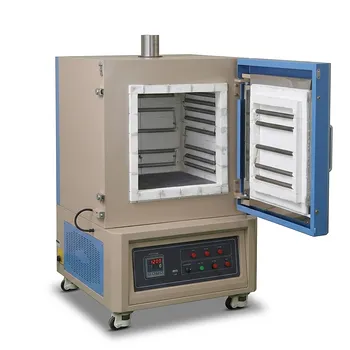
1200C High Temperature 125L Muffle Furnace 5 Side Heating for Large Batch Sintering with Optional Alloy Debinding Chamber
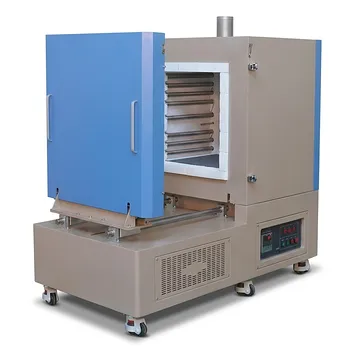
1200C Five Side Heating Muffle Furnace with Sliding Door 125L Volume High Temperature Heat Treatment System for Large Scale Sintering and Annealing
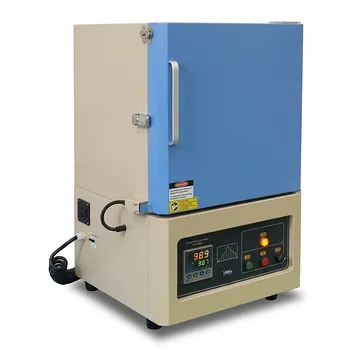
1200°C High Temperature Muffle Furnace 19L Chamber with 50 Segment Programmable Controller
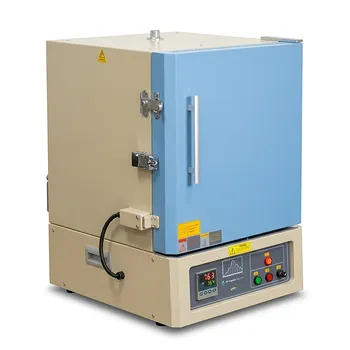
Large Capacity 1200C Muffle Furnace 64 Liter Chamber with Digital PID Controller and Built In Venting Port
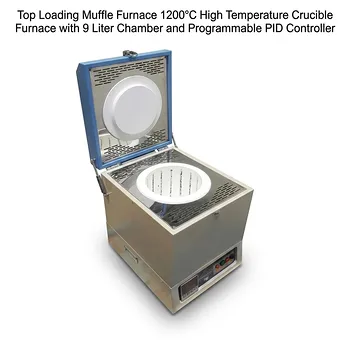
Top Loading Muffle Furnace 1200°C High Temperature Crucible Furnace with 9 Liter Chamber and Programmable PID Controller
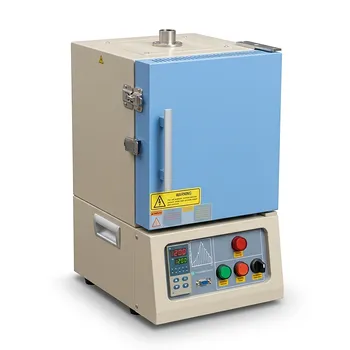
1200°C Small Box Furnace 4.2 Liter Programmable Muffle Furnace with High Purity Alumina Insulation and PID Control
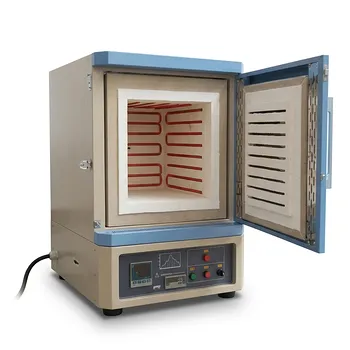
Five Side Heating Muffle Furnace 1200C High Uniformity 64L Chamber 16x16x16 Inch Industrial Heat Treatment
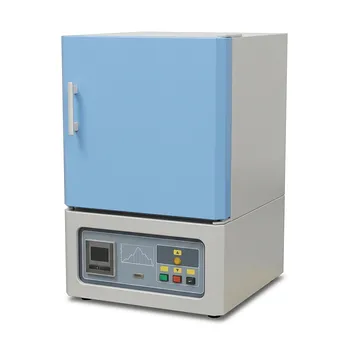
1800C Bench Top Muffle Furnace with Kanthal Super 1900 Heating Elements and 3.6L Alumina Fiber Chamber
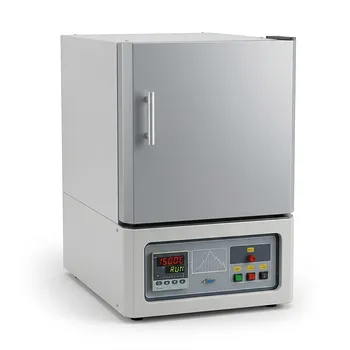
High Temperature 1500C Benchtop Muffle Furnace 3.6L Alumina Fiber Chamber Programmable Controller Sintering Annealing Carbonization Thermal Processing System
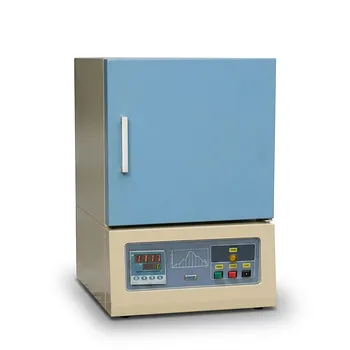
Ultra High Temperature Bench Top Muffle Furnace 1750C Sintering System with Kanthal Super Heating Elements and Precision Digital Control
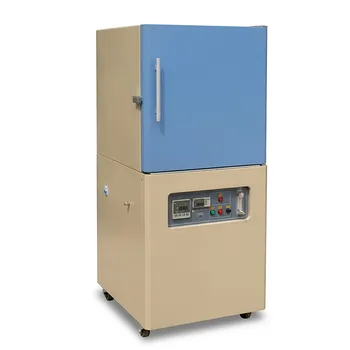
High Temperature Muffle Furnace with Dual Controllers and 36L Large Chamber 1700C Max
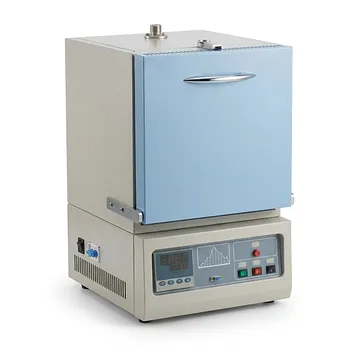
1750C Compact Muffle Furnace 1.7L Ultra High Temperature Laboratory Sintering System for Advanced Ceramics and Material Science Research
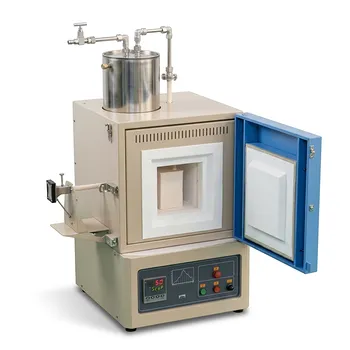
High Temperature Bench Top Muffle Furnace 1700C with Integrated Evaporating Particle Collection and 8x8x8 Alumina Fiber Chamber
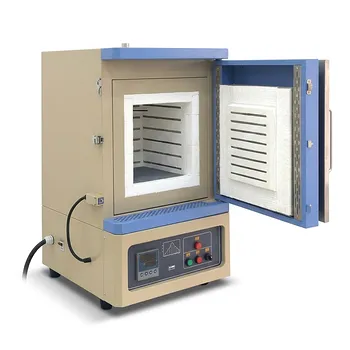
Five Side Heating Muffle Furnace High Purity Alumina Fiber 27L Chamber 1200C High Temperature Thermal Processing System for Sintering Annealing and Materials Research
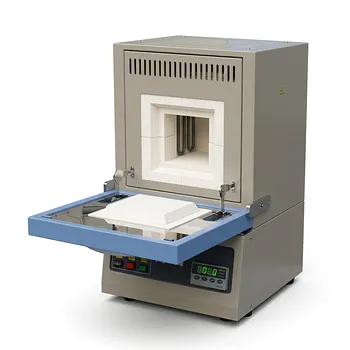
Five Sided Heating Muffle Furnace High Uniformity 1200C Lab Box Furnace 27L Alumina Fiber Chamber
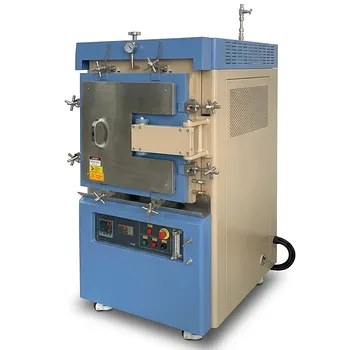
Atmosphere Controlled Muffle Furnace 1700C Maximum Temperature 80L High Capacity Vacuum Inert Gas Box Furnace