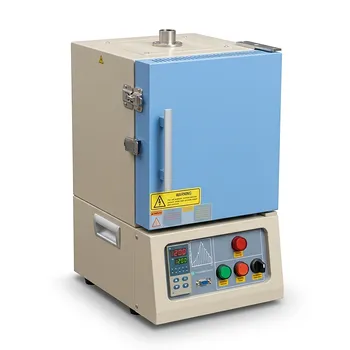
What role does an industrial muffle furnace play in the carbonization process of woody biomass? Optimize Biochar Yields.
Updated 3 months ago
The industrial muffle furnace acts as the primary thermal reactor for the carbonization of woody biomass. Its essential role is to provide a strictly controlled, high-temperature, anaerobic environment that facilitates pyrolysis—the thermochemical decomposition of organic material in the absence of oxygen. By maintaining temperatures typically ranging from 400°C to 600°C, the furnace transforms complex lignocellulosic structures into a stable, carbon-rich intermediate known as char.
An industrial muffle furnace provides the precise thermal and atmospheric control necessary to prevent biomass combustion while driving the chemical reactions that create a carbonized skeleton. This process is the foundational step in producing high-quality precursors for activated carbon and other advanced carbon materials.
The Role of Controlled Thermochemical Decomposition
Creating an Anaerobic Environment
The muffle furnace isolates the biomass from ambient air, often utilizing a carbon dioxide or nitrogen atmosphere to exclude oxygen. This prevents the material from simply burning (combustion) and instead forces it to undergo pyrolysis, preserving the carbon structure.
Precise Thermal Regulation
Industrial muffle furnaces allow for the setting of specific heating rates and dwell times, which are critical for consistent results. By controlling the temperature—often around 600°C—the furnace ensures that the heat penetrates the biomass uniformly to achieve complete carbonization.
Facilitating Dehydration and Aromatization
During the heating process, the furnace triggers dehydration and aromatization reactions. These chemical changes reorganize the organic molecules into a more stable, aromatic carbon framework, which increases the fixed carbon content of the resulting char.
Structural Transformation and Pore Development
Removal of Volatile Substances
As the furnace heats the woody biomass, it drives off volatile organic compounds (VOCs), moisture, and gases. The escape of these volatiles is essential for reducing the mass of the material and concentrating the carbon atoms.
Preliminary Pore Formation
The exit of volatile gases creates an initial micropore and mesopore network within the carbon matrix. This "etching" process, facilitated by the furnace's heat, establishes the physical foundation required for subsequent chemical activation.
Conversion to Carbon-Rich Intermediates
The final product of this furnace treatment is char or biochar, a precursor that retains the structural integrity of the original biomass but with a vastly different chemical profile. This intermediate is highly receptive to the secondary etching processes used to create activated carbon.
Understanding the Trade-offs
Temperature vs. Surface Functional Groups
Operating at higher temperatures (e.g., above 700°C) increases carbon purity but can destroy beneficial surface functional groups. These groups are often necessary for specific applications like heavy metal adsorption, requiring a balance between heat intensity and chemical utility.
Heating Rate and Structural Integrity
Rapid heating rates can lead to a phenomenon known as "plasticization" or structural collapse in certain biomass types. While faster rates increase throughput, they may result in a lower quality pore structure compared to slower, more controlled heating curves.
Energy Consumption and Scaling
Industrial muffle furnaces are highly precise but can be energy-intensive to maintain at high temperatures for extended periods. The trade-off involves balancing the precision of a "muffle" design (where the heat source is isolated) with the high-volume requirements of industrial production.
How to Apply This to Your Project
When utilizing an industrial muffle furnace for biomass carbonization, your settings should be dictated by the intended end-use of the carbon.
- If your primary focus is high fixed carbon content: Target higher temperatures (600°C–800°C) with longer dwell times to ensure the maximum removal of non-carbon elements.
- If your primary focus is subsequent chemical activation: Maintain moderate temperatures (400°C–500°C) to develop a preliminary pore structure without over-calcining the material.
- If your primary focus is heavy metal adsorption: Use lower carbonization temperatures (around 300°C–400°C) to preserve the oxygen-containing functional groups that bond with metallic ions.
By mastering the thermal and atmospheric variables of the muffle furnace, you can precisely engineer the physical and chemical characteristics of your carbonized biomass.
Summary Table:
| Feature | Role in Carbonization | Impact on Final Product |
|---|---|---|
| Anaerobic Control | Prevents combustion & oxidation | High fixed carbon content and purity |
| Thermal Regulation | Maintains stable pyrolysis (400℃-600℃) | Uniform chemical transformation |
| Atmospheric Isolation | Facilitates dehydration & aromatization | Stable aromatic carbon framework |
| Volatile Management | Drives off moisture and VOCs | Creation of initial micropore networks |
| Heating Rate Control | Manages heat penetration speed | Preservation of structural integrity |
Elevate Your Carbon Research with THERMUNITS
Unlock the full potential of your material science research with THERMUNITS, a leading manufacturer of high-temperature laboratory equipment for industrial R&D. We offer a comprehensive range of thermal processing solutions tailored for biomass carbonization and advanced material synthesis, including:
- Precision Furnaces: Muffle, Vacuum, Atmosphere, Tube, and Rotary Furnaces.
- Advanced Systems: CVD/PECVD systems, Hot Press furnaces, and Vacuum Induction Melting (VIM) furnaces.
- Specialized Equipment: Dental Furnaces, Electric Rotary Kilns, and high-quality Thermal Elements.
Our equipment provides the precise thermal and atmospheric control necessary to engineer superior biochar and activated carbon. Contact our experts today to find the ideal furnace solution for your laboratory!
References
- Beata Doczekalska, Andrzej Świątkowski. Activated carbons prepared from stump wood of various tree species by chemical activation and their application for water purification. DOI: 10.1007/s00107-024-02148-1
Mentioned Products
- 1200C High Temperature Muffle Furnace with Motorized Door and Automated PC Control for Industrial Sintering and Material Processing 27 Liter
- Industrial Large Box Furnace 1700C 216L High Temp Muffle Sintering System
- 1200C High Temperature 125L Muffle Furnace 5 Side Heating for Large Batch Sintering with Optional Alloy Debinding Chamber
- 1200C Muffle Furnace 12x8x5 7.2L Heating Chamber with Quartz Observation Window and Vent Port
- High Temperature 1200C Muffle Furnace 27L Volume 12x12x12 Chamber with Programmable PID Controller for Laboratory Material Science
People Also Ask
- What is the role of a High-Temperature Muffle Furnace in the synthesis of bulk graphitic carbon nitride (CN)? Expert Guide
- What safety features are standard in high-temperature muffle furnaces? Essential Guide to Laboratory Equipment Safety
- What is the purpose of preheating charcoal in a high-temperature muffle furnace? Ensure Accuracy in Zinc Reduction.
- What is the role of a high-temperature muffle furnace or tube furnace in the preparation of Na2WO4/SiO2 catalysts?
- What role does a high-temperature muffle furnace play in ash content analysis? Ensure Purity & Adsorption Efficiency

Tech Team · ThermUnits
Last updated on Jun 03, 2026
Related Products
1200C High Temperature Muffle Furnace with Motorized Door and Automated PC Control for Industrial Sintering and Material Processing 27 Liter
Industrial Large Box Furnace 1700C 216L High Temp Muffle Sintering System
1200C High Temperature 125L Muffle Furnace 5 Side Heating for Large Batch Sintering with Optional Alloy Debinding Chamber
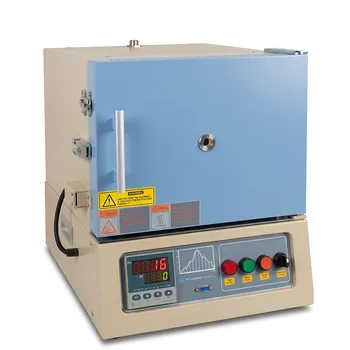
1200C Muffle Furnace 12x8x5 7.2L Heating Chamber with Quartz Observation Window and Vent Port
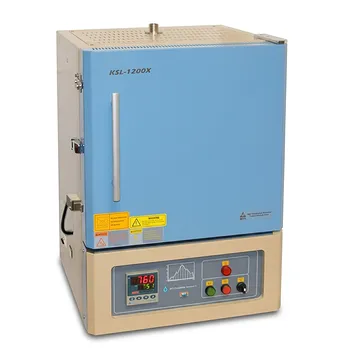
High Temperature 1200C Muffle Furnace 27L Volume 12x12x12 Chamber with Programmable PID Controller for Laboratory Material Science
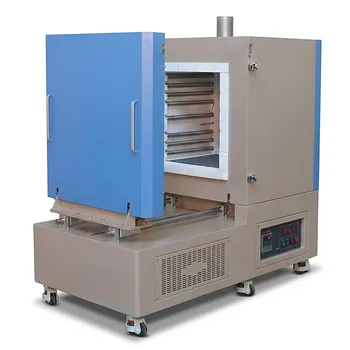
1200C Five Side Heating Muffle Furnace with Sliding Door 125L Volume High Temperature Heat Treatment System for Large Scale Sintering and Annealing
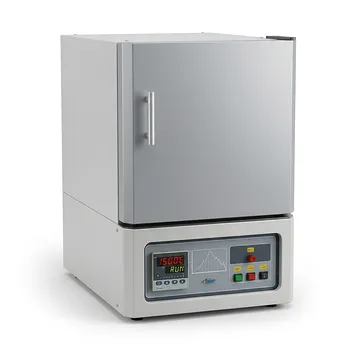
High Temperature 1500C Benchtop Muffle Furnace 3.6L Alumina Fiber Chamber Programmable Controller Sintering Annealing Carbonization Thermal Processing System
Five Side Heating Muffle Furnace High Purity Alumina Fiber 27L Chamber 1200C High Temperature Thermal Processing System for Sintering Annealing and Materials Research
1750C Compact Muffle Furnace 1.7L Ultra High Temperature Laboratory Sintering System for Advanced Ceramics and Material Science Research
Ultra High Temperature Bench Top Muffle Furnace 1750C Sintering System with Kanthal Super Heating Elements and Precision Digital Control
1200°C High Temperature Muffle Furnace 19L Chamber with 50 Segment Programmable Controller
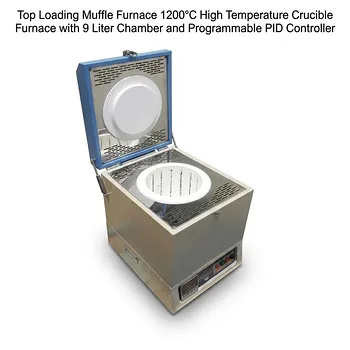
Top Loading Muffle Furnace 1200°C High Temperature Crucible Furnace with 9 Liter Chamber and Programmable PID Controller
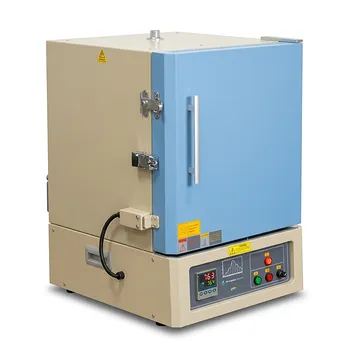
Large Capacity 1200C Muffle Furnace 64 Liter Chamber with Digital PID Controller and Built In Venting Port
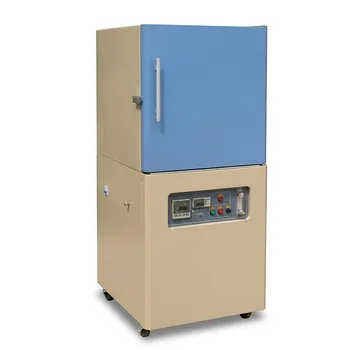
High Temperature Muffle Furnace with Dual Controllers and 36L Large Chamber 1700C Max
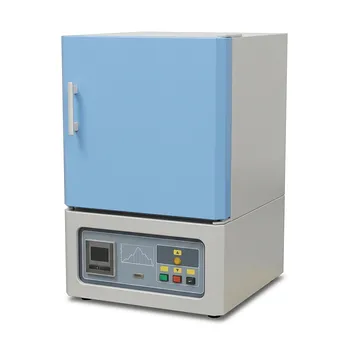
1800C Bench Top Muffle Furnace with Kanthal Super 1900 Heating Elements and 3.6L Alumina Fiber Chamber
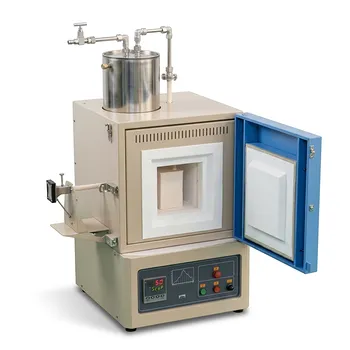
High Temperature Bench Top Muffle Furnace 1700C with Integrated Evaporating Particle Collection and 8x8x8 Alumina Fiber Chamber
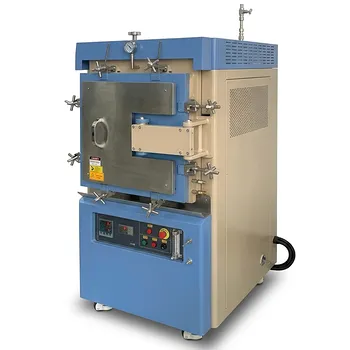
Atmosphere Controlled Muffle Furnace 1700C Maximum Temperature 80L High Capacity Vacuum Inert Gas Box Furnace
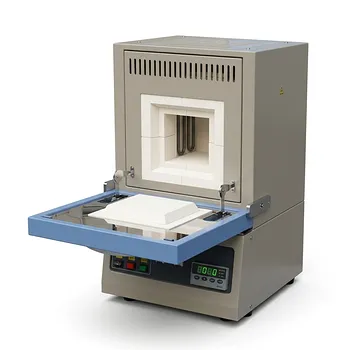
Five Sided Heating Muffle Furnace High Uniformity 1200C Lab Box Furnace 27L Alumina Fiber Chamber
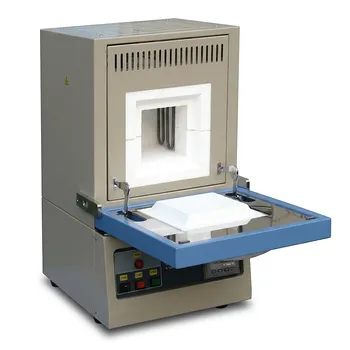
High Temperature 1800C Compact Muffle Furnace with Kanthal Super 1900 Heating Elements and 1.7L Alumina Chamber