Why are ceramic boats used as carriers during the high-temperature processing of Si@Fe3O4/AC/CNR composites? (Purity Guide)
Updated 3 months ago
Ceramic boats are utilized as carriers because they provide an chemically inert, high-purity environment that prevents contamination during extreme thermal processing. In the synthesis of $Si@Fe_3O_4/AC/CNR$ composites at $750^\circ C$, these vessels ensure that the silicon, iron salts, and carbon sources do not react with the container itself, maintaining the precise chemical composition required for the final material.
Core Takeaway: Ceramic boats serve as the critical interface between the furnace environment and the raw materials, offering the thermal stability and chemical resistance necessary to produce high-purity composites without introducing structural defects or metallic impurities.
Ensuring Chemical Purity and Material Integrity
Prevention of Cross-Reactivity
At the $750^\circ C$ carbonization threshold, many materials become reactive or prone to atomic migration. Ceramic boats, particularly those made of high-purity alumina, are selected for their total chemical inertness. This prevents the carrier from bonding with the silicon or iron salts, ensuring the "Si" and "Fe" components stay within the composite structure rather than leaching into the vessel.
Stability in Reducing Atmospheres
The processing of $Si@Fe_3O_4$ composites often requires a reducing or inert atmosphere to prevent unwanted oxidation. High-quality ceramics resist corrosion from reducing gases like hydrogen. This stability ensures that the carrier does not release oxygen or other volatile impurities that could degrade the composite’s electromagnetic or structural properties.
Elimination of Metallic Contamination
Standard metallic trays would likely shed ions or undergo scaling at $750^\circ C$, which would ruin the sensitive $Si@Fe_3O_4/AC/CNR$ matrix. Ceramic materials act as a barrier against metal ion diffusion. This is vital for maintaining the specific electrical and magnetic characteristics of the carbon-nitrogen-based ($CNR$) and activated carbon ($AC$) components.
Thermal Durability and Process Efficiency
Resistance to Thermal Cycling
Industrial and laboratory processes involve repeated heating and cooling cycles that can cause inferior materials to fatigue. Ceramic boats possess high thermal shock stability. This allows them to withstand the rapid temperature shifts of a tube furnace without cracking, deforming, or losing their structural integrity over multiple production runs.
Optimization of Gas-Solid Interactions
The shallow, trough-like geometry of a ceramic boat is a functional design choice rather than just a storage vessel. The wide surface area allows precursor powders to be spread in a thin, uniform layer. This configuration ensures that heat and process gases—such as those used for carbonization or reduction—can penetrate the sample evenly, leading to a homogenous composite.
High-Temperature Structural Rigidity
Unlike specialized polymers or lower-grade alloys, ceramics do not sag or warp at $750^\circ C$. The boats maintain a flat, stable platform within the constant temperature zone of the furnace. This rigidity is crucial for ensuring that the liquid or powder precursors remain in the optimal heating zone throughout the hours-long calcination process.
Understanding the Trade-offs
While ceramic boats are the gold standard for this synthesis, they are not without limitations. Their primary weakness is mechanical fragility; because they are brittle, they can shatter if dropped or subjected to extreme physical impact. Furthermore, while they are chemically inert to most substances, certain highly aggressive alkaline activators (like KOH) used in biochar production can slowly erode the ceramic surface over time if the material quality is not sufficiently high. Finally, porosity can be a factor—lower-grade ceramic boats may trap trace amounts of precursors in their pores, which can lead to cross-contamination between different batches if not cleaned rigorously.
How to Apply This to Your Project
When selecting or using a ceramic boat for high-temperature composite synthesis, your choice should be dictated by the specific demands of your thermal profile and chemical precursors.
- If your primary focus is maximum purity: Opt for high-purity alumina ($Al_2O_3$) boats, as they offer the lowest risk of mineral or metallic leaching into your silicon-iron matrix.
- If your primary focus is uniform morphology: Ensure the boat is wide and shallow to allow for thin-film spreading, which facilitates even gas diffusion and prevents "clumping" during carbonization.
- If your primary focus is longevity and cost-efficiency: Invest in "dense" ceramic variants with low porosity to prevent precursor absorption and make the cleaning process between cycles more effective.
The strategic use of ceramic carriers is what allows for the precise, repeatable synthesis of complex $Si@Fe_3O_4/AC/CNR$ materials in high-stress thermal environments.
Summary Table:
| Key Feature | Benefit for Synthesis | Why It Matters |
|---|---|---|
| Chemical Inertness | Prevents Cross-Reactivity | Ensures silicon/iron salts stay in the composite, not the carrier. |
| Thermal Stability | Resists Thermal Cycling | Withstands repeated heating/cooling at 750°C without cracking. |
| Geometry Design | Optimized Gas Diffusion | Shallow shape allows uniform heat and gas penetration for powders. |
| High-Purity Alumina | Zero Metal Contamination | Protects the magnetic and electrical properties of the CNR matrix. |
Maximize Your Material Synthesis Precision with THERMUNITS
High-purity composites like $Si@Fe_3O_4/AC/CNR$ require exact thermal environments and reliable equipment. THERMUNITS is a leading manufacturer specializing in high-performance laboratory heat treatment solutions for material science and industrial R&D.
We offer a comprehensive range of thermal processing systems designed to deliver the stability and atmosphere control your research demands, including:
- Tube, Atmosphere, and Vacuum Furnaces for precise composite synthesis.
- CVD/PECVD Systems for advanced carbon and silicon layer deposition.
- Muffle, Rotary, and Hot Press Furnaces for diverse material processing.
- Vacuum Induction Melting (VIM) and Electric Rotary Kilns for industrial-scale R&D.
Don't let equipment limitations compromise your material integrity. Partner with us to achieve repeatable, high-purity results. Contact the THERMUNITS technical team today to find your thermal solution.
References
- Xiang Liu, Dong‐Liang Peng. Si@Fe3O4/AC composite with interconnected carbon nano-ribbons network for high-performance lithium-ion battery anodes. DOI: 10.1016/j.heliyon.2024.e25426
Mentioned Products
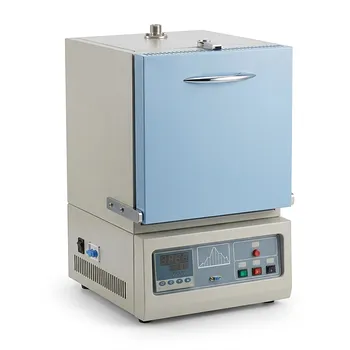
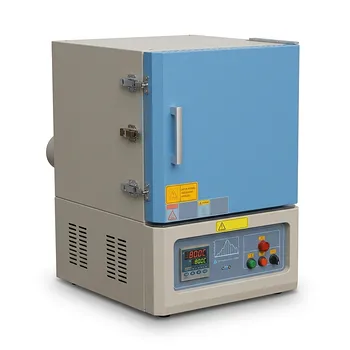
- 1750C Compact Muffle Furnace 1.7L Ultra High Temperature Laboratory Sintering System for Advanced Ceramics and Material Science Research
- 1800C Bench Top Muffle Furnace 18 Liters with Kanthal Super 1900 Heating Elements for High Purity Ceramic Sintering and Material Research
People Also Ask
- What role does a laboratory high-temperature muffle furnace play in the ash analysis phase of biomass co-firing research? [Guide]
- What is the function of a high-temp muffle furnace in Ni-V oxide synthesis? Optimize your material's performance.
- What role does a high-temperature muffle furnace play in the synthesis of Melem precursors? Precision Polymerization.
- What is the function of a high-temperature muffle furnace in phosphorus-modified zeolite catalyst preparation?
- What is the function of a muffle furnace in aluminoborosilicate glass prep? Stabilize Raw Materials for Superior Purity

Tech Team · ThermUnits
Last updated on Jun 02, 2026