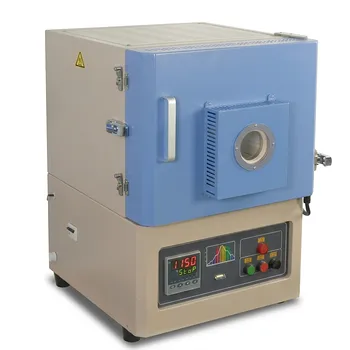
Why is a muffle furnace required for K-CN micro-nanobelt exfoliation? Achieving Optimal Thermal Shock for Material R&D
Updated 3 months ago
The high-temperature box-type resistance furnace is essential because it facilitates a "thermal shock" exfoliation mechanism driven by chemical competition. This specific furnace environment allows oxygen atoms from the air to penetrate and expand the interlayer spacing of bulk carbon nitride at 550°C. This process successfully transforms the bulk material into micro-nanobelts, significantly increasing the surface area for active site loading.
The muffle furnace enables a precise thermal shock at 550°C where atmospheric oxygen outcompetes the weak interlayer interactions of the carbon nitride. This chemical-thermal synergy is the primary driver for expanding the material's structure into high-surface-area micro-nanobelts.
The Mechanism of Thermal Exfoliation
Inducing Precise Thermal Shock
The furnace provides a stable and controlled environment to reach a critical temperature of 550°C. This high-temperature environment is necessary to trigger the thermal shock required to disrupt the stable bulk structure of the carbon nitride.
Without the rapid and sustained heat of a muffle furnace, the material would not receive enough energy to initiate the expansion process. The resistance furnace ensures that this thermal energy is distributed evenly across the sample.
The Role of Atmospheric Oxygen
The use of a box-type furnace is significant because it typically operates under an air atmosphere. This allows oxygen atoms to participate directly in the chemical transformation of the material.
As the temperature rises, oxygen atoms from the air compete with the weak interlayer interactions (van der Waals forces) that hold the bulk carbon nitride together. This competition is the specific catalyst for structural expansion.
Structural Transformation and Surface Dynamics
Expanding Interlayer Spacing
As the oxygen atoms interact with the material, they force the interlayer spacing to expand. This expansion is what physically separates the bulk layers, leading to the formation of the micro-nanobelt morphology.
This transition from a dense bulk material to a thin, belt-like structure is the core objective of the secondary heat treatment. The muffle furnace provides the exact thermodynamic conditions necessary for this "delamination" to occur.
Maximizing Specific Surface Area
The resulting micro-nanobelts possess a much higher specific surface area compared to the original bulk material. This increased surface area is critical for the material's functional performance.
By creating more surface area, the furnace treatment provides a greater number of active sites. These sites are essential for the subsequent loading of quantum dots, which determines the efficiency of the final composite.
Understanding the Trade-offs
Temperature Sensitivity and Material Integrity
Maintaining exactly 550°C is a delicate balance in carbon nitride processing. While high heat is required for exfoliation, excessive temperatures can lead to the complete oxidation or decomposition of the material, destroying the desired semiconductor properties.
Atmosphere Consistency
Because the process relies on oxygen competition, the airflow and oxygen concentration within the furnace must be consistent. Inconsistent air exposure can result in uneven exfoliation, where some parts of the material remain in bulk form while others are over-processed.
How to Apply This to Your Project
Optimizing the Exfoliation Process
- If your primary focus is maximizing surface area: Ensure the furnace reaches the 550°C threshold quickly to maximize the "shock" effect and encourage full expansion into nanobelts.
- If your primary focus is material purity: Monitor the duration of the heat treatment strictly to prevent the oxygen competition from progressing into unwanted chemical degradation of the carbon nitride backbone.
- If your primary focus is loading efficiency: Use the muffle furnace to create the highest possible density of active sites, ensuring the micro-nanobelts are thin enough to support high quantum dot dispersion.
The high-temperature furnace acts as a chemical "wedge," utilizing heat and oxygen to transform bulk solids into high-performance micro-nanostructures.
Summary Table:
| Key Parameter | Role in Exfoliation Process | Desired Material Outcome |
|---|---|---|
| Temperature (550°C) | Induces precise thermal shock | Disrupts bulk structure energy barriers |
| Atmosphere (Air) | Facilitates oxygen competition | Expands interlayer spacing for delamination |
| Equipment Stability | Uniform heat distribution | Ensures consistent micro-nanobelt morphology |
| Surface Dynamics | Creates high specific surface area | Maximizes active sites for quantum dot loading |
Elevate Your Material Research with THERMUNITS
Precision is paramount when managing sensitive thermal shock processes like K-CN exfoliation. THERMUNITS is a leading manufacturer of high-temperature laboratory equipment specifically designed for the rigorous demands of material science and industrial R&D.
We offer a comprehensive range of thermal processing solutions, including Muffle, Vacuum, Atmosphere, Tube, Rotary, and Hot Press furnaces, as well as CVD/PECVD systems, Dental Furnaces, Electric Rotary Kilns, and Vacuum Induction Melting (VIM) furnaces. Our equipment provides the exact temperature stability and atmospheric control required to transform bulk materials into high-performance nanostructures.
Unlock the full potential of your lab's heat treatment capabilities.
Contact THERMUNITS today to find your tailored furnace solution!
References
- Chenxi Ye, Xiao Liu. Highly Efficient and Stable Potassium‐Doped g‐C<sub>3</sub>N<sub>4</sub>/Zn<sub>0.5</sub>Cd<sub>0.5</sub>S Quantum Dot Heterojunction Photocatalyst for Hydrogen Evolution. DOI: 10.1002/bte2.20240033
Mentioned Products
- 1200C High Temperature Muffle Furnace with Motorized Door and Automated PC Control for Industrial Sintering and Material Processing 27 Liter
- High Temperature 1700C Bench Top Muffle Furnace with Alumina Fiber Insulation and 3.6L Chamber Capacity for Precision Sintering and Heat Treatment
- High Temperature 1500C Benchtop Muffle Furnace 3.6L Alumina Fiber Chamber Programmable Controller Sintering Annealing Carbonization Thermal Processing System
- 1200°C High Temperature Muffle Furnace 19L Chamber with 50 Segment Programmable Controller
- Large Bench Top 1700C High Temperature Muffle Furnace with 19L Chamber for Advanced Material Sintering and Annealing
People Also Ask
- What is the role of a High-Temperature Muffle Furnace in the synthesis of bulk graphitic carbon nitride (CN)? Expert Guide
- What safety features are standard in high-temperature muffle furnaces? Essential Guide to Laboratory Equipment Safety
- What is the purpose of preheating charcoal in a high-temperature muffle furnace? Ensure Accuracy in Zinc Reduction.
- What is the role of a high-temperature muffle furnace or tube furnace in the preparation of Na2WO4/SiO2 catalysts?
- What role does a high-temperature muffle furnace play in ash content analysis? Ensure Purity & Adsorption Efficiency

Tech Team · ThermUnits
Last updated on Jun 02, 2026
Related Products
1200C High Temperature Muffle Furnace with Motorized Door and Automated PC Control for Industrial Sintering and Material Processing 27 Liter
High Temperature 1700C Bench Top Muffle Furnace with Alumina Fiber Insulation and 3.6L Chamber Capacity for Precision Sintering and Heat Treatment
High Temperature 1500C Benchtop Muffle Furnace 3.6L Alumina Fiber Chamber Programmable Controller Sintering Annealing Carbonization Thermal Processing System
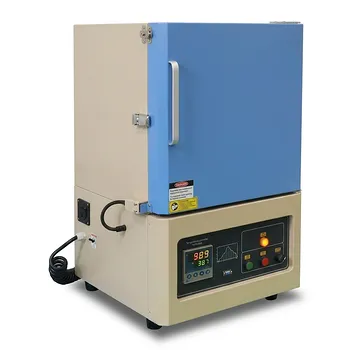
1200°C High Temperature Muffle Furnace 19L Chamber with 50 Segment Programmable Controller
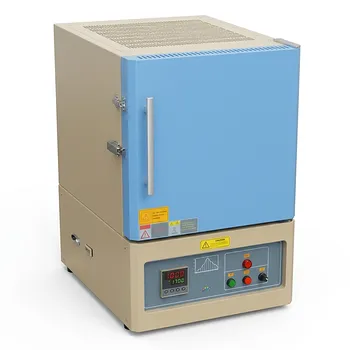
Large Bench Top 1700C High Temperature Muffle Furnace with 19L Chamber for Advanced Material Sintering and Annealing
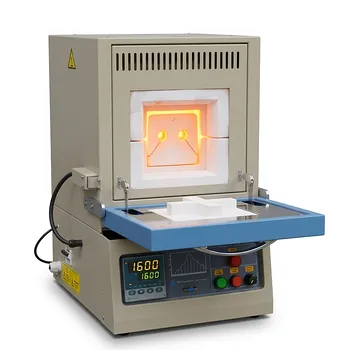
High Temperature Compact Muffle Furnace 1700 C with 30 Segment Programmable Controller and 1.7L Cubic Chamber
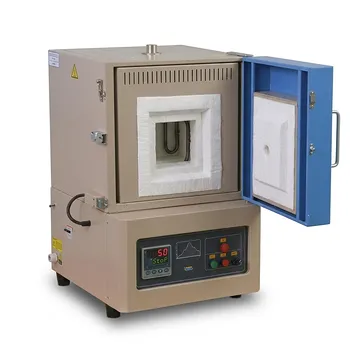
1800°C Bench Top Ultra High Temperature Muffle Furnace with Sapphire Observation Window and Top Feeding Port for Materials Research and Thermal Processing
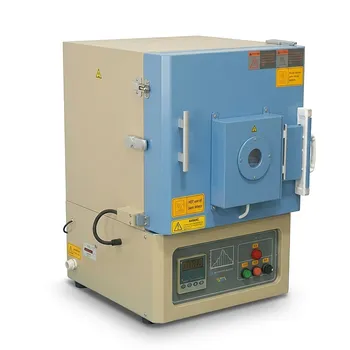
High Temperature Benchtop Muffle Furnace 1500C with 3.6L Chamber and Quartz Observation Window
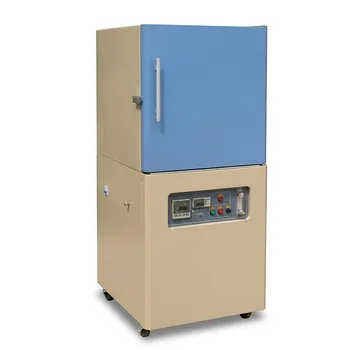
High Temperature Muffle Furnace with Dual Controllers and 36L Large Chamber 1700C Max
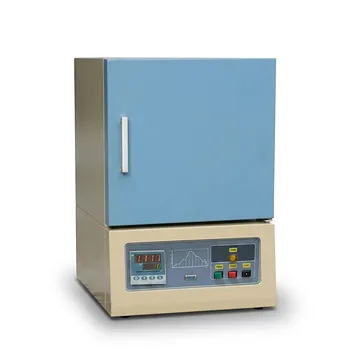
Ultra High Temperature Bench Top Muffle Furnace 1750C Sintering System with Kanthal Super Heating Elements and Precision Digital Control
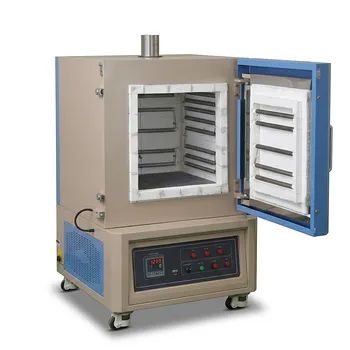
1200C High Temperature 125L Muffle Furnace 5 Side Heating for Large Batch Sintering with Optional Alloy Debinding Chamber
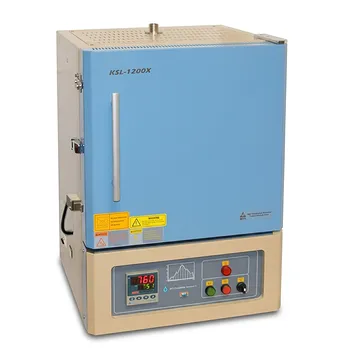
High Temperature 1200C Muffle Furnace 27L Volume 12x12x12 Chamber with Programmable PID Controller for Laboratory Material Science
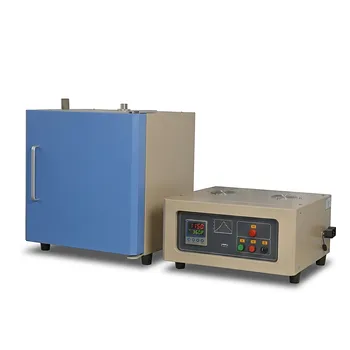
High Temperature Muffle Furnace with Alloy Chamber for Debinding and Sintering Applications
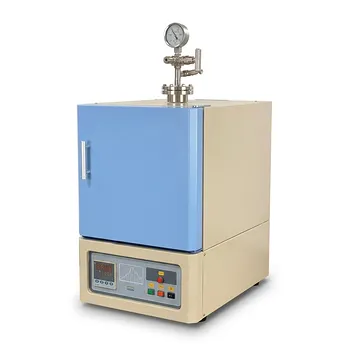
Hybrid High Temperature Muffle and Tube Furnace with 1500C Capability and Vacuum Flange Assembly
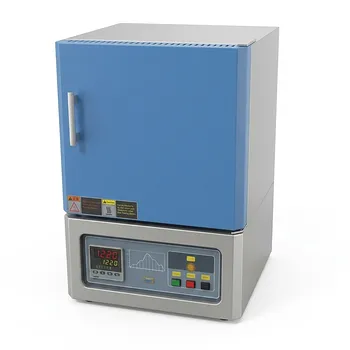
High Temperature Benchtop Muffle Furnace 1700C 10L Chamber Alumina Fiber Insulation MoSi2 Heating Elements
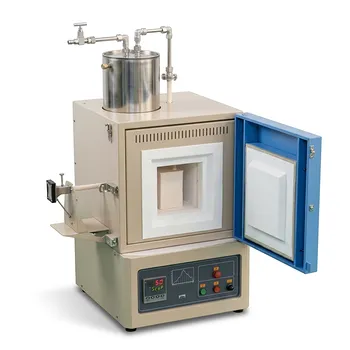
High Temperature Bench Top Muffle Furnace 1700C with Integrated Evaporating Particle Collection and 8x8x8 Alumina Fiber Chamber
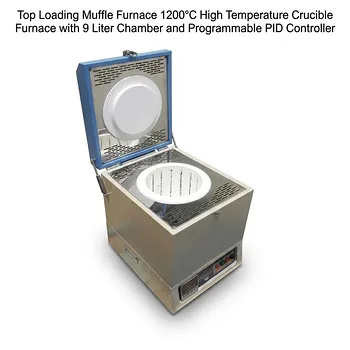
Top Loading Muffle Furnace 1200°C High Temperature Crucible Furnace with 9 Liter Chamber and Programmable PID Controller
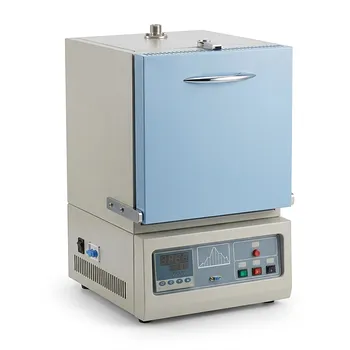
1750C Compact Muffle Furnace 1.7L Ultra High Temperature Laboratory Sintering System for Advanced Ceramics and Material Science Research
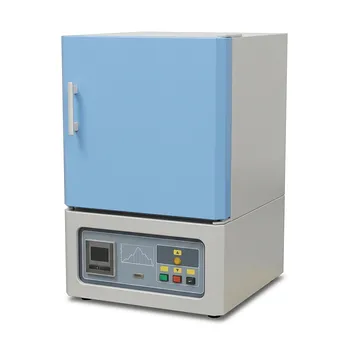
1800C Bench Top Muffle Furnace with Kanthal Super 1900 Heating Elements and 3.6L Alumina Fiber Chamber