Why are corundum crucible boats used for biochar pyrolysis? Ensure Purity and Stability in High-Temp Synthesis
Updated 3 months ago
Corundum (high-alumina) crucible boats are selected for biochar/montmorillonite production because they provide a chemically inert and thermally stable environment that prevents contamination. These specialized containers maintain their structural integrity at extreme temperatures, ensuring that the resulting composite remains pure and the heating remains uniform throughout the pyrolysis process.
Core Takeaway: Corundum boats act as a foundational tool in materials science by offering high thermal conductivity and chemical resistance. Their primary role is to ensure that the intense heat of pyrolysis transforms the biomass without the container reacting with the sample or introducing unwanted metal ions.
The Role of Chemical Inertness in Material Purity
Preventing Unwanted Chemical Reactions
During the pyrolysis of modified rice husk and montmorillonite, the environment becomes chemically volatile as organic compounds break down. Corundum boats are exceptionally stable and do not react with the biomass or the mineral components even at high temperatures. This ensures that the chemical signature of the final biochar/montmorillonite composite is derived solely from the raw materials.
Avoiding Metal Ion Contamination
Maintaining the purity of a composite is critical for its performance in applications like heavy metal adsorption. Unlike lower-quality containers, high-alumina ceramics do not leach metal ions into the sample. This prevents external impurities from interfering with the experimental data or the functional properties of the biochar.
Resistance to Corrosive Activators
In many pyrolysis workflows, aggressive chemical activators like KOH or phosphoric acid are used to increase surface area. Corundum boats can withstand the strong corrosive nature of these molten substances at temperatures exceeding 900°C. This durability makes them more versatile than standard porcelain or quartz boats in complex synthesis environments.
Thermal Properties and Process Efficiency
Structural Integrity at Extreme Temperatures
Pyrolysis often requires sustained heat between 400°C and 1000°C to achieve full carbonization. Corundum boats possess superior high-temperature resistance, allowing them to hold their shape without deformation or cracking. This structural reliability is essential for the precise weighing and collection of materials after the heat treatment is complete.
Achieving Uniform Heating via Thermal Conductivity
Consistent material properties require that every part of the sample reaches the target temperature simultaneously. The excellent thermal conductivity of corundum allows heat from the furnace to transfer efficiently through the boat's walls. This facilitates uniform heating, which is necessary for creating a biochar with a consistently rich pore structure.
Thermal Shock Resistance and Durability
The process of moving samples in and out of a high-temperature tube furnace creates significant thermal stress. High-quality ceramic boats are designed to resist thermal shock, reducing the risk of the container rupturing during rapid temperature changes. This longevity ensures experimental repeatability and reduces the cost of replacing consumables.
Understanding the Trade-offs
Cost vs. Performance
While corundum boats offer the highest level of protection against contamination, they are more expensive than standard porcelain. For low-temperature applications where high purity is not a concern, the cost of high-alumina materials may be difficult to justify. However, for composite synthesis, the risk of a failed experiment usually outweighs the initial investment in quality ceramic.
Material Fatigue Over Time
Despite their robustness, corundum boats are not indestructible and can suffer from gradual material fatigue after dozens of high-temperature cycles. Over time, repeated exposure to corrosive activators may cause surface pitting. Regularly inspecting the boats for signs of wear is necessary to ensure that container degradation does not eventually compromise the sample.
How to Apply This to Your Project
When selecting a vessel for high-temperature synthesis, your choice should align with the chemical complexity of your materials and your purity requirements.
- If your primary focus is maximum sample purity: Use high-purity corundum (high-alumina) boats to ensure no metal ions or silicates leach into your biochar composite.
- If your primary focus is chemical activation with KOH: Opt for corundum over quartz, as alumina provides much better resistance to strong alkaline erosion at temperatures above 700°C.
- If your primary focus is high-throughput, low-temp processing: Consider standard porcelain boats if the temperature stays below 750°C and no aggressive chemical modifiers are present.
Choosing the right container ensures that your experimental results are a true reflection of your material science, not a byproduct of your laboratory hardware.
Summary Table:
| Feature | Key Benefit | Why It Matters |
|---|---|---|
| Chemical Inertness | Prevents Sample Contamination | Ensures the composite's chemical signature remains pure and free of leached ions. |
| Thermal Conductivity | Facilitates Uniform Heating | Promotes consistent carbonization and a well-developed pore structure across the sample. |
| Corrosion Resistance | Withstands Chemical Activators | Resists degradation from aggressive agents like KOH or phosphoric acid at 900°C+. |
| Structural Integrity | High-Temperature Durability | Maintains shape and prevents cracking during sustained heat (up to 1000°C+). |
| Thermal Shock Resistance | Longevity in Tube Furnaces | Reduces the risk of container rupture during rapid temperature changes in laboratory workflows. |
Elevate Your Material Synthesis with THERMUNITS
Precision in pyrolysis requires more than just high-quality consumables—it demands the right thermal environment. THERMUNITS is a leading manufacturer of high-temperature laboratory equipment specifically designed for material science and industrial R&D.
Whether you are synthesizing biochar/montmorillonite composites or developing advanced ceramics, our comprehensive range of thermal solutions—including Tube Furnaces, Muffle Furnaces, Vacuum Systems, and CVD/PECVD equipment—ensures uniform heat distribution and precise process control.
Ready to optimize your heat treatment workflow? Contact us today to discuss how our furnaces and thermal elements can enhance your laboratory's efficiency and research accuracy.
References
- Zhiyong Han, Zixuan Wang. Study on Methylene Blue Adsorption Properties of Biochar/Montmorillonite Composites. DOI: 10.11648/j.earth.20241304.15
Mentioned Products
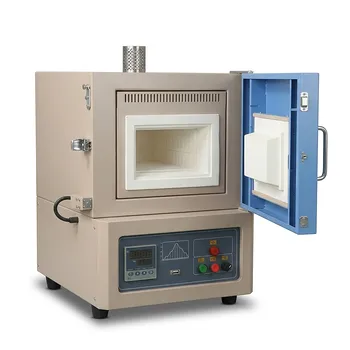
- Anti Corrosive Muffle Furnace with Sintered Corundum Chamber and 1050C Operating Range for Corrosive Material Calcination
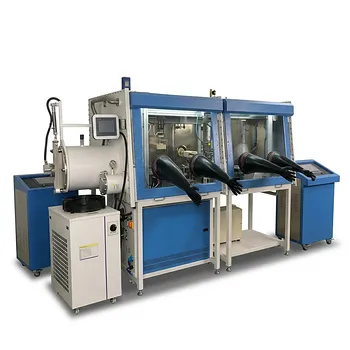
- Automatic 10 Crucible Induction Melting and Casting System with Stirring Function and Glovebox Integration 2000C
People Also Ask
- Why is a corrosion-resistant high-temperature muffle furnace required for the chemical activation of lignocellulose?
- What role does a muffle furnace play in NiMo/gamma-Al2O3 catalyst prep? Optimize Your Synthesis Process
- Why is a high-temperature muffle furnace used for the preliminary calcination of Titanium Dioxide (TiO2) precursors?
- Why must spinel samples be rapidly moved to open air for quenching? Lock in Phase Purity and Structural Integrity
- Why is a muffle furnace necessary for the post-treatment of silicalite-1 zeolite? Unlock Pore Activity & Stability

Tech Team · ThermUnits
Last updated on Jun 02, 2026