Why are high-purity graphite molds required for the loose-sintering of porous aluminum wicks? Precision & Purity Guide
Updated 3 months ago
The selection of high-purity graphite molds is a critical technical requirement for the loose-sintering of porous aluminum wicks. This material provides the necessary thermal stability and non-wetting characteristics to maintain precise dimensional control during the delicate process of natural powder accumulation. By acting as a chemically inert vessel, it ensures the final wick remains free of impurities while facilitating an effortless demolding process.
High-purity graphite serves as the foundational medium for loose-sintering because it combines high-temperature structural integrity with a unique non-stick surface. This allows porous aluminum structures to form naturally under zero external pressure without contamination or deformation.
Ensuring Dimensional Precision and Stability
Superior Thermal Stability at Sintering Temperatures
Loose-sintering of aluminum typically occurs at environments around 600°C, a temperature where many materials begin to expand or lose structural integrity. High-purity graphite possesses excellent high-temperature resistance, ensuring the mold does not deform during the heating cycle. This stability is what guarantees the dimensional accuracy of complex shapes like cylindrical or plate-shaped wicks.
Supporting Zero-Pressure Accumulation
In loose-sintering, aluminum powders are allowed to accumulate naturally without the aid of external mechanical force. Graphite provides a stable heat conduction environment that allows these particles to bond uniformly. Because the mold remains rigid and predictable, the resulting porous structure maintains the exact geometry required for high-performance thermal management.
Chemical Compatibility and Surface Interaction
Non-Wetting Properties for Easy Demolding
One of the most significant advantages of graphite is that it does not wet when in contact with aluminum or copper powders. This lack of adhesion prevents the aluminum from sticking to the mold walls as the particles sinter together. Consequently, the fragile porous samples can be easily demolded without the risk of structural damage or surface tearing.
Elimination of Metallic Impurities
High-purity graphite is selected specifically for its chemical stability and inertness at high temperatures. It prevents the introduction of metallic impurities into the aluminum, which is vital for maintaining the thermal and capillary properties of the wick. This ensures the precise chemical composition of the final component remains untainted by the container material.
Thermal Dynamics and Material Strength
Rapid and Uniform Heat Distribution
Graphite's superior thermal conductivity facilitates rapid and even temperature equalization throughout the sintering chamber. This uniformity is essential for creating a consistent pore structure across the entire length of the aluminum wick. Without uniform heat, the wick could develop structural weak points or inconsistent porosity levels.
High Mechanical Strength Under Stress
While loose-sintering involves zero external pressure, the mold must still withstand the internal stresses of thermal cycling. High-strength graphite maintains its mechanical strength at high temperatures, preventing cracks or failures during repeated use. This durability makes it a reliable medium for both laboratory research and industrial-scale production.
Understanding Technical Constraints and Trade-offs
Susceptibility to Oxidation
The primary limitation of graphite is its sensitivity to oxygen; it will begin to oxidize and degrade at high temperatures if exposed to air. Therefore, sintering processes must be conducted in argon-protected or vacuum environments to preserve the mold's life. Failure to control the atmosphere will result in mold erosion and potential contamination of the aluminum.
Material Fragility and Handling
Despite its strength at high temperatures, graphite is a brittle material that is susceptible to physical impact and chipping. Precision-machined graphite molds require careful handling and storage to prevent surface damage that could be transferred to the sintered part. Regular inspection is necessary to ensure that micro-cracks do not compromise the mold's thermal field stability.
Optimizing Your Sintering Process
To achieve the best results when using high-purity graphite molds for porous aluminum production, consider your primary technical objective:
- If your primary focus is Maximum Purity: Utilize high-purity graphite (99.9% or higher) and conduct all sintering cycles within a high-vacuum or ultra-pure argon environment to eliminate atmospheric contamination.
- If your primary focus is Dimensional Precision: Ensure the graphite is precision-machined with a fine surface finish to minimize mechanical interlocking between the powder and the mold walls.
- If your primary focus is Mold Longevity: Implement slow heating and cooling ramps to reduce thermal shock and prevent the development of stress-induced micro-cracks in the graphite structure.
By leveraging the unique chemical and thermal properties of high-purity graphite, you can produce porous aluminum wicks with the structural integrity and purity required for advanced thermal applications.
Summary Table:
| Key Feature | Benefit for Sintering Aluminum Wicks |
|---|---|
| High Thermal Stability | Maintains precise geometry and dimensional accuracy at 600°C+ |
| Non-Wetting Surface | Prevents adhesion for easy, damage-free demolding of fragile structures |
| Chemical Inertness | Eliminates metallic impurities to preserve capillary performance |
| Thermal Conductivity | Ensures uniform heat distribution for consistent porosity levels |
| Mechanical Strength | Resists thermal cycling stresses during industrial-scale production |
Optimize Your Sintering Excellence with THERMUNITS
Achieving the perfect porous structure requires more than just the right mold—it requires precise thermal control. THERMUNITS is a leading manufacturer of high-temperature laboratory equipment, providing the advanced systems needed for successful loose-sintering in vacuum or argon-protected environments.
From Vacuum and Atmosphere Furnaces to CVD/PECVD systems and Tube Furnaces, we offer comprehensive thermal processing solutions tailored for material science and industrial R&D. Our equipment ensures the structural integrity and purity your aluminum wicks demand.
Ready to elevate your lab's efficiency? Contact our engineering experts today to find the ideal heat treatment solution for your research and production needs.
References
- Yanbo Cai, Bohua Duan. Effect of Copper Content on the Microstructure and Properties of the Sintered Porous Aluminum Wick. DOI: 10.3390/met14040386
Mentioned Products
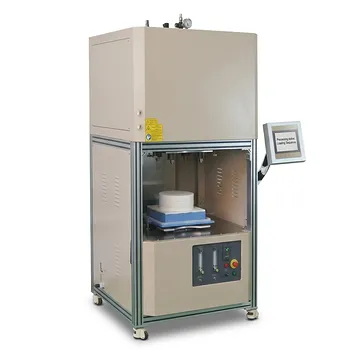
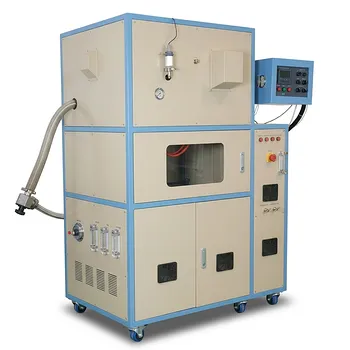
- High Temperature Vacuum Graphitization Chamber Furnace 2800C Graphite Heating Elements Bottom Loading
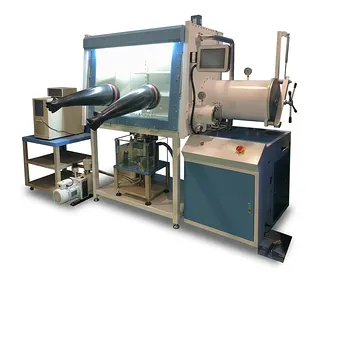
- High Temperature Induction Melting System with Integrated Ultra High Purity Glove Box for Metallic Alloy Processing
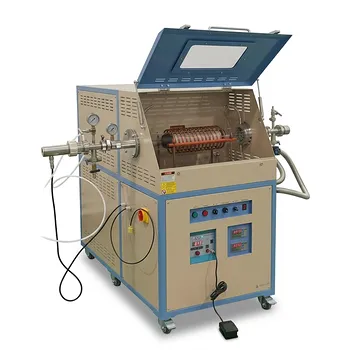
- Ultra High Temperature 2300C Induction Heated Graphite Tube Furnace with Infrared Control
- High Temperature Vertical Atmosphere Controlled Furnace with Automatic Bottom Loading and 1700°C Capacity for Advanced Material Research
People Also Ask
- Why is a high-temperature graphitization furnace needed for ZrC/SiC/C ceramic aerogels? Master UHTC Synthesis at 1700°C
- What conditions does a graphitization furnace provide for pitch-based carbon? Achieve Superior Crystalline Quality
- How does a high-temp furnace enhance thermal conductivity of graphene & CNT films? Superior Material Graphitization
- Why is an ultra-high temperature graphitization furnace required for coal-based graphite? Unlock Crystalline Performance
- What core technical conditions must an ultra-high temperature graphitization furnace meet? Achieve 2800°C Peak Performance

Tech Team · ThermUnits
Last updated on Jun 02, 2026
Related Products
High Temperature Vacuum Graphitization Chamber Furnace 2800C Graphite Heating Elements Bottom Loading
High Temperature Induction Melting System with Integrated Ultra High Purity Glove Box for Metallic Alloy Processing
Ultra High Temperature 2300C Induction Heated Graphite Tube Furnace with Infrared Control