Why is an ultra-high temperature graphitization furnace required for coal-based graphite? Unlock Crystalline Performance
Updated 3 months ago
The necessity of an ultra-high temperature graphitization furnace lies in its ability to provide the extreme thermal energy required to force disordered carbon atoms into an ordered crystalline lattice. These furnaces reach temperatures between 2500°C and 3000°C, which are essential to overcome the atomic diffusion energy barriers found in coal-based precursors. Without this intense heat, the organic macromolecules in coal cannot reorganize into the long-range ordered stacking structures required for high-performance graphite and subsequent graphene exfoliation.
Core Takeaway: Ultra-high temperature furnaces provide the physical driving force to transform amorphous coal-based carbon into crystalline graphite by eliminating lattice defects and contracting interlayer spacing. This structural reorganization is impossible at lower temperatures where the energy is insufficient to trigger atomic rearrangement.
The Thermodynamic Necessity of Extreme Heat
Overcoming Atomic Diffusion Barriers
Coal-based precursors consist of complex, disordered organic macromolecules that are thermodynamically "locked" in an amorphous state. Ultra-high temperatures (UHT) provide the kinetic energy necessary for carbon atoms to migrate across the lattice and settle into their most stable, ordered positions.
Structural Reorganization into Aromatic Layers
At temperatures reaching 2800°C, the carbon atoms undergo a fundamental shift from a random arrangement to ordered, layered aromatic structures. This process is the foundation for creating high-quality graphite, as it establishes the long-range alignment of carbon sheets.
Contraction of Interlayer Spacing
A critical metric of graphitization is the contraction of the interlayer spacing ($d_{002}$). As the furnace temperature exceeds 2500°C, these layers tighten and the grain sizes ($L_a$ and $L_c$) increase significantly, which directly enhances the material's electrical and thermal conductivity.
Environmental Control and Material Integrity
Protection via Inert Atmospheres
Operating at such extreme temperatures requires a strictly controlled environment using high-purity Argon or vacuum conditions. This prevents the carbon source from reacting with oxygen, which would result in the immediate oxidation and loss of the material.
The Role of Sacrificial Deoxidizers
In many high-temperature setups, a graphite crucible acts as a sacrificial deoxidizer to maintain a reducing atmosphere. This ensures that any residual oxygen reacts with the crucible rather than the coal-based precursor, preserving the integrity of the carbon crystals being formed.
Elimination of Lattice Defects
Extreme heat is the only effective way to "heal" or eliminate lattice defects that occur during the initial stages of carbonization. By deep annealing at 3000°C, the furnace repairs the carbon framework, resulting in a product with metal-level conductivity and superior stability.
Understanding the Trade-offs and Limitations
High Energy Consumption and Cost
The primary drawback of UHT graphitization is the massive energy requirement and the specialized cooling systems needed to manage the heat. These furnaces are expensive to operate and maintain, making the process viable only for high-value carbon products.
The Risk of Structural Collapse
Subjecting raw coal precursors directly to ultra-high temperatures can cause violent decomposition and structural failure. To avoid this, materials must undergo a "pre-carbonization" phase at lower temperatures (around 600°C) to form a stable mesophase coke before entering the graphitization stage.
Processing Time vs. Quality
While higher temperatures yield better crystals, the duration of the soak time also impacts the final quality. Finding the balance between maximum temperature and the time spent at that temperature is a complex optimization problem for every specific precursor.
How to Apply This to Your Project
Making the Right Choice for Your Goal
- If your primary focus is producing high-quality graphene: You must utilize temperatures of at least 2800°C to ensure the degree of graphitization is high enough to allow for easy exfoliation.
- If your primary focus is surface modification for battery anodes: A lower-temperature atmosphere furnace may be sufficient to induce the necessary functional groups and micropore defects for SEI film optimization.
- If your primary focus is stabilizing raw coal tar: Start with a medium-temperature (600°C) pre-carbonization step in a tube furnace to build a structural foundation before attempting graphitization.
- If your primary focus is maximizing electrical conductivity: Prioritize a deep annealing stage at 3000°C under argon protection to fully repair the carbon lattice and minimize resistance.
Selecting the appropriate furnace environment and temperature range is the single most important factor in determining the final crystalline structure and performance of coal-based carbon materials.
Summary Table:
| Parameter | Temperature Range | Key Transformation/Result |
|---|---|---|
| Pre-carbonization | 600°C | Formation of stable mesophase coke |
| Graphitization | 2500°C - 3000°C | Atomic migration to ordered crystalline lattice |
| Interlayer Spacing | > 2500°C | Contraction of $d_{002}$ and grain size expansion |
| Lattice Healing | ~ 3000°C | Elimination of defects; metal-level conductivity |
| Environment | Controlled | Inert Argon or Vacuum to prevent oxidation |
Elevate Your Carbon Research with THERMUNITS Precision
As a leading manufacturer of high-temperature laboratory equipment for material science and industrial R&D, THERMUNITS understands that reaching 3000°C is just the beginning. Whether you are developing coal-based graphene, optimizing battery anodes, or exploring advanced carbon materials, our thermal solutions provide the stability and control your project demands.
Our Comprehensive Thermal Processing Solutions Include:
- Furnaces: Muffle, Vacuum, Atmosphere, Tube, Rotary, and Hot Press Furnaces.
- Advanced Systems: CVD/PECVD systems, Dental Furnaces, and Electric Rotary Kilns.
- Specialized Equipment: Vacuum Induction Melting (VIM) furnaces and high-quality Thermal Elements.
Don't let equipment limitations stall your innovation. Let our experts help you select the ideal furnace configuration to achieve perfect graphitization and superior material integrity.
Contact THERMUNITS Today to Request a Quote
References
- Lanhao Wang, Chuanxiang Zhang. Coal-based graphene derived from different coal ranks: exceptional sodium storage performance in sodium-ion batteries. DOI: 10.1039/d4ra05104a
Mentioned Products
- Ultra High Temperature 2300C Induction Heated Graphite Tube Furnace with Infrared Control
- High Temperature Vacuum Graphitization Chamber Furnace 2800C Graphite Heating Elements Bottom Loading
- Ultra High Temperature Bench Top Muffle Furnace 1750C Sintering System with Kanthal Super Heating Elements and Precision Digital Control
- High Temperature Ultrafast Heating Pressing Furnace 2900C Max 100kgf Rapid Thermal Processing System
- Ultra High Temperature Induction Heated Vacuum Furnace with Molten Salt Electrolysis Capability and 3000 Degree Precision Control
People Also Ask
- How does a high-temp furnace enhance thermal conductivity of graphene & CNT films? Superior Material Graphitization
- What conditions does a graphitization furnace provide for pitch-based carbon? Achieve Superior Crystalline Quality
- What core technical conditions must an ultra-high temperature graphitization furnace meet? Achieve 2800°C Peak Performance
- Why is a high-temperature graphitization furnace needed for ZrC/SiC/C ceramic aerogels? Master UHTC Synthesis at 1700°C
- What role does an industrial high-temperature tube furnace play in spray pyrolysis? Master Layered Oxide Synthesis.

Tech Team · ThermUnits
Last updated on Jun 02, 2026
Related Products
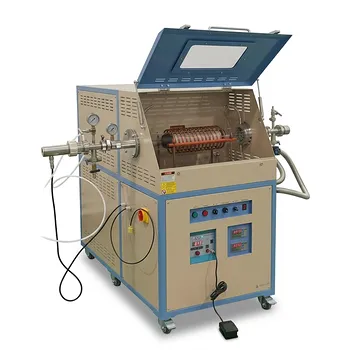
Ultra High Temperature 2300C Induction Heated Graphite Tube Furnace with Infrared Control
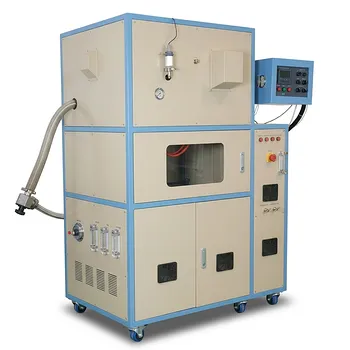
High Temperature Vacuum Graphitization Chamber Furnace 2800C Graphite Heating Elements Bottom Loading
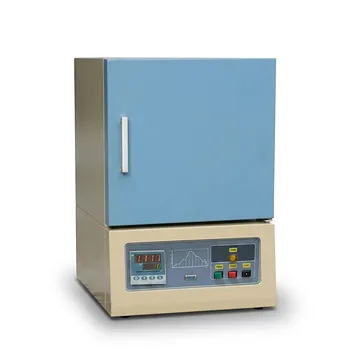
Ultra High Temperature Bench Top Muffle Furnace 1750C Sintering System with Kanthal Super Heating Elements and Precision Digital Control
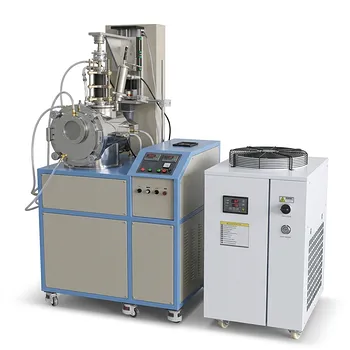
High Temperature Ultrafast Heating Pressing Furnace 2900C Max 100kgf Rapid Thermal Processing System
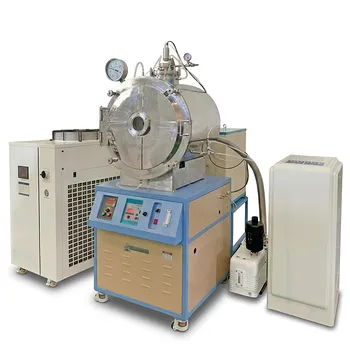
Ultra High Temperature Induction Heated Vacuum Furnace with Molten Salt Electrolysis Capability and 3000 Degree Precision Control
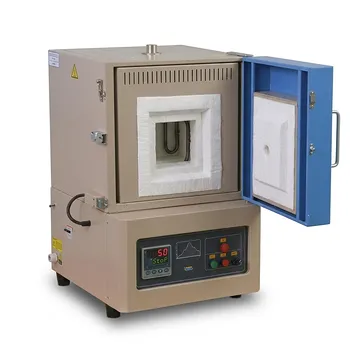
1800°C Bench Top Ultra High Temperature Muffle Furnace with Sapphire Observation Window and Top Feeding Port for Materials Research and Thermal Processing
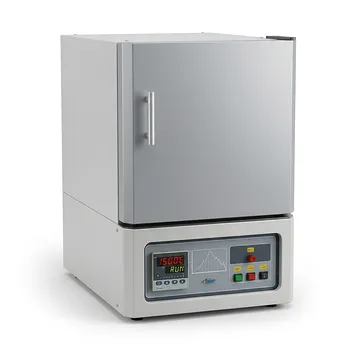
High Temperature 1500C Benchtop Muffle Furnace 3.6L Alumina Fiber Chamber Programmable Controller Sintering Annealing Carbonization Thermal Processing System
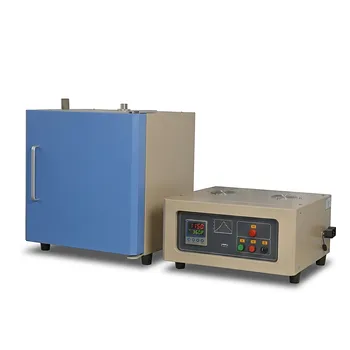
High Temperature Muffle Furnace with Alloy Chamber for Debinding and Sintering Applications
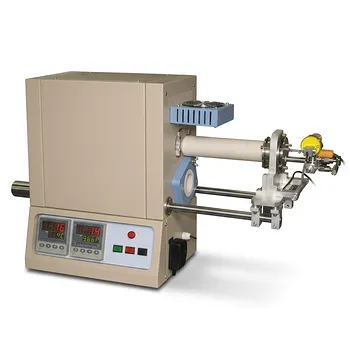
High Temperature Tube Furnace 1500C with Sliding Flanges and 50mm OD for Rapid Thermal Processing Fast Heating and Cooling
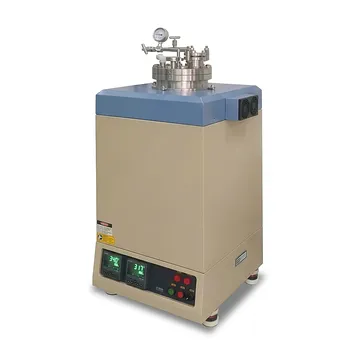
High Temperature 1000C Vacuum Furnace with 8 Inch ID Chamber for Material Sintering and Research Annealing
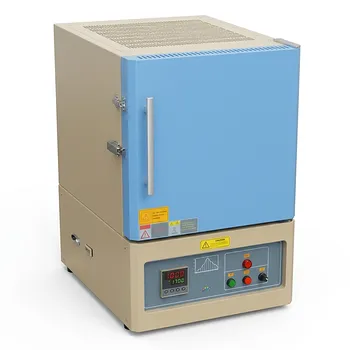
Large Bench Top 1700C High Temperature Muffle Furnace with 19L Chamber for Advanced Material Sintering and Annealing
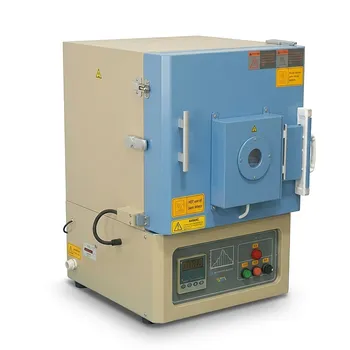
High Temperature Benchtop Muffle Furnace 1500C with 3.6L Chamber and Quartz Observation Window
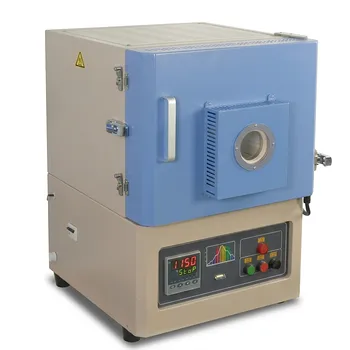
High Temperature Benchtop Muffle Furnace with Quartz Observation Window for Thermal Imaging and Material Analysis
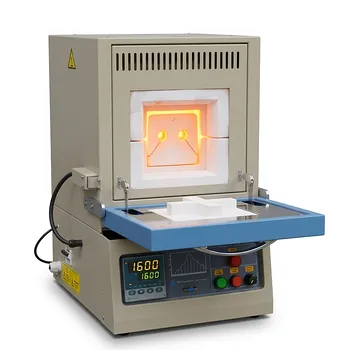
High Temperature Compact Muffle Furnace 1700 C with 30 Segment Programmable Controller and 1.7L Cubic Chamber

High Temperature 1700C Tube Furnace with High Vacuum Turbomolecular Pump System and Multi Channel Mass Flow Controller Gas Mixer
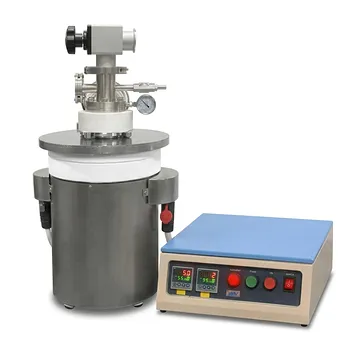
1100C High Temperature Vacuum Crucible Furnace with Quartz Chamber for Thermal Processing and Sintering
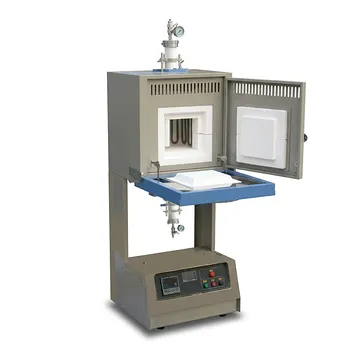
Vertical Hybrid High Temperature Furnace 1500C Alumina Tube SOFC Fuel Cell Testing Laboratory Heat Treatment Research Equipment
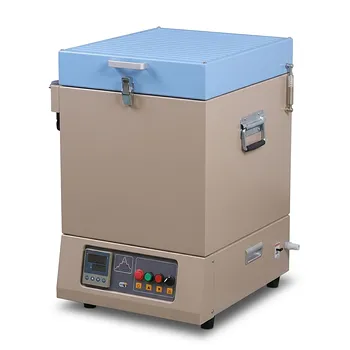
High Temperature Vertical Crucible Furnace with 22L Heating Chamber and 1200C Maximum Temperature
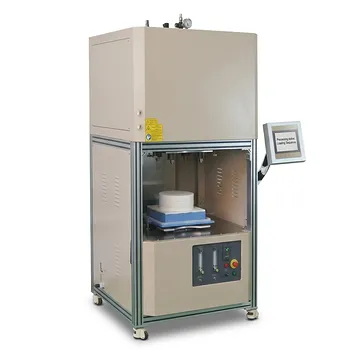
High Temperature Vertical Atmosphere Controlled Furnace with Automatic Bottom Loading and 1700°C Capacity for Advanced Material Research
