How does a high-temp furnace enhance thermal conductivity of graphene & CNT films? Superior Material Graphitization
Updated 3 months ago
To enhance the thermal conductivity of graphene and carbon nanotube (CNT) hybrid films, ultra-high temperature graphitization furnaces provide a critical environment for structural reorganization at the atomic level. These furnaces generate extreme heat—often reaching 2800°C or higher—which serves as the physical driving force to repair carbon lattice defects and transform disordered carbon into a highly ordered graphite crystalline structure. This process minimizes phonon scattering and creates seamless bridges between the graphene and CNT components, resulting in superior in-plane thermal conductivity (IP-TC).
The core function of an ultra-high temperature furnace is to provide the thermal energy necessary to overcome the activation energy for carbon atom rearrangement. By evolving amorphous structures into crystalline lattices, the furnace removes the internal resistance that hinders heat flow.
The Mechanism of Structural Transformation
Repairing the Carbon Lattice
At temperatures exceeding 2000°C, the thermal energy is sufficient to vibrate carbon atoms back into their ideal hexagonal positions. This process repairs lattice defects and removes residual oxygen-containing functional groups that frequently remain in precursor materials like reduced graphene oxide.
Increasing Grain Size and Order
The furnace promotes the growth of the graphitic grains, measurable by the increase in grain size parameters ($L_a$ and $L_c$). As grain sizes increase, the number of grain boundaries—which act as barriers to heat-carrying phonons—is significantly reduced.
Contraction of Interlayer Spacing
Under extreme heat, the disordered carbon layers undergo a fundamental contraction of their interlayer spacing ($d_{002}$). This tighter, more ordered stacking facilitates a more stable environment for heat transfer across the film's thickness and plane.
Enhancing the Hybrid Interface
Inducing Covalent Bonding
One of the unique benefits of ultra-high temperature treatment in hybrid films is the potential for covalent bonding between carbon nanotubes and graphene layers. This creates a "welded" interface that allows phonons to pass between the two materials without the significant loss of energy typical of weak van der Waals forces.
Eliminating Phonon Scattering
Phonons are the primary carriers of heat in carbon-based materials. By creating a highly ordered crystalline state, the furnace removes the "atomic roadblocks" that cause phonons to scatter, thereby maximizing the mean free path of these carriers.
Homogeneity Through Uniform Thermal Fields
Modern graphitization furnaces often use graphite heating elements and specialized thermal fields to ensure uniform heat distribution. This uniformity is vital for ensuring that the entire hybrid film achieves consistent material performance and defect repair.
Understanding the Trade-offs
High Energy and Operational Costs
Maintaining a stable environment at 3000°C requires massive energy consumption and specialized argon gas protection or vacuum systems. These requirements increase the cost per unit, making the process more suitable for high-end applications than mass-market commodities.
Material Shrinkage and Delamination
The intense heat that drives crystallization also causes the material to contract. If the transition from amorphous carbon to graphite occurs too rapidly or unevenly, it can lead to dimensional shrinkage or internal stress, potentially causing delamination in hybrid films.
Increased Material Brittleness
While graphitization improves thermal and electrical performance, it often renders the material less flexible. As the film becomes more crystalline, it may lose some of its mechanical ductility, which could be a drawback for applications requiring flexible electronics.
How to Apply This to Your Project
Understanding the role of graphitization allows you to calibrate your processing parameters based on your specific performance requirements.
- If your primary focus is Maximum Thermal Conductivity: Target furnace temperatures between 2800°C and 3000°C to ensure full graphitization and the deepest possible repair of lattice defects.
- If your primary focus is Chemical Modification or Surface Grafting: Use a lower-temperature tube furnace (850°C–1000°C) to activate surface sites without inducing full structural crystalline transformation.
- If your primary focus is Mechanical Stability and Machinability: Optimize the cooling rate post-graphitization to manage the transition from amorphous carbon to graphite, which can help in balancing hardness and brittle behavior.
The ultra-high temperature graphitization furnace is the essential tool for turning raw carbon precursors into high-performance thermal management solutions by perfecting the atomic architecture of the material.
Summary Table:
| Mechanism | Impact on Thermal Conductivity |
|---|---|
| Lattice Repair | Removes defects and oxygen groups to reduce resistance. |
| Grain Growth | Increases grain size to minimize boundary-induced phonon scattering. |
| Covalent Bonding | Creates "welded" interfaces between graphene and CNTs for energy transfer. |
| Layer Contraction | Minimizes interlayer spacing ($d_{002}$) for stable heat flow. |
Elevate Your Material Research with THERMUNITS
As a leading manufacturer of high-temperature laboratory equipment, THERMUNITS provides the precision thermal processing solutions needed for cutting-edge material science and industrial R&D. Our comprehensive range—including Muffle, Vacuum, Atmosphere, Tube, Rotary, and Hot Press furnaces, CVD/PECVD systems, electric rotary kilns, and Vacuum Induction Melting (VIM) furnaces—is engineered to deliver the uniform thermal fields essential for perfecting graphene and CNT architectures.
Unlock the full potential of your carbon nano-materials with expert-grade heat treatment.
Contact THERMUNITS for Custom Thermal Solutions
References
- Yu-Ze Xing, Cheng‐Meng Chen. Revealing the essential effect mechanism of carbon nanotubes on the thermal conductivity of graphene film. DOI: 10.1039/d3tc03840h
Mentioned Products
- Ultra High Temperature 2300C Induction Heated Graphite Tube Furnace with Infrared Control
- High Temperature Vacuum Graphitization Chamber Furnace 2800C Graphite Heating Elements Bottom Loading
- Ultra High Temperature Bench Top Muffle Furnace 1750C Sintering System with Kanthal Super Heating Elements and Precision Digital Control
- High Temperature Ultrafast Heating Pressing Furnace 2900C Max 100kgf Rapid Thermal Processing System
- Ultra High Temperature Induction Heated Vacuum Furnace with Molten Salt Electrolysis Capability and 3000 Degree Precision Control
People Also Ask
- What conditions does a graphitization furnace provide for pitch-based carbon? Achieve Superior Crystalline Quality
- Why is an ultra-high temperature graphitization furnace required for coal-based graphite? Unlock Crystalline Performance
- What core technical conditions must an ultra-high temperature graphitization furnace meet? Achieve 2800°C Peak Performance
- Why is a high-temperature graphitization furnace needed for ZrC/SiC/C ceramic aerogels? Master UHTC Synthesis at 1700°C
- What role does an industrial high-temperature tube furnace play in spray pyrolysis? Master Layered Oxide Synthesis.

Tech Team · ThermUnits
Last updated on Jun 03, 2026
Related Products
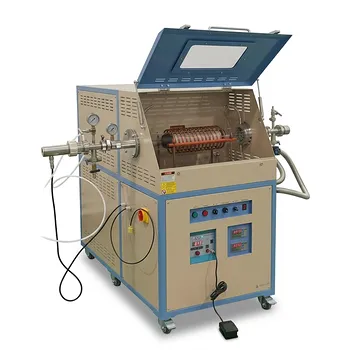
Ultra High Temperature 2300C Induction Heated Graphite Tube Furnace with Infrared Control
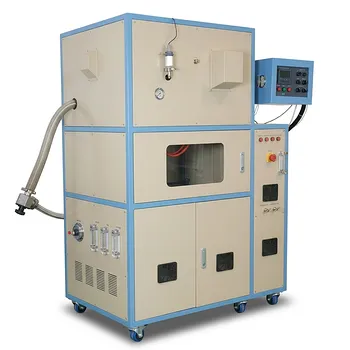
High Temperature Vacuum Graphitization Chamber Furnace 2800C Graphite Heating Elements Bottom Loading
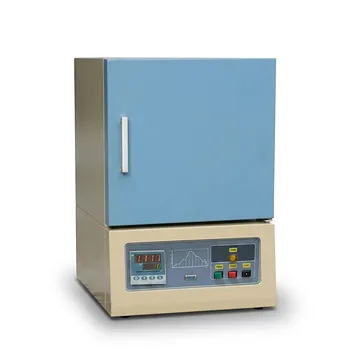
Ultra High Temperature Bench Top Muffle Furnace 1750C Sintering System with Kanthal Super Heating Elements and Precision Digital Control
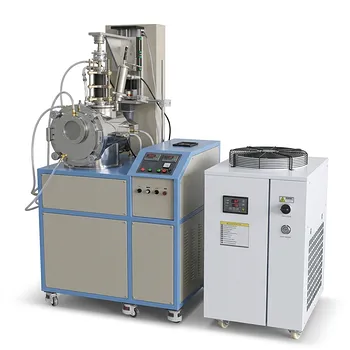
High Temperature Ultrafast Heating Pressing Furnace 2900C Max 100kgf Rapid Thermal Processing System
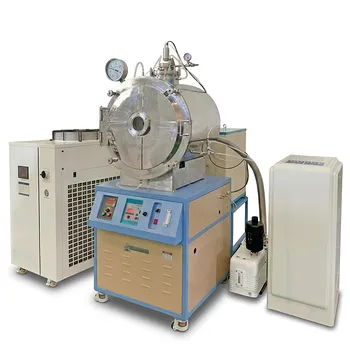
Ultra High Temperature Induction Heated Vacuum Furnace with Molten Salt Electrolysis Capability and 3000 Degree Precision Control
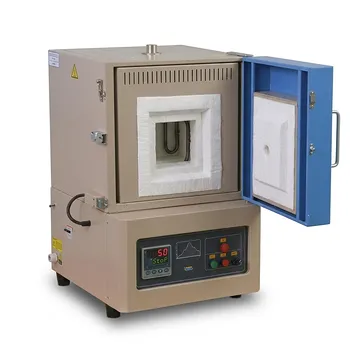
1800°C Bench Top Ultra High Temperature Muffle Furnace with Sapphire Observation Window and Top Feeding Port for Materials Research and Thermal Processing
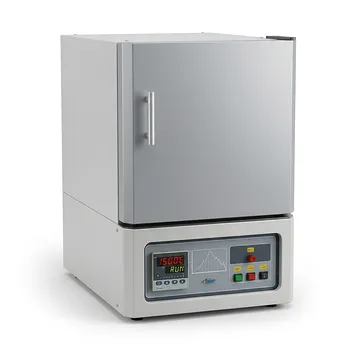
High Temperature 1500C Benchtop Muffle Furnace 3.6L Alumina Fiber Chamber Programmable Controller Sintering Annealing Carbonization Thermal Processing System
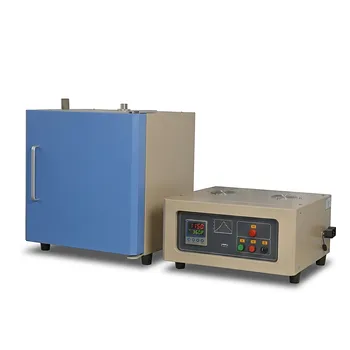
High Temperature Muffle Furnace with Alloy Chamber for Debinding and Sintering Applications
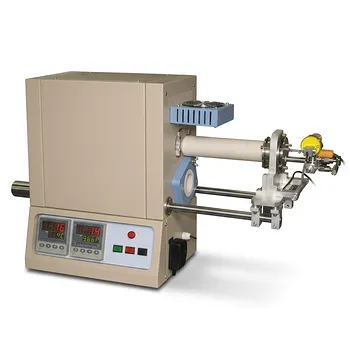
High Temperature Tube Furnace 1500C with Sliding Flanges and 50mm OD for Rapid Thermal Processing Fast Heating and Cooling
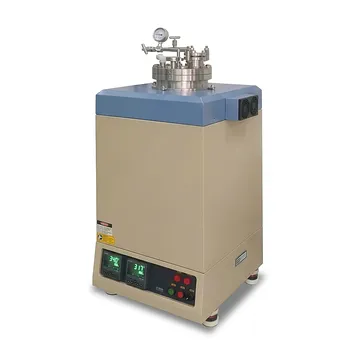
High Temperature 1000C Vacuum Furnace with 8 Inch ID Chamber for Material Sintering and Research Annealing
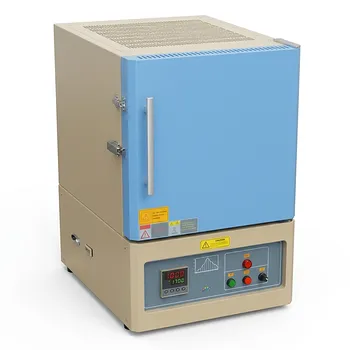
Large Bench Top 1700C High Temperature Muffle Furnace with 19L Chamber for Advanced Material Sintering and Annealing
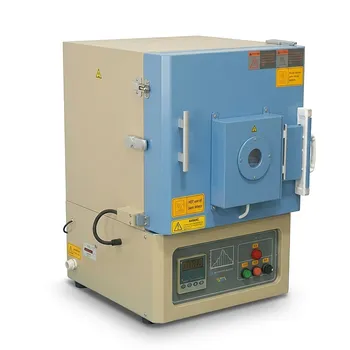
High Temperature Benchtop Muffle Furnace 1500C with 3.6L Chamber and Quartz Observation Window
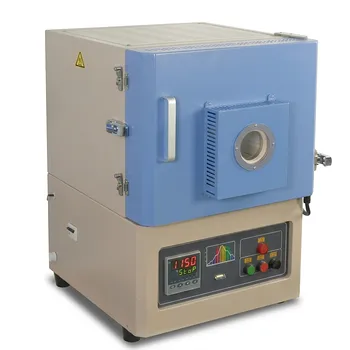
High Temperature Benchtop Muffle Furnace with Quartz Observation Window for Thermal Imaging and Material Analysis
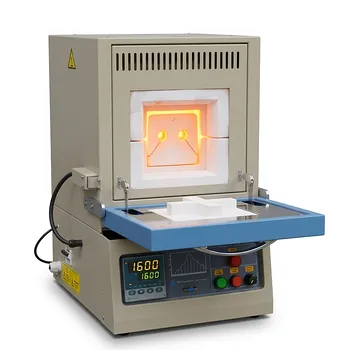
High Temperature Compact Muffle Furnace 1700 C with 30 Segment Programmable Controller and 1.7L Cubic Chamber

High Temperature 1700C Tube Furnace with High Vacuum Turbomolecular Pump System and Multi Channel Mass Flow Controller Gas Mixer
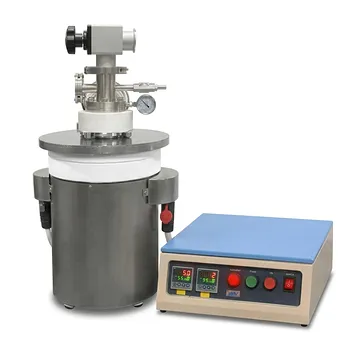
1100C High Temperature Vacuum Crucible Furnace with Quartz Chamber for Thermal Processing and Sintering
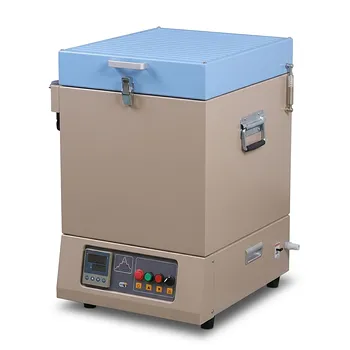
High Temperature Vertical Crucible Furnace with 22L Heating Chamber and 1200C Maximum Temperature
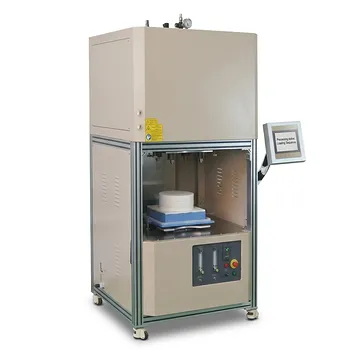
High Temperature Vertical Atmosphere Controlled Furnace with Automatic Bottom Loading and 1700°C Capacity for Advanced Material Research

1750°C High Temperature Benchtop Vacuum Atmosphere Tube Furnace with Kanthal Super 1800 Heating Elements and 60mm Alumina Processing Tube