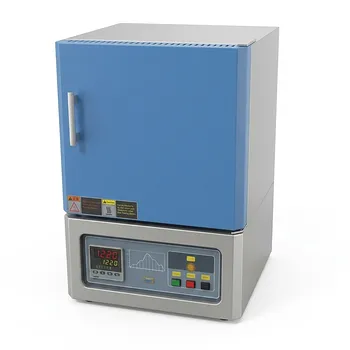
Why are resistive wire and ceramic thermal elements preferred for laboratory and analytical instruments? Precision & Purity
Updated 5 months ago
Resistive wire and ceramic thermal elements are the industry standard for laboratory instrumentation due to their rapid response times, precision, and exceptional cleanliness. These components provide the tight resistance tolerances—typically within ±5–8%—required for the high-degree predictability needed in scientific testing. By minimizing thermal lag and eliminating chemical outgassing, they ensure that sensitive analytical samples remain untainted during rigorous heating cycles.
These heating elements provide the specialized balance of low thermal inertia and high purity required for modern laboratory environments. They enable the fast, repeatable temperature cycling necessary for valid experimental results while protecting samples from contamination.
Performance Drivers: Precision and Speed
The primary reason these elements dominate the laboratory market is their ability to change and maintain temperature with surgical precision.
The Impact of Low Thermal Inertia
Thermal inertia refers to how quickly a material responds to changes in power input. Resistive wire and ceramic elements have very low mass relative to their heat output, meaning they heat up and cool down almost instantly. This characteristic is vital for "ramping" temperatures quickly during complex chemical reactions.
Precision Through Tight Resistance Tolerances
In a laboratory, predictability is everything. These elements are manufactured with tight resistance tolerances, typically within ±5–8%. This allows instrument controllers to calculate heat output accurately, ensuring that an incubator or furnace maintains a stable, uniform temperature without overshooting the target.
Maintaining Analytical Integrity
Beyond thermal performance, the physical properties of the materials used are critical for preventing experimental interference.
Clean and Emission-Free Operation
Many heating methods can release microscopic particles or vapors when stressed. Ceramic and resistive wire elements offer clean, emission-free operation, which is a non-negotiable requirement when working with sensitive biological or chemical samples. This prevents sample contamination that could otherwise invalidate months of research.
Suitability for Sensitive Environments
These elements are specifically engineered for use in incubators and furnaces where air quality and temperature stability are paramount. Their design ensures that the heat is transferred efficiently without the risk of oxidation or degradation of the heating element itself. This longevity reduces the risk of equipment failure during long-term experiments.
Understanding the Trade-offs
While these elements are superior for precision work, they are not without limitations that engineers must account for.
Mechanical Fragility
Ceramic elements, while thermally excellent, are brittle and sensitive to mechanical shock. Dropping an instrument or subjecting it to heavy vibration can cause the ceramic substrate to crack or shatter.
Specialized Control Requirements
Because these elements respond so quickly, they require sophisticated PID controllers to prevent rapid "hunting" for the target temperature. Without high-quality control electronics, the low thermal inertia can lead to unstable oscillations rather than a smooth temperature curve.
How to Apply This to Your Project
When selecting a thermal solution for your laboratory or analytical instrument, align the element type with your specific performance requirements.
- If your primary focus is rapid thermal cycling: Prioritize elements with the lowest possible mass to take full advantage of low thermal inertia for fast ramp rates.
- If your primary focus is sample purity: Select high-grade ceramic-encapsulated elements to ensure zero outgassing or particle shedding during high-heat phases.
- If your primary focus is budget-sensitive stability: Standard resistive wire elements provide the best balance of tight ±5-8% tolerance and cost-effectiveness for steady-state applications like basic incubators.
By prioritizing these specialized thermal elements, you ensure that your instrumentation provides the repeatable, untainted data required for rigorous scientific inquiry.
Summary Table:
| Feature | Advantage | Laboratory Impact |
|---|---|---|
| Low Thermal Inertia | Rapid heating and cooling | Enables fast temperature ramp rates |
| Tight Tolerance (±5-8%) | High predictability | Ensures stable, uniform heat control |
| Zero Outgassing | Clean, emission-free heating | Prevents contamination of sensitive samples |
| Ceramic Substrate | High purity insulation | Ideal for high-temp furnaces and incubators |
Optimize Your Lab’s Precision with THERMUNITS
Ensure the integrity of your research with high-performance thermal solutions from THERMUNITS, a leading manufacturer of high-temperature laboratory equipment. We specialize in providing the material science and industrial R&D sectors with advanced systems including Muffle, Vacuum, Tube, and Rotary furnaces, CVD/PECVD systems, and specialized Thermal Elements. Our components are engineered to deliver the rapid response, surgical precision, and high purity required for your most sensitive experiments.
Don't let thermal lag or sample contamination compromise your results. Let our experts help you select or customize the perfect heating solution for your application.
Contact THERMUNITS Today for a Professional Consultation
Mentioned Products
- Molybdenum Disilicide MoSi2 Thermal Elements Electric Furnace Heating Element High Temperature Resistance
- Silicon Carbide SiC Thermal Heating Elements for Industrial Electric Furnaces
- High Temperature Horizontal Electrical Assisted Sintering Furnace with 3KW Programmable Power Source for Advanced Ceramic Materials
- High Temperature Benchtop Muffle Furnace 1700C 10L Chamber Alumina Fiber Insulation MoSi2 Heating Elements
People Also Ask
- What role do MoSi2 heating elements play in high-temperature smelting? Precision for Ferronickel & Slag Research
- Why is the selection of high-performance thermal elements critical for high-temperature testing? Ensure Data Integrity.
- How do electric thermal elements compare to combustion-based heating systems? Maximize Your Lab's Energy Efficiency
- What are the primary functions of an electric resistance furnace? Enhancing Precision in Industrial Thermal Processing
- How do optimized control schemes for electric resistance furnaces ensure accuracy? Enhance Heat Treatment Stability.

Tech Team · ThermUnits
Last updated on Apr 14, 2026
Related Products
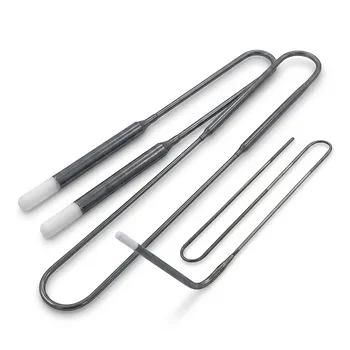
Molybdenum Disilicide MoSi2 Thermal Elements Electric Furnace Heating Element High Temperature Resistance
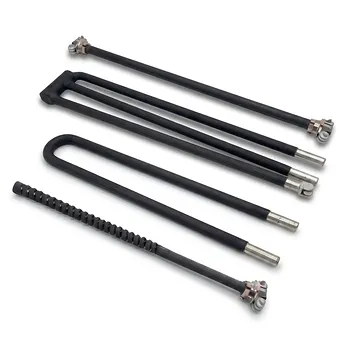
Silicon Carbide SiC Thermal Heating Elements for Industrial Electric Furnaces
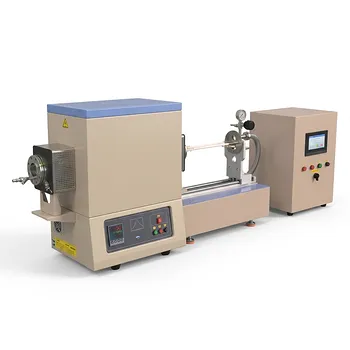
High Temperature Horizontal Electrical Assisted Sintering Furnace with 3KW Programmable Power Source for Advanced Ceramic Materials