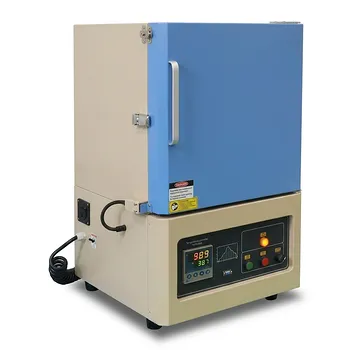
Why does LiCoO2 regeneration require a 13-hour Muffle Furnace treatment? Achieve Perfect Lattice Reorganization.
Updated 3 months ago
The regeneration of Lithium Cobalt Oxide (LiCoO2) relies on high-temperature solid-phase synthesis. This 13-hour process at 950 °C is required to overcome significant kinetic barriers that prevent the material from returning to its optimal state. By utilizing a high-performance muffle furnace, the system provides a stable thermal field that allows the lithium and cobalt sources to fully diffuse and reorganize into a restored layered crystalline structure.
Core Takeaway: A 13-hour heat treatment at 950 °C provides the essential activation energy and duration required for atoms to migrate across solid boundaries, ensuring the complete lattice reorganization necessary for the material's electrochemical performance.
Overcoming Kinetic Barriers via Thermal Energy
The Necessity of High Activation Energy
Solid-phase synthesis is inherently limited by the kinetic barriers of the raw materials, specifically the lithium source (Li2CO3) and cobalt source (Co3O4).
The muffle furnace must maintain a precise 950 °C environment to provide the activation energy required for these oxides to react in their solid state. Without this intense thermal energy, the chemical bonds in the precursor materials would remain intact, preventing the formation of the desired compound.
Driving Solid-State Diffusion
Unlike liquid-phase reactions, solid-state reactions depend on the migration of cations across the contact points of solid particles.
A continuous 13-hour window is critical because the diffusion rate of lithium and cobalt ions is relatively slow. The extended time ensures that these ions can travel through the material bulk to reach an equilibrium state, preventing "dead zones" of unreacted precursors.
Restoring the Layered Crystalline Structure
Achieving Lattice Reorganization
The primary goal of regeneration is to restore the specific layered crystalline structure of LiCoO2, which is often degraded in spent batteries.
During the heat treatment, the atoms undergo lattice reorganization, moving from a disordered state into a highly ordered hexagonal framework. This structural precision is what allows lithium ions to move freely in and out of the material during battery charging and discharging.
The Role of Thermal Field Stability
A "high-performance" furnace is specified because temperature uniformity is paramount for consistent crystallization.
Fluctuations in the thermal field can lead to localized defects or the formation of secondary phases that do not contribute to energy storage. Maintaining a stable thermal field for the full 13 hours ensures that the entire batch of material achieves the same level of structural integrity.
Understanding the Trade-offs and Limitations
Energy Consumption vs. Material Quality
The most significant trade-off in this process is the high energy demand associated with maintaining 950 °C for over half a day. While shorter durations or lower temperatures would reduce costs, they often result in incomplete lattice restoration, leading to poor capacity and short cycle life in the regenerated battery.
Risks of Overheating and Sintering
Increasing the temperature beyond the 950 °C threshold to speed up the reaction can be counterproductive.
Excessive heat can lead to unwanted grain growth or sintering, where particles fuse together so tightly that the specific surface area is reduced. This reduces the number of active sites available for electrochemical reactions, ultimately harming the battery's power density.
How to Apply These Insights to Your Project
Effective regeneration requires balancing the thermodynamic needs of the crystal lattice with the operational limits of your equipment.
- If your primary focus is Maximum Electrochemical Performance: Prioritize the full 13-hour soak at 950 °C to ensure total lattice reorganization and ion diffusion.
- If your primary focus is Energy Efficiency: Consider optimizing the precursor particle size to increase contact area, which may allow for a slight reduction in dwell time without sacrificing structural integrity.
- If your primary focus is Material Consistency: Invest in a muffle furnace with multi-zone heating controls to ensure the thermal field remains uniform across the entire crucible.
The success of Lithium Cobalt Oxide regeneration hinges on the precise intersection of high-temperature thermodynamics and the patient duration required for atomic-scale reorganization.
Summary Table:
| Parameter | Requirement | Purpose |
|---|---|---|
| Temperature | 950 °C | Provides activation energy for solid-phase synthesis |
| Duration | 13 Hours | Allows sufficient time for solid-state ion diffusion |
| Equipment | Muffle Furnace | Ensures thermal field stability and uniform crystallization |
| Key Outcome | Lattice Restoration | Reorganizes atoms into a highly ordered hexagonal framework |
Elevate Your Material Research with THERMUNITS
Are you looking to optimize your Lithium Cobalt Oxide (LiCoO2) regeneration or other advanced material processes? THERMUNITS is a leading manufacturer of high-temperature laboratory equipment for material science and industrial R&D. We offer the precision and thermal stability essential for successful lattice reorganization and consistent results.
Our comprehensive thermal processing solutions include:
- Muffle, Vacuum, Atmosphere, Tube, and Rotary Furnaces
- Hot Press Furnaces & CVD/PECVD Systems
- Dental Furnaces & Electric Rotary Kilns
- Vacuum Induction Melting Furnaces (VIM) & Thermal Elements
Ensure your high-temperature treatments meet the highest standards of quality and efficiency. Contact THERMUNITS experts today to find the perfect solution for your laboratory or industrial needs!
References
- Md. Anik Hasan, Veena Sahajwalla. Sustainable regeneration of cathode active materials from spent lithium-ion batteries by repurposing waste coffee powder. DOI: 10.1039/d4gc05048g
Mentioned Products
- High Temperature Muffle Furnace with Alloy Chamber for Debinding and Sintering Applications
- High Temperature 1500C Benchtop Muffle Furnace 3.6L Alumina Fiber Chamber Programmable Controller Sintering Annealing Carbonization Thermal Processing System
- High Temperature Compact Muffle Furnace 1700 C with 30 Segment Programmable Controller and 1.7L Cubic Chamber
- High Temperature Muffle Furnace with Dual Controllers and 36L Large Chamber 1700C Max
- Large Bench Top 1700C High Temperature Muffle Furnace with 19L Chamber for Advanced Material Sintering and Annealing
People Also Ask
- What role does a high-temperature muffle furnace play in evaluating the mineral composition of rock samples? LOI & XRF Guide
- What role does a high-temperature muffle furnace play in the synthesis of Melem precursors? Precision Polymerization.
- What is the purpose of using muffle or tube furnaces in glass synthesis? Achieve Precise Melt-Quenching & Homogeneity
- Why is annealing in a high-temperature muffle furnace necessary for SiO2/Si substrate pretreatment before monolayer WS2 synthesis?
- What is the role of a high-temperature muffle furnace in the synthesis of graphitic carbon nitride (g-C3N4)? - Guide

Tech Team · ThermUnits
Last updated on Jun 03, 2026
Related Products
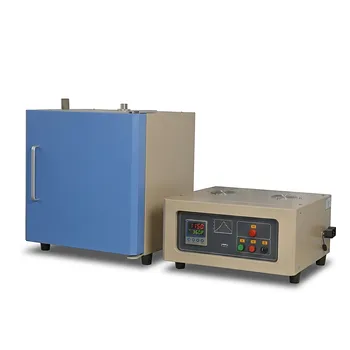
High Temperature Muffle Furnace with Alloy Chamber for Debinding and Sintering Applications
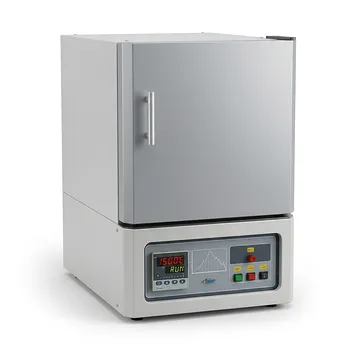
High Temperature 1500C Benchtop Muffle Furnace 3.6L Alumina Fiber Chamber Programmable Controller Sintering Annealing Carbonization Thermal Processing System
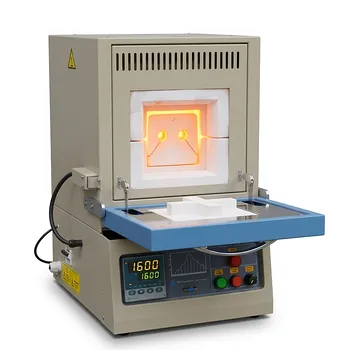
High Temperature Compact Muffle Furnace 1700 C with 30 Segment Programmable Controller and 1.7L Cubic Chamber
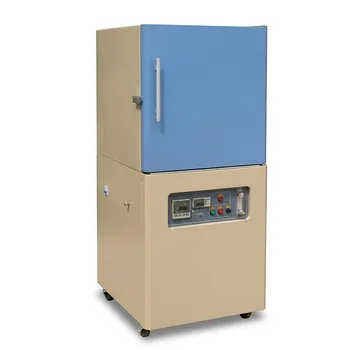
High Temperature Muffle Furnace with Dual Controllers and 36L Large Chamber 1700C Max
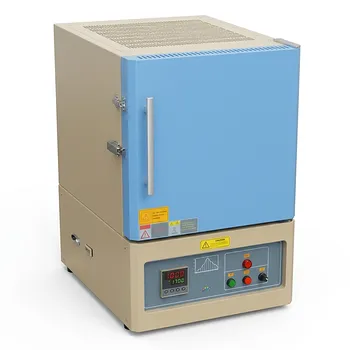
Large Bench Top 1700C High Temperature Muffle Furnace with 19L Chamber for Advanced Material Sintering and Annealing
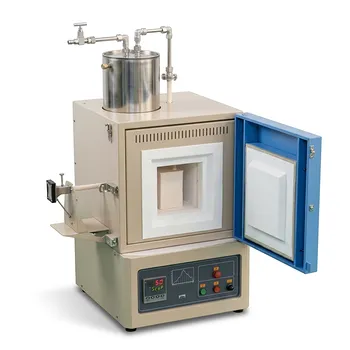
High Temperature Bench Top Muffle Furnace 1700C with Integrated Evaporating Particle Collection and 8x8x8 Alumina Fiber Chamber
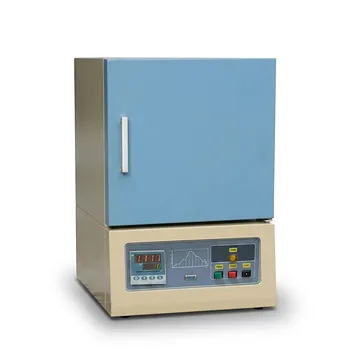
Ultra High Temperature Bench Top Muffle Furnace 1750C Sintering System with Kanthal Super Heating Elements and Precision Digital Control
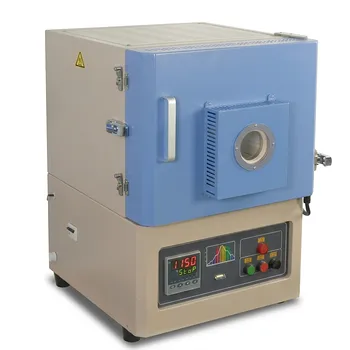
High Temperature Benchtop Muffle Furnace with Quartz Observation Window for Thermal Imaging and Material Analysis
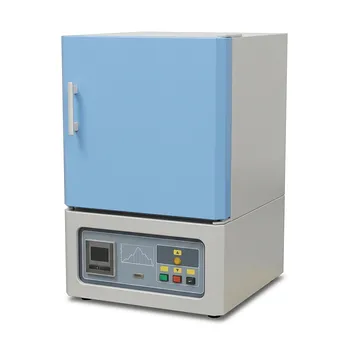
1800C Bench Top Muffle Furnace with Kanthal Super 1900 Heating Elements and 3.6L Alumina Fiber Chamber
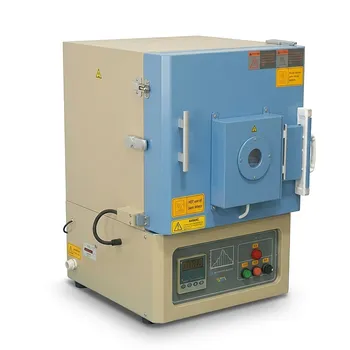
High Temperature Benchtop Muffle Furnace 1500C with 3.6L Chamber and Quartz Observation Window
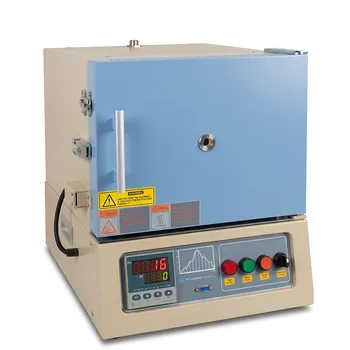
1200C Muffle Furnace 12x8x5 7.2L Heating Chamber with Quartz Observation Window and Vent Port
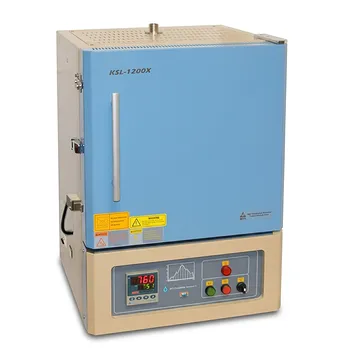
High Temperature 1200C Muffle Furnace 27L Volume 12x12x12 Chamber with Programmable PID Controller for Laboratory Material Science
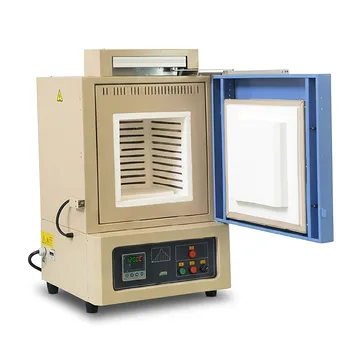
1200C High Temperature Muffle Furnace with Motorized Door and Automated PC Control for Industrial Sintering and Material Processing 27 Liter
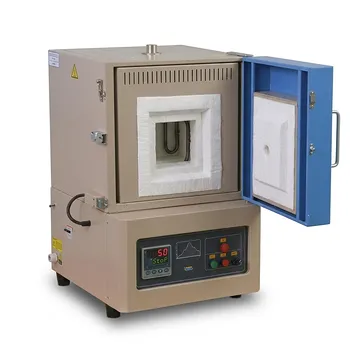
1800°C Bench Top Ultra High Temperature Muffle Furnace with Sapphire Observation Window and Top Feeding Port for Materials Research and Thermal Processing
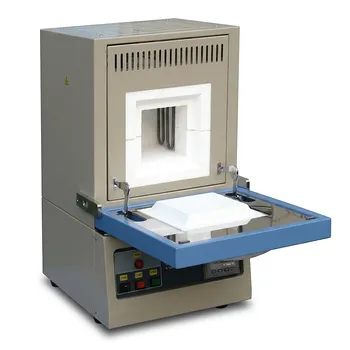
High Temperature 1800C Compact Muffle Furnace with Kanthal Super 1900 Heating Elements and 1.7L Alumina Chamber
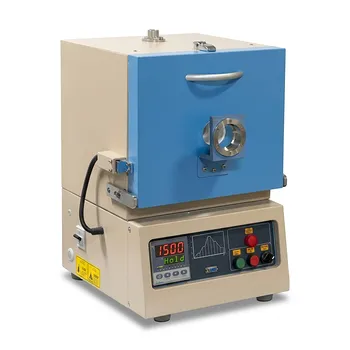
1500C Hybrid Muffle Tube Furnace 1.7L Box with 2 Inch Mullite Tube and Programmable PID Controller
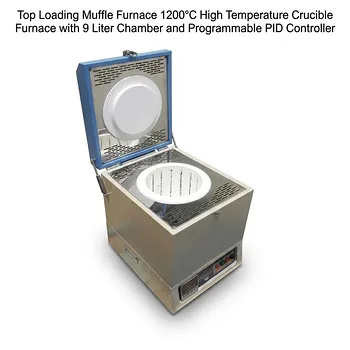
Top Loading Muffle Furnace 1200°C High Temperature Crucible Furnace with 9 Liter Chamber and Programmable PID Controller
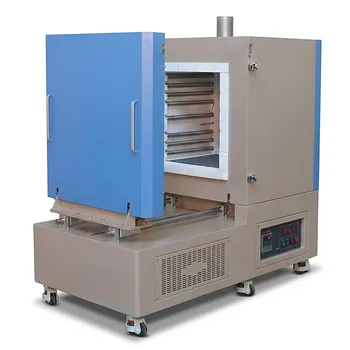
1200C Five Side Heating Muffle Furnace with Sliding Door 125L Volume High Temperature Heat Treatment System for Large Scale Sintering and Annealing
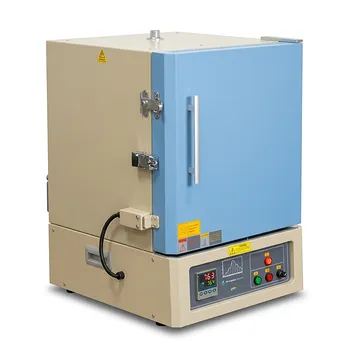
Large Capacity 1200C Muffle Furnace 64 Liter Chamber with Digital PID Controller and Built In Venting Port