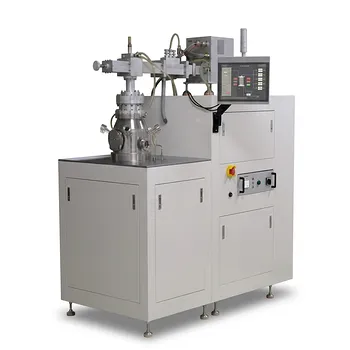
Why is a high-precision MFC essential for 2D tin selenide? Master Phase-Pure Growth
Updated 3 months ago
The precise regulation of precursor ratios is the defining factor in the phase-pure growth of 2D tin selenide. In this synthesis process, a high-precision Mass Flow Controller (MFC) serves as the primary mechanism for fine-tuning carrier gas flow rates, which in turn strictly dictates the entry rate of metal-organic precursors into the reaction chamber. By maintaining a constant precursor ratio, the MFC effectively suppresses the formation of impurity phases, allowing researchers to target the specific preparation of either SnSe2 or SnSe thin films with high accuracy.
Core Takeaway: High-precision MFCs are essential because they provide the stoichiometric control required to navigate the sensitive phase space of tin selenide. Without this rigorous flow regulation, minor fluctuations in carrier gas would lead to inconsistent vapor concentrations, resulting in mixed-phase impurities rather than high-quality 2D crystals.
The Critical Role of Stoichiometric Control
Regulating Precursor Entry Rates
In the synthesis of tin selenide, the ratio of tin (Sn) to selenium (Se) is extremely sensitive. The MFC acts as a gatekeeper, using carrier gases to transport metal-organic precursors into the reaction zone at a calculated, steady rate.
Suppressing Impurity Phases
Even slight deviations in the precursor ratio can trigger the formation of unwanted phases. Precise flow control ensures that the chemical environment remains within the narrow window required for either SnSe or SnSe2, preventing the growth of mixed or amorphous materials.
Ensuring Phase Purity
Achieving a phase-pure 2D material requires a reaction environment that is both stable and predictable. By locking in the flow rates, the MFC provides the high degree of repeatability necessary to produce thin films with consistent electronic and structural properties.
Transport Dynamics and Reaction Stability
Influence on Vapor Concentration
The carrier gas flow rate directly influences the concentration distribution of precursors within the reaction chamber. A stable flow ensures that the precursor vapors reach the substrate in a uniform manner, which is vital for the growth of large-area, high-quality films.
Managing Boundary Layer and Pressure
Beyond simple transport, the flow rate determines the thickness of the boundary layer near the substrate and minimizes internal pressure fluctuations. This level of control is essential for ensuring that the reaction kinetics remain constant throughout the entire growth cycle.
Real-Time Monitoring of the Environment
High-precision MFCs provide real-time feedback and adjustment capabilities. This allows the system to compensate for any external pressure or temperature changes, maintaining a stable partial pressure of the reactants, which is a critical variable in nanomaterial micromorphology.
Understanding the Trade-offs
Precision vs. System Complexity
While high-precision MFCs offer unmatched control, they increase the complexity of the CVD system. They require regular calibration against specific gases to remain accurate, as a controller calibrated for Argon may not perform identically when used with different process gases.
Cost and Sensitivity to Contamination
The internal sensors of high-precision MFCs are highly sensitive and can be expensive to replace. In environments where precursors might condense or where particulate contamination is present, the longevity of the MFC can be compromised if proper filtration and heating are not implemented.
Response Time and Stabilization
There is often a trade-off between the speed of the MFC's response and its stability. While rapid adjustments are needed for complex structures like superlattices, excessive "hunting" for a setpoint can lead to flow oscillations, which may negatively impact the uniformity of a 2D tin selenide film.
How to Apply This to Your Project
When integrating an MFC into your 2D material growth setup, your choice should align with your specific material objectives. The following recommendations provide a guide for prioritizing your system's capabilities:
- If your primary focus is Phase Purity: Invest in high-accuracy MFCs with a low error margin (±1% of setpoint or better) to maintain strict Sn:Se stoichiometric ratios.
- If your primary focus is Large-Area Uniformity: Prioritize MFCs that offer excellent long-term stability and minimal drift to ensure a consistent vapor concentration over long growth durations.
- If your primary focus is Complex Heterostructures: Select MFCs with fast response times (less than 500ms) to allow for the sharp injection timing required for nanometer-scale layers.
- If your primary focus is Repeatability: Ensure your MFCs are integrated into a digital control system that can log flow data and replicate specific flow profiles across multiple experimental runs.
Reliable synthesis of 2D tin selenide is only possible when the gaseous environment is controlled with enough precision to turn chemical sensitivity into a reproducible advantage.
Summary Table:
| Key MFC Function | Impact on Growth | Primary Research Benefit |
|---|---|---|
| Stoichiometric Control | Regulates precise Sn:Se ratios | Prevents impurity phases (SnSe vs SnSe2) |
| Flow Stability | Maintains uniform vapor concentration | Ensures large-area uniformity and film quality |
| Real-time Monitoring | Compensates for pressure fluctuations | Guarantees high repeatability across runs |
| Boundary Layer Mgmt | Stabilizes reaction kinetics | Enhances electronic and structural properties |
Elevate Your Material Research with THERMUNITS
Precision is the backbone of successful 2D material synthesis. THERMUNITS is a leading manufacturer of high-temperature laboratory equipment, providing the rigorous thermal processing solutions needed for cutting-edge material science and industrial R&D.
Whether you are growing tin selenide via CVD/PECVD systems or require advanced Muffle, Vacuum, Atmosphere, Tube, or Hot Press furnaces, our equipment is engineered for ultimate stability and control. We empower researchers to achieve phase-pure results and repeatable outcomes across various applications, including Dental Furnaces, electric rotary kilns, and vacuum induction melting furnaces (VIM).
Ready to optimize your lab’s thermal precision? Contact our experts today to find the perfect heat treatment solution for your research objectives!
References
- Sungyeon Kim, Joonki Suh. Phase‐Centric MOCVD Enabled Synthetic Approaches for Wafer‐Scale 2D Tin Selenides. DOI: 10.1002/adma.202400800
Mentioned Products
- High Temperature 1200C Automatic Sliding Dual Zone Tube Furnace for 2D Transition Metal Dichalcogenides Growth and Material Sublimation Research
- 1200C Dual Temperature Zone Slidable Tube Furnace for 2D Material Growth and TCVD Synthesis
- Cylindrical Resonator MPCVD Machine System for Microwave Plasma Chemical Vapor Deposition and Lab Diamond Growth
People Also Ask
- What are the technical advantages of a dual-zone tube furnace for phosphidation? Optimize Cobalt Nanowall Synthesis.
- What is the value of a dual-zone tube furnace in coal ash deposition? Precision Simulation of Sodium Vapor Scaling.
- Why is a double-temperature zone tube furnace utilized for the preparation of monolayer MoS2? Precision CVD Explained
- What is the function of a high-precision dual-zone tube furnace in MAPbI3 deposition? Expert Perovskite Synthesis.
- What technical advantages does a Dual-zone Tube Furnace provide for ZnSe sulfidation? Precision & Quality Control.

Tech Team · ThermUnits
Last updated on Jun 03, 2026
Related Products
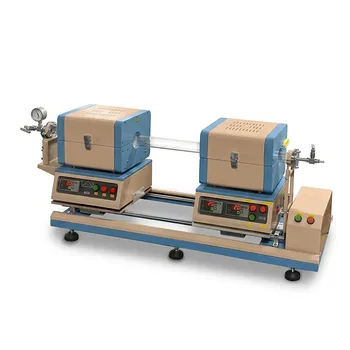
High Temperature 1200C Automatic Sliding Dual Zone Tube Furnace for 2D Transition Metal Dichalcogenides Growth and Material Sublimation Research
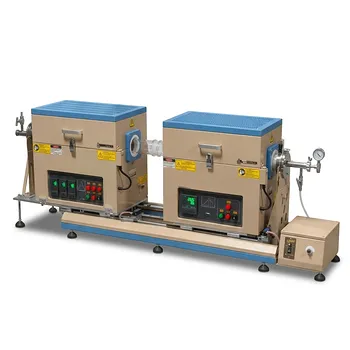
1200C Dual Temperature Zone Slidable Tube Furnace for 2D Material Growth and TCVD Synthesis