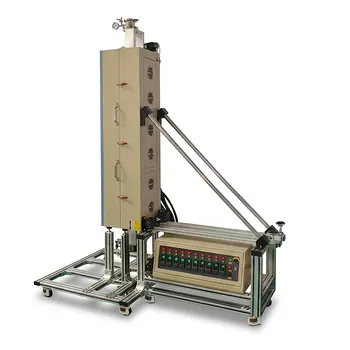
What is the value of a dual-zone tube furnace in coal ash deposition? Precision Simulation of Sodium Vapor Scaling.
Updated 3 months ago
The technical value of a dual-zone tube furnace lies in its ability to decouple the volatile release and condensation phases of coal ash formation. By maintaining two independently controlled temperature zones, it allows researchers to accurately simulate the transition from a 1000 °C combustion environment to a 600–800 °C heat exchange surface. This setup is uniquely capable of capturing the precise behavior of high-alkali sodium vapors as they transform and deposit on cooler surfaces within a boiler.
A dual-zone tube furnace bridges the gap between laboratory bench-top tests and full-scale boiler environments by replicating the distinct physical-chemical pathways of sodium vapors. It provides a highly controlled, repeatable platform for observing the growth patterns of initial ash deposition layers under specific temperature gradients.
Replicating the Complex Boiler Environment
Simulating the Physical-Chemical Pathway
High-alkali coal combustion is a multi-stage process where volatile elements like sodium are released at high temperatures. A dual-zone furnace replicates this by using the first zone as a combustion furnace stabilized at 1000 °C. This ensures that sodium salt vapors are released in a manner consistent with the hot furnace sections of an industrial boiler.
Modelling the Condensation Process
After vaporization, ash-forming elements must encounter a cooler surface to begin deposition. The second zone acts as a condensation furnace, typically maintained between 600 °C and 800 °C. This specific temperature range simulates the heating surface environments found in actual boilers, allowing for the precise study of how vapors turn into solid deposits.
Advancing Research into Ash Deposition
Isolating Variables in Ash Growth
In a single-zone furnace, the temperature of combustion and deposition are inherently linked, limiting experimental flexibility. The dual-zone design allows for independent control of both fields, enabling researchers to change the deposition surface temperature without altering the combustion conditions. This is vital for identifying which specific temperatures trigger the fastest growth of initial ash deposition layers.
Precision Sodium Vapor Management
The primary challenge with high-alkali coal is the high concentration of sodium vapors that lead to severe fouling. By creating a dedicated 1000 °C zone, researchers can ensure a consistent flux of sodium salts. This flow is then directed into the cooler second zone, providing a controlled environment to observe the chemical transformation of these vapors into problematic ash layers.
Understanding the Trade-offs
Technical Complexity and Calibration
While a dual-zone system offers superior control, it introduces increased system complexity. Managing two distinct thermal gradients requires sophisticated control loops and high-quality insulation to prevent "thermal bleeding" between the zones. If the transition zone between the two heaters is not correctly managed, the temperature profile may become unpredictable, compromising the accuracy of the simulation.
Spatial and Throughput Limitations
The requirement for two distinct zones often necessitates a longer furnace tube, which can limit the spatial flexibility of the setup. Furthermore, ensuring that the sample is positioned precisely at the interface or within the specific temperature nodes of the second zone requires meticulous manual adjustment. This can make high-throughput testing more labor-intensive compared to simpler, single-zone systems.
How to Apply This to Your Research Project
To maximize the utility of a dual-zone furnace in coal ash studies, consider your experimental objectives:
- If your primary focus is Simulating Realistic Boiler Fouling: Set Zone 1 at 1000 °C for combustion and Zone 2 to 600–750 °C to monitor the condensation of sodium salts and the formation of initial layers.
- If your primary focus is Investigating Temperature Sensitivity: Maintain a constant 1000 °C in Zone 1 while varying Zone 2 in 50-degree increments to find the "critical temperature" where a specific coal's ash becomes most adhesive.
- If your primary focus is Sodium Release Kinetics: Use Zone 1 to test different combustion atmospheres (e.g., oxy-fuel vs. air) while keeping Zone 2 constant to see how gas chemistry affects the volume of deposits.
The dual-zone tube furnace is an essential tool for transforming high-alkali coal research from qualitative observation to quantitative, phase-specific analysis.
Summary Table:
| Feature | Zone 1: Release Phase | Zone 2: Condensation Phase |
|---|---|---|
| Primary Function | Simulates high-temp combustion | Simulates boiler heat exchange surfaces |
| Typical Temp | ~1000 °C | 600 °C – 800 °C |
| Chemical Role | Releases volatile sodium vapors | Manages vapor-to-solid transformation |
| Research Goal | Consistent vapor flux control | Observing initial ash layer growth |
Optimize Your Material Research with THERMUNITS
Precision is non-negotiable in high-temperature research. THERMUNITS is a leading manufacturer of advanced laboratory heat treatment equipment, providing the accuracy required for complex experiments like coal ash deposition and sodium vapor analysis.
We offer a comprehensive suite of thermal solutions tailored for material science and industrial R&D, including:
- Tube & Rotary Furnaces (Dual-zone and Multi-zone configurations)
- Muffle, Vacuum, and Atmosphere Furnaces
- CVD/PECVD Systems and Hot Press Furnaces
- Vacuum Induction Melting (VIM) and Dental Furnaces
Whether you are investigating ash fouling kinetics or developing new materials, our team provides custom engineering to meet your specific thermal profiles. Contact our experts today to enhance your lab’s capabilities and achieve superior experimental repeatability.
References
- Quan Liang, Qiulan Ding. Experimental Investigation of the Effect of NiCrTi Coating on the Ash Condensation Characteristics of High-Alkali Coals. DOI: 10.3390/coatings14121594
Mentioned Products
- Dual Zone Quartz Tube Furnace with 80mm Diameter 1200C Max Temperature 3 Channel Gas Mixer and Vacuum Pump System
- Dual Zone Tube Furnace 1100C with 11 Inch Quartz Tube and Vacuum Flanges for 8 Inch Wafer Processing
- 1200C Dual Zone Split Tube Furnace with Fused Quartz Tube and Vacuum Flanges Available in 60mm 80mm and 100mm Diameters
- High Temperature Dual Zone Tube Furnace for Material Science Research and Professional Thermal Processing
- 1200C Dual Temperature Zone Slidable Tube Furnace for 2D Material Growth and TCVD Synthesis
People Also Ask
- How do dual-zone quartz tube furnaces achieve controllable material preparation? Optimize Perovskite VD Processes
- What are the technical advantages of using a dual-zone tube furnace for growing large PdCoO2 crystals via CVT? Expert Tips
- Purpose of the reverse gradient step in CVT growth? Master Crystal Purity with Dual-Zone Furnaces
- Why is it necessary to place MoS2 devices in a dual-zone tube furnace for annealing? Optimize Lattice Repair & Doping
- Why is a dual-zone tube furnace necessary for ReO3-doped Cu2Te CVD? Essential for precise precursor synchronization.

Tech Team · ThermUnits
Last updated on Jun 02, 2026
Related Products
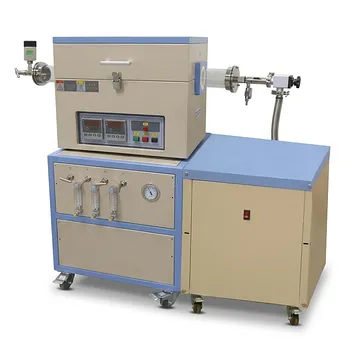
Dual Zone Quartz Tube Furnace with 80mm Diameter 1200C Max Temperature 3 Channel Gas Mixer and Vacuum Pump System
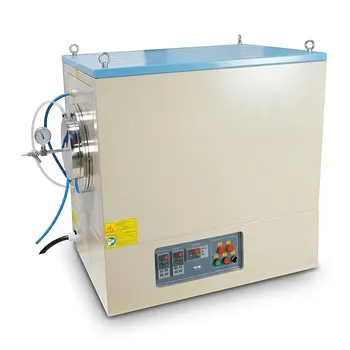
Dual Zone Tube Furnace 1100C with 11 Inch Quartz Tube and Vacuum Flanges for 8 Inch Wafer Processing
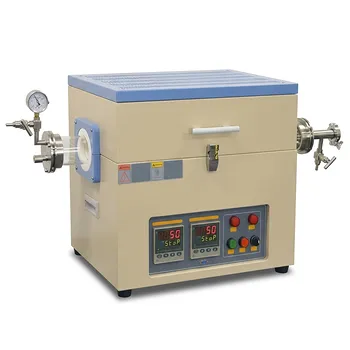
1200C Dual Zone Split Tube Furnace with Fused Quartz Tube and Vacuum Flanges Available in 60mm 80mm and 100mm Diameters
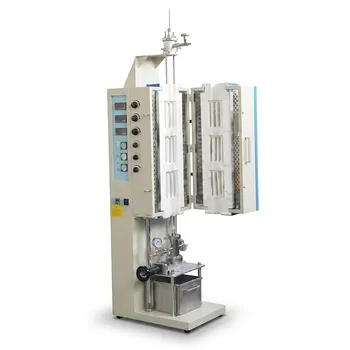
High Temperature Dual Zone Tube Furnace for Material Science Research and Professional Thermal Processing
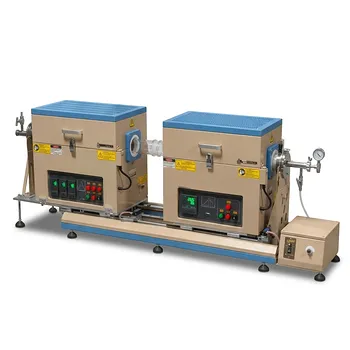
1200C Dual Temperature Zone Slidable Tube Furnace for 2D Material Growth and TCVD Synthesis
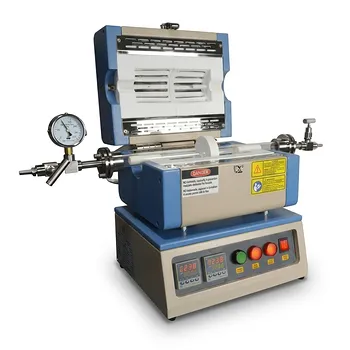
Dual Heating Zone 1200C Compact Split Tube Furnace with Optional 1" - 2" Tube and Vacuum Flanges
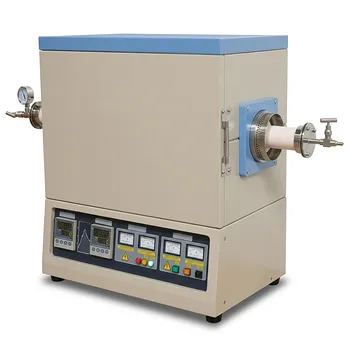
High Temperature 1700C Dual Zone Tube Furnace for Material Science and Industrial Chemical Vapor Deposition Research
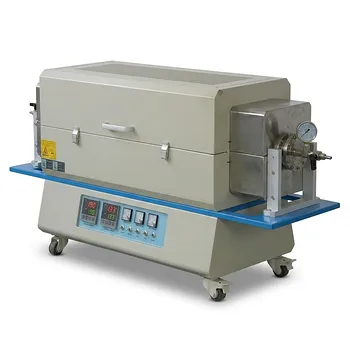
High Temperature Elongated Dual Zone Tube Furnace for Material Research and Industrial Heat Treatment
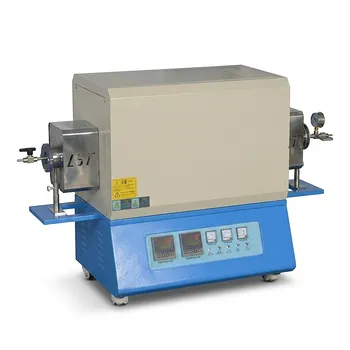
High Temperature Dual Zone Vacuum Tube Furnace for Material Research and CVD Processing
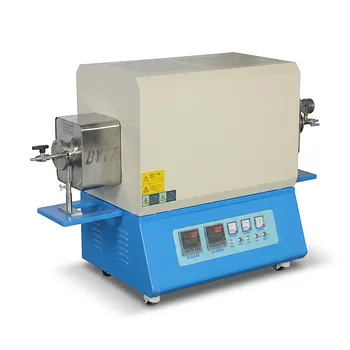
High Temperature Dual Zone Split Tube Furnace for Advanced Atmosphere Sintering and Vacuum CVD Applications
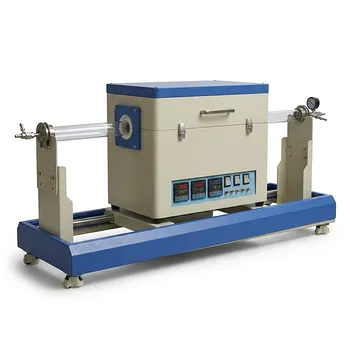
Double Temperature Zone Double Cover Tube Furnace for High Temperature CVD and Vacuum Annealing
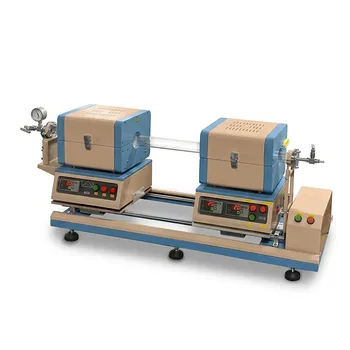
High Temperature 1200C Automatic Sliding Dual Zone Tube Furnace for 2D Transition Metal Dichalcogenides Growth and Material Sublimation Research
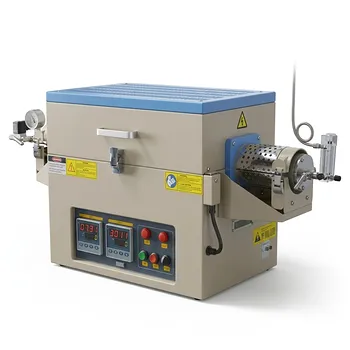
1100C Dual Zone Hydrogen Gas Tube Furnace with Quartz Tube and Integrated H2 Leak Detection System
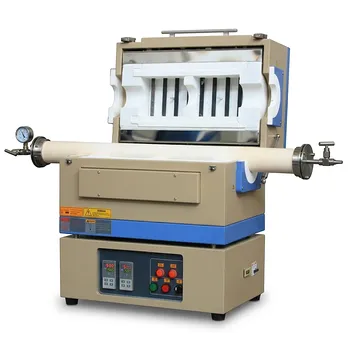
1500C Two Zone Split Tube Furnace with Vacuum Flange and 80mm Alumina Tube
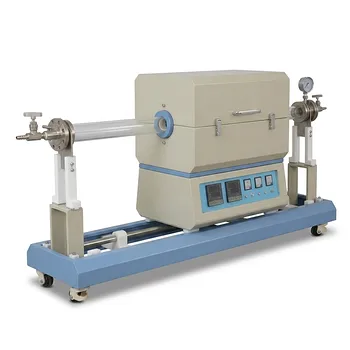
Double Zone Fast Heating Tube Furnace High Temperature Vacuum Atmosphere System
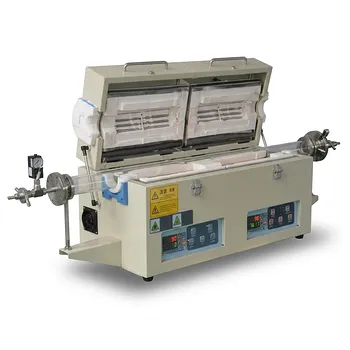
Elongated Two Temperature Zone Pipe Furnace for Industrial Heat Treatment and Material Science Research
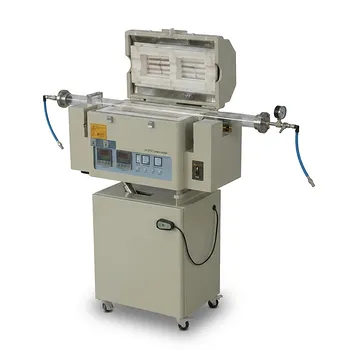
Double Temperature Revolving Tube Furnace with Precision Rotation and Adjustable Inclination for Advanced Material Research
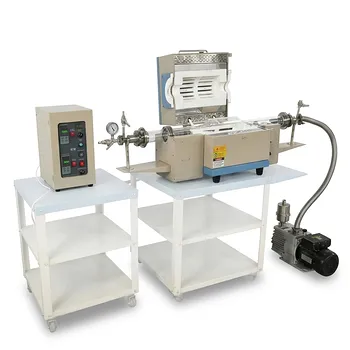
Two Zone Rotary Tube Furnace for Powder CVD Coating and Core Shell Material Synthesis 1100C
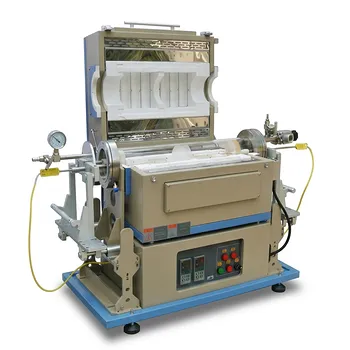
Two Zone IR Heating Rapid Thermal Processing RTP Tube Furnace with 4 Inch ID Quartz Tube and Sliding Sample Holders