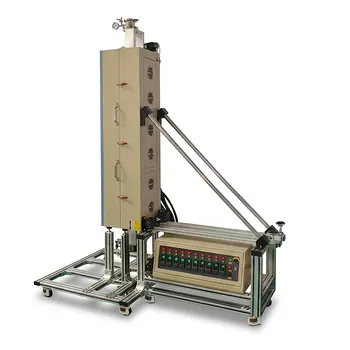
What is the function of a high-precision dual-zone tube furnace in MAPbI3 deposition? Expert Perovskite Synthesis.
Updated 3 months ago
The high-precision dual-zone tube furnace acts as the thermodynamic engine of the single-step vapor deposition process. It provides two independently controlled thermal fields to manage the disparate sublimation rates of precursors like methylammonium iodide (MAI) and lead acetate [Pb(ac)2]. This separation ensures that both chemicals reach the substrate in the exact concentrations required to form a high-purity, continuous perovskite layer.
A dual-zone furnace is required to decouple the evaporation temperatures of precursors with different vapor pressures. This independent control allows for precise management of gas-phase stoichiometry and crystallization kinetics, which are the primary drivers of perovskite film quality.
Managing Differential Sublimation Rates
Overcoming Vapor Pressure Disparity
The primary challenge in single-step deposition is that precursors like MAI and lead salts do not vaporize at the same temperature. A single-zone furnace would either under-heat the lead source or over-heat (and potentially decompose) the organic MAI.
The dual-zone design allows researchers to set optimal evaporation gradients for each specific powder. This ensures that both precursors enter the gas phase at controlled, predictable rates rather than reacting prematurely or unevenly.
Precise Gas-Phase Mixing
By controlling the upstream and center zones independently, the furnace creates a specific concentration gradient in the gas phase. This environment is essential for ensuring that the precursors mix thoroughly before reaching the substrate.
Controlling Crystallization and Film Quality
Regulating Nucleation and Growth
The high-precision nature of these furnaces provides a uniform thermal field that is critical for controlled crystallization. This stability allows the gaseous precursors to undergo a transition from island growth to a continuous, large-area film.
Without this precision, the film may suffer from poor grain size distribution or incomplete coverage. Precise temperature management ensures the film possesses high crystallinity and uniform fluorescence properties across the entire substrate.
Maintaining Phase Purity
The dual-zone setup prevents the formation of unwanted intermediate phases by keeping the reaction kinetics within a narrow window. This leads to the production of perovskite layers with high phase purity, which is vital for the efficiency of solar cells and optoelectronic devices.
Understanding the Trade-offs and Limitations
Complexity of Thermal Profiling
While dual-zone control offers more freedom, it also introduces significant operational complexity. Finding the "sweet spot" for two different temperatures, while accounting for the carrier gas flow, requires extensive calibration and thermal profiling.
Sensitivity to Sealing and Vacuum
The effectiveness of the furnace is entirely dependent on its sealing performance. Any oxygen or moisture ingress during the high-temperature phase can degrade the precursors or oxidize the substrate, negating the benefits of the dual-zone precision.
Thermal Lag and Cross-Contamination
If the furnace zones are too close together, thermal cross-talk can occur, where the heat from one zone bleeds into the other. Additionally, reusing quartz tubes without rigorous cleaning can lead to cross-contamination, affecting the reproducibility of the perovskite layers.
How to Optimize Your Deposition Strategy
Making the Right Choice for Your Goal
To achieve the best results with a high-precision dual-zone tube furnace, you must align your thermal settings with your specific material objectives.
- If your primary focus is high crystallinity: Prioritize the stability of the substrate growth zone temperature to allow for slower, more ordered grain growth.
- If your primary focus is thickness uniformity: Fine-tune the carrier gas flow rate in conjunction with the upstream evaporation temperature to ensure a steady supply of reactants.
- If your primary focus is rapid prototyping: Use the independent zones to quickly test different sublimation-to-deposition ratios without having to reconfigure the entire hardware setup.
Mastering the independent thermal fields of a dual-zone furnace is the most effective way to transform volatile precursors into high-performance, large-area perovskite electronics.
Summary Table:
| Key Function | Impact on Film Quality | Core Advantage |
|---|---|---|
| Independent Thermal Control | Decouples precursor evaporation | Precise gas-phase stoichiometry |
| Uniform Thermal Field | Regulates nucleation and growth | Large-area film continuity |
| Dual-Zone Sublimation | Manages disparate vapor pressures | Prevents precursor decomposition |
Elevate Your Material Research with THERMUNITS
As a leading manufacturer of high-temperature laboratory equipment, THERMUNITS provides the precision needed for advanced material science and industrial R&D. Our high-precision Tube Furnaces and CVD/PECVD systems are engineered to master the complex thermal profiles required for perovskite synthesis and thin-film deposition.
Why Partner with THERMUNITS?
- Unmatched Precision: Independently managed zones for perfect stoichiometry and crystallization.
- Comprehensive Range: We offer Muffle, Vacuum, Atmosphere, Tube, Rotary, and Hot Press furnaces, alongside VIM and electric rotary kilns.
- Industrial Expertise: Tailored solutions for laboratories developing next-gen solar cells and optoelectronics.
Ready to optimize your thin-film deposition and heat treatment processes? Contact our experts today to find the perfect thermal processing solution for your research goals!
References
- Dmitry S. Muratov, Aldo Di Carlo. Single‐Step Chemical Vapor Deposition of Methyl Ammonium Lead Halide Perovskite for p–i‐n Solar Cells. DOI: 10.1002/slct.202400147
Mentioned Products
- Dual Zone Quartz Tube Furnace with 80mm Diameter 1200C Max Temperature 3 Channel Gas Mixer and Vacuum Pump System
- Dual Zone Tube Furnace 1100C with 11 Inch Quartz Tube and Vacuum Flanges for 8 Inch Wafer Processing
- 1200C Dual Zone Split Tube Furnace with Fused Quartz Tube and Vacuum Flanges Available in 60mm 80mm and 100mm Diameters
- High Temperature Dual Zone Tube Furnace for Material Science Research and Professional Thermal Processing
- 1200C Dual Temperature Zone Slidable Tube Furnace for 2D Material Growth and TCVD Synthesis
People Also Ask
- How do dual-zone quartz tube furnaces achieve controllable material preparation? Optimize Perovskite VD Processes
- What are the technical advantages of using a dual-zone tube furnace for growing large PdCoO2 crystals via CVT? Expert Tips
- Purpose of the reverse gradient step in CVT growth? Master Crystal Purity with Dual-Zone Furnaces
- Why is it necessary to place MoS2 devices in a dual-zone tube furnace for annealing? Optimize Lattice Repair & Doping
- Why is a dual-zone tube furnace necessary for ReO3-doped Cu2Te CVD? Essential for precise precursor synchronization.

Tech Team · ThermUnits
Last updated on Jun 03, 2026
Related Products
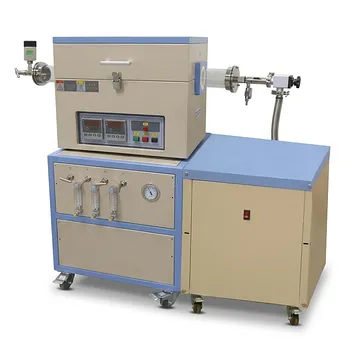
Dual Zone Quartz Tube Furnace with 80mm Diameter 1200C Max Temperature 3 Channel Gas Mixer and Vacuum Pump System
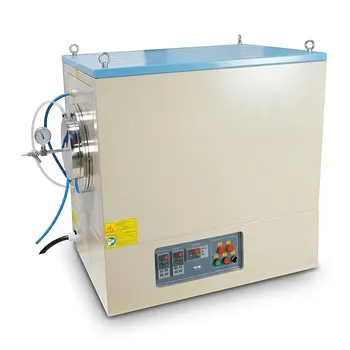
Dual Zone Tube Furnace 1100C with 11 Inch Quartz Tube and Vacuum Flanges for 8 Inch Wafer Processing
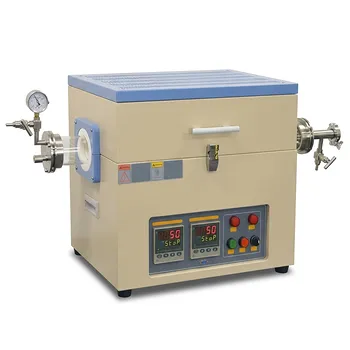
1200C Dual Zone Split Tube Furnace with Fused Quartz Tube and Vacuum Flanges Available in 60mm 80mm and 100mm Diameters
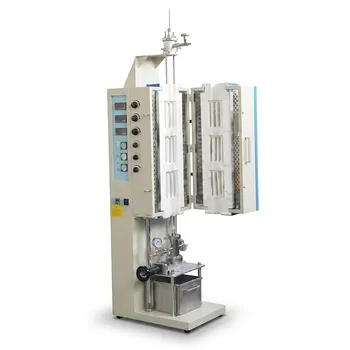
High Temperature Dual Zone Tube Furnace for Material Science Research and Professional Thermal Processing
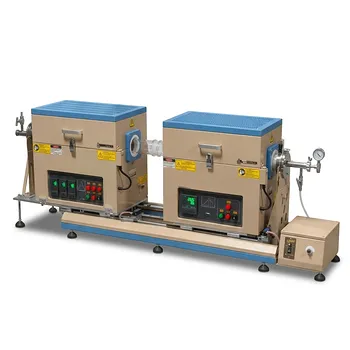
1200C Dual Temperature Zone Slidable Tube Furnace for 2D Material Growth and TCVD Synthesis
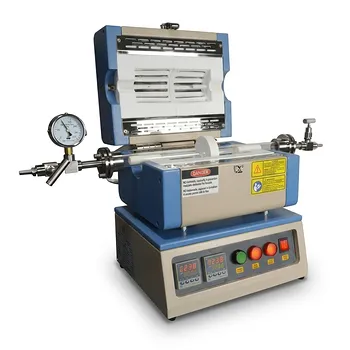
Dual Heating Zone 1200C Compact Split Tube Furnace with Optional 1" - 2" Tube and Vacuum Flanges
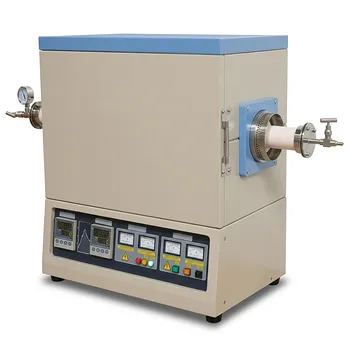
High Temperature 1700C Dual Zone Tube Furnace for Material Science and Industrial Chemical Vapor Deposition Research
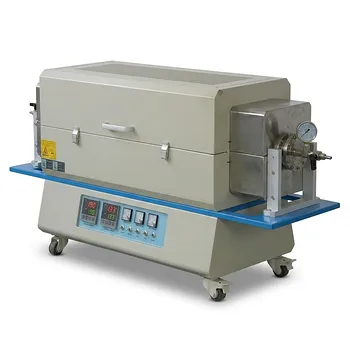
High Temperature Elongated Dual Zone Tube Furnace for Material Research and Industrial Heat Treatment
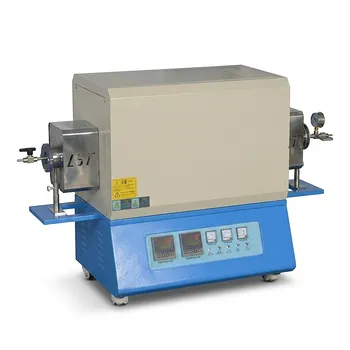
High Temperature Dual Zone Vacuum Tube Furnace for Material Research and CVD Processing
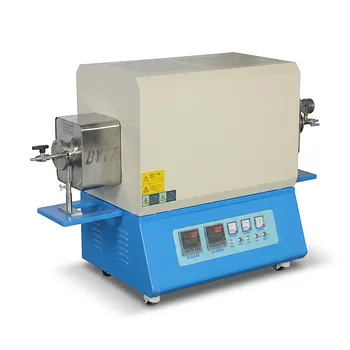
High Temperature Dual Zone Split Tube Furnace for Advanced Atmosphere Sintering and Vacuum CVD Applications
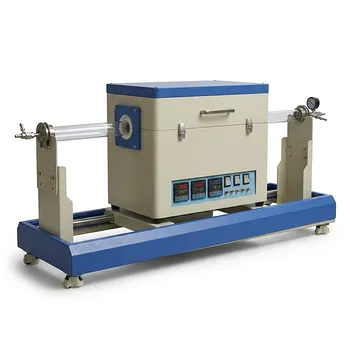
Double Temperature Zone Double Cover Tube Furnace for High Temperature CVD and Vacuum Annealing
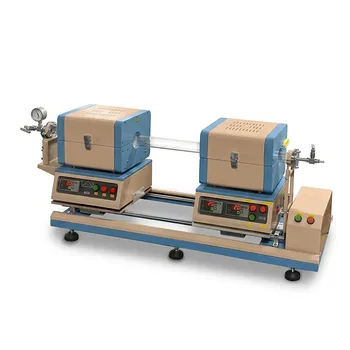
High Temperature 1200C Automatic Sliding Dual Zone Tube Furnace for 2D Transition Metal Dichalcogenides Growth and Material Sublimation Research
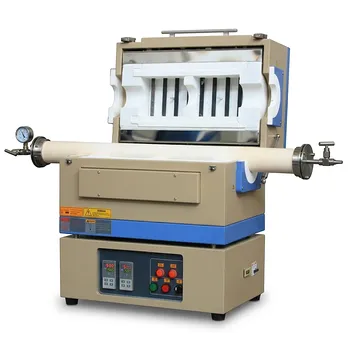
1500C Two Zone Split Tube Furnace with Vacuum Flange and 80mm Alumina Tube
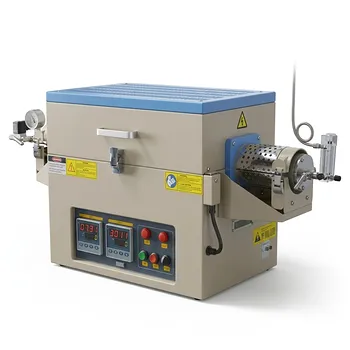
1100C Dual Zone Hydrogen Gas Tube Furnace with Quartz Tube and Integrated H2 Leak Detection System
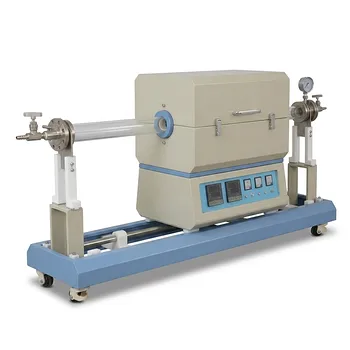
Double Zone Fast Heating Tube Furnace High Temperature Vacuum Atmosphere System
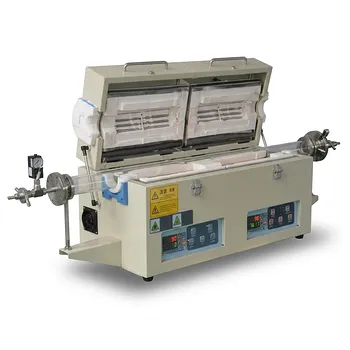
Elongated Two Temperature Zone Pipe Furnace for Industrial Heat Treatment and Material Science Research
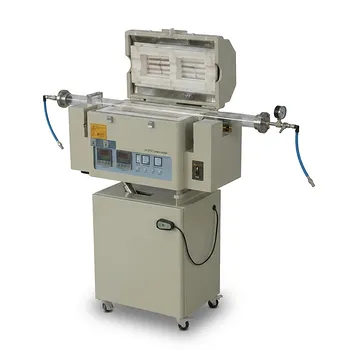
Double Temperature Revolving Tube Furnace with Precision Rotation and Adjustable Inclination for Advanced Material Research
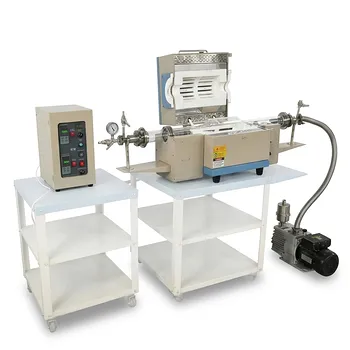
Two Zone Rotary Tube Furnace for Powder CVD Coating and Core Shell Material Synthesis 1100C
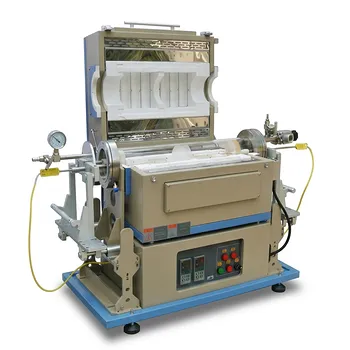
Two Zone IR Heating Rapid Thermal Processing RTP Tube Furnace with 4 Inch ID Quartz Tube and Sliding Sample Holders