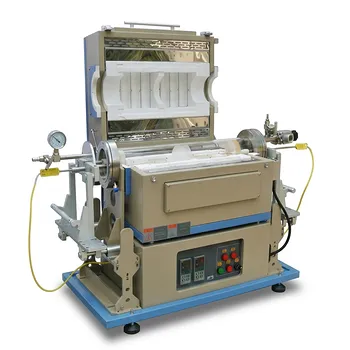
What technical advantages does a Dual-zone Tube Furnace provide for ZnSe sulfidation? Precision & Quality Control.
Updated 3 months ago
The primary technical advantage of a Dual-zone Tube Furnace in the sulfidation of ZnSe nanorods is the ability to decouple sulfur evaporation from the chemical reaction. By creating two independent thermal environments, the furnace allows for a constant sulfur vapor pressure while simultaneously providing the specific energy required for the ZnSe/ZnS phase transformation in the reaction zone.
A Dual-zone Tube Furnace provides precise thermal field partitioning, ensuring that the sulfur source evaporation and the nanorod reaction occur at their respective optimal temperatures. This independent control is the fundamental requirement for synthesizing high-quality ZnSe/ZnS heterojunctions with uniform composition and minimal defects.
Precision Control of Vapor Dynamics
Independent Evaporation Zone Management
The first zone of the furnace is dedicated solely to the sulfur source, typically maintained at a constant temperature such as 250 °C. This ensures a stable and predictable production of sulfur vapor throughout the entire process. Without this independent control, any change in the reaction temperature would unintentionally alter the sulfur concentration, leading to inconsistent results.
Decoupling Vapor Pressure from Reaction Kinetics
In material synthesis, the temperature required to vaporize a precursor is rarely the same as the temperature required for the reaction on the substrate. A dual-zone system allows the downstream reaction zone to be regulated between 250 and 350 °C without affecting the evaporation rate. This separation enables researchers to fine-tune the growth kinetics and the thickness of the ZnS layer independently of the sulfur supply.
Achieving Uniform Supersaturation Levels
By maintaining a stable upstream temperature, the system ensures a uniform local concentration of sulfur vapor. This stability is critical for driving the in-situ displacement reaction, where gas-phase sulfur atoms exchange with selenium atoms in the ZnSe lattice. Consistent vapor pressure prevents fluctuations that could lead to non-uniform coating or incomplete reactions across the nanorod surface.
Optimization of the ZnSe/ZnS Heterojunction
Thermal Field Partitioning for Phase Transformation
The formation of ZnSe/ZnS heterojunctions requires a precise thermal field to facilitate the displacement of selenium by sulfur. The dual-zone configuration provides the exact thermal partitioning needed to ensure the reaction zone stays within the critical 250-350 °C window. This specific range is optimized to provide enough energy for the chemical exchange while maintaining the structural integrity of the underlying ZnSe nanorods.
Suppression of Structural Defects
Precise control over the sulfur vapor concentration effectively suppresses the formation of sulfur vacancies (Vs). By optimizing the temperature in the low-pressure zone containing the sulfur source, the probability of successful covalent bonding in the reaction zone is significantly enhanced. This results in a higher quality crystalline structure with fewer electronic traps.
Enhanced Uniformity in 3D Nanostructures
For complex geometries like nanorods, the dual-zone setup ensures deep and uniform chemical reaction throughout the entire sample. The stable airflow and constant vapor pressure allow sulfur atoms to penetrate the spaces between nanorods effectively. This results in a consistent ZnS shell thickness across the entire batch, which is vital for reproducible electrocatalytic or optoelectronic performance.
Understanding the Trade-offs
System Complexity and Calibration
While a dual-zone furnace offers superior control, it introduces increased system complexity compared to single-zone models. Users must carefully calibrate the distance between the two zones to manage the thermal gradient effectively. If the zones are too close, thermal "cross-talk" can occur, where the heat from the reaction zone leaks into the evaporation zone, destabilizing the vapor pressure.
Potential for Precursor Condensation
A common pitfall in dual-zone setups is the condensation of precursors in the transition region between the two zones. If the temperature gradient drops too sharply between the sulfur source and the reaction zone, sulfur vapor may solidify on the tube walls. This not only wastes material but can also lead to unpredictable vapor concentrations reaching the ZnSe nanorods.
How to Optimize Your Sulfidation Process
Implementing Effective Sulfidation Strategies
The success of your ZnSe/ZnS synthesis depends on aligning the furnace parameters with your specific material requirements.
- If your primary focus is maximizing heterojunction quality: Prioritize the precision of the reaction zone temperature (250–350 °C) to ensure a complete and uniform displacement reaction.
- If your primary focus is controlling shell thickness: Focus on the fine-tuning of the sulfur source temperature in the upstream zone to regulate the total vapor concentration over time.
- If your primary focus is minimizing defect density: Ensure the upstream zone is pre-heated and stabilized before the reaction zone reaches its target temperature to maintain a sulfur-rich environment from the start.
By mastering the spatial separation of heat, you can achieve the level of atomic-scale precision necessary for advanced nanostructure engineering.
Summary Table:
| Advantage | Technical Impact | Key Result |
|---|---|---|
| Independent Heating | Decouples sulfur evaporation from reaction kinetics | Stable, constant sulfur vapor pressure |
| Thermal Partitioning | Precise 250-350°C window for ZnSe/ZnS transformation | High-quality heterojunction formation |
| Vapor Dynamics Control | Minimizes sulfur vacancies (Vs) and electronic traps | Reduced structural defects |
| Uniform Flow | Ensures deep sulfur penetration in 3D structures | Consistent ZnS shell thickness in nanorods |
Elevate Your Nanomaterial Synthesis with THERMUNITS
Achieving atomic-scale precision in ZnSe/ZnS heterojunctions requires advanced thermal management. THERMUNITS is a leading manufacturer of high-temperature laboratory equipment, providing the specialized tools needed for cutting-edge material science and industrial R&D.
Our Dual-zone Tube Furnaces and CVD/PECVD systems are engineered to provide the decoupled thermal environments essential for complex sulfidation and chemical vapor deposition processes. Beyond tube furnaces, we offer a comprehensive range of solutions including Vacuum, Atmosphere, Rotary, and Hot Press furnaces, as well as Vacuum Induction Melting (VIM) systems and Electric Rotary Kilns.
Why partner with THERMUNITS?
- Superior Uniformity: Precision thermal field partitioning for defect-free material growth.
- Versatile Solutions: Equipment tailored for everything from dental applications to industrial-scale heat treatment.
- Technical Expertise: Supporting your R&D with reliable, high-performance thermal elements and systems.
Ready to optimize your laboratory’s heat treatment efficiency? Contact us today to find your solution!
References
- Long Chen, Hongyan Wang. Improvement of Photocatalytic and Photodegradable ZnSe Nanorods by a Vulcanization Strategy. DOI: 10.1021/acsomega.4c05603
Mentioned Products
- Dual Zone Quartz Tube Furnace with 80mm Diameter 1200C Max Temperature 3 Channel Gas Mixer and Vacuum Pump System
- 1200C Dual Zone Split Tube Furnace with Fused Quartz Tube and Vacuum Flanges Available in 60mm 80mm and 100mm Diameters
- Dual Zone Tube Furnace 1100C with 11 Inch Quartz Tube and Vacuum Flanges for 8 Inch Wafer Processing
- 1200C Dual Temperature Zone Slidable Tube Furnace for 2D Material Growth and TCVD Synthesis
- High Temperature Dual Zone Tube Furnace for Material Science Research and Professional Thermal Processing
People Also Ask
- How do dual-zone quartz tube furnaces achieve controllable material preparation? Optimize Perovskite VD Processes
- What are the technical advantages of using a dual-zone tube furnace for growing large PdCoO2 crystals via CVT? Expert Tips
- Purpose of the reverse gradient step in CVT growth? Master Crystal Purity with Dual-Zone Furnaces
- Why is it necessary to place MoS2 devices in a dual-zone tube furnace for annealing? Optimize Lattice Repair & Doping
- Why is a dual-zone tube furnace necessary for ReO3-doped Cu2Te CVD? Essential for precise precursor synchronization.

Tech Team · ThermUnits
Last updated on Jun 03, 2026
Related Products
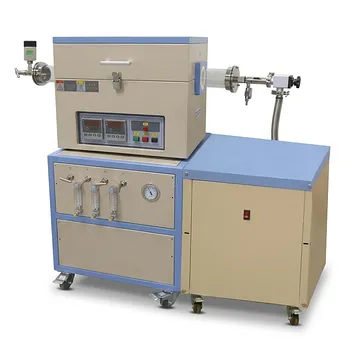
Dual Zone Quartz Tube Furnace with 80mm Diameter 1200C Max Temperature 3 Channel Gas Mixer and Vacuum Pump System
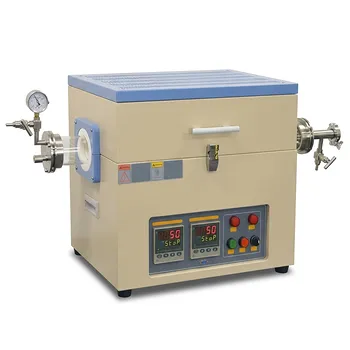
1200C Dual Zone Split Tube Furnace with Fused Quartz Tube and Vacuum Flanges Available in 60mm 80mm and 100mm Diameters
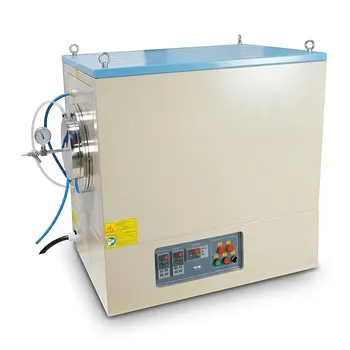
Dual Zone Tube Furnace 1100C with 11 Inch Quartz Tube and Vacuum Flanges for 8 Inch Wafer Processing
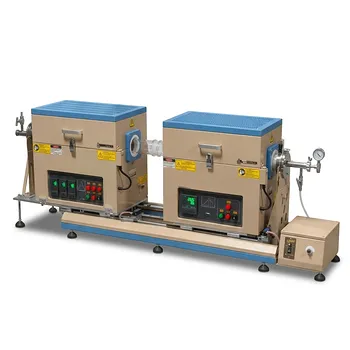
1200C Dual Temperature Zone Slidable Tube Furnace for 2D Material Growth and TCVD Synthesis
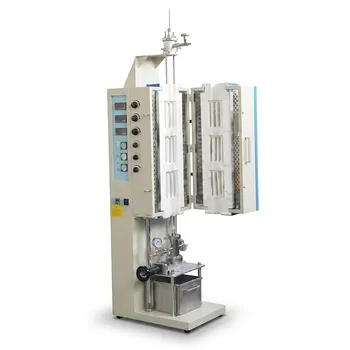
High Temperature Dual Zone Tube Furnace for Material Science Research and Professional Thermal Processing
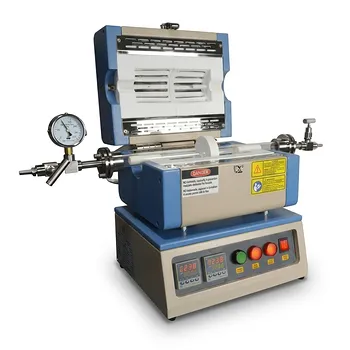
Dual Heating Zone 1200C Compact Split Tube Furnace with Optional 1" - 2" Tube and Vacuum Flanges
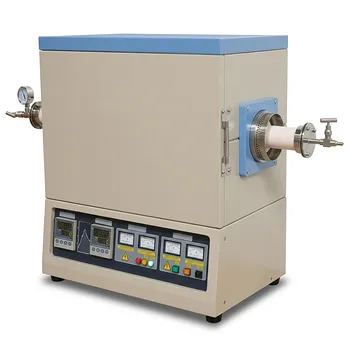
High Temperature 1700C Dual Zone Tube Furnace for Material Science and Industrial Chemical Vapor Deposition Research
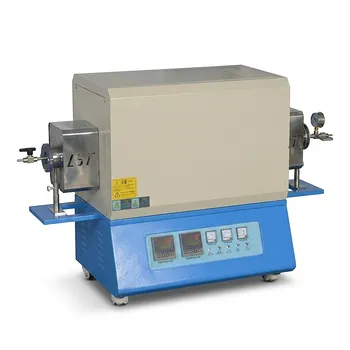
High Temperature Dual Zone Vacuum Tube Furnace for Material Research and CVD Processing
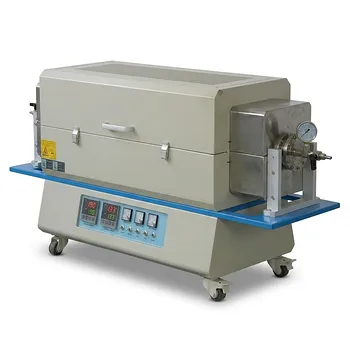
High Temperature Elongated Dual Zone Tube Furnace for Material Research and Industrial Heat Treatment
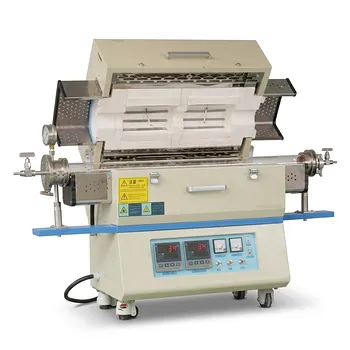
Dual Zone Split Tube Quenching Furnace with High Vacuum Atmosphere Control and Rapid Cooling
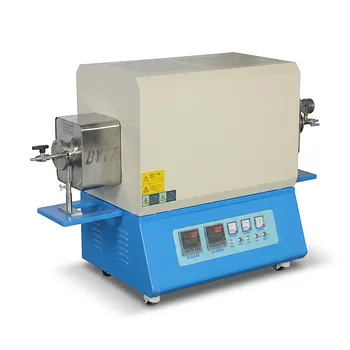
High Temperature Dual Zone Split Tube Furnace for Advanced Atmosphere Sintering and Vacuum CVD Applications
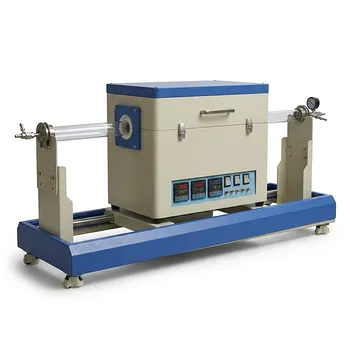
Double Temperature Zone Double Cover Tube Furnace for High Temperature CVD and Vacuum Annealing
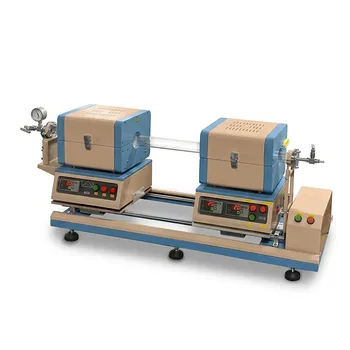
High Temperature 1200C Automatic Sliding Dual Zone Tube Furnace for 2D Transition Metal Dichalcogenides Growth and Material Sublimation Research
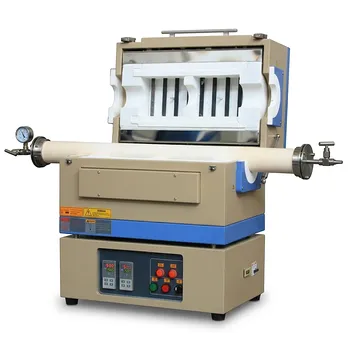
1500C Two Zone Split Tube Furnace with Vacuum Flange and 80mm Alumina Tube
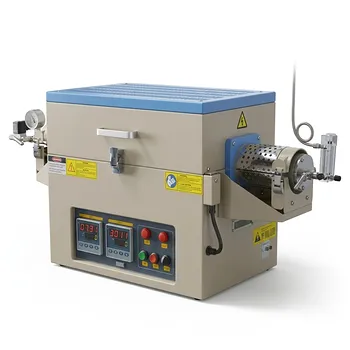
1100C Dual Zone Hydrogen Gas Tube Furnace with Quartz Tube and Integrated H2 Leak Detection System
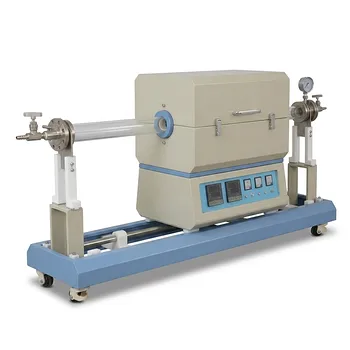
Double Zone Fast Heating Tube Furnace High Temperature Vacuum Atmosphere System
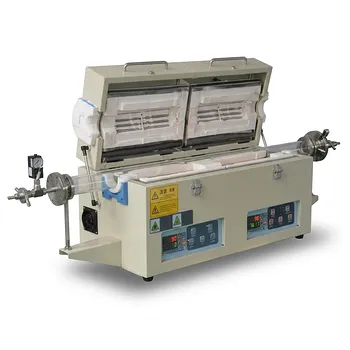
Elongated Two Temperature Zone Pipe Furnace for Industrial Heat Treatment and Material Science Research
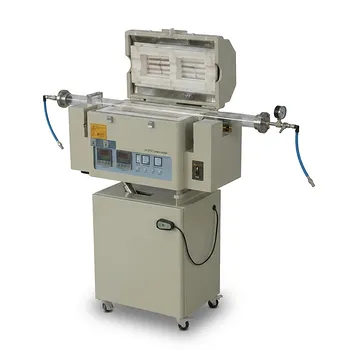
Double Temperature Revolving Tube Furnace with Precision Rotation and Adjustable Inclination for Advanced Material Research
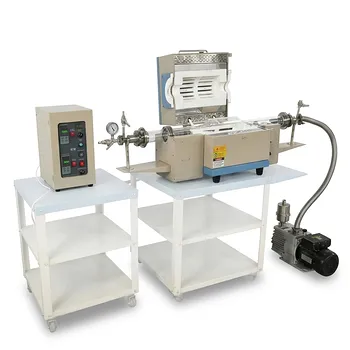
Two Zone Rotary Tube Furnace for Powder CVD Coating and Core Shell Material Synthesis 1100C