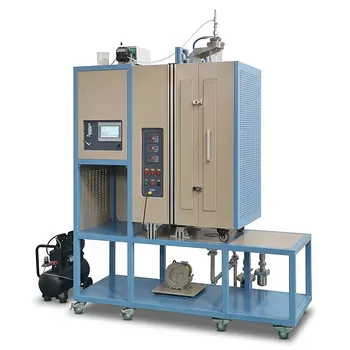
Why is a high-precision Mass Flow Controller (MFC) necessary for a biomass pyrolysis system? Enhance Research Accuracy
Updated 3 months ago
High-precision Mass Flow Controllers (MFCs) are the primary safeguard for ensuring that biomass undergoes thermal decomposition rather than simple combustion. By maintaining a strictly regulated flow of inert carrier gas, such as nitrogen or argon, the MFC excludes oxygen from the reactor and dictates the "residence time" of volatile vapors. This level of control is the difference between a failed experiment and the successful production of high-quality biochar with specific chemical properties.
Core Takeaway: A high-precision MFC is necessary to stabilize the reactor's internal atmosphere and control the duration that vapors remain in the heat zone. This precision prevents unintended oxidation and ensures the reproducibility of kinetic data and biochar morphology.
Establishing Atmospheric Integrity
The Prevention of Oxidative Combustion
In a pyrolysis system, the primary goal is to decompose biomass in the absence of oxygen. A high-precision MFC regulates the injection of inert gases—typically nitrogen (N2) or argon—to purge the reactor of air before and during the heating process. Without this precise regulation, even trace amounts of oxygen can lead to direct combustion, which destroys the biomass sample and alters the resulting carbon skeleton.
Maintaining a Stable Inert Environment
Beyond simply removing oxygen, the MFC ensures that the atmospheric composition remains constant throughout the reaction. In specialized studies like oxidative torrefaction, MFCs allow for the exact proportioning of oxygen concentrations (e.g., 6 vol%). This stability is a fundamental requirement for researchers to isolate the effects of different atmospheres on biomass degradation mechanisms.
Controlling Gas-Phase Dynamics
Regulating Vapor Residence Time
As biomass heats up, it releases volatile vapors that can undergo secondary reactions if they remain in the reaction zone too long. An MFC precisely controls the carrier gas flow rate, which directly determines how quickly these vapors are purged. By managing this residence time, the system can either preserve the primary vapors for collection or allow for specific gas-solid interactions that modify the biochar.
Ensuring Data Reproducibility and Kinetic Accuracy
For technical professionals, the value of an MFC lies in the reproducibility of the flow field. Stable flow rates prevent fluctuations that would otherwise lead to inconsistent data across different experimental runs. This precision is vital for calculating pyrolysis kinetic parameters, as even minor variations in flow can skew the measured rate of thermal degradation.
Engineering the Final Product
Influencing Biochar Chemical Structure
The flow rate established by the MFC has a direct impact on the aromatic structures and surface functional groups of the resulting biochar. By carrying away volatile components at a controlled rate, the MFC helps optimize the solid-phase carbonization process. This allows producers to "tune" the biochar for specific applications, such as soil amendment or filtration.
Preserving Microscopic Morphology
Fluctuations in gas flow can disrupt the physical formation of the biochar. High-precision control ensures that the microscopic morphology and pore distribution of the carbon remain consistent. This is particularly important when the goal is to create a stable carbon skeleton with specific surface area characteristics.
Understanding the Trade-offs
Precision vs. System Complexity
While a high-precision MFC provides unmatched control, it introduces a layer of complexity to the system. These devices require regular calibration against specific gases, as an MFC calibrated for nitrogen will not provide accurate readings for carbon dioxide or helium without adjustment. Using a low-quality flow meter instead of a true MFC often results in "drift," where the flow rate changes as the reactor temperature and back-pressure rise.
The Risk of Secondary Reactions
If the flow rate is set too low to save gas, the resulting increase in residence time can trigger unintended secondary reactions. These reactions may lead to the deposition of soot or heavy tars on the biochar surface, fundamentally changing its chemical profile. Conversely, a flow rate that is too high may cool the reactor zone excessively, leading to thermal gradients that compromise the uniformity of the pyrolysis.
Implementing Flow Control in Your System
Choosing the Right Strategy for Your Goal
To maximize the effectiveness of your pyrolysis system, the flow control strategy must align with your desired outcome.
- If your primary focus is Kinetic Modeling: You must prioritize an MFC with high repeatability and low "noise" to ensure that the flow field remains constant for accurate mathematical modeling.
- If your primary focus is Biochar Functionalization: Focus on an MFC that allows for the precise mixing of multiple gases (e.g., CO2 and N2) to tailor the surface functional groups and microscopic pores.
- If your primary focus is Liquid Oil (Bio-oil) Yield: Use the MFC to maintain a high flow rate and minimize vapor residence time, effectively "quenching" the reaction and preventing the vapors from breaking down further.
Precision in gas regulation is the technical foundation upon which predictable and high-quality thermochemical conversion is built.
Summary Table:
| Key Feature of MFC | Impact on Pyrolysis Process | Benefit to Research & Production |
|---|---|---|
| Atmospheric Integrity | Excludes oxygen via inert gas purging | Prevents sample combustion and protects carbon structures. |
| Residence Time Control | Regulates how long vapors stay in the heat zone | Minimizes secondary reactions and optimizes bio-oil yield. |
| Flow Reproducibility | Maintains a stable and constant flow field | Ensures accurate kinetic data and experimental repeatability. |
| Atmospheric Tuning | Allows for precise gas mixing (e.g., N2, CO2, O2) | Enables functionalization of biochar and pore engineering. |
| Stability Control | Prevents drift caused by back-pressure changes | Maintains consistent microscopic morphology of the final product. |
Elevate Your Material Research with THERMUNITS
Precision is the backbone of successful thermal decomposition. As a leading manufacturer of high-temperature laboratory equipment for material science and industrial R&D, THERMUNITS provides the advanced technology needed to ensure your pyrolysis experiments are repeatable and high-quality.
Our comprehensive range of thermal processing solutions includes:
- Furnaces: Muffle, Vacuum, Atmosphere, Tube, Rotary, and Hot Press Furnaces.
- Advanced Systems: CVD/PECVD systems, Dental Furnaces, and Electric Rotary Kilns.
- Specialized Equipment: Vacuum Induction Melting (VIM) furnaces and high-grade Thermal Elements.
Whether you are optimizing biochar morphology or modeling complex chemical kinetics, our equipment delivers the atmospheric control and temperature uniformity your lab demands.
Ready to upgrade your laboratory’s capabilities? Contact our technical experts today to find the ideal heat treatment solution for your specific application!
References
- Márcia Santos, L.A.C. Tarelho. Characteristics of Biochar Obtained by Pyrolysis of Residual Forest Biomass at Different Process Scales. DOI: 10.3390/en17194861
Mentioned Products
- Electric Rotary Kiln Small Rotary Furnace Biomass Pyrolysis Plant
- High Temperature Tilting Rotary Tube Furnace with Integrated Mass Flow Control and Multi Zone Heating
- Electric Rotary Kiln Continuous Working Small Rotary Furnace Heating Pyrolysis Plant
- 1500C Three Zone Vertical Pyrolysis Furnace for Nanoparticle Synthesis and Advanced Oxide Coating
People Also Ask
- How does the electric rotary kiln support environmental compliance and sustainability? Achieve Zero-Emission Production
- What are the maintenance and service life advantages of an electric rotary kiln? 25+ Year Longevity & Low Maintenance
- What thermal efficiency can be expected from an electric rotary kiln compared to fuel-fired alternatives? Gain 95% efficiency.
- How does the use of an electric rotary kiln facilitate CO2 capture in cement and lime production? Achieve High-Purity CCUS
- Which minerals and specialty chemicals are commonly processed using electric rotary kilns? Precision Thermal Processing Guide

Tech Team · ThermUnits
Last updated on Jun 02, 2026
Related Products
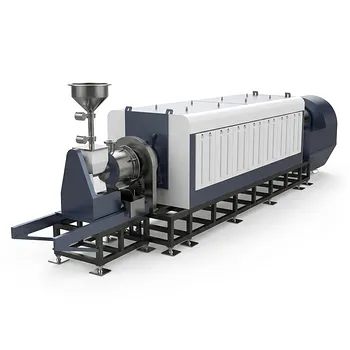
Electric Rotary Kiln Small Rotary Furnace Biomass Pyrolysis Plant
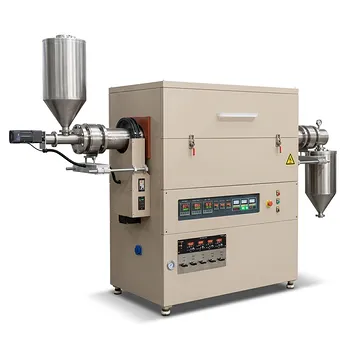
High Temperature Tilting Rotary Tube Furnace with Integrated Mass Flow Control and Multi Zone Heating
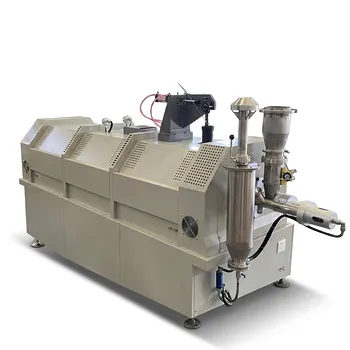
Electric Rotary Kiln Continuous Working Small Rotary Furnace Heating Pyrolysis Plant