Why is high-precision temperature control required for In2Se3 processing? Stabilize the Vital Ferroelectric Beta Phase
Updated 3 months ago
High-precision temperature control is required because $In_2Se_3$-based materials possess multiple polymorphic phases with very small energy differences, making them hyper-sensitive to thermal fluctuations. This precision allows for the strict execution of specific heating and cooling curves necessary to stabilize the desired ferroelectric $\beta$ phase while suppressing non-ferroelectric phases like the $\gamma$ phase. Without this level of control, the material cannot achieve the phase purity required for high-performance ferroelectric polarization.
Core Takeaway: For $In_2Se_3$-based materials, temperature precision is not merely a process preference but a structural requirement. Because the energy barriers between $\alpha, \beta, \gamma,$ and $\delta$ phases are minimal, high-precision systems are the only way to "lock" the material into a specific crystalline state and ensure predictable device performance.
The Challenge of Polymorphic Energy Landscapes
Narrow Stability Windows and Phase Competition
$In_2Se_3$-based materials are inherently complex due to their polymorphic nature, existing in $\alpha, \beta, \gamma,$ and $\delta$ phases. The energy differences between these phases are relatively small, meaning that even a slight deviation in temperature can trigger an unwanted phase transition. High-precision systems ensure the thermal environment remains strictly within the target window, preventing the material from "slipping" into an incorrect structural state.
Managing Thermal History and Kinetics
The transition between these phases is highly dependent on the heating and cooling rates as well as isothermal holding times. A high-precision controller allows for the execution of programmable thermal curves, which are essential for guiding the material through specific kinetic pathways. This level of regulation is critical for materials like $In_{1.75}Sb_{0.25}Se_3$, where the timing of temperature shifts dictates the final atomic arrangement.
Impact on Device Performance and Material Integrity
Selective Stabilization of the $\beta$ Phase
In the context of ferroelectric devices, the $\beta$ phase is often the primary target due to its specific polarization characteristics. High-precision control is the mechanism used to induce stability in this specific phase during the annealing or growth process. By maintaining a stable thermal plateau, the system provides the necessary energy to form the $\beta$ lattice without providing enough excess energy to cross into the next phase.
Avoiding Non-Ferroelectric Impurities
The presence of the $\gamma$ phase or other non-ferroelectric impurities can significantly degrade the polarization performance of the final device. Inaccurate temperature control often leads to phase mixtures, where the functional properties of the $\beta$ phase are diluted by inert or counterproductive structures. Strictly suppressing these non-functional phases is the only way to ensure the ferroelectric polarization performance meets technical specifications.
Understanding the Trade-offs and Pitfalls
The Risk of Thermal Gradient Fluctuations
In systems with low precision, temperature oscillations can cause localized areas of the material to undergo different phase transitions than the bulk. This results in a heterogeneous microstructure that suffers from internal stress and inconsistent electrical properties. Similar to the processing of $Yb123$ or $SCM435$ steel, even minor deviations can lead to impurity fluctuations that are impossible to correct once the cooling cycle is complete.
Consequences of Excessive Heat
Overshooting the target temperature, even by a few degrees, can lead to excessive grain growth or the formation of silicate coatings in complex compositions. In $In_2Se_3$ systems, overheating typically favors the more thermally stable but functionally undesirable phases. High-precision thermocouples and controllers are therefore necessary to act as a safety buffer against the irreversible deterioration of the material's microscopic structure.
Applying Precision Control to Your Project
Recommendations for Material Optimization
To achieve the highest crystalline quality and phase purity in $In_2Se_3$ and similar multi-phase materials, consider the following strategic approaches:
- If your primary focus is Phase Purity: Utilize high-precision controllers paired with high-quality thermocouples to lock the reaction environment within a $\pm 1^\circ C$ window.
- If your primary focus is Structural Integrity: Implement slow, programmable cooling rates (e.g., $2^\circ C$ per hour) to minimize internal thermal stress and dislocations.
- If your primary focus is Device Polarization: Prioritize the suppression of the $\gamma$ phase by strictly adhering to the validated isothermal holding times for the $\beta$ phase.
Effective thermal processing of $In_2Se_3$ requires viewing temperature not as a static setting, but as a dynamic tool for precise structural engineering.
Summary Table:
| Aspect | High-Precision Control Benefit | Risk of Low Precision |
|---|---|---|
| Phase Selection | Stabilizes desired $\beta$ phase; suppresses $\gamma$ phase | Formation of non-ferroelectric phase mixtures |
| Energy Barriers | Navigates narrow windows between $\alpha, \beta, \gamma, \delta$ | Unwanted "slipping" into incorrect crystalline states |
| Kinetics | Precise programmable heating/cooling curves | Internal stress and heterogeneous microstructure |
| Material Integrity | Prevents overshooting and excessive grain growth | Irreversible structural deterioration and impurities |
Master Your Material Transitions with THERMUNITS
Achieving the precise $\beta$ phase in $In_2Se_3$ requires more than just heat—it requires expert thermal engineering. As a leading manufacturer of high-temperature laboratory equipment for material science and industrial R&D, THERMUNITS provides the specialized control your research demands.
From Muffle, Vacuum, and Atmosphere furnaces to advanced CVD/PECVD systems, Tube furnaces, and Vacuum Induction Melting (VIM), our equipment is designed to lock in the exact thermal parameters needed for complex material synthesis. Whether you are developing ferroelectric devices or exploring new alloys, we offer a comprehensive range of solutions including Rotary, Hot Press, and Dental furnaces, as well as high-quality Thermal Elements.
Ensure predictable device performance and phase purity in your laboratory.
Contact our thermal processing experts today to find the perfect high-precision solution for your project.
References
- Shasha Li, Yimin A. Wu. Emergence of Ferroelectricity in p‐Type 2D In<sub>1.75</sub>Sb<sub>0.25</sub>Se<sub>3</sub>. DOI: 10.1002/pssr.202400057
Mentioned Products
- Induction Heating System with Temperature Control for High Temperature Vacuum Sintering and Melting
- High Frequency Desktop Induction Heater 35KW 30-80 KHz with Precision Timer Control for Industrial Material Research and Metal Processing
- High Temperature Oxygen and Inert Atmosphere Controlled Furnace 8 Liter 1700C Sintering System for Advanced Materials RD
- High Temperature Three Temperature Zone Tube Furnace for Advanced Material Science Sintering and Chemical Vapor Deposition Applications
- Three Zone Alumina Tube Furnace with Vacuum Flanges High Temperature 1700C Thermal Gradient CVD System
People Also Ask
- What is the role of a vacuum induction melting furnace combined with a water-cooled copper mold? Mastering RHEA Purity
- Explain the physical principle behind heat generation in a Vacuum Induction Melting (VIM) furnace: A Technical Guide
- Why is a VIM furnace essential for high-purity alloys? Achieve unmatched metal purity and structural integrity.
- Why is Vacuum Induction Melting preferred for manufacturing corrosion-resistant alloys? Ensure Ultra-High Purity
- How does Vacuum Induction Melting mitigate hydrogen embrittlement? Ensure Structural Integrity for Critical Alloys

Tech Team · ThermUnits
Last updated on Jun 03, 2026
Related Products
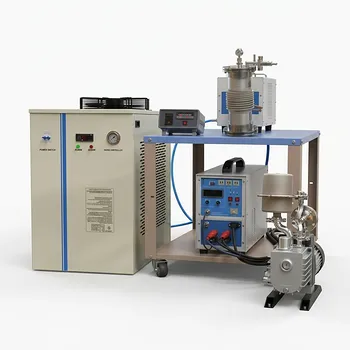
Induction Heating System with Temperature Control for High Temperature Vacuum Sintering and Melting
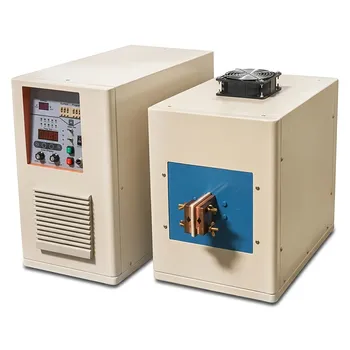
High Frequency Desktop Induction Heater 35KW 30-80 KHz with Precision Timer Control for Industrial Material Research and Metal Processing
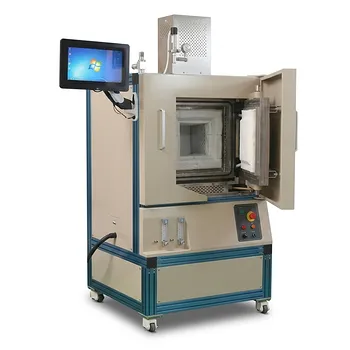
High Temperature Oxygen and Inert Atmosphere Controlled Furnace 8 Liter 1700C Sintering System for Advanced Materials RD
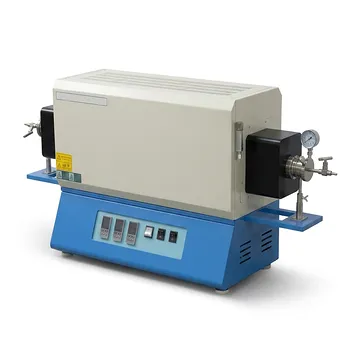
High Temperature Three Temperature Zone Tube Furnace for Advanced Material Science Sintering and Chemical Vapor Deposition Applications
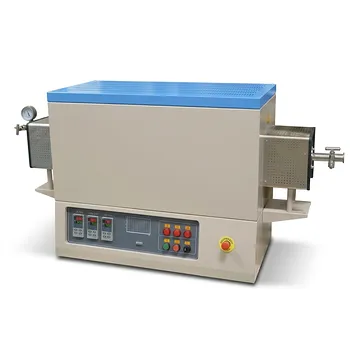
Three Zone Alumina Tube Furnace with Vacuum Flanges High Temperature 1700C Thermal Gradient CVD System
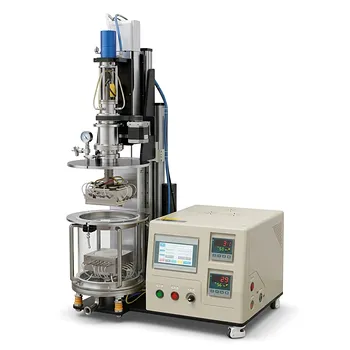
High Temperature 800C Rapid Thermal Processing Furnace with Rotating Sample Holder for Close Spaced Sublimation and Thin Film Solar Cell Research