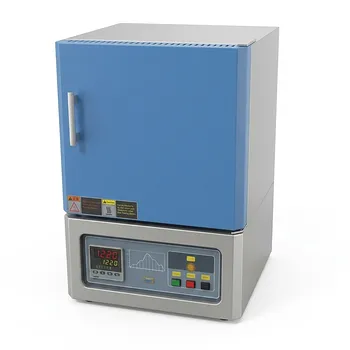
Why is a high-temperature Muffle Furnace required for the debindering process of alumina catalyst supports? Essential Guide
Updated 3 months ago
A high-temperature Muffle Furnace is essential because it provides the precise, oxygen-rich environment required to oxidize organic binders and clear the support's internal architecture. This thermal process, typically reaching 600°C, transforms a fragile "green body" into a functional, porous alumina structure by completely removing additives like Polyvinylpyrrolidone (PVP) introduced during the Binder Jetting process.
The Muffle Furnace serves as a chemical reactor that eliminates organic binders to unlock the support's porosity while simultaneously triggering phase transformations necessary for mechanical strength. Without this controlled thermal treatment, the internal pore network remains blocked, rendering the support useless for active catalyst loading.
Eliminating Organic Binders and Pore Formers
Complete Oxidation of PVP
In Binder Jetting, organic binders like Polyvinylpyrrolidone (PVP) hold the alumina powder together in a "green" state. The muffle furnace provides a controlled air atmosphere where these organics are completely oxidized and decomposed at approximately 600°C, leaving no carbonaceous residue.
Clearing the Internal Pore Network
The primary goal of debindering is to vacate the space previously occupied by the binder and any pore-forming agents like starch. This "clearing" action is vital because it creates the interconnected porosity required for the subsequent diffusion of active catalytic species and the impregnation of metal precursors.
Removal of Moisture and Volatiles
Beyond the binder, the furnace effectively removes adsorbed moisture and volatile impurities stored within the alumina. This purification step ensures a clean, consistent physicochemical foundation, which is necessary for the uniform loading of active components in later stages.
Driving Phase Transformation and Mechanical Integrity
Transitioning to γ-Al2O3
The thermal environment of the furnace facilitates the phase transformation of precursors like pseudo-boehmite into stable γ-Al2O3 (gamma-alumina). This transformation is critical for establishing the specific surface area and the final chemical properties of the catalyst support.
Strengthening the Structural Framework
Exposure to high temperatures triggers the initial stages of sintering or chemical bonding between particles, ensuring the mechanical strength of the final component. This prevents the alumina structure from collapsing or eroding during the high-pressure environments common in chemical reactors.
Stabilizing Surface Chemistry
High-temperature treatment eliminates excess surface hydroxyl groups and stabilizes the framework structure. This stability prevents unwanted side reactions and ensures that the finished catalyst maintains its reproducibility and activity over long operational periods.
Understanding the Trade-offs and Risks
The Danger of Rapid Gas Release
A common pitfall in debindering is an excessively fast heating rate, which can cause the binder to vaporize too quickly. If internal pressure builds up faster than the gas can escape through the pores, it leads to micro-cracks or catastrophic structural failure of the alumina component.
Balancing Temperature and Porosity
While high temperatures are required for phase stability, excessive heat can lead to over-sintering. This reduces the total surface area and can cause the collapse of smaller pores, ultimately limiting the catalyst's effectiveness by reducing the available sites for chemical reactions.
Atmospheric Limitations
The debindering process relies on an oxidizing atmosphere (air) to turn organic binders into CO2 and water vapor. If the furnace cannot maintain a consistent airflow, incomplete decomposition may occur, leaving residual carbon that poisons the catalyst or blocks active sites.
How to Apply This to Your Project
When utilizing a muffle furnace for alumina debindering, your thermal profile should be dictated by your specific structural and chemical goals.
- If your primary focus is Structural Integrity: Use a slow, controlled heating rate (e.g., 5°C to 7°C per minute) to allow organic gases to escape without causing internal fractures.
- If your primary focus is Optimal Pore Volume: Maintain a strict upper temperature limit (e.g., 550°C–600°C) to prevent over-sintering and the loss of specific surface area.
- If your primary focus is Chemical Purity: Ensure an adequate isothermal hold time at the peak temperature to guarantee the complete decomposition of nitrates and organic residues.
By precisely controlling the thermal environment, you transform a fragile 3D-printed shape into a high-performance industrial catalyst support.
Summary Table:
| Process Stage | Key Function | Impact on Alumina Support |
|---|---|---|
| Binder Oxidation | Thermal decomposition of PVP (~600°C) | Clears internal architecture and removes carbon residue. |
| Pore Formation | Removal of starch/pore-formers | Creates interconnected porosity for active species loading. |
| Phase Transformation | Pseudo-boehmite to γ-Al2O3 | Increases surface area and stabilizes chemical properties. |
| Sintering Control | High-temperature structural bonding | Enhances mechanical strength and prevents structural collapse. |
| Impurity Volatilization | Moisture and volatile removal | Ensures a clean physicochemical foundation for metal precursors. |
Maximize Your Material Performance with THERMUNITS
Precise debindering is the difference between a high-performance catalyst and a failed structural component. THERMUNITS is a leading manufacturer of high-temperature laboratory equipment specifically engineered for material science and industrial R&D.
We provide a comprehensive range of thermal processing solutions tailored for complex processes like alumina debindering, including:
- Advanced Muffle & Atmosphere Furnaces for precise air oxidation.
- Vacuum & Tube Furnaces for specialized material treatments.
- CVD/PECVD Systems for advanced coating applications.
- Rotary Kilns & Hot Press Furnaces for industrial-scale batches.
Whether you are refining 3D-printed alumina parts or developing next-generation catalyst supports, our equipment delivers the temperature uniformity and atmospheric control you need.
Ready to upgrade your lab's thermal capabilities?
Contact our technical experts today to find the perfect furnace for your R&D requirements!
References
- S. Wilmes, Olaf Hinrichsen. Influencing Factors on the Wet Impregnation of Additive‐Manufactured Catalyst Support Structures. DOI: 10.1002/cite.202400090
Mentioned Products
- 1200C Muffle Furnace 12x8x5 7.2L Heating Chamber with Quartz Observation Window and Vent Port
- High Temperature 1200C Muffle Furnace 27L Volume 12x12x12 Chamber with Programmable PID Controller for Laboratory Material Science
- 1750C Compact Muffle Furnace 1.7L Ultra High Temperature Laboratory Sintering System for Advanced Ceramics and Material Science Research
- 1200C High Temperature 125L Muffle Furnace 5 Side Heating for Large Batch Sintering with Optional Alloy Debinding Chamber
- Ultra High Temperature Bench Top Muffle Furnace 1750C Sintering System with Kanthal Super Heating Elements and Precision Digital Control
People Also Ask
- What is the function of an experimental muffle furnace in the conversion of FeOOH to α-Fe2O3? Optimize Phase Transition
- Why is a muffle furnace required for MoO2@HCNF pre-oxidation? Crucial Steps for High-Performance Composites
- What is the function of a high-temperature Muffle furnace in removing residual solvents? Essential Bismuth Synthesis
- What is the function of Muffle furnace calcination? Essential steps for Pr-doped SrFeMoO6 Perovskite synthesis.
- What are the primary functions of a Muffle furnace in oxide calcination? Achieve high purity and phase control.

Tech Team · ThermUnits
Last updated on Jun 03, 2026
Related Products
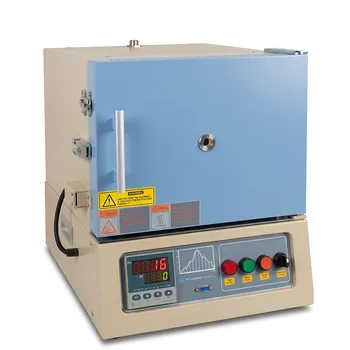
1200C Muffle Furnace 12x8x5 7.2L Heating Chamber with Quartz Observation Window and Vent Port
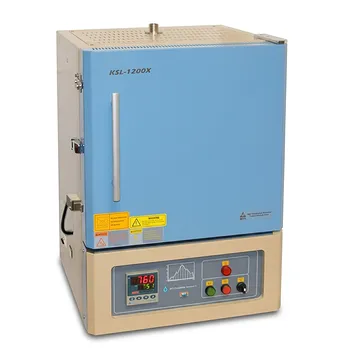
High Temperature 1200C Muffle Furnace 27L Volume 12x12x12 Chamber with Programmable PID Controller for Laboratory Material Science
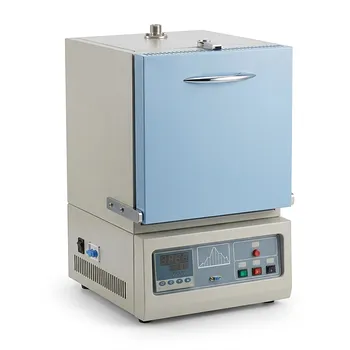
1750C Compact Muffle Furnace 1.7L Ultra High Temperature Laboratory Sintering System for Advanced Ceramics and Material Science Research
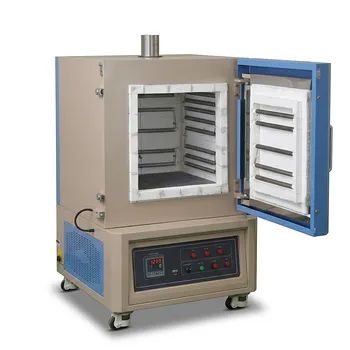
1200C High Temperature 125L Muffle Furnace 5 Side Heating for Large Batch Sintering with Optional Alloy Debinding Chamber
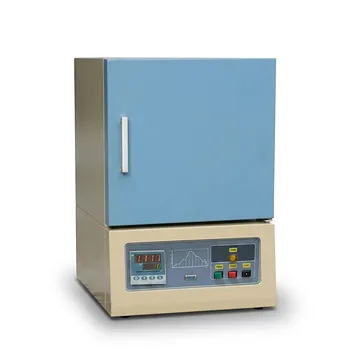
Ultra High Temperature Bench Top Muffle Furnace 1750C Sintering System with Kanthal Super Heating Elements and Precision Digital Control
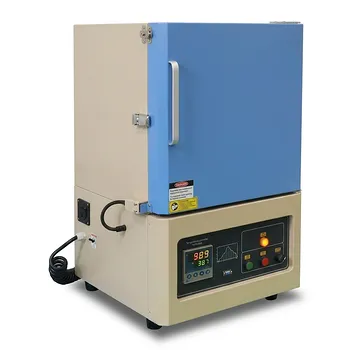
1200°C High Temperature Muffle Furnace 19L Chamber with 50 Segment Programmable Controller
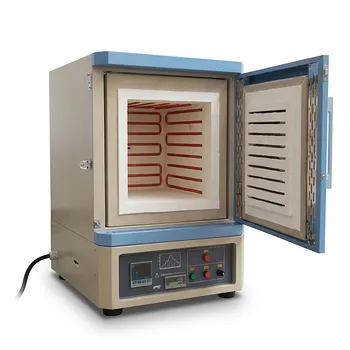
Five Side Heating Muffle Furnace 1200C High Uniformity 64L Chamber 16x16x16 Inch Industrial Heat Treatment
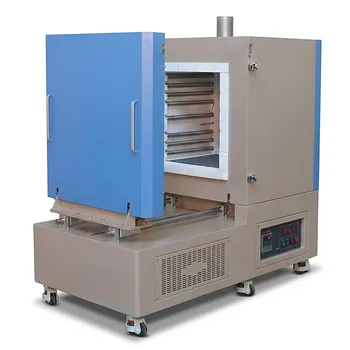
1200C Five Side Heating Muffle Furnace with Sliding Door 125L Volume High Temperature Heat Treatment System for Large Scale Sintering and Annealing
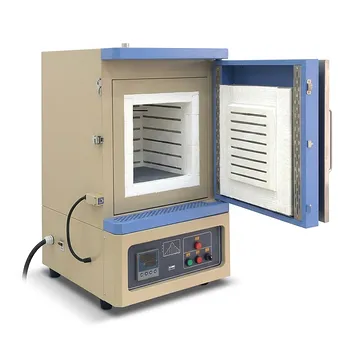
Five Side Heating Muffle Furnace High Purity Alumina Fiber 27L Chamber 1200C High Temperature Thermal Processing System for Sintering Annealing and Materials Research
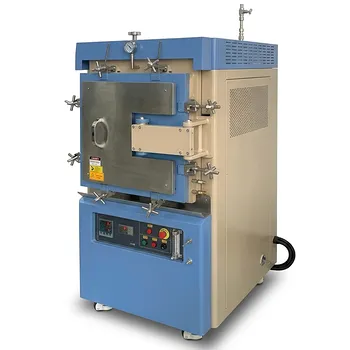
Atmosphere Controlled Muffle Furnace 1700C Maximum Temperature 80L High Capacity Vacuum Inert Gas Box Furnace
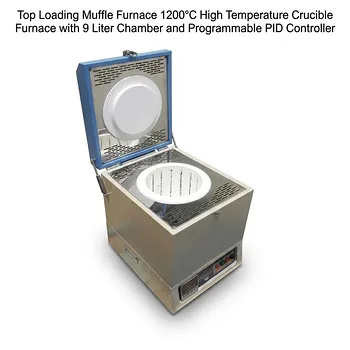
Top Loading Muffle Furnace 1200°C High Temperature Crucible Furnace with 9 Liter Chamber and Programmable PID Controller
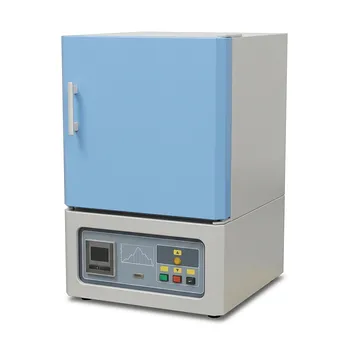
1800C Bench Top Muffle Furnace with Kanthal Super 1900 Heating Elements and 3.6L Alumina Fiber Chamber
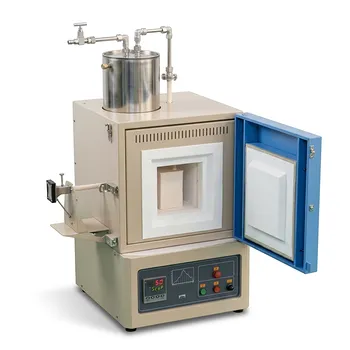
High Temperature Bench Top Muffle Furnace 1700C with Integrated Evaporating Particle Collection and 8x8x8 Alumina Fiber Chamber
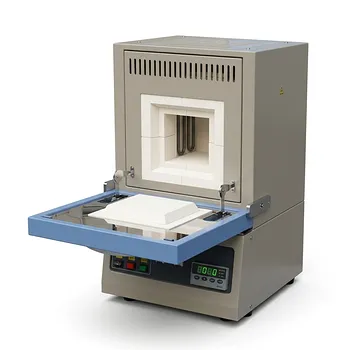
Five Sided Heating Muffle Furnace High Uniformity 1200C Lab Box Furnace 27L Alumina Fiber Chamber
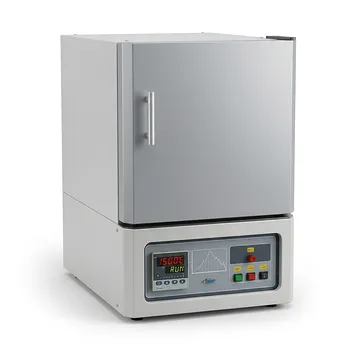
High Temperature 1500C Benchtop Muffle Furnace 3.6L Alumina Fiber Chamber Programmable Controller Sintering Annealing Carbonization Thermal Processing System
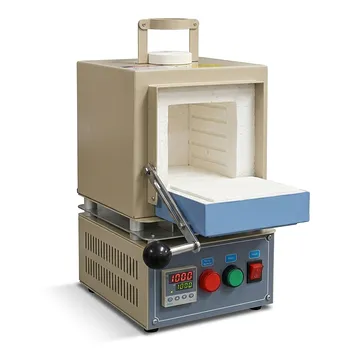
Compact 1000C Muffle Furnace with Programmable Controller and 2 Inch Top Port for Vacuum and Atmosphere Material Research
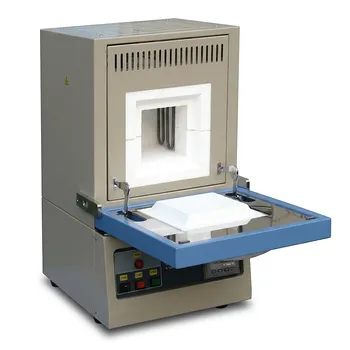
High Temperature 1800C Compact Muffle Furnace with Kanthal Super 1900 Heating Elements and 1.7L Alumina Chamber
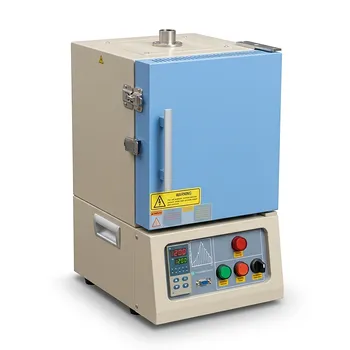
1200°C Small Box Furnace 4.2 Liter Programmable Muffle Furnace with High Purity Alumina Insulation and PID Control
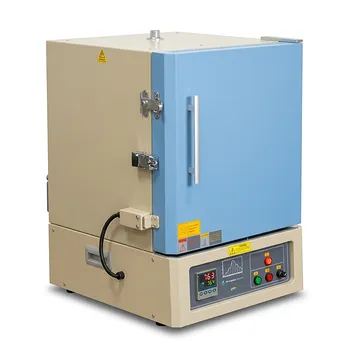
Large Capacity 1200C Muffle Furnace 64 Liter Chamber with Digital PID Controller and Built In Venting Port